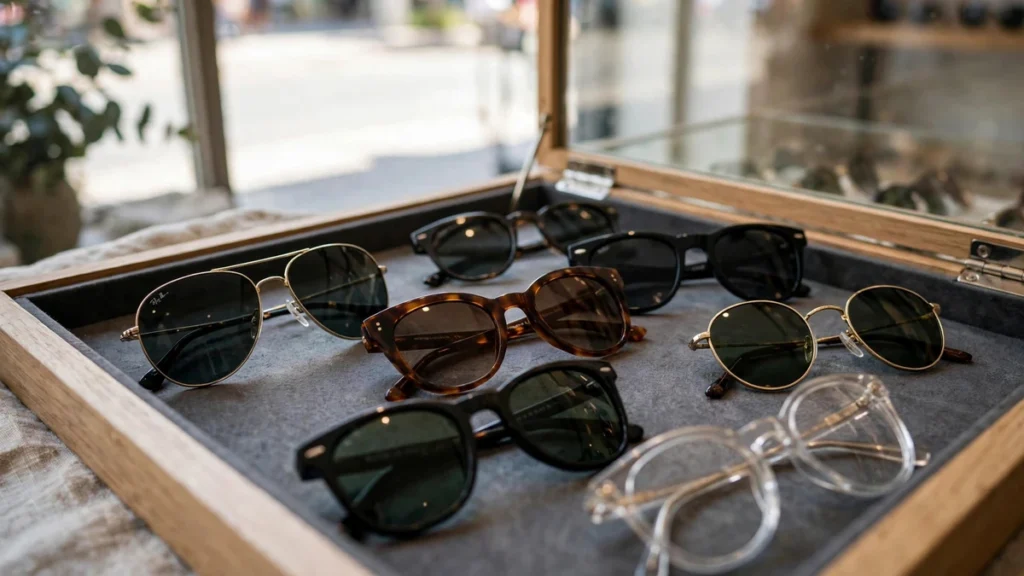
Buying sunglasses looks simple until you stand in front of a wall of frames. Hundreds of shapes, tints and prices, all promising the same thing, and very little honest guidance about what actually matters. The result is often a pair bought on impulse, worn twice, and left in a drawer because it slips, pinches, or makes everything look slightly wrong.
That is why this guide works through the decision step by step, from protection to fit to budget, rather than starting with a brand or a trend. A good pair is a small investment in your eyes and your comfort, and it deserves the same care as any other piece of clothing you will wear every day in the sun. The most important checks cost nothing, and they take about ten minutes in a shop. A rushed choice usually means a pair that pinches behind the ears, slides down your nose, or makes the world look slightly tinted in a way you never get used to.
Below are nine steps to buying sunglasses in 2027, from checking the UV label to looking after the pair once it is yours. Each step explains what to do, what to watch for, and how much time and money it takes, so you can walk into a shop knowing what you need, not just what looks good on the shelf.
Key takeaways
- Check the UV label first: 100 percent UVA and UVB protection, or UV400, is non-negotiable at any price.
- Try sunglasses on in daylight, not just under shop lights, and check the fit from the side as well as the front.
- Match the frame to your face shape and to your life, because a pair that does not fit will not be worn.
- Polarised lenses help with glare on water and roads, but they are not essential for everyone.
- No single pair suits every face, every activity and every budget, and a cheap pair with no UV label is worse than none.
What buying sunglasses actually involves
Buying sunglasses involves three decisions, and the order matters. The first is protection: do the lenses block ultraviolet light properly. The second is vision: do they give you a clear, undistorted view in bright light. The third is fit and style: do they sit comfortably for hours and look right on your face. Most people start with style and never get to the first two, which is how a handsome pair ends up unworn.
It also involves knowing where to buy. A reputable optician or a well-known brand store will let you try pairs on properly, adjust the fit, and answer questions about lenses. A market stall or an unknown online seller may not. That does not mean you need to spend a fortune, only that the place you buy from should stand behind what it sells, and should be able to tell you what the lenses actually do.
How we chose these steps and what to look for
Look first at what the steps are for. They are written for a man buying a pair he will wear often, not for a collector and not for a specialist sports purchase. The advice applies whether you spend $95 or $400, because the checks are the same: UV protection, lens clarity, fit, and honest materials. Price changes the craftsmanship and the finish, not the basic job of the lens.
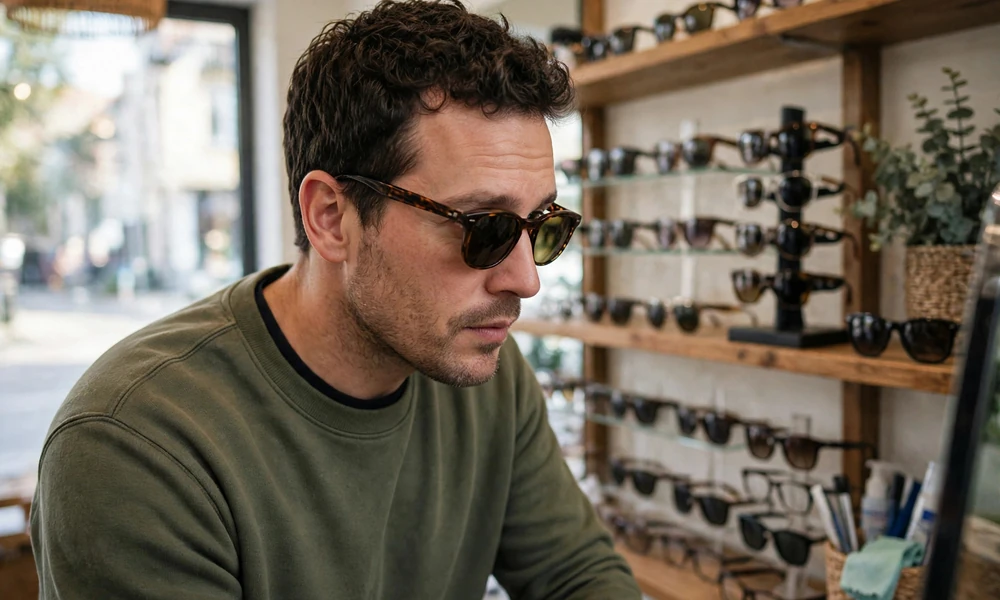
Look next at how to use the steps. Work through them in order, and do not skip the daylight test. A pair that looks good under shop lights can look very different outside, and a tint that seems fine indoors can be too dark for driving or too light for a beach. Sun protection is part of the same habit, and our guide to the best mineral sunscreens covers the skin side of that routine, because sunglasses protect your eyes while sunscreen protects the skin around them.
Finally, remember that buying well is slower than buying fast, and that is the point. Ten minutes of checking in a shop saves months of a pair sitting unused, and it saves the cost of replacing a pair you never liked. The steps below take you through that ten minutes, plus the care that keeps a good pair working for years.
The 9 steps to buying sunglasses in 2027
Check the UV label before anything else
What we like: A clear label saying 100 percent UVA and UVB protection, or UV400, is a quick, reliable check that costs nothing. What to consider: Dark lenses with no label are a warning sign, not a bargain. Best for: Every buyer, every budget. Cost: Free. Time needed: One minute.
This is the single most important step. Dark lenses without UV protection make your pupils open wider and let in more ultraviolet light, which is worse than wearing no sunglasses at all.
Decide whether you need polarised lenses
What we like: Polarised lenses cut reflected glare on water, wet roads and snow, and they make bright days much more comfortable. What to consider: They can make some phone, dashboard and ATM screens look patchy, and they cost more. Best for: Driving, fishing, boating, and time near water. Cost: Usually $30 to $80 more than the same frame without polarisation. Time needed: Five minutes of thought before you shop.
If you spend a lot of time driving or on the water, polarised lenses are worth the extra cost. For general city wear, they are a pleasant extra rather than a necessity.
Match the frame to your face shape
What we like: A frame that balances your face looks natural and feels comfortable, and it is easy to check in a mirror. What to consider: Fashion trends can push you towards a shape that does not suit you. Best for: Every buyer, because fit starts with shape. Cost: Free. Time needed: Ten minutes trying on different shapes.
Oval faces suit most styles. Square faces soften with rounder frames. Round faces gain definition from angular frames. Heart-shaped faces suit aviators and browline styles. Try several, and look from the side too.
Check the fit at the nose, ears and temples
What we like: A pair that sits level, stays put when you look down, and does not press behind the ears will be worn every day. What to consider: A pair that feels fine for a minute can pinch after an hour. Best for: Anyone who will wear sunglasses for hours at a time. Cost: Free, and an optician can adjust metal frames. Time needed: Five minutes in the shop, plus a full day of wear to be sure.
Check three points: the bridge or nose pads should hold the frame steady, the arms should rest without pressing, and the frame should not touch your cheeks when you smile. If it does, the fit is wrong.
Choose the lens colour for how you will use them
What we like: The right tint improves contrast and comfort for a specific activity, whether that is driving or a day at the beach. What to consider: A tint that is too dark is unsafe for driving, and a fashion tint may distort colours. Best for: Drivers, walkers, and anyone outdoors for hours. Cost: Included in most pairs; specialist tints cost more. Time needed: Five minutes comparing tints in daylight.
Grey keeps colours true. Brown warms the view and suits driving. Green is gentle on the eyes in bright sun. Mirror lenses look striking but show every smudge, and very dark lenses are not for driving at dusk.
Test the lenses in daylight, not just in the shop
What we like: Stepping outside shows you the true tint, the clarity, and whether straight lines stay straight. What to consider: Some shops have no easy way to step outside, so ask to stand near a window. Best for: Every buyer, because shop lighting hides a bad lens. Cost: Free. Time needed: Two minutes outside.
Look at a straight edge, such as a door frame, and check it stays straight. Look at colours and see if they look natural. If the view feels muddy or distorted, the lenses are not good enough, whatever the brand.
Set a budget and compare like with like
What we like: A clear budget keeps you honest, and comparing similar frames shows what extra money actually buys. What to consider: A famous logo does not protect your eyes any better than a good mid-priced lens. Best for: Anyone who wants value rather than a status symbol. Cost: Most good pairs sit between $95 and $350. Time needed: Ten minutes of comparison.
Above $350 you are paying for craftsmanship, rare materials and brand, which can be worth it, but it does not make the lenses safer. Our look at the most expensive sunglasses for men shows what the top end buys, and how much of it is handwork and rare materials rather than better protection.
Buy from a shop you can go back to
What we like: A reputable shop will adjust the fit, honour a warranty, and answer questions after you buy. What to consider: A bargain from an unknown seller may have no returns, no warranty, and no real UV protection. Best for: First-time buyers and anyone spending over $150. Cost: No extra cost, and often a free adjustment. Time needed: The time to walk into a proper shop.
If a seller cannot tell you the UV rating, the lens material, or the returns policy, walk away. A good shop is part of the purchase, not just a place to pay.
Keep the case, the cloth and the receipt
What we like: A hard case and a microfibre cloth protect the lenses, and a receipt protects your warranty. What to consider: Sunglasses left loose in a pocket or on a dashboard scratch and warp quickly. Best for: Every buyer, because care is what makes a pair last. Cost: Free, since the case and cloth usually come with the pair. Time needed: One minute to put them away properly.
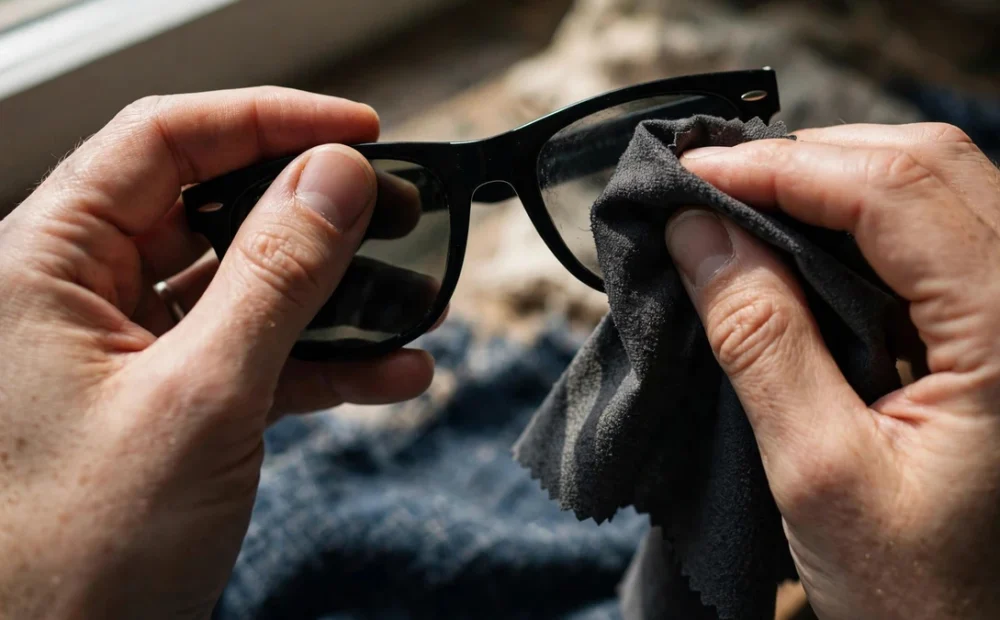
Clean lenses with lukewarm water and a microfibre cloth, never with your shirt, and never leave them on a hot dashboard. After-sun care matters for skin too, and our guide to the best after-sun skincare covers what to do when a long day in the sun leaves your skin needing attention.
Which sunglasses are right for you
Start with how you will use them most. A man who drives every day needs coverage, true colours and lenses that do not distort. A man who spends weekends on the water needs polarised lenses and a frame that stays put. A man who wants one pair for work and weekends needs a classic shape in a neutral colour that looks right with a shirt as well as a T-shirt.
Then think about your face and your budget together. A $95 pair that fits perfectly is a better buy than a $350 pair that slips, because the pair you wear is the pair that protects you. If you are between two pairs, choose the one that feels better after five minutes, not the one that photographs better in the mirror.
Finally, be honest about how careful you are with small things. If you lose sunglasses often, a mid-priced pair is the sensible choice. If you keep things for years, a well-made pair with a warranty is worth the extra money, because the cost per wear falls every year you keep it.
The caveats that matter
Buying sunglasses is straightforward, but a few mistakes are common. The most common is buying dark lenses with no UV label, which is worse than wearing nothing. The next is buying online without trying the pair on, which often ends in a return or a drawer. The third is choosing a fashion shape that does not suit your face, because a pair you do not like looking at yourself in is a pair you will not wear.
| Detail | What is known |
|---|---|
| First check | UV label: 100 percent UVA and UVB, or UV400, before anything else |
| Polarised lenses | Best for glare on water and roads; not essential for city wear |
| Best test | Try them on in daylight and check straight lines stay straight |
| Who should buy in a shop | First-time buyers, and anyone spending over $150 |
| What to avoid | Dark lenses with no UV label, and sellers who cannot answer questions |
| Budget guide | Most good pairs sit between $95 and $350 |
| Care | Hard case, microfibre cloth, lukewarm water, never a hot dashboard |
| What buying well does not do | It does not replace eye care, and it does not make a bad fit good |
If you have a prescription, an eye condition, or you have had eye surgery, ask your optician before choosing, especially for driving or sport. That is not a formality. Your eyesight changes what a lens needs to do, and a simple check avoids a pair that looks right and sees wrong.
Checklist: buying sunglasses honestly
Use these checks in the shop, and again after a week of wear.
- Check the UV label: it should say 100 percent UVA and UVB protection, or UV400.
- Check the fit: level on your face, comfortable behind the ears, no sliding when you look down.
- Check the view in daylight: straight lines stay straight, and colours look natural.
- Check the weight: a pair that feels heavy after a minute will feel heavier after four hours.
- Check the seller: can they tell you the UV rating, the lens material, and the returns policy.
- Keep the case and receipt: a hard case protects the lenses, and a receipt protects the warranty.
Frequently asked questions
Should I buy sunglasses online?
You can, if you know the frame fits you and the seller is reputable, with a clear returns policy. For a first pair, or a new shape, a shop is better, because fit is hard to judge from a photo, and a return takes days.
How much should I spend on sunglasses?
Most good pairs sit between $95 and $350. That buys full UV protection, honest materials and a good fit. Above that you are paying for craftsmanship, rare materials and brand, which can be worth it, but it does not make the lenses protect your eyes any better.
Are expensive sunglasses better for my eyes?
Not necessarily. A mid-priced pair from a reputable maker can protect your eyes as well as a luxury pair. What extra money buys is usually better materials, finer finishing, and a more comfortable fit, not stronger UV protection.
What if my sunglasses keep slipping?
Check the fit at the nose and behind the ears first. Nose pads can be adjusted on metal frames, and an optician can tighten the arms. Silicone nose pads and temple grips help in hot weather, and a sports strap works for running and cycling.
Do I need a different pair for driving?
Not always, but drivers benefit from lenses that keep colours true and do not distort, with enough coverage to block side light. Brown or grey lenses usually suit driving best, and very dark lenses are not ideal at dusk or in tunnels.
How long should a good pair last?
Years, if the lenses stay unscratched and the frame stays straight. Replace them when the lenses are badly scratched, the coating peels, or the pair no longer sits level, even if they still look fine from a distance.
The bottom line
Buying sunglasses well is not complicated, but it is not a one-minute decision either. Check the UV label, decide on polarisation, match the frame to your face, test the fit and the lenses in daylight, set a budget, and buy from a shop you can return to. That is the whole job, and it takes about ten minutes in a shop.
Choose the pair that fits, protects and suits the life you actually live, keep it in its case, and wear it every time you are out in bright sun. That is the honest way to get the benefit sunglasses are known for, without the discomfort and the waste that comes from a pair bought in a hurry.