



Walking into a nail salon and facing a wall of polish bottles can leave you quietly panicking about what to ask for. That uncertainty is common. Plenty of people sit down in the chair without knowing the difference between gel and acrylic, whether they should bring their own tools, or why the technician keeps asking them to relax their hands. The whole visit can feel like a small test you did not study for.
Here is the good news: a nail salon is a fairly predictable place once you understand the flow. The tools, the products, the timing, and the etiquette all follow patterns. Know those patterns and the appointment stops being a mystery. It becomes a service you can actually steer, like ordering at a restaurant where you finally understand the menu.
What happens on a typical visit, start to finish
Most salons run on a similar rhythm, even if the details differ. Understanding the sequence helps you plan your time and know what to expect at each stage.
The consultation and color choice
It usually starts before anyone touches your hands. A technician or receptionist asks what you want: a basic manicure, a gel set, an extension service, or something decorative. This is your moment to be specific. Bringing a photo is the single most useful thing you can do. Describing a color in words rarely works, because “mauve” means something different to everyone in the room.
If you are unsure what suits you, ask to see the options in person. Many salons keep sample swatches or rings of artificial tips. A technician can hold them against your skin, which tells you far more than staring at a bottle. For a low-risk starting point, nude nail polish flatters almost every skin tone and hides regrowth better than bright shades.
Prep work: the part that decides how long your manicure lasts
Then comes the unglamorous but critical stage. The technician files the nail edge, pushes back the cuticle, and lightly buffs the surface. This prep is not busywork. If the nail plate is not cleaned and shaped properly, product lifts at the edges within days.
Two practical tips here. First, speak up if the filing feels rough or the nipping stings. A good technician adjusts immediately. Second, ask them to file in one direction rather than sawing back and forth, which weakens the nail edge over time. You do not need to be an expert to make that request; it is a normal thing to ask.
Product application
This is where the services diverge. A standard polish manicure is quick and air-dries. A gel service is cured under a UV or LED lamp, which is why it lasts longer. Acrylic and dip powder systems build thickness and length. Each has trade-offs in durability, removal time, and how much stress it puts on the natural nail.
Finishing and aftercare advice
The last step is cuticle oil, a hand massage in many places, and a short briefing on how to protect the work. Listen to this part. Most early chipping is caused by the client, not the salon: opening cans with the nails, soaking hands in hot water too soon, or skipping oil. If you want a broader set of maintenance habits, press on nail care covers many of the same principles, since both formats depend on keeping the nail edge sealed and the surrounding skin moisturized.
Manicure vs. pedicure vs. extensions: what you are actually booking
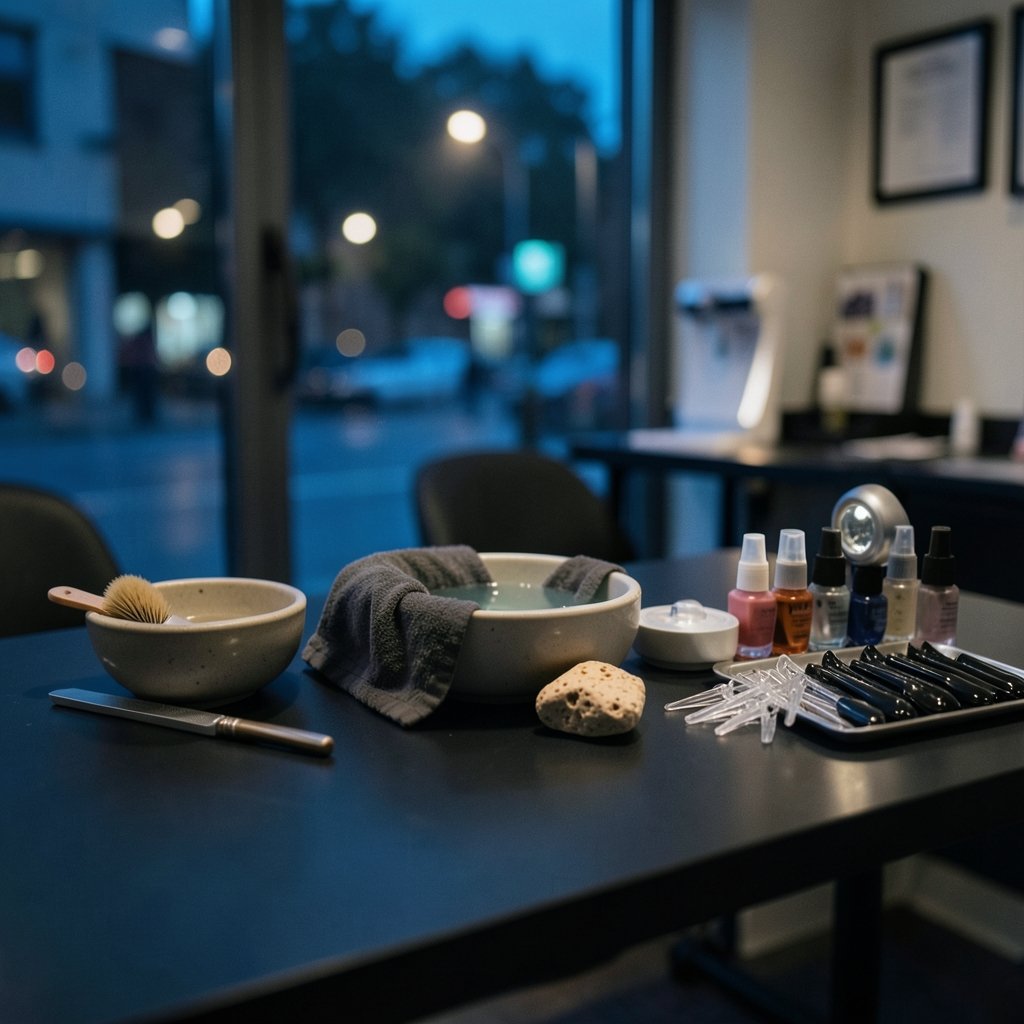
People often use “manicure” as a catch-all, but the services are distinct. Here is a plain comparison.
| Service | What it covers | Typical duration | Best for |
|---|---|---|---|
| Basic manicure | Hands only; shaping, cuticle care, standard polish | 30 to 45 minutes | Short wear time, natural look |
| Gel manicure | Hands; cured polish that lasts longer | 45 to 60 minutes | People who want two to three weeks of wear |
| Pedicure | Feet; soak, exfoliation, shaping, polish | 45 to 60 minutes | Maintenance and comfort |
| Acrylic or hard gel extensions | Added length and structure | 60 to 120 minutes | Length, shape changes, strength |
| Nail art | Decoration on top of any base service | Adds 10 to 40 minutes | Personal expression |
Knowing the difference matters for scheduling and for your budget. It also matters for removal. Gel and acrylic cannot be peeled off safely at home, and picking at them is the most common way people damage their own nails. If you want a style that reads as deliberate without being loud, black nail designs work on short or long shapes and pair well with a simple matte or glossy finish.
How to choose a salon without guessing
Licensing is handled at the state level in the United States, and the requirements for training hours and exams vary widely from one state to another. That means a license on the wall is a baseline, not a guarantee of quality. You still have to look around.
Three things are worth checking on a first visit:
- Ventilation. Nail products release vapors and dust. A salon with visible fans, open windows, or dedicated extraction near the workstations is a better bet than a sealed room that smells strongly of chemicals.
- Tool handling. Look for sealed pouches or a visible disinfection process. Tools should come out of sterile packaging or a disinfection container in front of you.
- The technician’s pace. Someone rushing through cuticle work is more likely to nick skin, which opens the door to infection. Speed is not a virtue here.
Ask questions before you sit down. A salon that answers them calmly is usually a salon that runs a clean operation. One that gets defensive is giving you information too.
The products, the risks, and what the regulators say
This is the section most salon articles skip, and it is the one that matters most for your health.
Nail products can release volatile organic compounds, and the dust from filing is a real occupational concern for the people who work in salons all day. Public health agencies have published guidance on salon ventilation and safer product choices for exactly this reason. For a customer, the practical takeaway is simple: if the air makes your eyes water, that is not a sign of a “strong” salon. It is a sign of poor airflow.
One ingredient deserves specific mention. Methyl methacrylate, or MMA, is a liquid monomer that has been used in artificial nail systems. The FDA has warned against its use because of nail damage and allergic reactions, and several states restrict or ban it. There is no single federal ban, so the rules depend on where you live. If a salon advertises unusually cheap acrylics and the smell is unusually harsh, asking which monomer they use is a fair question.
Formaldehyde is another one. It is permitted at limited levels in cosmetics and must be labeled, so it is worth reading the bottle if you have sensitive skin or a known allergy. And the UV lamps used to cure gel polish emit UVA light. Dermatology research has debated the skin cancer risk from these lamps for years and generally finds the risk low with typical use, but no firm consensus number exists. If you are concerned, sunscreen on the hands before curing is a cheap precaution.
Infections are the other recurring topic. Fungal and bacterial infections have been documented in salon settings, and state boards set sanitation rules for tools and footbaths. The pattern to remember: any break in the skin, any reused tool that was not properly disinfected, and any footbath that is not cleaned between clients are the weak points.
Etiquette, tipping, and the awkward parts
Nobody explains salon etiquette, so here it is plainly.
- Tipping is customary in many markets, and 15 to 20 percent is a common range for good service. Cash is often preferred.
- Bringing your own tools is acceptable in many salons and increasingly common. If you have a sensitivity or a history of infections, it is a reasonable request.
- Speaking up mid-service is not rude. If the shape is wrong or the color is off, say so before the top coat goes on. Fixing it then takes two minutes. Fixing it later takes a whole new appointment.
- Phone use during curing is the classic mistake. Digging into a bag or scrolling with wet nails ruins the finish. Keep hands still and let the lamp do its job.
One more thing worth knowing: many salon workers are misclassified as independent contractors when they function as employees, and labor rules on this differ from state to state. You cannot fix that from the chair, but understanding it explains why some technicians seem to be juggling bookings, cleaning, and payment all at once. A little patience goes a long way.
What to ask for if you want a specific look
Bringing references changes everything. If you are browsing for inspiration before your appointment, nail art ideas will give you concrete shapes to point at rather than vague descriptions. Two styles deserve a note because they are frequently requested and frequently misunderstood.
Milky white looks soft and clean but shows every flaw in the nail surface, so it works best over a smooth base. Ask for a sheer formula and expect two to three thin coats rather than one thick one. If you like that translucent look, milky white nail designs shows how far the style can stretch.
Gel extensions offer more structure than a standard gel polish and less bulk than acrylic in many cases. They are a good middle path for people who want length without a heavy feel. Gel x nail designs is a useful reference for shapes and finishes that suit that system.
And if you prefer to keep things close to your natural nail, natural nail designs focuses on looks that do not require extensions at all. That route is easier on your nails and cheaper to maintain, though it demands more frequent appointments.
Mistakes that cost you money and nail health
A few habits account for most salon regrets. Peeling off gel or acrylic is the worst offender; it takes layers of the natural nail with it and can leave the surface thin for months. Skipping the cuticle oil is second. Third is booking a service right before swimming, moving furniture, or a long trip, because water and pressure are what cause lifting in the first week.
Also, do not treat a salon visit as a one-off errand. Consistency matters. Regular appointments at sensible intervals keep the nail plate healthier than long gaps followed by heavy removal sessions.
Conclusion
A nail salon is not a black box. It is a sequence: consult, prep, apply, finish, maintain. Once you know that sequence, you can ask better questions, spot a poorly run shop, and get results that last. The most valuable habits are unglamorous ones. Bring a photo. Speak up early. Watch how the tools are handled. Keep your hands out of your bag while they dry. And treat the health advice, from ventilation to monomer choice to lamp exposure, as part of the service rather than an afterthought. Do those things and the appointment stops being a gamble and starts being something you actually look forward to.
Frequently asked questions
How long does a nail salon appointment usually take?
A basic manicure runs about 30 to 45 minutes, a gel manicure 45 to 60 minutes, and a pedicure 45 to 60 minutes. Extensions and detailed nail art add time, so a full set with decoration can take two hours. Book accordingly and avoid squeezing a long service into a short window.
Is it safe to get gel polish regularly?
For most people, yes, provided the product is applied and removed correctly. The risk comes from improper removal, especially peeling or picking, which strips layers from the natural nail. Give your nails a break between sets if you notice thinning, and never let anyone scrape product off with a rough tool.
Should I bring my own tools to a salon?
It is not required, but it is a reasonable option if you have sensitive skin, a history of nail infections, or simply prefer it. Many salons accept this without complaint. What matters more is confirming that the salon’s own tools come out of sealed packaging or a proper disinfection process.
What is MMA and why do people worry about it?
MMA stands for methyl methacrylate, a liquid monomer used in some artificial nail systems. The FDA has warned against it because of nail damage and allergic reactions, and several states restrict its use. There is no single nationwide ban in the United States, so the rules depend on your state. Asking which monomer a salon uses is a fair question.
Do UV nail lamps cause skin cancer?
Research on UV nail lamps has been ongoing for years and most findings suggest the risk from typical use is low, but there is no agreed risk figure. If you want to minimize exposure, apply sunscreen to your hands before curing or ask about LED options, which are common in modern salons.
How much should I tip at a nail salon?
Tipping customs vary by region, but 15 to 20 percent is a widely used range for good service, and cash is often preferred. If you received detailed art or an unusually long service, tipping toward the higher end is common practice.









