

What did you eat this morning? Maybe a bowl of cereal eaten standing over the sink, maybe nothing at all, maybe a proper plate of eggs and toast. Whatever it was, someone somewhere has probably told you it was the wrong choice. Breakfast is the most moralized meal of the day. It has been sold as the key to weight loss, the secret to good grades, and the reason your metabolism either works or doesn’t. Most of that advice is shakier than it sounds.
The honest answer to “what is the best breakfast?” is that there is no single winner. Nutrition science describes patterns, not magic meals. But that doesn’t mean anything goes. Some breakfasts genuinely support steady energy and long-term health, and some are closer to dessert with a health halo. Here is what the research actually supports, what it doesn’t, and how to build a morning meal that works for a real, busy human.
Why the “Most Important Meal” Rule Deserves a Second Look
Breakfast cereal companies have spent a century telling you that skipping breakfast is dangerous. The science is more modest. A 2019 systematic review and meta-analysis of randomized controlled trials published in the BMJ found that skipping breakfast probably has little effect on body weight in adults. The trials did not support the popular claim that eating breakfast helps you lose weight.
That finding matters because it undercuts a lot of confident advice. Older observational studies showed that breakfast eaters tended to weigh less. But people who eat breakfast also tend to sleep differently, exercise differently, and smoke less. Once researchers ran actual trials, the weight-loss benefit largely evaporated.
None of this means breakfast is pointless. It means breakfast is not a metabolic switch you must flip. If you are hungry in the morning, eat. If you are not, forcing down a bowl of something you don’t want is not a health strategy. The best breakfast starts with an honest question: what does your body actually need today?
What a Good Breakfast Actually Does

Even without the weight-loss hype, breakfast earns its place for practical reasons. It breaks an overnight fast, which for many people means restoring blood sugar and energy before work or school. Reviews of breakfast and cognition in children suggest modest benefits for attention and school performance, though study quality varies. For adults, the effect is more about avoiding the mid-morning crash than boosting brainpower.
The bigger lever is what breakfast contributes to your whole day. Official dietary guidance, including the Dietary Guidelines for Americans for 2020–2025, focuses on overall eating patterns rich in fruits, vegetables, whole grains, and varied protein, with limited added sugars, saturated fat, and sodium. Breakfast is simply the easiest place to bank some of those foods early. A morning meal built on whole grains, fruit, and protein does more for your diet than one built on refined flour and sugar, regardless of calorie count.
There is also a cultural dimension worth naming. Traditional breakfasts vary enormously, from Japanese rice, fish, and miso soup to Mediterranean bread, olive oil, and tomatoes to a full English plate. No trial ranks cuisines against each other. What travels well across cultures is the pattern: whole or minimally processed staples, some protein, and produce.
The Building Blocks of a Breakfast That Works
Forget superfoods. Think structure. A breakfast that keeps you full and steady for three or four hours usually contains three things: a fiber-rich carbohydrate, a solid protein, and some fat. Get two of the three and you’ll notice the difference by mid-morning.
Fiber: The Underrated Anchor
Fiber slows digestion and blunts the blood sugar spike that follows refined carbs. Oats are the classic example. They contain beta-glucan, a soluble fiber that has an approved health claim in Europe: 3 grams of oat beta-glucan per day contributes to maintenance of normal blood cholesterol. That’s roughly a bowl of porridge, not a sprinkle.
Other strong fiber sources include whole-grain bread, berries, and seeds. The practical test is simple. If your breakfast is white toast with jam, you have fiber’s weaker cousin. Swap in whole-grain bread, add fruit, and the meal changes character.
Protein: The Satiety Engine
Protein is what separates a breakfast that holds you until lunch from one that has you raiding the snack drawer at ten. Eggs, Greek yogurt, cottage cheese, beans, tofu, and fish all work. The amount matters more than the source. A single egg on its own is modest; two eggs plus yogurt or beans is a different meal.
Eggs deserve a note because they spent decades unfairly demonized. US dietary guidance shifted in 2015 when the advisory committee dropped a specific numerical limit on dietary cholesterol, citing insufficient evidence for a cap, while still advising limits on saturated fat. For most people, the cholesterol in eggs is not the problem it was once made out to be. The butter you fry them in is a bigger conversation.
Fat: Quality Over Quantity
Fat makes breakfast satisfying and carries flavor. The question is which fat. Olive oil, nuts, seeds, nut butters, and avocado are the reliable choices. The PREDIMED trial, republished with corrections in 2018, found that a Mediterranean diet supplemented with olive oil or nuts reduced major cardiovascular events compared with a control diet. It did not isolate breakfast, but it supports the general case for plant fats over processed meat and heavy cream.
The Breakfast Cereal Problem
Here is where the health halo gets thick. Many breakfast cereals are marketed with words like “whole grain” and “fortified” while carrying a sugar load closer to a dessert. In the UK, the Scientific Advisory Committee on Nutrition recommended in 2015 that free sugars be limited to 5% of daily energy. Many popular cereals exceed that in a single serving before you add milk or fruit.
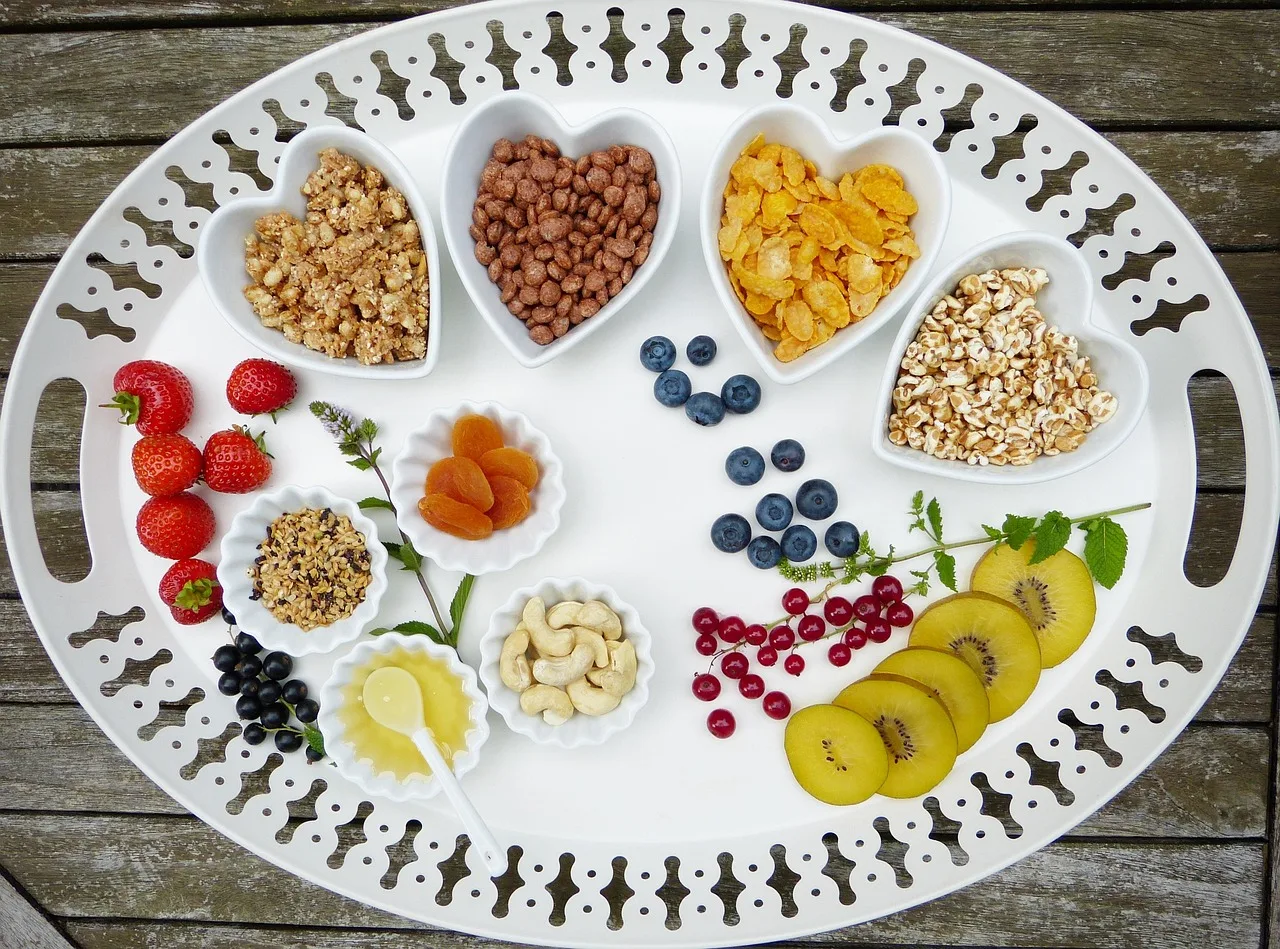
The fix isn’t to ban cereal. It’s to read the label like an adult. Look for cereals with more fiber than sugar per serving, or mix a sugary one half-and-half with a plain one. Add nuts and berries so the bowl earns its keep. A bowl of plain oats with fruit and yogurt beats a “balanced” cereal box almost every time.
This is also where the marketing machine connects to bigger issues. The same industry pressures that push sugary cereals also drive cheap, fast food culture more broadly, and the fast fashion controversies around disposable clothing follow a strikingly similar playbook: sell speed and convenience, hide the real cost. Breakfast is one small place where slowing down pays off.
Breakfast Around the World: Lessons Without Rankings
It would be easy to crown one cuisine the winner. Resist that. Comparative trials don’t exist, and traditional diets evolved around local food, climate, and work. What you can do is borrow the strongest habits.
| Tradition | Typical Elements | What to Borrow |
|---|---|---|
| Japanese | Rice, grilled fish, miso soup, pickles | Protein and fermented foods at breakfast |
| Mediterranean | Bread, olive oil, tomatoes, cheese, fruit | Plant fats and produce in the morning |
| Nordic | Rye bread, oats, berries, fish | High-fiber grains and berries |
| Full English | Eggs, bacon, beans, toast, tomato | Eggs and beans; skip the daily sausage |
Notice the pattern. The strongest common thread is whole grains, produce, and protein. The weakest is processed meat eaten daily. A full English once a week is a pleasure. A full English every morning is a cardiovascular gamble.
Practical Tips That Actually Work
Advice is cheap. Here is what tends to survive contact with a real morning.
- Decide the night before. The single biggest predictor of a bad breakfast is a rushed one. Set out oats, soak them, or boil eggs in advance. Ten minutes of prep the night before beats thirty minutes of regret.
- Aim for protein first. Build the meal around eggs, yogurt, beans, or tofu, then add carbs. This one habit changes how full you feel by lunch.
- Keep a default. Have one breakfast you can make half-asleep. Repetition is not boring; it’s reliable. Save variety for weekends.
- Read one label. Check the sugar and fiber numbers on your usual cereal or granola. Granola in particular hides a lot of sugar behind its healthy image.
- Don’t force it. If you genuinely aren’t hungry at 7 a.m., a later breakfast or a protein-rich snack mid-morning is fine. The “most important meal” rule is not a law.
Common mistakes are worth naming too. People swap a sugary cereal for a “healthy” granola with the same sugar content. They drink their breakfast as a smoothie that is mostly fruit juice and banana. They add “just a little” honey, syrup, or agave and triple the sugar. They skip breakfast, then arrive at lunch ravenous and overeat. None of these are moral failures. They are just easy traps, and knowing them is half the fix.
The Hair and Skin Angle Nobody Mentions
Breakfast advice usually stops at weight and energy. But nutrition shows up in appearance too, and not in the way supplement ads promise. Protein and iron support hair growth, and deficiencies can contribute to shedding. That matters especially for people with tightly coiled hair types, where breakage and thinning are common concerns and diet is one factor among many. If you are building a breakfast around eggs, beans, or fish, you are also feeding your hair. It’s a nice side effect, and a more honest framing than any miracle product. Readers dealing with texture and breakage often find context in resources on 4c hair, but the plate matters as much as the shelf.
When Breakfast Is a Ritual, Not a Rule
There is a quieter argument for breakfast that has nothing to do with biomarkers. For many people, the morning meal is a ritual: the first ten minutes of the day that belong to them. Coffee, a warm bowl, a few minutes of quiet before the noise starts. That has value even if no trial measures it.
This is where the slow-living ethos that shows up in fashion and design applies to food. Brands built on considered, durable choices, the kind of quiet luxury associated with the row, sell the idea that fewer, better things beat more, cheaper ones. Breakfast works the same way. A simple, well-made meal eaten without a screen beats a fancy one inhaled in the car. The best breakfast is partly a question of attention.
How to Choose Your Own Best Breakfast
The honest conclusion is that the best breakfast is the one you will actually eat, that contains real food, and that leaves you steady until lunch. That rules out a lot of marketed products and rules in a lot of ordinary ones.
Start with structure: fiber, protein, fat. Add produce where you can. Keep added sugar low without becoming joyless about it. Read labels on anything in a box. And treat the “most important meal” slogan with the skepticism it deserves. If you skip breakfast and feel fine, that is a legitimate choice supported by trial evidence. If you eat it and feel better, that is equally valid.
What the research does not support is the idea that one perfect breakfast exists, waiting to be discovered by the right influencer. It doesn’t. There are better and worse patterns, and within them, a lot of room for personal taste, culture, budget, and time. The person who eats oats with yogurt and berries four days a week and eggs on toast the other three is not missing a secret. They have simply found a pattern that works, and they repeat it. That is the whole trick.
Frequently Asked Questions
Is breakfast really the most important meal of the day?
No, not in the way the slogan implies. Trial evidence suggests skipping breakfast has little effect on body weight in adults, so it is not a metabolic necessity. Breakfast can be a useful, enjoyable meal, but it does not outrank lunch or dinner in importance. What matters is your overall eating pattern across the day.
What should a healthy breakfast include?
Aim for three components: a fiber-rich carbohydrate such as oats or whole-grain bread, a solid protein such as eggs, yogurt, beans, or tofu, and some plant fat such as nuts, seeds, or olive oil. Add fruit or vegetables where you can. This combination tends to keep energy steady and hunger in check until lunch.
Is cereal a bad breakfast choice?
Not automatically, but many cereals are high in added sugar and low in fiber. Check the label and look for options with more fiber than sugar per serving. Mixing a sweet cereal with a plain one and adding nuts or berries makes the bowl substantially better without giving it up entirely.
Do eggs raise cholesterol?
For most people, dietary cholesterol from eggs has a smaller effect on blood cholesterol than once believed. US dietary guidance dropped its specific numerical cholesterol limit in 2015 while still advising limits on saturated fat. The bigger concern with eggs is usually how they are cooked and what accompanies them, not the eggs themselves.
Can skipping breakfast help with weight loss?
It might, for some people, simply because it removes a meal’s worth of calories. But the evidence does not show that skipping breakfast is a reliable weight-loss strategy. The 2019 BMJ review of randomized trials found little effect on body weight either way. The better question is whether skipping helps you eat well overall.
What is a quick healthy breakfast for busy mornings?
Overnight oats made with plain yogurt, milk, and fruit take minutes the night before. Boiled eggs prepared in advance pair well with whole-grain toast. Greek yogurt with nuts and berries needs no cooking at all. The key is having one default option you can assemble without thinking, so a rushed morning doesn’t default to nothing or something sugary.
Conclusion
The search for the best breakfast ends not with a single perfect plate but with a pattern you can live with. Fiber, protein, and plant fat, built around real food, eaten with a little attention. Skip the guilt about skipping breakfast, skip the health halos on sugary boxes, and skip the idea that one cuisine has cracked the code. The best breakfast is the one that leaves you steady, satisfied, and not thinking about food again until lunch. That is a low bar, and most mornings, clearing it is enough.









