


Can a supermodel really throw a proper jab? In Adriana Lima’s case, the answer appears to be yes. The Brazilian model, born June 12, 1981, in Salvador, Bahia, became one of the most recognizable faces in fashion as a Victoria’s Secret Angel from the late 1990s until 2018. But somewhere between runway walks and campaign shoots, she picked up boxing gloves. Search her name alongside the word “boxing” and you will find workout clips, fitness interviews, and headlines that sometimes blur the line between a hard training habit and an actual fight career. That distinction matters, and it is where most casual readers get confused.
Is Adriana Lima a Boxer or Just a Boxer in the Gym?
This is the question that trips people up, so let’s settle it early. Public reporting describes Lima’s boxing as fitness and self-defense training, not as a competitive career. There is no known professional boxing license, promoter record, or commission bout listing attached to her name. She is not a licensed professional or amateur competitor, and no sanctioned fight record for her has surfaced in widely available databases.
That does not make the training less real. It just means the word “boxing” is doing two different jobs in the coverage. When a magazine writes that Lima “boxes,” it usually means she hits pads, works a heavy bag, and drills footwork as part of her workout routine. When a boxing database lists a fighter, it means a sanctioned bout happened under a commission’s rules. Those are very different claims, and only one of them applies here.
The practical takeaway for readers: treat “boxing workouts” and “boxing career” as separate categories. Most of what circulates about Lima falls firmly in the first.
How the Boxing Training Entered the Picture
Lima’s boxing training became widely reported around 2019 to 2021, a window that lines up with her return to modeling after pregnancies and with her broader post-2018 career pivot. After she left Victoria’s Secret, her public fitness content expanded, and boxing featured more prominently in it.
Exact first-report dates vary by outlet, so it is safer to describe the trend than to pin a single start date. What is clear is the pattern: entertainment and fitness media began framing her workouts around boxing drills, and that framing stuck.
There is also a useful fashion-world parallel here. When brands lean into athletic or high-performance aesthetics, the fitness conversation tends to follow. The same cultural moment that pushed boxing-inspired styling into mainstream wardrobes also made “she trains like an athlete” a marketable storyline for models. Lima’s boxing coverage sits right at that intersection of fitness, fashion, and image.
Why the Post-2018 Timing Makes Sense
Leaving a long-running contract role creates room for reinvention. For a model whose public identity was tied to one brand for nearly two decades, fitness content offers a way to reset the narrative on her own terms. Boxing is visually striking, easy to film, and reads as disciplined rather than decorative. It is, in short, ideal material for a career pivot.
What Her Boxing Workouts Actually Look Like
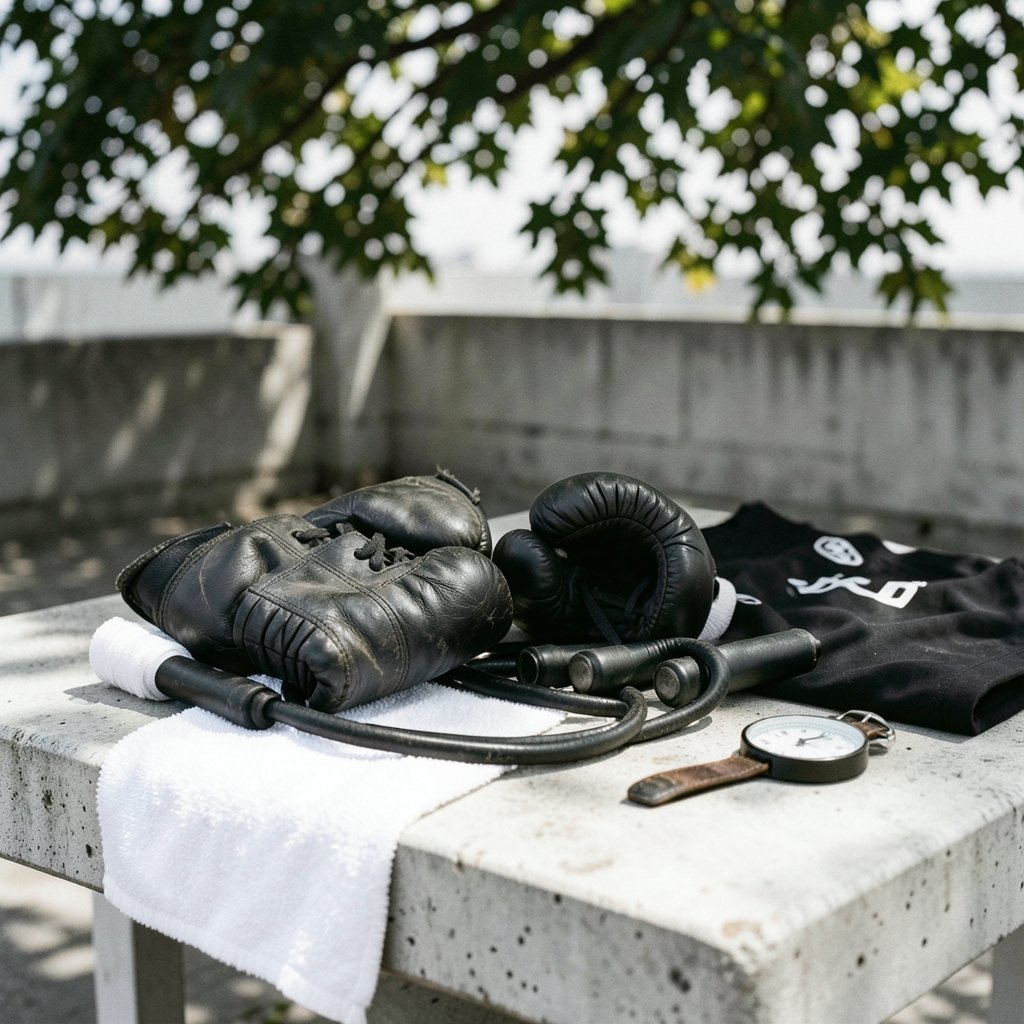
Coverage of Lima’s training tends to emphasize the staples of boxer-style conditioning rather than sparring footage. Based on how her sessions are described in fitness reporting, the work is built around a familiar set of components.
| Component | What It Involves | Why It Appears in Her Routine |
|---|---|---|
| Pad work | Hitting focus mitts with a coach calling combinations | Builds timing, coordination, and punch accuracy |
| Heavy bag rounds | Repeated punching intervals, usually timed | Develops power endurance and shoulder stamina |
| Footwork drills | Ladder work, pivots, and stance movement | Improves balance and agility |
| Jump rope | Continuous skipping intervals | Warms up calves and builds cardio |
| Core and strength work | Bodyweight and weighted exercises | Supports rotation power and posture |
| Conditioning | Interval cardio between boxing rounds | Raises overall work capacity |
Notice what is missing from that table: sparring. Fitness-oriented boxing programs often skip live sparring entirely, and that is a sensible choice for anyone training for health rather than competition. Sparring carries concussion risk, and it is not necessary to get the cardiovascular and coordination benefits of boxing.
The Common Mistake Beginners Make
People watch a celebrity boxing clip and assume the routine is the secret. It rarely is. The real structure behind almost any credible boxing fitness program is unglamorous: consistent weekly sessions, a coach correcting form, and progressive overload on the conditioning side. Beginners typically make three errors when they try to copy a celebrity routine.
- They start with too much volume. Five bag rounds on day one becomes a sore shoulder on day two and a skipped week on day three.
- They punch with arms only. Power comes from hips and legs, and arm-dominant punching is how wrists and elbows get hurt.
- They skip the warm-up. Jump rope and shadowboxing are not filler; they prepare the shoulders and ankles for the load ahead.
What actually works is duller and more effective: two to three boxing sessions a week, a coach who watches your form, and gradual increases in round length.
Why Boxing Appeals to Models and Performers
Boxing has a long history as a conditioning tool for people whose jobs depend on their bodies. It builds shoulder endurance, improves posture, and trains the kind of full-body coordination that photographs well and performs well on camera. It also requires zero special talent beyond showing up and repeating drills.
There is a psychological angle too. Boxing training is loud, sweaty, and unambiguous. For someone whose professional life involves being styled, positioned, and directed, a session where the only feedback is whether the combination landed cleanly can feel like a release. Fitness outlets have leaned into that framing for years, and it is part of why boxing workouts spread so widely among models and actors.
The aesthetic crossover runs both directions. Just as beauty audiences borrow from combat sports, hair and grooming conversations borrow from athletic practicality. Anyone who has tried to keep textured hair intact through sweaty training knows the struggle, and the same 4c hair care questions that come up in everyday routines apply double during high-sweat workouts.
The Namesake Problem: Don’t Confuse the Records
Here is a caution worth stating plainly. “Adriana Lima” is not a unique name in the Portuguese-speaking world, and Brazilian combat sports have produced plenty of athletes with similar names. Before accepting any fight record as hers, check that the record belongs to the model and not to a namesake.
The safest method is to search a boxing record database by name and then verify the identifying details: birth date, hometown, and weight class. If a listed fighter’s birth year is not 1981 or the hometown is not Salvador, it is a different person. This is exactly the kind of verification that separates a reliable article from a copied one.
Why a “No Record” Result Still Provides Information
Some readers hear “no sanctioned bout record” and assume the research was lazy. In boxing, the absence of a record is actually a specific, checkable fact. Sanctioned bouts are regulated, and records are maintained by commissions and compiled in searchable databases. A fighter without an entry in those systems has not competed under those systems.
That is why precise language matters. Saying Lima “trains in boxing” is accurate. Saying she “is a boxer” implies a competitive identity that the record does not support. Saying she “fought professionally” would be false. The gap between those three sentences is where misinformation lives.
How to Read Headlines About Celebrity Boxing
Headlines compress. “Adriana Lima’s Boxing Transformation” could describe a fitness routine, a photo shoot, or a movie role. When you encounter a claim, ask three questions:
- Does the article name a specific event, date, and opponent?
- Does it cite a commission, promoter, or record database?
- Does it use the word “training” or “workout” rather than “fight”?
If the answers are no, no, and “workout,” you are reading fitness coverage, not sports reporting. That is fine. It is just a different genre.
What Changed After 2018, and What Didn’t
The Victoria’s Secret era gave Lima a global platform and a tightly managed public image. The post-2018 period loosened that image considerably. Fitness content, including boxing, became part of how she presented herself publicly. Coverage of her training increased alongside that shift.
What did not change is the fundamental nature of the activity. Boxing remained a training method, not a competition pathway. No exhibition bout, charity fight, or sanctioned match has been credibly reported. If that changes, the story would move from the fitness pages to the sports pages, and the record databases would reflect it.
For now, the honest summary is that Lima boxes the way many dedicated fitness enthusiasts box: regularly, with purpose, and without any intention of stepping into a ring for a scored bout.
Practical Lessons From the Lima Boxing Story
If there is something to take from all this, it is a set of realistic expectations about what boxing training delivers and what it does not.
Boxing training is accessible. You do not need a competitive license to get the benefits. A pair of gloves, wraps, and a gym with bags will do.
Consistency beats intensity. The people who look transformed by boxing are the ones who kept showing up for months, not the ones who did one brutal session.
Form comes first. Wrist injuries from poor punching mechanics are common and preventable. A few sessions with a coach to learn stance, guard, and rotation will save months of frustration.
Sparring is optional. For fitness goals, it is not required. Anyone who wants to spar should do so under supervision with proper protective equipment and medical awareness.
Verify before you share. Celebrity fitness content spreads fast and mutates faster. Checking whether a claim describes training or competition takes thirty seconds and prevents a lot of nonsense.
The seasonal shopping frenzy around fitness gear follows a similar pattern to other retail moments. Just as people plan purchases around something like the aritzia boxing day sale for wardrobe refreshes, fitness gear buying spikes when a celebrity routine goes viral. The difference between a good purchase and a wasted one is usually whether you checked what you actually needed first.
Conclusion
Adriana Lima’s relationship with boxing is best understood as a serious fitness practice rather than a fighting career. The Brazilian model, a Victoria’s Secret Angel from the late 1990s through 2018, has been widely reported to train in boxing as part of her workout routine, particularly in the years after she left the brand. That training involves the familiar building blocks of boxer-style conditioning: pad work, bag rounds, footwork, jump rope, and strength work. What it does not involve, based on everything publicly available, is sanctioned competition.
That distinction is not a technicality. It is the difference between a story about discipline and a story about a sport. Lima’s boxing story belongs to the first category, and it is a genuinely useful one. It shows how a demanding, skill-based workout can fit into a life that was never built around athletics. It also shows how easily fitness coverage can drift into fight coverage when nobody checks the record.
For readers inspired to try boxing themselves, the path is straightforward: find a coach, learn the basics, keep the sessions regular, and skip the sparring unless you have a specific reason to do it. For readers who just wanted to know whether the model actually fights, the answer is clear. She trains. She does not compete. And in a media landscape that loves to blur that line, knowing the difference is worth more than any headline.
FAQ
Does Adriana Lima actually box competitively?
No. Public reporting describes her boxing as fitness and self-defense training. There is no known professional license, promoter record, or sanctioned bout listing for her, and no exhibition or charity fight has been credibly reported.
When did Adriana Lima start boxing?
Her boxing training became widely reported around 2019 to 2021, a period that overlaps with her return to modeling after pregnancies and her broader career shift after leaving Victoria’s Secret in 2018. Exact first-report dates vary by outlet.
Does she have a professional fight record?
No sanctioned fight record for the model has surfaced in widely available boxing databases. Absence of a record is itself a checkable fact, since sanctioned bouts are regulated and compiled in searchable systems.
What does her boxing workout include?
Coverage of her training emphasizes standard boxer-style conditioning: pad work with a coach, heavy bag rounds, footwork drills, jump rope, core and strength work, and interval cardio. Sparring is not part of the reported routine.
Could a fight record under her name belong to someone else?
Possibly. “Adriana Lima” is not a unique name, and Brazilian combat sports have produced athletes with similar names. Verify any record by checking birth date, hometown, and weight class before attributing it to the model.
Is boxing training safe for beginners who want to copy her routine?
Generally yes, with precautions. Beginners should start with low volume, learn proper punching mechanics from a coach, warm up thoroughly, and avoid sparring unless supervised. Wrist and shoulder injuries from poor form and sudden volume jumps are the most common setbacks.









