

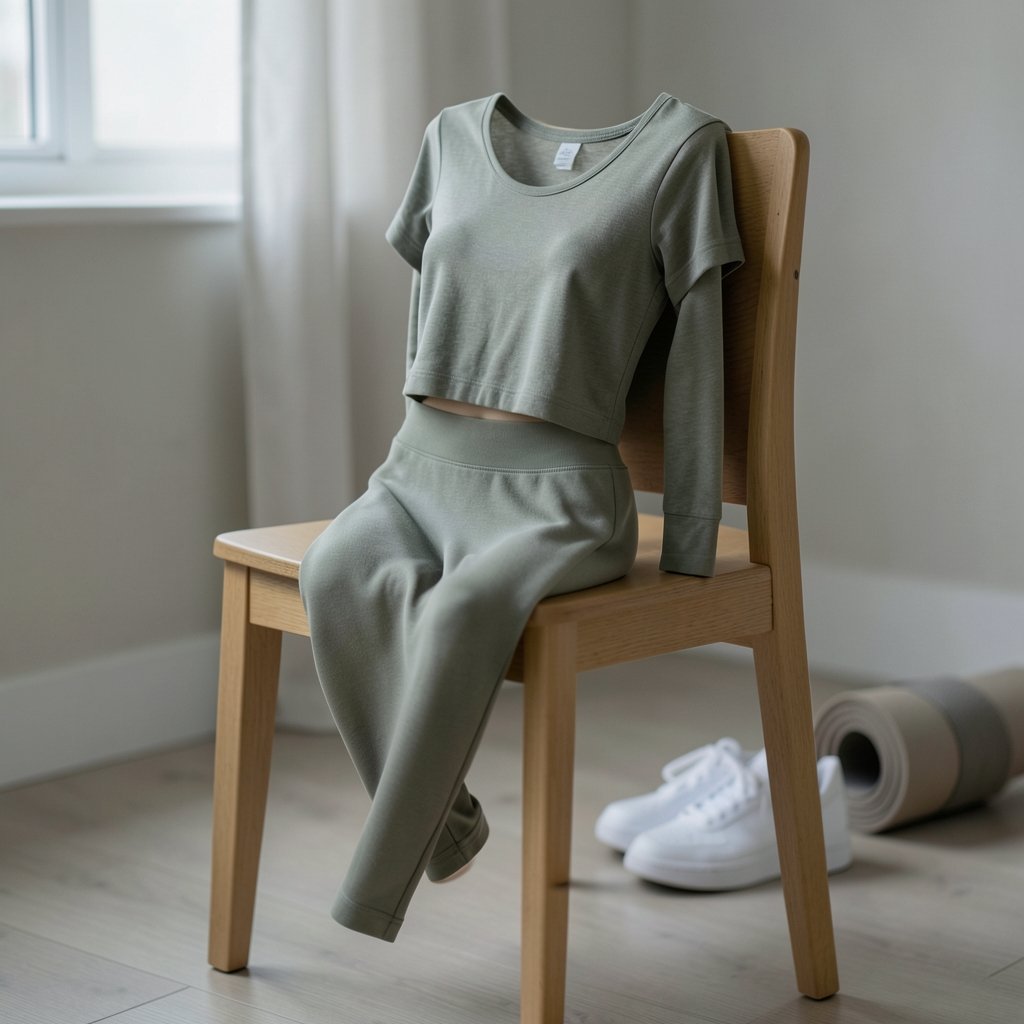
What makes a matching workout set feel worth the money when a plain leggings-and-tank combo costs half as much? For a growing number of shoppers, the answer comes down to fit, fabric, and the strange confidence of walking into a studio looking put-together without thinking about it. Alo co-ords sit right at the center of that question. They are coordinated two-piece outfits from the Los Angeles activewear brand Alo Yoga, sold as a top-and-bottom pairing designed to be worn together. The appeal is obvious. The practical details are less so, and that is where most buying decisions actually get made.
What “Co-Ord” Actually Means
Start with the word itself. Co-ord is short for “coordinated set,” a piece of retail shorthand common in British and Commonwealth fashion vocabulary. A co-ord is not a single garment. It is two pieces, usually a top and a bottom, designed as a matched pair. The term covers everything from linen summer sets to knit skirt-and-cardigan combos, and in activewear it usually means a sports bra or crop top paired with leggings, biker shorts, or a matching skirt.
The spelling matters for search behavior. Shoppers type “co-ord,” “coord,” “co ord,” and “co-ords” interchangeably, and retailers use all of them. If someone is hunting for Alo co-ords, they are almost certainly looking for a matched Alo top-and-bottom set rather than a loose piece to mix into an existing wardrobe. That distinction shapes everything from price expectations to how the pieces get worn.
Product naming in activewear shifts constantly. Collections get renamed, seasonal colorways rotate, and a set sold as a pair in one region may be sold as separates in another. Anyone treating a specific co-ord name as permanent should check the current catalog rather than trust an old screenshot or a resale listing.
Why Matching Sets Became a Wardrobe Staple

The rise of the co-ord tracks a broader shift in how people dress. Activewear stopped being something worn only to the gym and became everyday clothing for errands, travel, coffee runs, and remote work. Once leggings became acceptable outside the studio, the logical next step was a top that matched them exactly.
There is also a practical argument. A co-ord removes a decision. The color is settled, the proportions are designed to work together, and the fabric is consistent across both pieces, which matters more than people expect. A cheap top over premium leggings can look mismatched because the sheen, weight, and stretch behave differently. A co-ord eliminates that friction.
The numbers behind the category are hard to pin down precisely because activewear gets bundled into broader apparel reporting, but the direction is not in dispute. Athleisure has grown steadily for well over a decade, and matching sets have moved from a niche styling trick to a core merchandising strategy across nearly every major brand. Alo, founded in 2007, built much of its identity on exactly this idea: studio-to-street pieces that look intentional rather than purely functional.
What an Alo Co-Ord Typically Includes
Most Alo co-ords follow a few recognizable formulas. The exact pieces change by season, but the structure stays consistent.
| Set Type | Typical Top | Typical Bottom | Best For |
|---|---|---|---|
| Studio set | Sports bra or cropped tank | High-rise leggings | Yoga, Pilates, barre |
| Warm-weather set | Cropped tee or bra | Biker shorts | Walking, travel, summer errands |
| Layered set | Long-sleeve crop or fitted top | Leggings or flared pants | Cooler weather, streetwear looks |
| Skirt set | Fitted top | Tennis or golf skirt | Court sports, casual summer wear |
The common thread is proportion. Alo tends to design tops that hit at or above the waistband so the set reads as one continuous line rather than two separate pieces fighting each other. That is a design choice worth noticing, because it is one of the main reasons a co-ord looks cohesive in photos and in person.
Fabric and Fit Notes
Alo’s core fabrics lean toward compression-forward blends with a brushed or buttery hand feel, plus lighter airy knits for warm-weather pieces. Fit runs toward high-rise bottoms and cropped tops, which flatters some body types and frustrates others. The honest advice here is to treat sizing as non-transferable between styles. A small in one legging style is not automatically a small in another, and the same goes for tops. Reading the size guide per product, not per brand, is the single most useful habit a buyer can build.
How to Choose a Co-Ord That Earns Its Place
Most co-ord purchases that end in regret share the same root cause: the buyer chose the set for how it looked on someone else. A few practical rules cut that risk sharply.
- Match the set to a real activity. If the plan is hot yoga, a heavyweight compression set will feel wrong within ten minutes. If the plan is school pickup and coffee, a delicate strappy bra under a thin top may not survive the day.
- Check the rise against your tops. A high-rise legging with a longline bra creates a gap of exposed midriff that some people love and others hate. Decide before buying, not after.
- Buy the bottom first if you are unsure. Bottoms carry more fit risk than tops. If the leggings work, adding the matching top later is easy and often cheaper than returning a full set.
- Consider color practicality. Light colors show sweat and wear faster. Neutral tones mix with more of an existing wardrobe if the set ever gets split up.
- Read reviews for the specific piece, not the brand. Fit complaints cluster by style, not by company.
Common Mistakes Buyers Make
The most frequent error is assuming a co-ord must be worn together forever. In practice, the value of a matched set comes from the option to wear it as a unit or split it into two versatile pieces. A cropped bra that only works with one specific legging is a weaker purchase than one that layers under an open shirt or pairs with a different bottom.
The second mistake is ignoring care instructions. Compression fabrics degrade with heat, and a set that pills or loses shape after a few washes stops looking coordinated no matter how well it fit on day one. Cold washing and air drying extend the life of almost any activewear set dramatically.
The third mistake is paying full price out of urgency. Activewear runs on seasonal color rotation, and last-season colorways routinely drop in price. Patience is genuinely rewarded in this category.
Co-Ords in the Wider World of Word Obsession
There is something quietly funny about how much energy people pour into short strings of letters. Fashion shorthand like “co-ord” is a tiny linguistic invention that now shapes search behavior, retail categories, and product pages across the world. Language does that constantly, compressing ideas into compact labels that carry enormous practical weight. The same instinct shows up in the way people count and catalog words themselves, a fascination explored in this look at how many words the English language actually holds and the honest answer behind the numbers.
That appetite for small, precise units of meaning runs through everything from spelling lessons to prayer. Teachers lean on simple three-letter patterns to build early reading confidence, a method explained in this guide to CVC words and how three-letter words teach children to read. Adults do the same thing with memorized text, holding onto familiar phrasing for comfort and continuity, which is part of why the lyrics to Rudolph the Red-Nosed Reindeer have endured for generations. Even records get built out of small things. A mountain kingdom that sells water to its neighbors turned an unlikely resource into a national distinction, as this account of Lesotho shows. Words, sets, and small coordinated units all punch above their weight.
What Actually Works in Practice
Strip away the marketing and a few truths hold up across almost every co-ord purchase.
Fabric consistency is the real product. The reason a matched set looks better than two separates is that the material behaves identically across both pieces. When shopping, feel both pieces if possible, or read the fabric composition for each. If the top is a different blend than the bottom, the “set” is really just a color match.
Fit beats trend every time. A co-ord in a silhouette that suits your body and routine will get worn dozens of times. A trend-forward set that requires constant adjustment will sit in a drawer. This is not a moral failing. It is just how clothing works.
Versatility multiplies value. The best co-ords split cleanly. The top works with jeans, the bottom works with an old tee, and the pair works together. Sets that only function as a unit are a harder sell at any price point.
Care determines lifespan. A set cared for properly can last years. A set washed hot and tumble dried can lose its shape in months. The math on cost per wear shifts dramatically based on this single habit.
For anyone who likes precision and record-keeping, the mindset is familiar. Detail-oriented people track everything from calibration data, as this breakdown of what an Axicon verifier calibration sheet actually records shows, to the exact wording of a prayer and what it means when you pray it. Activewear buyers do a smaller version of the same thing: they track what fit, what lasted, and what got returned.
Price, Value, and the Honest Trade-Off
Alo sits in the premium tier of activewear, which means a full co-ord can represent a meaningful spend. Whether that is justified depends entirely on use. A set worn three times a week for a year delivers a very different cost per wear than one worn twice.
The balanced view is this: premium activewear earns its price through fabric quality, construction, and fit consistency, not through logos. Buyers who care about those things and wear the pieces hard will usually feel the value. Buyers who want a single trendy outfit for one season have cheaper routes that work fine.
Resale is part of the equation too. Premium activewear holds resale value better than fast-fashion equivalents, which softens the effective cost if a piece does not work out. That is a real advantage, though it should never be the primary reason for a purchase.
Conclusion
Alo co-ords are not complicated. They are matched activewear sets built on a simple idea: two pieces designed together look and feel better than two pieces chosen separately. The term itself is just retail shorthand, but the logic behind it is sound. Consistent fabric, coordinated proportion, and the freedom to wear the set as a unit or split it apart make a well-chosen co-ord one of the more useful things in a modern wardrobe.
The practical path is straightforward. Match the set to a real routine, check fit per product rather than per brand, prioritize fabric consistency, and care for the pieces properly. Do those things and the co-ord earns its place. Skip them and even an expensive set becomes drawer clutter. The clothing does not decide. The buyer does.
Frequently Asked Questions
What does “alo co ords” mean?
It refers to coordinated two-piece sets from the activewear brand Alo Yoga, typically a matching top and bottom such as a sports bra with leggings or biker shorts. “Co-ord” is short for coordinated set, a term widely used in British and Commonwealth fashion retail.
Are Alo co-ords sold as sets or as separates?
It varies by style and region. Some pairings are merchandised together as a set, while others are sold as individual pieces that happen to match. Checking the product listing carefully is the safest approach, since a color match does not always mean a bundled price.
Do Alo co-ords run true to size?
Sizing is generally consistent within a single style but not necessarily across styles. A small in one legging fit may differ from a small in another. Reading the size guide and reviews for the specific product, rather than trusting brand-wide sizing, is the most reliable method.
Can you wear co-ord pieces separately?
Yes, and most buyers should. The top usually works with jeans or under an open shirt, and the bottom pairs with existing tees and tanks. Sets that split cleanly deliver far more value than ones that only function as a matched pair.
How should you wash activewear co-ords?
Cold water, gentle cycle, and air drying preserve compression fabrics best. Heat breaks down stretch fibers and causes pilling. Turning pieces inside out and avoiding fabric softener also helps maintain the hand feel that makes a set look coordinated in the first place.
Are matching activewear sets worth the price?
It depends on wear frequency. Premium sets earn their cost through fabric quality, construction, and fit consistency when worn regularly. For occasional or trend-driven use, cheaper alternatives can work fine. Calculating cost per wear is the clearest way to decide.









