


What do you get when a company famous for fast zero-turn mowers decides to build a tractor? That question drives the Bad Boy tractors story, and the answer says a lot about how the compact utility market has changed. Bad Boy Mowers built its reputation on heavy fabricated decks and mowers that shrug off rough pasture. When it added tractors to the lineup, it carried that same “build it thick” philosophy into a different machine class. The result is a lineup that appeals to acreage owners who want simple, stout equipment, but it is not the right fit for everyone. Here is a grounded look at where these tractors come from, what they are built for, and the practical details that matter before money changes hands.
From Mower Maker to Tractor Builder
Bad Boy Mowers started in Batesville, Arkansas, and grew by selling direct and through dealers with a reputation for rugged, no-frills mowers. The company’s identity rests on welded steel, serviceable parts, and machines that hold up under commercial abuse. Moving into tractors was a natural brand extension rather than a reinvention. The tractors target the same customer: someone with ten to fifty acres, a long gravel drive, fence lines to maintain, and no interest in paying for a badge.
That positioning matters. These are not row-crop machines or high-horsepower field tractors. They are compact utility tractors aimed at property maintenance, loader work, mowing, and light grading. Buyers cross-shopping them usually also look at established compact tractor brands, and the comparison often comes down to dealer proximity and parts availability rather than raw specifications.
What Actually Sets These Tractors Apart
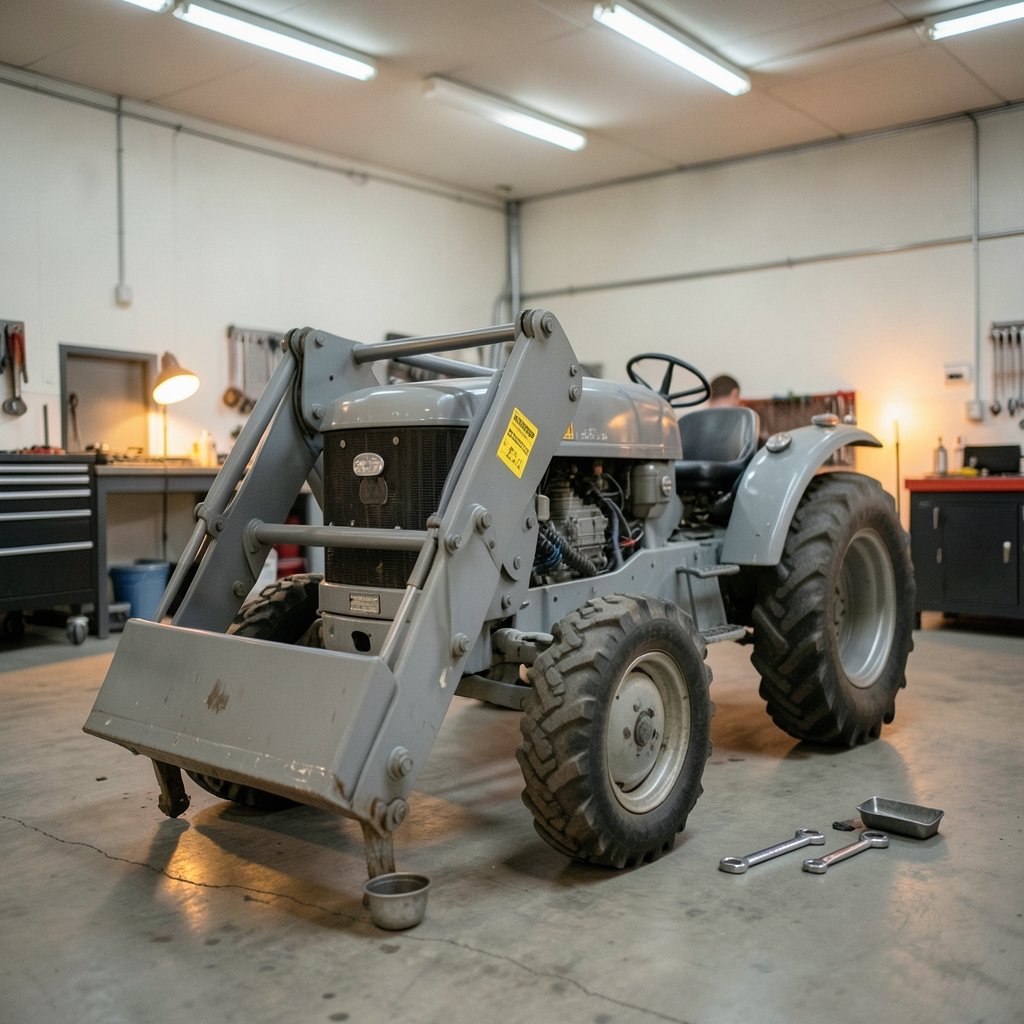
Three design choices show up again and again in owner discussions and dealer walkarounds.
Fabricated rather than stamped components. The company’s mower heritage shows in its preference for welded steel over lighter formed metal. On a tractor, that translates to decks, loader arms, and frames that feel overbuilt for the class.
Straightforward mechanical layouts. Fewer electronic layers mean fewer failure points and easier field diagnosis. For an owner doing their own maintenance, that is a genuine advantage.
Loader-first thinking. Many buyers configure a tractor with a front-end loader as the primary tool, with mowing and grading as secondary jobs. The lineup reflects that priority.
| Priority | What to Check | Why It Matters |
|---|---|---|
| Loader work | Lift capacity, breakout force, joystick feel | Determines whether the tractor handles gravel, manure, and pallets |
| Mowing | Deck width, deck steel gauge, cut height range | Affects finish quality and time on task |
| Property size | PTO horsepower, weight, tire type | Prevents buying too little or too much machine |
| Service access | Filter location, dealer distance, parts network | Drives long-term cost and downtime |
| Attachments | Category of three-point hitch, hydraulic outlets | Limits what implements you can run later |
Matching Machine to Property and Task
The most common mistake with any compact tractor, including these, is buying by horsepower alone. Horsepower tells you how fast a PTO-driven implement spins, not how much weight the loader can safely lift or how stable the machine feels on a slope. A better approach is to start from the job list.
If the primary work is moving material, loader capacity and hydraulic flow deserve more attention than engine output. If the primary work is mowing pasture or roadside, deck construction and cut quality matter more. If the primary work is grading a gravel drive, weight, tire choice, and box blade compatibility become the deciding factors.
Acreage is a useful rough guide, but terrain and soil type matter just as much. Ten flat acres of lawn is a different job from ten acres of clay hillside with drainage problems. Buyers on slopes should pay close attention to track width, tire ballast options, and the availability of a mid-mount mower versus a rear finish mower.
The Practical Side: Maintenance and Ownership
Compact tractors live or die by maintenance discipline. A few habits separate owners who get fifteen years out of a machine from those who fight breakdowns.
- Check the loader mounting hardware regularly. Vibration loosens bolts on any brand. A torque wrench and a monthly walkaround catch problems early.
- Keep the radiator and hydraulic coolers clean. Chaff and dust from mowing clog fins fast, and overheating is one of the most common causes of premature hydraulic wear.
- Service the transmission and hydraulic fluid on schedule, not on vibes. Fluid and filter changes are cheap compared with pump or transmission repair.
- Grease every fitting after wet or dusty work. Loader pins and three-point linkages are the usual suspects for squeaks and seized joints.
- Store under cover when possible. Sun degrades hydraulic hoses and seat material faster than most owners expect.
The other practical consideration is the dealer network. A tractor is a long-term relationship with a service department. Buyers who live far from a dealer should confirm parts shipping times and whether common wear items are stocked locally. This is where newer brands sometimes trail established ones, and it is worth asking directly before purchase.
How These Tractors Compare With Established Brands
The compact tractor market is crowded, and honest comparison helps more than brand loyalty. The table below summarizes the general trade-offs buyers describe, without pretending any single brand wins everywhere.
| Factor | Bad Boy Tractors | Legacy Compact Brands |
|---|---|---|
| Build philosophy | Heavy steel, simple layouts | Refined, feature-rich, highly engineered |
| Dealer footprint | Growing, regionally uneven | Broad and mature |
| Parts and service | Improving, verify locally | Widely stocked, quick turnaround |
| Price positioning | Often competitive for the class | Varies widely by model and package |
| Electronics and features | Minimal, mechanical focus | More sensors, displays, and comfort features |
| Best fit | Acreage owners who value simplicity | Buyers who prioritize dealer convenience |
For buyers who want a machine they can diagnose themselves and who have a nearby dealer, the value proposition is clear. For buyers in remote areas or those who want the widest possible service network, a legacy brand may still make more sense. Neither choice is wrong; they serve different priorities.
Common Buying Mistakes to Avoid
Experienced operators tend to flag the same errors over and over.
Overestimating what a compact tractor can do. These machines are capable, but they are not skid steers or full-size farm tractors. Pushing a compact loader beyond its rated capacity is how rollovers and hydraulic failures happen.
Skipping the test drive. Seat time reveals more than a spec sheet. Control layout, visibility, and comfort matter over hundreds of hours of use.
Ignoring tire choice. Turf, industrial, and agricultural tires behave very differently. Buying the wrong set for your ground conditions is an expensive correction.
Forgetting the implement budget. The tractor is often half the total spend. Loaders, mowers, box blades, and trailers add up quickly.
Not asking about warranty terms in writing. Coverage for hydraulic components and drivetrain parts varies, and verbal assurances are not coverage.
Safety and Operator Responsibility
Compact tractors concentrate a lot of force into a small machine, and the safety fundamentals are non-negotiable regardless of brand. Rollover protection structures and seat belts exist for a reason, and they only work when used. Loader work on uneven ground demands low travel speeds and a loaded bucket kept close to the ground. Slopes require attention to ballast and tire orientation.
New owners benefit from formal operator training rather than learning by trial and error. Many equipment dealers and agricultural extension programs offer short courses on compact tractor operation, and the time investment pays for itself in avoided incidents. The same discipline applies to attachment changes: shut down, lower the loader, relieve hydraulic pressure, and never work under an unsupported implement.
Where These Tractors Fit in a Broader Property Plan
A tractor is rarely the only big purchase an acreage owner makes. Driveway work, drainage, fencing, and outbuildings often compete for the same budget. Buyers planning major site work should sequence projects sensibly: a tractor can handle light grading and gravel spreading, but serious drainage or structural work belongs with specialists. Property owners weighing equipment purchases against construction projects sometimes find that hiring a home renovation contractor for structural work frees up budget for the machine that handles ongoing maintenance. Likewise, luxury home remodel contractors are the right call for high-end outbuilding or landscape construction, while the tractor earns its keep on the repetitive jobs that never end.
For readers thinking ahead to family plans and the names that go with them, modern name lists are now thoroughly researched. Parents comparing trending boy names or browsing unique baby boy names have more data available than ever, and the same principle applies to equipment shopping: good decisions come from good information, not impulse.
What Owners Tend to Say After a Few Seasons
Long-term feedback on compact tractors generally clusters around a few themes. Owners praise machines that start reliably in cold weather, hold hydraulic pressure without weeping, and have controls that fall naturally to hand. Complaints usually center on parts delays, uncomfortable seats during long mowing sessions, and minor fit-and-finish issues that are annoying rather than serious.
The pattern is consistent across brands: satisfaction tracks closely with dealer support. A mediocre machine with excellent local service often outperforms a better machine with no nearby parts source. Buyers who internalize that lesson tend to be happier with whatever they purchase.
Conclusion
Bad Boy tractors occupy a clear niche. They bring a mower maker’s heavy-steel sensibility to the compact utility class, prioritize simple mechanical layouts, and suit acreage owners who want sturdy, serviceable equipment without paying for a legacy badge. They are not the best choice for every buyer, particularly those far from a dealer or those who want the most refined feature set available. The smart path is to start from the job list, verify local parts and service support, budget for implements, and insist on seat time before signing. Do that, and the decision becomes far less about brand loyalty and far more about which machine actually fits the work.
Frequently Asked Questions
Who makes Bad Boy tractors?
Bad Boy tractors are produced by Bad Boy Mowers, a company based in Batesville, Arkansas, that built its reputation on heavy-duty zero-turn mowers before expanding into compact utility tractors. The tractors reflect the same design priorities as the mowers, with an emphasis on welded steel construction and straightforward mechanical systems rather than complex electronics.
What size property are these tractors designed for?
They are aimed primarily at acreage owners managing roughly ten to fifty acres, with tasks like loader work, driveway maintenance, fence line mowing, and light grading. Buyers with smaller lots often find a zero-turn mower and a walk-behind more practical, while buyers with large-scale farming needs should look at full-size agricultural tractors instead.
Are Bad Boy tractors good for loader work?
They are generally configured with front-end loaders as a primary attachment, and the heavy frame construction suits material handling. The key is matching the loader’s rated capacity to the job rather than assuming all compact loaders behave the same. Buyers should confirm lift capacity, breakout force, and hydraulic flow for the specific model before committing.
How hard is it to get parts and service?
Availability varies significantly by region. In areas with an established dealer, parts and service are typically straightforward. In remote areas, buyers should ask directly about shipping times for common wear items and whether the dealer stocks filters, hoses, and hydraulic components. Getting that answer in writing before purchase avoids unpleasant surprises later.
Do these tractors hold their value?
Resale value for any compact tractor depends on brand recognition, condition, hours, and local demand. Newer brands with a growing dealer footprint sometimes depreciate faster in regions where buyers are less familiar with them. Maintaining service records and keeping the machine clean and well-greased are the most reliable ways to protect resale value over time.
What should a first-time buyer check before purchasing?
Insist on a test drive that includes loader operation and, if possible, mowing. Confirm warranty terms in writing, verify dealer distance and parts availability, budget for implements and a trailer, and match tire type to ground conditions. First-time buyers also benefit from a short operator training course before tackling slopes or heavy loader work.









