


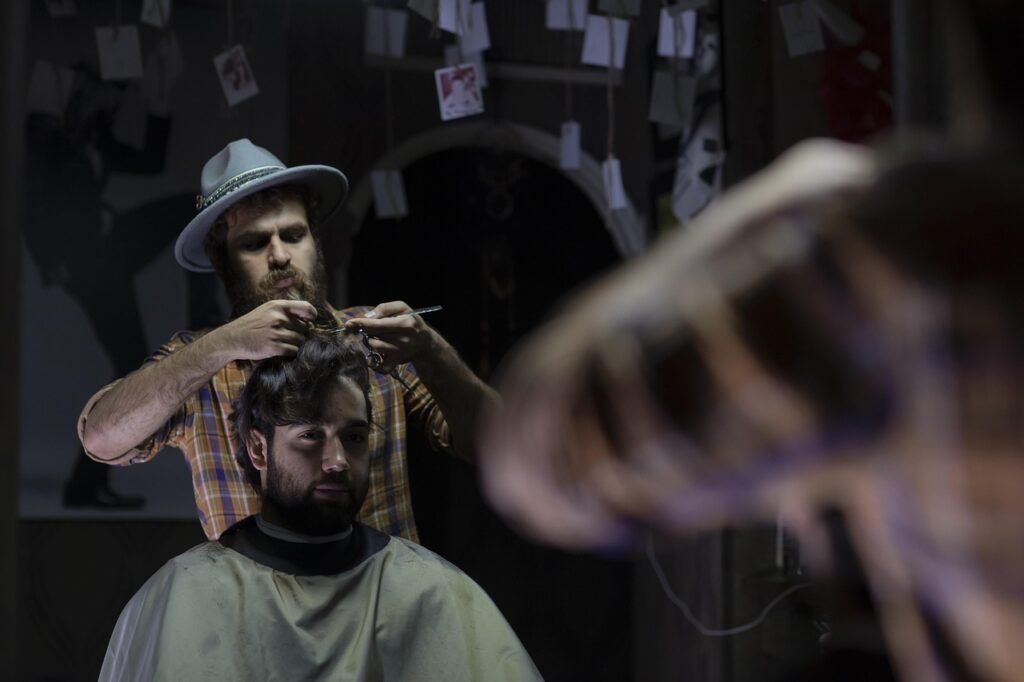
Has a stylist ever spun your chair around, and you caught your own reflection and felt your stomach drop? Maybe one side is shorter than the other. Maybe the bangs sit two inches above where you asked. Maybe the layers look like they were done with a weedwhacker. Whatever the specifics, a bad hair cutting experience is one of those small disasters that feels enormous for weeks, because you have to wear it on your head every single day.
Here is the good news, delivered plainly: most bad haircuts are survivable, many are fixable, and the rest grow out on a predictable schedule. The trick is knowing which category you are in, what you can reasonably ask for, and when to stop fiddling. This guide walks through all of it, from the first mirror check to the final fix.
What “Bad Hair Cutting” Actually Means
Start with a definition, because the phrase itself is informal. Bad hair cutting is not a technical term in dermatology, barbering, or consumer law. It is shorthand for a haircut the client is unhappy with. In practice, the complaint usually falls into one of four buckets:
- Technical errors: uneven lines, visible steps between sections, a neckline that looks chewed.
- Communication failures: the client asked for “just a trim,” the stylist heard “take off three inches.”
- Mismatch between reference and reality: a photo of a dense, wavy bob on a client with fine, straight hair.
- Subjective dislike: the cut is fine. The client simply does not like how it looks on them.
That last category matters more than people admit. A cut can be executed well and still be wrong for a face shape, a hair texture, or a morning routine that allows exactly four minutes of styling. Knowing which bucket you are in changes what you do next.
The First 48 Hours: Do Not Panic, Do Not Cut

The most common mistake people make after a bad hair cutting session is reaching for scissors at home the same night. Resist. Two things need to happen first.
First, wash and style it yourself. A fresh blowout from the salon can disguise a cut’s flaws, and salon styling can also make a good cut look strange. Wash it, let it dry the way it normally dries, and style it the way you normally style it. Some cuts only reveal their real shape after a night’s sleep.
Second, check it in daylight. Overhead salon lighting flatters everything. Bathroom lighting does not. Natural window light is the honest referee.
If it still looks wrong after that, give it three to five days before calling the salon. There is a practical reason: hair behaves differently in the first few days after a cut, especially if it was heavily texturized or thinned. A cut that seems choppy on day one can settle into shape by day four. Stylists also take feedback more constructively when it arrives as a calm observation rather than a same-night phone call.
Why Haircuts Go Wrong: The Technical Side
A few structural facts explain most bad outcomes, and they are worth understanding before you blame anyone.
Hair does not grow at the same rate everywhere
Hair grows at roughly 1 centimeter, or about 0.4 inches, per month on average. That is the standard figure in dermatology and trichology. It sets the real recovery clock: a 2 to 3 centimeter error is usually a two to three month wait, not a problem anyone can fix in an afternoon.
Hair density and growth patterns also vary by site on the scalp. The hairline, the crown, and the sides do not behave identically. This is exactly why a cut that looks perfectly even when wet can look lopsided when dry, and why “it’ll grow out” is not true on the same timeline across your whole head.
Wet cutting hides errors
Most cuts are performed on wet hair, which is longer and heavier than dry hair. A stylist cutting wet has to predict how much the hair will spring up as it dries. With curly and wavy hair types, that spring factor can be dramatic, and a cut that looked precise on a wet head can end up noticeably shorter than intended. If you have wavy hair types or tight curls, asking for a dry cut, or at least a dry check before the final snip, is one of the most useful habits you can build. (Hair transplant recovery)
Thinning shears are unforgiving
Thinning shears remove bulk, and once bulk is gone, it does not come back until it grows. Over-thinning is one of the most frequent causes of a haircut that looks stringy or collapses flat a week later. If your stylist reaches for the thinning shears on fine hair, it is fair to ask them to go easy.
Before You Complain: A Quick Self-Check
Run through this list honestly. It saves everyone time and awkwardness.
| Check | What to look for | What it means |
|---|---|---|
| Wash-and-wear test | Does it hold shape with your normal routine? | If yes, the cut may be fine and the styling was the issue |
| Daylight inspection | Are lines uneven in natural light? | Visible steps or a lopsided neckline suggest a technical error |
| Reference photo comparison | Does it match the shape and the length? | Mismatch may be a consultation failure, not a bad cut |
| Growth check | Is the problem length or shape? | Length problems resolve with time; shape problems need a fix |
| Second opinion | Does someone you trust notice without prompting? | Useful, but not decisive. Taste varies wildly |
If the cut passes the wash-and-wear test and only fails on personal preference, the honest move is to accept it and adjust your styling. If it fails on visible unevenness, you have grounds to ask for a correction.
How to Complain About a Haircut Without Burning Bridges
Most salons want to fix a bad hair cutting result. A repair costs them twenty minutes. A one-star review costs them far more. That gives you leverage, and it also means you can usually skip the confrontation entirely.
Here is the sequence that works in practice:
- Call the salon within a week. Ask for a correction, not a refund, first. Most salons offer free fixes as standard practice.
- Ask for a different stylist if you have lost confidence. This is a normal request. Salons handle it more gracefully than clients expect.
- Be specific, not emotional. “The left side is about half an inch shorter than the right, and the layers start too high” gets a better result than “it’s ruined.”
- Escalate to the manager only if the first fix fails. Bring the original consultation details: what you asked for, what you got.
- Consider a refund only when a correction is impossible. If too much length is gone, no fix exists, and that is when a refund conversation becomes reasonable.
One common mistake: letting a stylist “even it out” repeatedly in a single session. Each correction removes more length, and a small unevenness can turn into a much shorter cut. If the fix is not working after one attempt, stop and reschedule.
When the Only Fix Is Time
Sometimes the cut is simply too short, and no amount of skill can add hair back. In that case, your job shifts from repair to management. A few practical moves help.
Change the part. Moving a part half an inch can hide an uneven section or redistribute volume.
Use the front as a feature. Short, choppy layers near the face often read as intentional once styled with a little texture product.
Book a shaping appointment in four to six weeks, not two. Two weeks is too soon for meaningful growth, and another trim too early just removes more length. Four to six weeks lets roughly 1 to 1.5 centimeters come back, which is usually enough for a stylist to rebalance the shape.
Skip the at-home clippers. The number of bad haircuts that became worse haircuts because of a midnight DIY session is genuinely large. If you must tidy a neckline, use scissors and take off less than you think you need.
What Consumer Law Actually Covers
Here is where expectations need calibrating. A bad haircut is usually a service-quality dispute, not a fraud claim. Consumer-protection law generally covers services, including haircuts, but the remedies are limited, and the focus is on unfair or deceptive practices rather than subjective dissatisfaction.
In the United States, the Federal Trade Commission Act prohibits unfair or deceptive practices in commerce, and state consumer-protection statutes cover services. Those laws help if a provider misrepresented what they would do. They do not help if you simply dislike the result.
Cosmetology and barbering are state-licensed, and consumers can file complaints with the state licensing board. But boards typically regulate sanitation, safety, and licensing, not the aesthetic quality of a cut. A board complaint is usually the wrong channel for “I don’t like it,” though it is the right channel for burns, unsafe practices, or an unlicensed operator.
In the United Kingdom, the framework is clearer. The Consumer Rights Act 2015 requires services to be performed with reasonable care and skill. If they are not, the consumer can require re-performance or a price reduction. That is a firmer statutory hook than most US state frameworks provide.
In the European Union, the Unfair Commercial Practices Directive and national consumer laws apply to services, again focusing on misleading practices rather than taste.
The practical takeaway: use the salon’s own correction policy first, a consumer authority second, and small claims last. Small-claims limits vary widely by jurisdiction, and a haircut claim almost always sits below the threshold, so the cost-benefit rarely works out.
Preventing the Next Bad Haircut
Most bad haircuts are preventable at the consultation stage, before scissors touch hair. These habits do the heavy lifting.
Bring two photos, not one. One of the style you want, and one of your own hair on a good day. The second photo tells the stylist what your hair actually does.
Describe the shape and the length. “Shoulder-length with long layers and face framing” is more useful than “two inches off.”
Ask what the stylist plans to do before they start. A thirty-second recap catches mismatches while they are still free to fix.
Say what you do not want. “No thinning shears” and “nothing above my jaw” are legitimate, useful instructions. Stylists hear them constantly.
Ask about the grow-out plan. A good stylist will tell you how the cut will look in six weeks. If the answer is “great for two weeks, then awkward,” you have learned something important.
Keep a stylist who listens, even if they are not the trendiest. Consistency beats novelty. A stylist who knows your hair’s history is worth more than a rotating cast of trend-forward strangers. If you are rebuilding after a bad experience and want to understand how to care for hair between appointments, learning how to use a hair mask properly is a low-cost way to keep texture healthy while the shape grows back in.
Conclusion
A bad hair cutting experience feels personal because it is personal. You trusted someone with your appearance, and the result did not match the conversation. But the situation is almost always more manageable than it feels on the first night. Wash it, check it in daylight, give it a few days, then call the salon with a specific description rather than a general complaint. Most bad cuts get fixed for free within a week. The rest grow out on a schedule you can actually plan around, roughly a centimeter a month, which means a two-centimeter error is a two-month problem and nothing more.
The bigger lesson sits upstream. Most bad haircuts are consultation failures wearing a technical costume. Bring two photos, describe the shape, say what you do not want, and ask how the cut will look in six weeks. Do that, and the odds of walking out unhappy drop sharply. And if it does happen again, you will know exactly what to do, which is half the battle.
Frequently Asked Questions
How long does a bad haircut take to grow out?
Hair grows about 1 centimeter, or roughly 0.4 inches, per month on average. A cut that is 2 centimeters too short is usually a two-month wait. Shape problems are different from length problems, though, and a stylist can often rebalance the shape after four to six weeks of growth.
Should I ask for a refund or a fix?
Ask for a fix first. Most salons offer free corrections within a week or two as standard practice, and a correction costs them far less than a lost client. A refund becomes reasonable only when a correction is impossible, such as when too much length is gone to repair.
Can I complain to a licensing board about a bad haircut?
Usually not for the cut itself. State cosmetology and barbering boards regulate sanitation, safety, and licensing, not aesthetic quality. They are the right channel for burns, unsafe practices, or unlicensed operators, but not for “I don’t like the layers.”
Is a bad haircut covered by consumer protection law?
Services are generally covered, but the focus is on unfair or deceptive practices rather than subjective dissatisfaction. In the UK, the Consumer Rights Act 2015 requires reasonable care and skill, which gives a clearer remedy. In the US and EU, the laws help mainly when a provider misrepresented what they would do.
Why does my haircut look uneven when I style it myself?
Hair density and growth patterns vary across the scalp, and wet cutting hides errors that appear once hair dries and springs up. A cut that looked even when wet can look lopsided dry. If the unevenness is visible in daylight after you style it yourself, ask for a correction.
Should I fix a bad haircut at home?
No, at least not on the first night. Home fixes are the most common way a bad haircut becomes a worse one, because every correction removes more length and there is no undo. If you must tidy a neckline, use scissors and take off less than you think you need.









