



What is the difference between a camper who sleeps soundly through a cold night and one who shivers until sunrise? It is rarely toughness. It is almost always the bedding setup. Most people pack a sleeping bag, roll out a thin mat, and assume the bag does the heavy lifting. Then the ground steals their body heat from below, the tent walls drip condensation, and by 3 a.m. they are wearing every layer they brought.
The truth is that comfortable tent bedding is a system, not a single purchase. The pad, the bag, the pillow, the liner, and even how you pitch the tent all work together. Get the combination right and a tent becomes genuinely cozy. Get it wrong and no amount of extra blankets fixes the problem. This guide walks through each layer of that system, explains the numbers that matter, and covers the mistakes that catch even experienced campers.
Why Tent Bedding Is a Different Problem From Bedroom Bedding
At home, a mattress does two jobs quietly: it cushions your body and it blocks the cold coming up through the floor. In a tent, you have to recreate both jobs with gear you carry on your back or stuff into a car.
There is also a moisture problem that bedrooms do not have. Your breath releases water vapor all night, and damp gear adds more. That vapor condenses on the cooler inner walls of the tent and can drip onto your bedding. A sleeping bag that gets damp loses much of its insulating power, whether it uses down or synthetic fill. So tent bedding has to manage warmth, cushioning, and moisture at the same time.
Finally, everything has to pack down. A luxury bedding set that feels wonderful at home is usually the wrong answer in a tent, because cotton absorbs moisture and holds it against your body. The materials that work outdoors are chosen for different reasons than the ones chosen for a master bedroom, even though both are aiming at comfort.
The Foundation: Sleeping Pads and the R-Value That Matters Most
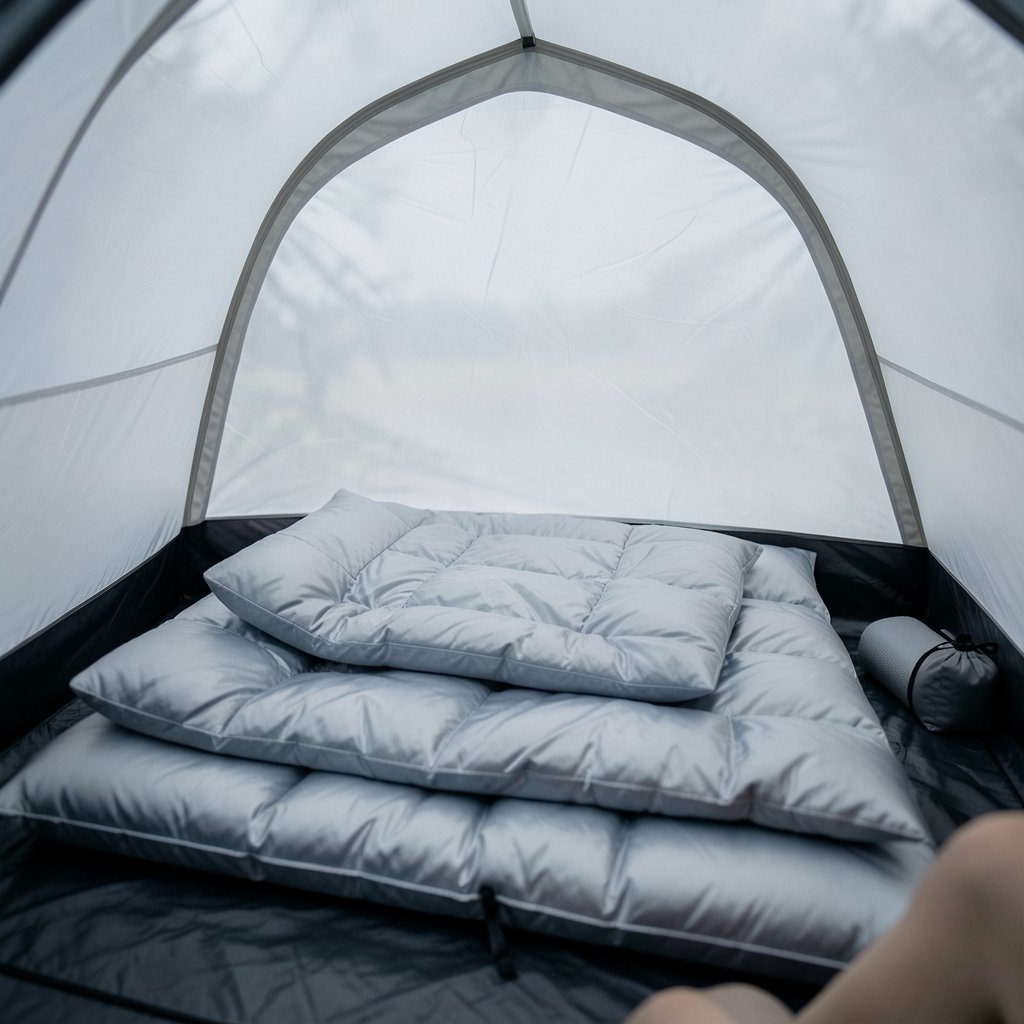
If there is one piece of tent bedding people under-invest in, it is the pad. The ground pulls heat away from a body far faster than air does, which means the pad underneath you often determines how warm you sleep more than the bag on top of you. A superb sleeping bag on a bare floor will still leave you cold.
Pad insulation is measured by R-value, a number describing thermal resistance. Higher means warmer. The standard test method for camping mats is ASTM F3340, first approved in 2018, which gave the industry a common way to compare pads. Before that, R-values were measured inconsistently, so older figures on used gear are not always comparable to current ones.
Industry guidance generally groups pads into rough bands, though these are rules of thumb rather than an official standard:
| Conditions | Suggested pad R-value | Typical use |
|---|---|---|
| Warm weather | Around R-2 or lower | Summer camping, warm nights |
| Three-season | Roughly R-3 to R-5 | Spring through fall |
| Cold or snow | R-5 and above | Winter, high altitude, frozen ground |
One common mistake is buying an uninsulated air mattress for cold camping. Air mattresses are comfortable, but plain air moves heat around inside the mattress through convection, carrying warmth away from your body. Insulated air pads solve this with synthetic fill or reflective layers. If you already own a basic air mattress, adding a closed-cell foam pad underneath is a cheap way to add real insulation.
Foam, Air, or Self-Inflating?
Closed-cell foam pads are cheap, light, and indestructible. They are not plush, but they never leak. Air pads pack small and cushion well, and insulated versions handle cold weather. Self-inflating pads combine foam and air and sit in the middle on comfort and weight.
For tent camping where you drive to the site, a thicker insulated pad is worth the bulk. For backpacking, the trade-off between weight and R-value becomes the whole decision. Either way, check the R-value on the label rather than guessing from thickness, because thickness and warmth are not the same thing.
Sleeping Bags and the Ratings Behind Them
Sleeping bag temperature ratings look precise, but they come from a standard that describes a specific test, not a promise about your night. The European standard EN 13537, introduced in 2002, was superseded by ISO 23537 (parts 1 and 2), published around 2021 to 2022. It defines a comfort rating, based on a standard woman, and a lower limit, based on a standard man.
That distinction matters. The comfort rating is the more conservative figure and the one to trust for children, cold sleepers, and anyone who wants to sleep rather than survive. The lower limit describes the edge of comfort for a warm sleeper in a particular set of conditions. Choosing a bag by its lower limit when you sleep cold is one of the most common tent-bedding mistakes.
In the United States, bag ratings were historically not standardized, and brands used their own methods, which made cross-brand comparisons unreliable. The outdoor industry worked on harmonizing ratings during the 2010s, but shoppers should still read carefully and compare comfort ratings where they are published.
Down or Synthetic?
Down packs smaller and lasts longer but loses insulation when wet. Synthetic fill keeps more of its warmth when damp and costs less, though it is bulkier. In a humid tent, synthetic is the forgiving choice. In dry cold, down rewards you with less weight.
Pillows, Liners, and the Small Items That Change a Night
The details are where tent bedding goes from tolerable to genuinely restful.
A pillow is optional but transformative. Inflatable camping pillows pack to nothing. A stuff sack filled with a fleece jacket works surprisingly well and costs nothing. The mistake is bringing a full-size home pillow, which takes up as much space as a jacket and gets damp.
A sleeping bag liner adds a few degrees of warmth and keeps the bag cleaner, which extends its life. Manufacturers’ warmth claims vary, so treat them as a modest bonus rather than a substitute for a warmer bag. A liner also gives you a lighter option for hot nights when the bag is too much.
A sleeping pad cover or fitted sheet made for camping pads makes the surface feel less like plastic and more like a bed. This is where a little soft bedding thinking pays off: a brushed fabric layer next to your skin makes a big difference to how a night feels, even when the insulation numbers stay the same.
Managing Moisture: The Invisible Enemy of Tent Comfort
Condensation is a major source of tent dampness. Moisture from breathing and from damp gear condenses on cooler tent walls, and in a poorly ventilated tent it can drip onto your bedding by morning. This is not a sign of a bad tent. It is physics.
A few practical habits help. Pitch the tent with vents open and the door slightly cracked when conditions allow. Choose a site that is not in a low hollow where cold, damp air pools. Avoid breathing directly into your bag by burping the bag’s hood around your face. Dry gear in the sun before packing it away, and never store a damp sleeping bag compressed, because trapped moisture damages insulation over time.
Tent floors are not perfect barriers either. Many tents use coated fabrics with a hydrostatic-head rating, a measure of waterproofness tested under standards such as ISO 811. A bathtub floor, where the floor material curves up the sides, keeps ground water out. A footprint under the tent protects the floor and adds another layer against moisture. If you camp in wet conditions, both are worth having.
Choosing Bedding Materials for a Tent
Material choice is where home bedding habits can mislead. Cotton is comfortable but absorbs and holds moisture, which is exactly what you do not want in a tent. The best tent bedding uses fabrics that either wick moisture away or resist absorbing it.
| Material | Strength in a tent | Weakness |
|---|---|---|
| Cotton | Feels soft and breathable | Absorbs moisture, dries slowly |
| Fleece | Warm, soft, cheap | Bulky, holds some moisture |
| Synthetic knits | Wicks well, dries fast | Less plush than cotton |
| Merino wool | Warm when damp, odor resistant | Costs more, needs care |
A useful rule: use cotton and other absorbent fabrics only for warm, dry, car-camping trips where you can air everything out. For cold or wet trips, lean toward synthetics and wool. If you want to think more about how fabric choice shapes comfort, the broader world of bedding materials is a good place to start, then translate those lessons to camp gear.
Matching Your Bedding to the Trip
The right setup depends heavily on how you camp. A car camper can bring a thicker pad, a bigger bag, and a proper pillow. A backpacker counts grams. A family tenting with kids needs warmth margins and easy cleanup.
Car Camping
Weight is not the constraint, so prioritize comfort. A thick insulated pad, a roomy bag rated well below the expected low, a real camping pillow, and a fitted sheet for the pad make a tent feel like a small bedroom. A rug or mat at the door keeps dirt out of the bedding.
Backpacking
Every item earns its place. Choose a pad with the highest R-value you can justify for the weight, a bag rated to the conditions, and a liner instead of extra layers. Skip the pillow or use a stuff sack.
Family Camping With Children
Children and cold sleepers need warmer ratings than the lower limit suggests. Use the comfort rating as the baseline, add a liner, and pack an extra layer. Keep bedding organized in labeled stuff sacks so bedtime is not a search mission.
Setup Mistakes That Undermine Good Gear
Even excellent bedding fails when it is set up badly. These are the errors that show up again and again.
- Skipping the pad’s insulation. A great bag on a cold floor still leaves you cold from below.
- Choosing a bag by its lower limit. Use the comfort rating unless you know you sleep warm.
- Pitching in a low, damp spot. Cold air and moisture settle in hollows.
- Sealing the tent completely. Ventilation reduces condensation, even on chilly nights.
- Storing a damp bag compressed. Let it air and dry fully before packing.
- Bringing home bedding. Cotton sheets and heavy comforters absorb moisture and take up space.
Each of these is easy to fix once you know to look for it, and together they matter more than any single upgrade.
Building a Sleep System, Not a Shopping List
The most useful mental shift is to stop thinking about bedding as separate purchases and start thinking about it as a system. The pad blocks heat loss from below. The bag traps warmth around your body. The liner adds a margin of warmth and keeps the bag clean. The pillow and sheet make the surface feel human. Ventilation and site choice control moisture.
When those pieces work together, the numbers stop being abstract. An R-5 pad and a bag rated to the comfort temperature you expect, plus a dry pitch and open vents, will outperform a much more expensive bag thrown on a bare floor. That is the whole game.
If you enjoy thinking about comfort at home, the ideas in this guide to luxury bedding styles translate more than you might expect: layering, breathable fabrics, and a surface that feels good against the skin. The tent version just has to survive weather and pack into a bag.
Conclusion
Good tent bedding is not about buying the most expensive bag on the shelf. It is about understanding that warmth comes from a stack of layers, that the ground steals heat faster than the air, and that moisture quietly ruins insulation if you let it. Get the pad’s R-value right for the conditions, choose a bag by its comfort rating, add a liner and a simple pillow, and manage condensation with ventilation and smart site selection.
Do that, and the tent stops being a place you endure and becomes a place you look forward to crawling into. The nights are often the best part of camping, provided you have built the bedding to enjoy them.
Frequently Asked Questions
What R-value sleeping pad do I need for tent camping?
For warm summer nights, a pad around R-2 or lower is often enough. For three-season camping, look for roughly R-3 to R-5. For cold weather or snow, choose R-5 or above. These are industry rules of thumb rather than an official standard, so they vary between sources, but they are a reliable starting point.
Is an air mattress good bedding for a tent?
It depends on the mattress. A plain air mattress cushions well but insulates poorly, because air moving inside it carries heat away from your body. Insulated air pads add synthetic fill or reflective layers to counter this. If you use a basic air mattress in cool weather, put a closed-cell foam pad underneath it.
What is the difference between a sleeping bag’s comfort rating and lower limit?
Under ISO 23537, the comfort rating is based on a standard woman and represents a temperature at which a typical sleeper stays comfortable. The lower limit is based on a standard man and describes the edge of comfort for a warm sleeper. Cold sleepers, children, and anyone who wants a safe margin should choose a bag by its comfort rating.
How do I stop condensation from soaking my tent bedding?
Ventilate the tent by opening vents and cracking the door when conditions allow. Pitch on higher ground rather than in a low hollow where damp air pools. Dry your gear before packing it, and avoid breathing directly into your sleeping bag by closing the hood around your face. Condensation is normal, but these habits keep it off your bedding.
Should I bring regular bedding like sheets and comforters into a tent?
Usually not. Cotton sheets and heavy comforters absorb moisture and dry slowly, and they take up a lot of space. A fitted sheet made for a camping pad, a liner, and a small camping pillow give most of the comfort with far less bulk and far better moisture behavior.
How much warmer does a sleeping bag liner make a bag?
Manufacturers often claim a liner adds a few degrees of warmth, but the claims vary and should be treated as a modest bonus rather than a replacement for a warmer bag. A liner is still worth packing because it keeps the bag cleaner and gives you a light option on hot nights.









