Best Cornrows Hairstyles 2027
Cornrows hairstyles are one of the oldest and most versatile protective styles in the world, and in 2027 they are having a louder moment than ever. From the runway to the gym to the office, neat rows braided close to the scalp are showing up everywhere, not as a trend borrowed for a season, but as a style people choose because it looks sharp, protects the hair underneath, and lasts for weeks with very little daily effort.
The appeal is practical as much as visual. Cornrows keep hair tidy and out of the way, they work on a wide range of lengths and textures, and they can be dressed up with beads, cuffs and colour, or kept completely plain for a clean, sculpted look.
Below are nine cornrows hairstyles worth considering in 2027, from classic straight-back rows to goddess braids with loose curls, each described by what it does well, what to watch for, and who it suits best, so you can walk into the salon knowing exactly what to ask for.
Key takeaways
- Cornrows are braids worked close to the scalp in continuous raised rows, and they double as a protective style that can last two to four weeks.
- Feed-in braids give the most natural-looking start, while straight-back and jumbo rows are the fastest and simplest to install.
- The best style depends on your hair length, your scalp sensitivity, and how much daily maintenance you want to do.
- Tension is the biggest risk: braids that hurt, bump or itch on day one are too tight and should be loosened, not endured.
- Cornrows do not repair damaged hair, and a style left in too long can cause breakage and traction alopecia at the edges.
What cornrows actually are
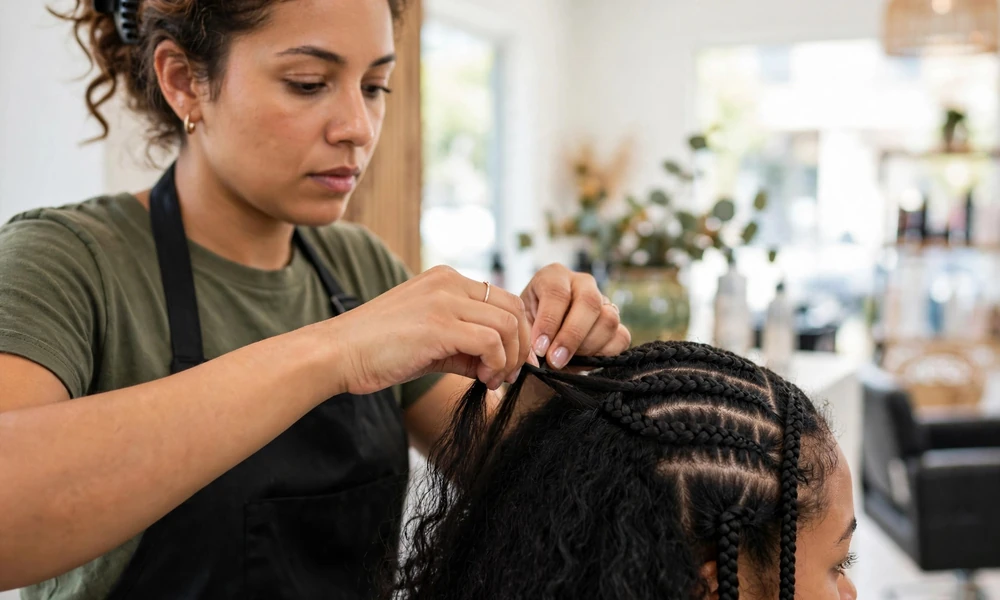
Cornrows are braids created by taking small sections of hair and braiding them flat against the scalp, adding hair as the braid moves along so the row stays continuous and raised. The rows can run straight back, curve into patterns, or sweep to one side, and the ends can be left loose, curled, gathered into a bun, or finished with beads and cuffs. The style is thousands of years old, with roots in African braiding traditions, and it has remained in continuous use ever since.
What makes cornrows different from a loose braid or a plait is the scalp-hugging construction. Because the hair is anchored along the whole row, the style holds its shape for weeks, survives workouts and swimming better than most styles, and keeps the ends of the hair tucked away from friction and weather. That is why they are classed as a protective style: the hair is doing less work and taking less damage while it is braided.
They are not a no-maintenance style, though. The scalp is exposed along the partings, so it can dry out or flake, and new growth loosens the rows over time.
How we chose these styles and what to look for
Look first at the braiding technique. Feed-in braids, where the braider gradually adds hair so the start of the row is flat and knot-free, look the most natural and put the least tension on the hairline. Traditional cornrows start with a small knot, which is faster but can feel tighter at the edges. If you have a sensitive scalp or fine edges, feed-in is usually the safer choice.
Look next at the size of the rows. Small, fine cornrows give the most intricate, long-lasting result, but they take hours and put more tension on the scalp. Jumbo rows are fast and bold, but they loosen sooner and suit thicker hair best. Medium rows are the practical middle ground for most people, especially if this is a first set of cornrows.
Finally, look at how the style fits your life. A style with loose curly ends looks beautiful but needs the ends detangled and moisturised. A style finished in a bun or ponytail is the lowest-effort option for work and the gym. A style with beads is striking, but beads add weight, and heavy beads on fine hair can pull. Our guide to the best curl care brands to watch in 2027 is worth reading alongside this one, because the leave-in products and edge care those brands make are exactly what keeps cornrows looking fresh between washes.
The 9 best cornrows hairstyles of 2027
Straight-back cornrows
What we like: The classic: clean, even rows running from the hairline straight back, fast to install, easy to wear, and flattering on almost everyone. What to consider: The simplest style can also be the most revealing of uneven partings, so a neat braider matters. Key features: Even rows, straight partings, ends loose or tucked. Hair type: All textures, especially medium to thick hair. Length: Short to long. Maintenance: Low; moisturise the scalp every two to three days.
Straight-back cornrows are the default for a reason. They are the quickest set to install, the easiest to tie up or leave down, and the most versatile base for adding beads, cuffs or colour later. If you are trying cornrows for the first time, start here.
Feed-in cornrows
What we like: Hair is gradually fed in, so the start of each row is flat and knot-free, with a softer, more natural-looking hairline and less tension on the edges. What to consider: Takes longer than a traditional install and costs more, and the technique matters, so choose a braider who specialises in it. Key features: Knotless start, flat roots, natural hairline. Hair type: All textures, especially fine hair and sensitive scalps. Length: Short to long. Maintenance: Low; edge control optional rather than essential.
Goddess cornrows
What we like: Cornrows at the front with loose, curly hair left out at the back or at the ends, giving the structure of braids with the softness of curls. What to consider: The loose curls need their own care, detangling and moisturising, or they tangle into the braids. Key features: Braided front, loose curly ends, romantic finish. Hair type: Curly and coily hair, or hair with extensions. Length: Medium to long. Maintenance: Medium; the curls need daily attention.
Goddess cornrows are the most glamorous option on this list, and the most popular for weddings and special occasions. They suit anyone who wants braids without giving up volume and movement.
Jumbo cornrows
What we like: Big, bold rows that make a statement, install in under two hours, and suit thick hair beautifully. What to consider: They loosen faster than smaller rows, and the weight can pull on fine hair. Key features: Wide rows, bold look, fast install. Hair type: Thick, dense hair. Length: Medium to long. Maintenance: Low, but refresh the style sooner, usually after two weeks.
Jumbo cornrows are the best choice when you want maximum impact for minimum chair time. They are also the easiest style to take down, which makes them a good first protective style.
Small cornrows
What we like: Fine, intricate rows that last the longest, hold patterns beautifully, and look polished for weeks. What to consider: The longest install, often four hours or more, and the most tension, so they are not the best choice for a tender scalp. Key features: Fine rows, intricate patterns, longest wear. Hair type: All textures with enough density to hold small sections. Length: Short to long. Maintenance: Low once installed; keep the scalp clean and moisturised.
Small cornrows reward patience. They are the style to choose when you want a set that will still look neat at week four, and when you have a braider you trust to keep the tension even.
Cornrows with curls
What we like: Braided rows that end in bouncy curls, or rows with curly pieces left out along the partings, for a soft, feminine finish. What to consider: The curls need to be refreshed with water and leave-in, and they can frizz in humidity. Key features: Braids plus curls, soft finish, versatile styling. Hair type: Curly, coily and wavy hair. Length: Medium to long. Maintenance: Medium; refresh curls every morning.
This is the style for anyone who loves the structure of cornrows but wants the softness of curls too. It photographs beautifully and works for both everyday wear and occasions.
Cornrows with beads
What we like: Beads, cuffs and shells threaded onto the ends of the rows, adding colour, movement and personality to a classic style. What to consider: Beads add weight and can catch on clothing, and heavy beads on fine hair can pull the edges. Key features: Decorative beads, customisable colour, playful finish. Hair type: All textures, best on medium to thick hair. Length: Medium to long. Maintenance: Low, but check the beads are secure and not pulling.
Beads are the easiest way to make a simple set of cornrows feel personal. Wooden beads are the lightest choice, while metal cuffs give a sharper, more polished look.
Side-swept cornrows
What we like: Rows that sweep across the head to one side, creating an asymmetrical, editorial look that frames the face. What to consider: The sweep needs to be planned around your part and your face shape, and it can feel heavier on one side. Key features: Asymmetrical sweep, face-framing, fashion-forward. Hair type: All textures. Length: Medium to long. Maintenance: Low; the style holds its shape well.
Side-swept cornrows are the most fashion-forward option here, and a good choice when you want cornrows to read as a deliberate style statement rather than a purely practical one.
Cornrow updo
What we like: Rows gathered into a bun, crown or high ponytail, keeping everything off the neck and looking polished for work, weddings and formal occasions. What to consider: An updo puts more tension on the hairline, so it is best as a shorter-term style, or with a loose, low bun. Key features: Rows gathered up, elegant finish, keeps hair off the neck. Hair type: All textures. Length: Medium to long. Maintenance: Low; protect the style with a silk scarf at night.
A cornrow updo is the most elegant way to wear the style, and it is the best option for hot weather, formal events, or anyone who wants their hair completely out of the way.
Which cornrow style is right for you
Fine or thinning hair suits feed-in and straight-back rows best, because they put the least tension on the hairline and the edges. Small cornrows and tight updos are the riskiest choices for fragile edges, however neat they look on day one. If your hairline is a concern, say so before the braider starts, and ask for the first row to be braided loosely.
Thick, dense hair can carry almost any style on this list, and jumbo rows and goddess braids look their best on full, heavy hair. The trade-off is time: thick hair takes longer to braid, and a full set of small cornrows on thick hair can be a five-hour appointment, so plan the day accordingly.
Short hair is not a barrier. Straight-back rows, small cornrows and feed-in styles all work on hair as short as two to three inches, and the braider can add extensions if you want length.
The caveats that matter
The biggest risk with cornrows is tension. Braids that hurt, throb, or leave bumps along the hairline on day one are too tight, and the damage they cause, traction alopecia, can become permanent if the same tight style is repeated. Pain is not a normal part of a cornrow install, and a good braider will loosen a row that is pulling rather than tell you to endure it.
| Detail | What is known |
|---|---|
| How long they last | Two to four weeks, depending on row size and new growth |
| Biggest risk | Tension and traction alopecia at the hairline if braided too tight |
| Gentlest option | Feed-in cornrows, with a flat, knotless start |
| Fastest install | Jumbo cornrows, usually under two hours |
| Longest-lasting | Small cornrows, which hold their shape for up to four weeks |
| Scalp care while braided | Light oil or leave-in along the partings every two to three days |
| Washing while braided | Diluted shampoo on the scalp, rinse well, dry fully to avoid mildew |
| What they do not do | They do not repair damaged hair, and they cannot be left in indefinitely |
Washing while braided is possible, but the hair must dry fully. A scalp left damp under braids can develop an odour or irritation, so wash in the morning, use a diluted shampoo, and let the hair air-dry completely before covering it. Our guide to the best hair oils of 2027 is useful here, because a light oil applied along the partings keeps the scalp comfortable without making the braids slippery or heavy.
Checklist: getting cornrows honestly
Use these checks before you book, and again after your first week in braids.
- Choose a braider who specialises in cornrows, and ask to see photos of their recent work on hair like yours.
- Talk about tension before the first row: no pain, no bumps, no throbbing, and a loose first row at the hairline.
- Arrive with clean, detangled, moisturised hair, and no heavy product that makes braiding slippery.
- Plan the aftercare before the appointment: a light scalp oil, a silk scarf or bonnet, and a wash plan.
- Set a take-down date when you book: two to three weeks for most styles, four at the very most.
- Take the style down gently, detangle section by section, and give your hair a deep-conditioning treatment before re-braiding.
Frequently asked questions
How long do cornrows last?
Two to four weeks for most styles. Jumbo rows loosen fastest, usually after two weeks, while small, neat cornrows can look good for up to four. New growth is the usual reason to take them down, not damage, so book the take-down when you book the install.
Do cornrows damage your hair?
They should not, if they are installed without excessive tension and taken down on time. Damage usually comes from braids that are too tight, a style left in for six weeks or more, or a rough take-down. If your hairline hurts, the style is too tight, and it should be loosened.
Can I wash my hair with cornrows in?
Yes. Use a diluted shampoo on the scalp, massage gently, rinse thoroughly, and let the hair dry completely. Wash in the morning so the braids have the whole day to dry, and avoid sleeping on damp braids. Our guide to how to wash your hair properly covers the technique in detail, and it applies just as well to braided hair.
Are cornrows suitable for fine hair?
Yes, with the right technique. Feed-in cornrows and straight-back rows are the safest choices, because they distribute tension evenly and start flat at the hairline. Avoid very small rows, heavy beads, and tight updos, which all pull more on fine hair.
How do I stop my scalp itching in cornrows?
Keep the scalp clean and lightly moisturised, and avoid heavy oils and pomades that build up along the partings. A light oil or a scalp spray every two to three days usually helps. Persistent itching, flaking or soreness is a sign to take the style down and let the scalp rest.
How long should I wait between cornrow styles?
Give your hair at least a week between installs, with a deep-conditioning treatment and a proper detangle in between. If your edges feel tender after a set, wait longer, and choose a looser style next time. Back-to-back tight installs are the fastest route to thinning edges.
The bottom line
The best cornrows hairstyles in 2027 are the ones that suit your hair, your scalp, and your life, not the ones that look best in a photo. Straight-back rows and feed-in braids are the safest starting points for most people, goddess and curly finishes are the most glamorous, and jumbo rows are the fastest way to a bold look. Whatever style you choose, the braider matters more than the style, and tension matters more than neatness.
Choose a braider who listens when you say a row is too tight, set a take-down date before you leave the chair, and give your hair a week of rest and conditioning between installs. Do that, and cornrows will do what they have done for thousands of years: keep your hair protected, tidy and beautiful, with very little daily effort from you.