Hoop Earrings: A History and 9 Styles to Wear in 2027
Hoop earrings are the oldest piece of jewellery still in everyday use. They were worn in ancient Egypt, in Nubia, in Rome and in India, and they have never really gone away.
What makes hoops so durable is their simplicity. A circle of metal, worn close to the face, catches the light, frames the features, and moves when you do. They suit almost every face shape, they work with almost every outfit, and they come in every size, from a tiny gold huggie to a sculptural hoop that reaches the shoulders. The trick is knowing which size and weight suits you, and which ones are worth the money. And because a good pair lasts for years, it is worth choosing carefully the first time.
Below is the story of the hoop, from ancient gold to the modern runway, and nine hoop styles worth wearing in 2027, from the classic gold hoop to diamond, pearl and beaded versions, each described by what it is good at and who it suits best.
Key takeaways
- Hoop earrings are one of the oldest jewellery designs in the world, worn in Egypt, Nubia, Rome and India for thousands of years.
- The right hoop size depends on your face shape, your hair length and your comfort: small hoops suit everyone, large hoops suit longer faces and updos.
- Gold and silver are the most versatile metals, while diamond, pearl and beaded hoops are better as statement pieces than everyday wear.
- Heavy hoops stretch the earlobe over time, so large hoops should be light, hollow, or worn with a support, not worn all day every day.
- Hoops never really go out of fashion, but the finish, the size and the styling change every season, and a classic pair outlasts any trend.
Where hoop earrings come from
The earliest hoops we know of were found in ancient Egypt, in gold, worn by both men and women as a sign of wealth and status. In India, hoops have been part of traditional dress for centuries, in gold and silver and set with coloured stones, and they are still worn at weddings today.
Hoops reached Europe through trade and conquest, and they stayed. In the 1960s and 1970s, large gold hoops became a symbol of identity and pride, worn by Black and Latina women in the United States as a statement of culture and confidence, and the association has never left them.
That history matters, because it is why hoops feel both timeless and personal. They are not a trend that arrived last season. They are a design that has been reinterpreted by every culture that has worn them, and the version you choose says something about you.
How we chose these nine styles and what to look for
Look first at the metal and the weight. Solid gold is the most durable and comfortable, but also the most expensive, and a large solid gold hoop is heavy enough to pull on the earlobe. Hollow gold, gold-filled and gold vermeil are lighter and cheaper, and for large hoops they are usually the smarter choice.

Look next at the closure. A hoop that does not close securely will fall out, and a hoop that is hard to close will be left in a drawer. The most common closures are the latch-back, which clicks shut, the hinged hoop, which opens and closes on a hinge, and the endless hoop, a continuous circle that threads through the piercing.
Finally, look at the size against your face. Small hoops, under 20 millimetres, suit everyone and work for everyday wear. Medium hoops, 20 to 40 millimetres, suit most faces and most outfits. Large hoops, over 40 millimetres, suit longer faces, updos and evening wear, and they need to be light. Our guide to the best diamond earrings of 2027 is a useful companion here, because it covers studs, hoops and drops by budget, and will help you decide whether a diamond hoop is worth the price, or whether a plain gold hoop is the better buy.
The 9 hoop earring styles to wear in 2027
1. Classic gold hoops
Stone: None, plain polished gold. Setting: Latch-back or hinged closure. Best for: Everyday wear, and anyone buying their first pair of hoops. Price range: £40 to £400, depending on the metal and the size.
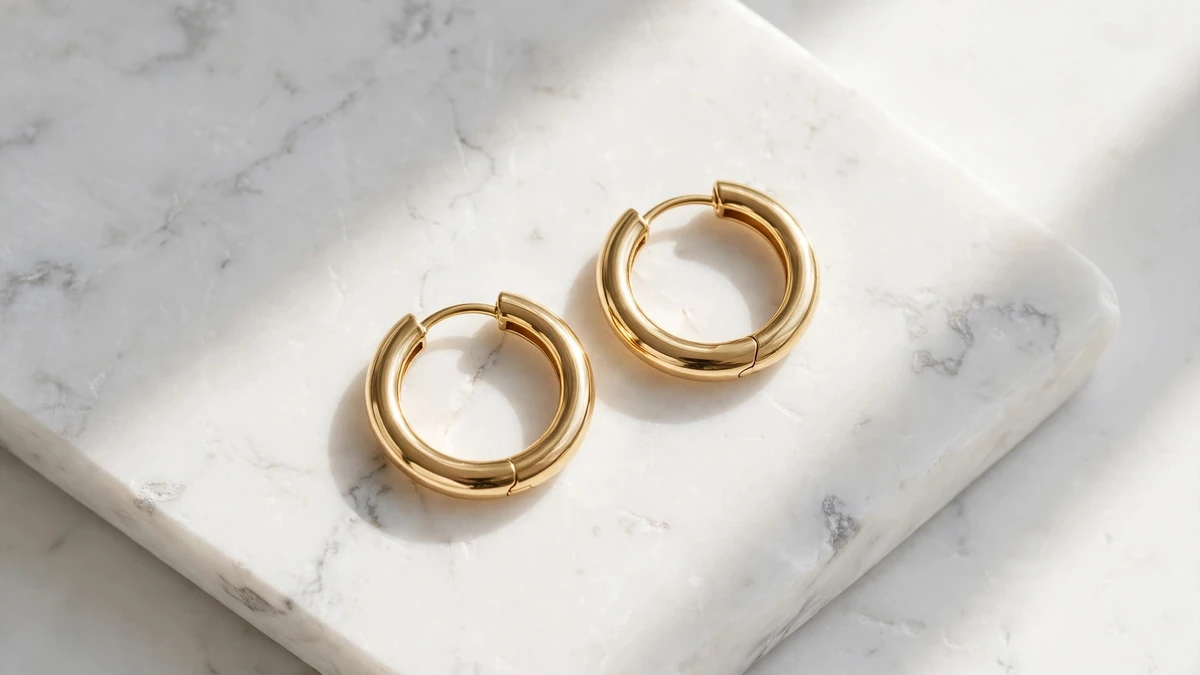
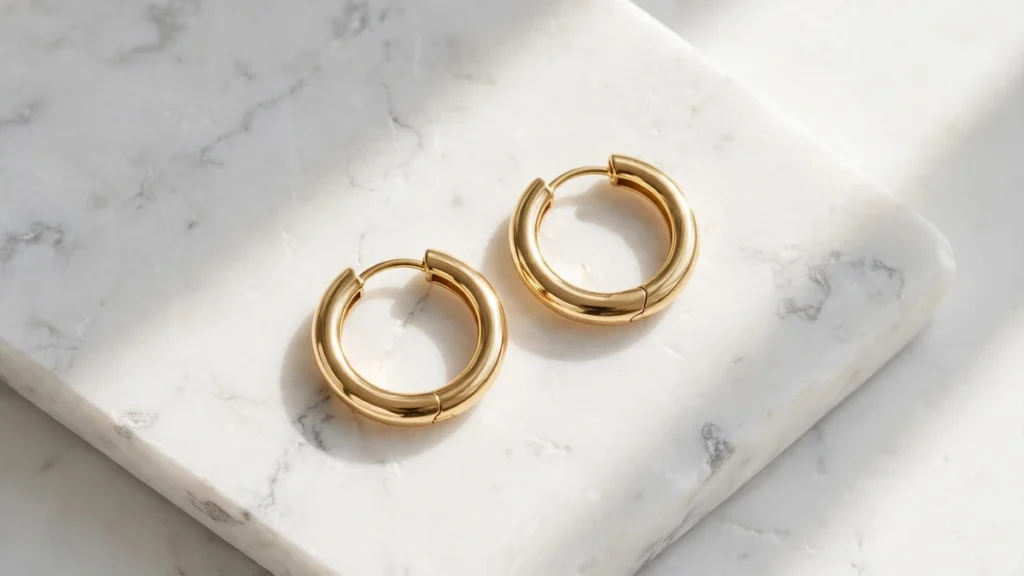
The classic gold hoop is the one to buy first, because it goes with everything and it never looks wrong. A medium, plain, polished gold hoop in 14k or 18k gold, or in gold vermeil if your budget is smaller, will suit a white shirt, a silk dress and a pair of jeans equally well.
2. Sterling silver hoops
Stone: None, plain polished silver. Setting: Hinged or latch-back closure. Best for: Cool skin tones, and anyone who prefers silver to gold. Price range: £30 to £200.
Silver hoops are cooler, crisper and more understated than gold, and they suit cool and neutral skin tones particularly well. The trade-off is tarnish: silver needs a polish every few weeks, and it should be stored in a closed box or pouch, not left out on a dresser.
3. Diamond hoops
Stone: Small pavé diamonds, usually 0.25 to 1 carat total. Setting: Pavé set along the front of the hoop. Best for: Evening wear, weddings and special occasions. Price range: £200 to £2,000 and above.
Diamond hoops are the most glamorous version of the design, and the most expensive. The diamonds are usually small and set along the front of the hoop, so they catch the light when you move, and the effect is far more noticeable than the carat weight suggests.
4. Oversized hoops
Stone: None, or a single small accent stone. Setting: Hollow tube, latch-back closure. Best for: Evening wear, updos and longer faces. Price range: £50 to £500.
Oversized hoops are the boldest version of the design, and the most fun to wear, but they need to be light. A solid large hoop will pull on the earlobe and hurt by the end of the evening, so look for hollow tubes, which give you the size without the weight.
5. Small huggie hoops
Stone: None, or a single small diamond or cubic zirconia. Setting: Hinged closure, hugging the earlobe. Best for: Everyday wear, work, and second or third piercings. Price range: £25 to £250.
Huggies are the smallest hoops, designed to sit close to the earlobe, and they are the easiest to wear every day. They do not catch on hair or clothing, they do not pull on the ear, and they suit every face shape. They are also the best hoop for a second or third piercing, because they sit neatly alongside a stud. Buy them in a metal you like, and wear them as a pair, or mix a plain huggie with a stone-set one for contrast.
6. Beaded hoops
Stone: Small gold or silver beads, or coloured glass beads. Setting: Beads threaded or soldered along the hoop. Best for: Summer, holidays and bohemian styling. Price range: £30 to £300.
Beaded hoops add texture and movement to the classic design, and they are a good choice for summer, when a plain hoop can look too formal. Gold beads give a soft, warm shimmer, while coloured glass beads add a playful note.
7. Textured hoops
Stone: None, the texture is the decoration. Setting: Hammered, twisted or rope finish, latch-back closure. Best for: Anyone who wants a hoop with more character than a plain polished one. Price range: £40 to £400.
A textured hoop catches the light in a way a plain polished hoop does not, because the hammered or twisted surface breaks the reflection into dozens of small highlights. The effect is more interesting, more handmade, and more forgiving of scratches, which is a practical advantage if you wear your hoops every day.
8. Pearl hoops
Stone: Freshwater or Akoya pearls, set along the hoop or hanging from it. Setting: Pearl set into the hoop, or dropped from the base. Best for: Weddings, formal occasions and soft, romantic styling. Price range: £60 to £600.
Pearl hoops combine two classic designs into one, and the result is softer and more romantic than a plain metal hoop. The pearls can be set into the hoop itself, or hung from the base so they move as you do. Freshwater pearls are the most affordable and the most forgiving, while Akoya pearls are rounder, brighter and more expensive.
9. Sculptural hoops
Stone: None, or a single small stone as an accent. Setting: Cast or hand-formed, often in an irregular or organic shape. Best for: Fashion-forward styling, art and design lovers, and evening wear. Price range: £80 to £800.
Sculptural hoops are the most modern version of the design, in irregular, organic or architectural shapes that are more like small works of art than traditional jewellery. They are made by contemporary designers and small studios, and no two pairs are quite alike. They are the least versatile hoop on this list, because they suit a simple outfit better than a busy one, but they are also the most distinctive, and the pair you will be asked about most.
Which hoop suits your face shape
Round faces suit longer, slimmer hoops, because the vertical line lengthens the face, while very round hoops can make a round face look rounder. Oval faces suit almost every hoop, because the proportions are already balanced, so choose by size and occasion rather than by shape. Square faces suit round, soft hoops, because the curve softens the jawline, while angular, geometric hoops can emphasise the angles.
Long faces suit wider hoops, because the width balances the length, and small huggies can look lost on a long face. Heart-shaped faces suit hoops that are wider at the bottom, such as teardrop or chandelier hoops, because they balance a wider forehead and a narrower chin.
Hair length matters too. Short hair shows the whole hoop, so a medium or large hoop looks best. Long hair hides part of the hoop, so a larger size is needed to make it visible, and a textured or beaded hoop reads better through hair than a plain polished one. Our guide to the best statement necklaces of 2027 is worth reading alongside this one, because the rule is the same for both: one statement piece at a time, and if the hoop is large, the necklace should be quiet.
The caveats that matter
Hoops are easy to wear, but they are not without problems. The most common is weight. A heavy hoop pulls on the earlobe, and over years it can stretch the piercing, which is why large hoops should be hollow, light, or worn only for an evening, not all day every day.
The second problem is catching. Large hoops catch on hair, scarves and clothing, and a sharp tug can tear a piercing. Put your hoops on after you have dressed and styled your hair, and take them off before you change. The third problem is allergy. Nickel is the most common cause of an itchy, sore earlobe, and cheap hoops are often made with nickel. If your ears itch or swell, switch to solid gold, sterling silver, or a nickel-free alloy, and the problem usually clears within a few days.
| Detail | What is known |
|---|---|
| Oldest known hoops | Ancient Egypt and Nubia, in gold, worn by men and women alike |
| Most versatile style | A medium, plain, polished gold hoop, 20 to 40 millimetres |
| Best everyday hoop | A small huggie, hinged, in gold or silver, that does not catch or pull |
| Best statement hoop | An oversized, hollow, lightweight hoop, worn with hair up |
| Biggest risk | Heavy hoops stretching the earlobe over time, and catching on hair |
| Most common allergy | Nickel in cheap alloys; switch to gold, silver, or nickel-free metal |
| Care needed | Polish silver regularly, keep pearls away from perfume, check settings yearly |
| What does not change | The hoop itself never goes out of fashion, only the size and finish change |
If you are buying hoops as a gift, a medium gold hoop is the safest choice, because it suits almost everyone and is easy to exchange if the size is wrong. If you are buying for yourself, try them on in person if you can, because the weight and the way a hoop sits against your ear are impossible to judge from a photograph. Our diamond buying guide is a useful companion if you are considering a diamond hoop, because it explains the four Cs and how to judge value, which matters far more for a diamond hoop than for a plain gold one.
Checklist: buying hoop earrings honestly
Use these checks before you buy, and again after a week of wear.
- Check the weight: hold the hoop in your hand, and choose hollow or light hoops for large sizes.
- Check the closure: it should click shut cleanly, sit flat against the ear, and open easily when you want it to.
- Check the metal: solid gold, sterling silver, or a nickel-free alloy, especially if your ears are sensitive.
- Check the size against your face: small hoops suit everyone, large hoops suit longer faces and updos.
- Check the finish: a textured or hammered hoop hides scratches better than a plain polished one.
- Check the care: polish silver, keep pearls away from perfume, and have diamond settings checked once a year.
Frequently asked questions
Are hoop earrings still in fashion in 2027?
Yes. Hoops have never really gone out of fashion, because the design is thousands of years old and it is reinterpreted every season. The size and the finish change, but the hoop itself is a permanent part of jewellery, and a classic pair will outlast any trend.
What size hoop should I wear?
Small hoops under 20 millimetres suit everyone and work for everyday wear. Medium hoops of 20 to 40 millimetres suit most faces and most outfits. Large hoops over 40 millimetres suit longer faces, updos and evening wear, and they should be light and hollow, not solid and heavy.
Do large hoops damage your ears?
They can, over time, because a heavy hoop pulls on the earlobe and can stretch the piercing. Choose hollow, lightweight hoops for large sizes, wear them for an evening rather than all day, and use a support patch behind the ear if your lobes are stretched.
Can I wear hoops every day?
Yes, if they are small or medium and light. Huggies and small hoops are designed for daily wear. Large or heavy hoops are better as an occasional piece, because they catch on hair and clothing and they pull on the ear.
Are gold or silver hoops better?
Neither is better in general. Gold suits warm skin tones and holds its colour without tarnishing, while silver suits cool skin tones and is usually cheaper. Choose the metal that suits your skin and your other jewellery, and buy the best quality you can afford in that metal.
How do I stop my hoops from tarnishing?
Store silver hoops in a closed box or pouch, away from air and moisture, and polish them with a soft silver cloth every few weeks. Gold hoops do not tarnish, but they do pick up dirt and oils, so wash them in warm water with a drop of mild soap and dry them with a soft cloth.
The bottom line
Hoop earrings are the oldest jewellery design still in everyday use, and they have survived for thousands of years for a simple reason: a circle of metal, worn close to the face, suits almost everyone and goes with almost everything. The best hoop for you is the one that suits your face, your hair and your comfort, and the most useful first pair is a medium, plain, polished gold hoop, light enough to forget you are wearing.
Buy the metal you can afford in the best quality available, choose a size that suits your face, check the closure before you pay, and keep large hoops light and occasional.