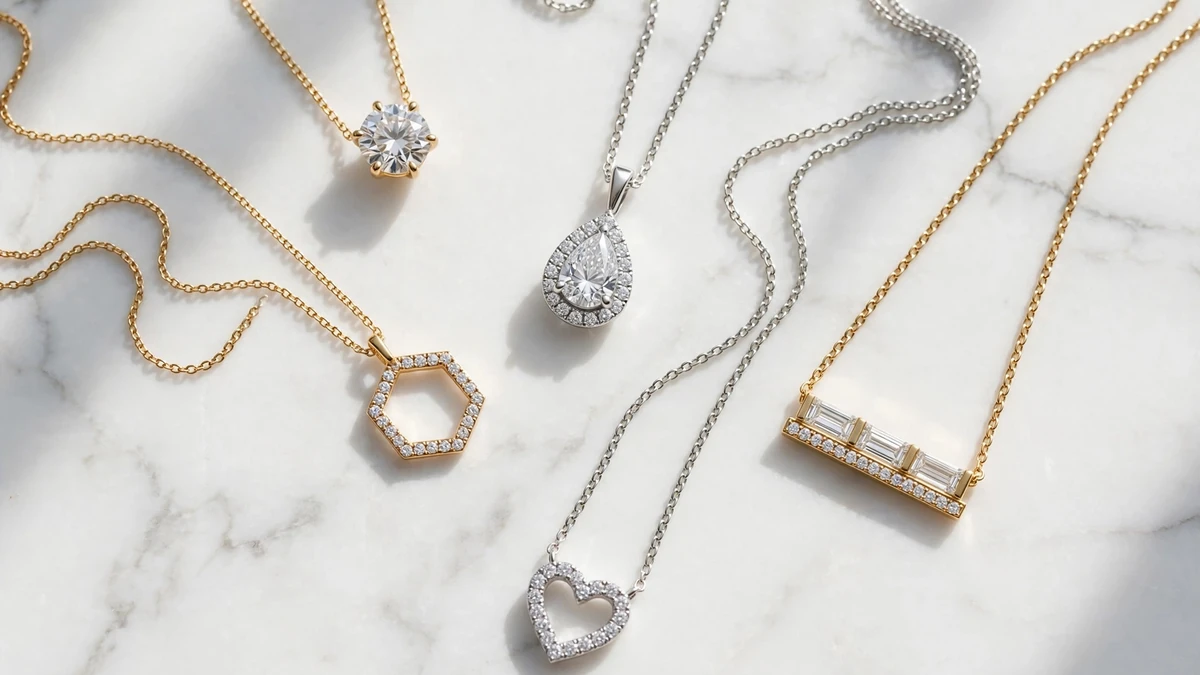

A diamond pendant necklace is the quietest way to wear a diamond every day. It sits at the centre of the neckline, catches the light with every movement, and works with a plain white shirt, a silk blouse, or an evening dress. The problem is not finding one. It is finding one where the diamond is well cut, the chain is strong enough for daily wear, and the price reflects the stone rather than the name on the box.
That is why this guide is organised by what actually matters: the diamond, the setting, and the chain. A small, well-cut diamond in a secure bezel will outshine a larger, poorly cut stone in a flimsy prong setting, and a chain that is too thin for the pendant will wear out long before the diamond does. Price is a poor guide on its own. Some of the best value is in lab-grown diamonds, and some of the most expensive pendants are the simplest.
Below are nine diamond pendant necklaces worth considering in 2027, from a classic solitaire to a modern lab-grown option. Each one is described by what it is good at, what to watch for, and who it suits best, so you can choose with the diamond in mind, not just the brand.
Key takeaways
- Cut matters more than carat weight in a pendant, because a small, well-cut diamond sparkles more than a larger, dull one.
- A bezel setting protects the stone best for daily wear, while prong settings show more of the diamond but need regular checks.
- Lab-grown diamonds are chemically identical to natural diamonds and cost far less per carat, though they hold little resale value.
- Check the chain first: it should be solid, matched to the pendant’s weight, and fitted with a secure clasp.
- No diamond pendant is an investment, and a stone without a grading report, or a chain that feels flimsy, should be a reason to walk away.
What a diamond pendant necklace actually is
A diamond pendant necklace is a chain with a single diamond, or a small cluster of diamonds, hanging from it. The pendant may be a solitaire in a prong or bezel setting, a halo of small stones around a centre diamond, or a simple drop. The chain is usually 16 to 18 inches, so the pendant sits at the collarbone, though longer chains are common for layering.
What makes one pendant better than another is mostly the diamond itself. Cut is the most important of the four Cs for a pendant, because the stone is seen from a distance and in movement, and a well-cut diamond returns light even in a small size. Colour and clarity matter too, but in a pendant, a near-colourless G or H stone that is eye-clean will look as good as a flawless stone, for far less money.
The shape of the pendant changes how it wears. A round solitaire is the most versatile and the easiest to pair with other jewellery. A drop or teardrop pendant draws the eye downward and suits a deeper neckline. A halo adds width and sparkle, which flatters a shorter neck, while a long, slim pendant suits a longer neck and a high collar. None of these is better in itself. The right shape is the one that sits comfortably at your neckline and matches the clothes you already wear most.
The setting matters almost as much. A bezel wraps the diamond in metal, which protects its edges and suits daily wear. A prong setting holds the stone with small claws, which lets in more light but leaves the diamond more exposed. A halo setting surrounds the centre stone with small diamonds, which makes it look larger, though it adds places where stones can loosen.
How we chose these necklaces and what to look for
Look first at the diamond and its grading. A stone of 0.25 to 1 carat is the usual range for a pendant, and a grading report from GIA or IGI is the honest way to know what you are buying. Without a report, colour and clarity grades are only the seller’s word. Our guide to the best diamond necklaces explains how the four Cs work together, and why cut should come before carat weight when you choose.

Look next at the chain and the clasp. A pendant needs a chain rated for its weight, usually a cable, rope or box chain in 14k or 18k gold, or platinum. A very fine chain under a heavy pendant will stretch and eventually snap. The clasp should close firmly and be easy to fasten on your own. A lobster clasp is more secure than a spring ring, and an adjustable chain, with rings at 16, 17 and 18 inches, is more versatile than a fixed length.
Finally, look at the metal and the finish. Yellow gold warms a diamond and suits warm skin tones. White gold and platinum give a cooler, more modern look, though white gold needs re-plating every few years. Rose gold flatters many skin tones and hides scratches well. Choose the metal you already wear most, so the pendant fits your existing jewellery rather than sitting in a drawer.
The 9 best diamond pendant necklaces of 2027
Tiffany & Co. Solitaire Diamond Pendant
What we like: A classic solitaire in a six-prong setting, with a well-cut natural diamond and a chain that is made to match it. What to consider: Premium price, and the prong setting needs checking once a year. Metal: 18k yellow, white or rose gold, or platinum. Setting: Six-prong solitaire. Best for: A first diamond pendant. Price range: High.
This is the pendant other pendants are measured against. It is simple, well made, and easy to wear every day, and the diamond is graded and documented, which is what you want at this price.
Cartier Diamond Pendant
What we like: A refined solitaire with a clean, architectural setting and a strong, well-finished chain. What to consider: Expensive for the carat weight, and the design is deliberately plain. Metal: 18k gold or platinum. Setting: Four-prong solitaire. Best for: Minimal, elegant styling. Price range: High.
A quiet, confident choice. There is nothing to distract from the diamond, and the finishing is the kind you notice only when you wear it every day.
David Yurman Cable Diamond Pendant
What we like: A solitaire on the brand’s signature cable chain, which is sturdy and distinctive without being loud. What to consider: The cable chain is heavier than a fine chain, and the pendant suits a bolder style. Metal: 18k gold or sterling silver. Setting: Bezel solitaire. Best for: Everyday wear with character. Price range: Mid to high.
The bezel setting is a practical win here. It protects the diamond, and the cable chain is one of the strongest everyday chains you can buy.
Mejuri Lab-Grown Diamond Pendant
What we like: A lab-grown diamond solitaire at a fraction of the price of a natural stone, with a solid 14k gold chain. What to consider: Lab-grown diamonds have almost no resale value, and the stone is smaller than the price suggests at first glance. Metal: 14k gold or vermeil. Setting: Bezel or prong solitaire. Best for: Value and everyday sparkle. Price range: Affordable to mid.
This is the sensible way to get a visibly larger diamond for the money. Choose the solid gold version, not vermeil, if you plan to wear it daily.
Monica Vinader Diamond Pendant
What we like: A delicate solitaire with a fine, adjustable chain, designed to layer with other necklaces. What to consider: The chain is fine, so it suits a small pendant only, and vermeil wears through with daily use. Metal: 18k gold vermeil or solid gold. Setting: Prong solitaire. Best for: Layering. Price range: Affordable to mid.
A good layering piece. Wear it on its own for a clean look, or pair it with a longer chain, and choose solid gold if it will be your everyday pendant.
Missoma Diamond Pendant
What we like: A modern solitaire with a slim chain and a clean, contemporary setting. What to consider: Small stone, and the gold vermeil version needs gentle care. Metal: 18k gold vermeil or solid gold. Setting: Bezel solitaire. Best for: A first fine pendant. Price range: Affordable.
An easy entry point. The bezel keeps the small diamond safe, and the slim chain sits neatly under a collar or a crew neck.
Maria Black Diamond Pendant
What we like: A sculptural, slightly offbeat pendant with a well-cut diamond and a strong chain. What to consider: The design is distinctive, so it will not suit everyone, and the chain is on the fine side. Metal: 14k gold. Setting: Prong solitaire. Best for: Modern, sculptural style. Price range: Mid.
For anyone who finds a classic solitaire too plain, this adds shape without losing the diamond’s sparkle. It is still easy to wear every day.
Astrid & Miyu Diamond Pendant
What we like: A small, bright solitaire with a halo option that makes the stone look larger, on an adjustable chain. What to consider: The halo adds small stones that need checking, and the stone is small. Metal: 18k gold vermeil or solid gold. Setting: Solitaire or halo. Best for: A delicate, sparkling pendant. Price range: Affordable to mid.
The halo version is the clever pick if you want more sparkle for the money. It reads larger than its carat weight, and the adjustable chain makes it easy to layer.
Thomas Sabo Diamond Pendant
What we like: A simple solitaire with a sturdy chain and a clear, well-cut stone at an accessible price. What to consider: Small diamond, and the design is plain rather than distinctive. Metal: 925 sterling silver or 18k gold. Setting: Bezel solitaire. Best for: Everyday wear on a budget. Price range: Affordable.
A straightforward, honest pendant. It does the job well, the bezel protects the stone, and it is one of the easiest ways to start wearing a diamond daily.
Which diamond pendant necklace is right for you
For daily wear, choose a bezel setting and a chain you can forget about. A bezel protects the diamond from knocks, and a cable or box chain will not stretch the way a very fine chain can. If you wear your pendant every day, solid gold or platinum is worth the extra cost, because vermeil and plating wear through in one to three years.
For a special occasion or a gift, a prong solitaire shows the diamond at its best, and a halo makes a smaller stone look bigger. A diamond buying guide is worth reading before you spend, because the difference between a well-cut and a poorly cut stone is visible, and it is the difference between a pendant that sparkles and one that looks flat.
For layering, choose a small pendant on an adjustable chain, and keep the total weight light. Two fine chains tangle less than one heavy one, and a pendant that sits at 16 inches pairs well with a longer chain at 18 or 20 inches.
Skin tone can guide the metal, though it should never decide for you. Yellow gold warms fair and warm skin, and it suits a diamond with a hint of warmth. White gold and platinum suit cool skin and a colourless stone. Rose gold flatters most skin tones and softens a very white diamond. If you already wear one metal every day, match the pendant to it, because a pendant that clashes with your rings and earrings will be worn less, however beautiful it is on its own.
The caveats that matter
A diamond pendant is a durable piece of jewellery, but it is not indestructible. Prongs wear and loosen over time, chains stretch, and clasps fail. A yearly check with a jeweller, where the prongs and clasp are inspected, costs little and prevents the most common loss, which is a stone falling out of a worn setting. Clean the pendant gently with warm water, mild soap and a soft brush, and keep it in a soft pouch so it does not scratch other jewellery.
| Detail | What is known |
|---|---|
| Most important factor | Cut, before carat weight, colour or clarity |
| Best setting for daily wear | Bezel, which protects the diamond’s edges |
| Best chain | Cable, rope or box chain, matched to the pendant’s weight |
| Lab-grown vs natural | Chemically identical, far cheaper, but little resale value |
| What to ask for | A GIA or IGI grading report for any stone over 0.25 carats |
| What to avoid | A very fine chain under a heavy pendant, and a stone with no report |
| How to clean it | Warm water, mild soap, soft brush; dry before storing |
| What it is not | An investment, or a substitute for a properly graded stone |
If you are buying a pendant as a gift and do not know the recipient’s chain length, choose an adjustable chain. It fits more necklines and more people, and it is easier to layer later.
For a pendant that cost a significant amount, keep the receipt, the grading report and the appraisal together, and tell your home insurer about it. A pendant is one of the most commonly lost pieces of jewellery, because a broken chain or a worn clasp gives no warning. A yearly check, a secure clasp and a chain matched to the pendant’s weight are the three cheapest forms of insurance you can buy.
Checklist: choosing a diamond pendant necklace honestly
Use these checks before you buy, and again after a month of wear.
- Check the diamond: ask for a grading report, and choose cut before carat weight.
- Check the setting: a bezel for daily wear, prongs if you want maximum sparkle and will check them yearly.
- Check the chain: solid, matched to the pendant’s weight, with a secure lobster clasp.
- Check the length: 16 to 18 inches suits most necklines, and an adjustable chain is the most versatile.
- Check the metal: solid gold or platinum for daily wear, not vermeil or plating.
- Check the clasp: fasten it yourself before buying, and make sure it closes firmly every time.
Frequently asked questions
What size diamond is best for a pendant?
Most pendants use a diamond between 0.25 and 1 carat. A well-cut 0.50 carat stone usually looks better than a poorly cut 1 carat stone, so put your money into cut first, then size.
Is a lab-grown diamond a real diamond?
Yes. A lab-grown diamond is chemically and physically identical to a natural diamond. The difference is origin and price: lab-grown stones cost far less per carat, but they hold almost no resale value.
Should I choose a bezel or a prong setting?
A bezel protects the diamond and suits daily wear. A prong setting shows more of the stone and lets in more light, but it needs checking once a year because prongs wear and loosen.
What chain length should I choose?
16 to 18 inches suits most necklines and sits at the collarbone. An adjustable chain with rings at 16, 17 and 18 inches is the most versatile, because it works with more outfits and layers well.
Can I wear a diamond pendant every day?
Yes, if the setting is secure and the chain is strong enough. A bezel setting and a cable or box chain are the safest combination. Have the prongs and clasp checked once a year.
Are diamond pendants a good investment?
No. A diamond pendant is jewellery, not an investment. Small diamonds in particular hold little resale value. Buy it to wear and enjoy, and our guide to statement necklaces can help if you want a bolder piece for evenings, while a pendant stays your everyday choice.
The bottom line
The best diamond pendant necklace in 2027 is not the biggest or the most expensive. It is the one with a well-cut diamond, a secure setting, and a chain strong enough to wear every day. For most people, that means a 0.50 carat stone in a bezel or prong setting, on a solid gold chain, with a grading report to back it up.
Choose one pendant, wear it daily for a month, and judge it on how it feels and how it sparkles in ordinary light, not in a jeweller’s display. That is the honest way to know you bought the right one.