Best Diamond Toe Rings 2027
A diamond toe ring is a small piece of jewellery with an outsized effect. It catches the light when you walk, it dresses up bare feet in summer, and it turns an ordinary pair of sandals into something deliberate. The problem is not finding one. It is finding one that stays comfortable all day, that does not slip, pinch, or turn, and that uses a stone worth the price rather than a cloudy chip set in thin metal.
That is why this guide is organised by how a toe ring is actually worn, not just by how it looks in a photograph. A solid band with a well-set stone behaves very differently from a delicate open ring that you bend to fit. A lab-grown diamond can be the sensible choice for everyday wear, while a natural stone suits a piece you plan to keep for years.
Below are nine diamond toe rings worth considering in 2027, from a classic single-stone stud ring to pavé, halo, and bezel-set styles in gold and platinum. Each one is described by what it is good at, what to watch for, and who it suits best, so you can choose with your feet in mind, not just a bestseller list.
Key takeaways
- A diamond toe ring should fit snugly enough to stay put but loosely enough to slide over the toe joint without pinching.
- Lab-grown diamonds look identical to natural diamonds and cost considerably less, which makes them a sensible choice for everyday toe rings.
- Bezel and pavé settings protect the stone better than a high prong setting, which can catch on fabric and socks.
- Gold and platinum both work well, but thin, soft bands bend out of shape faster than a slightly heavier band.
- No toe ring is maintenance-free, and a ring that is too tight can cause swelling, irritation, or skin damage, especially in heat.
What diamond toe rings actually are
A diamond toe ring is a small band worn on a toe, usually the second toe, with one or more diamonds set into it. The band is typically open or adjustable, so it can be slipped on and gently closed to fit. Some are closed bands sized like a finger ring, but most are adjustable, because toes change size through the day and with temperature far more than fingers do.
The diamond in a toe ring is almost always small, usually well under a quarter of a carat, because a large stone on a toe looks out of proportion and catches on everything. What matters is not the size but the cut and the clarity. A well-cut small diamond sparkles in daylight in a way a larger, poorly cut stone never will, and a cloudy stone looks dull at arm’s length even before you look closely.
Toe rings are worn mostly in warm weather, with sandals, open shoes, or bare feet. They are a summer piece for most people, which means they spend a lot of time in contact with sand, water, and sun cream.
How we chose these diamond toe rings and what to look for
Look first at the fit. An adjustable band is the safest choice if you have never worn a toe ring, because you can open it slightly to get it over the joint and then close it until it sits comfortably. A closed band needs to be sized properly, and sizing a toe is harder than sizing a finger, because toes are rarely perfectly round. If a ring leaves a mark after an hour, it is too tight.
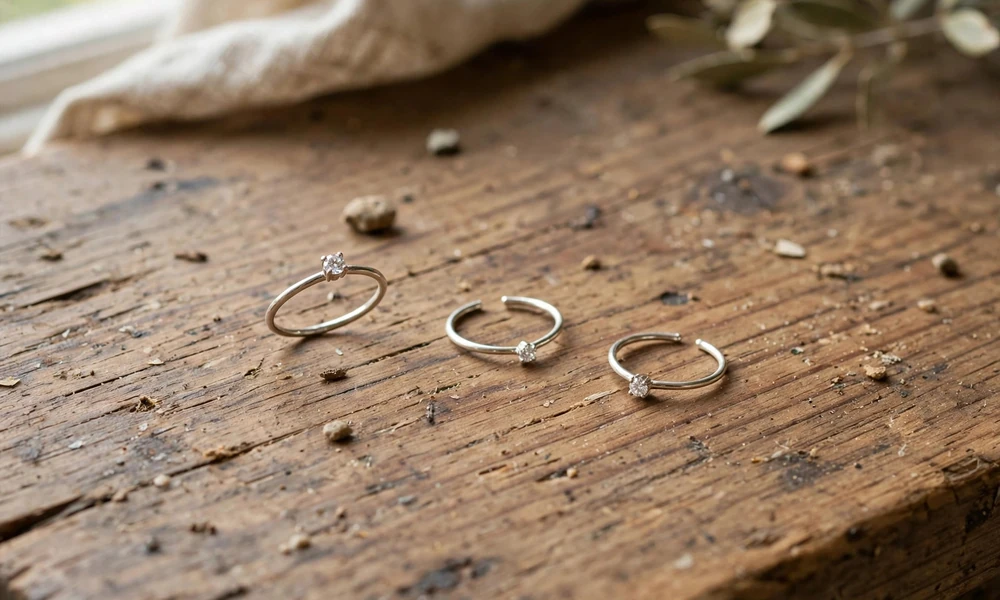
Look next at the setting. A bezel setting, where the metal wraps around the edge of the stone, is the most practical for a toe ring, because it protects the diamond and has no prongs to snag. A pavé setting, where small diamonds are set close together along the band, gives more sparkle but needs checking now and then, because a loose pavé stone can fall out unnoticed. A prong setting shows off a single stone best, but it is the most likely to catch on socks and tights.
Finally, look at the metal. Solid gold in 14k is a good balance of strength and comfort for a toe ring, and it holds up well to water and sun cream. Platinum is heavier and more durable, but it costs more. Gold-filled and gold-plated rings are cheaper, but the plating wears through on a toe ring faster than on a finger ring, because the ring rubs against shoes and the ground. Our guide to gold jewellery for everyday wear covers the difference between solid, filled, and plated gold in more detail, and it is worth reading before you spend more than a modest amount.
The 9 best diamond toe rings of 2027
The Classic Single Diamond Stud Ring
What we like: A single round diamond on a slim, adjustable gold band, simple, comfortable, and easy to wear every day. What to consider: The stone is small, so it will not make a dramatic statement. Best for: First-time toe ring wearers. Material: 14k gold, natural or lab-grown diamond. Price range: $45–$120. Standout feature: The cleanest, most wearable design in this guide.
This is the toe ring to start with. It sits flat, it does not catch on anything, and it goes with every sandal you own. If you only buy one diamond toe ring, this is the one.
The Pavé Diamond Toe Ring
What we like: A row of small diamonds set along the front of the band, so the whole ring sparkles rather than a single point. What to consider: Pavé stones need checking every few months, because one can loosen without you noticing. Best for: Evenings and special occasions. Material: 14k gold, lab-grown diamonds. Price range: $60–$150. Standout feature: Continuous sparkle across the band.
A pavé band looks far more expensive than it is. It is the best choice if you want a toe ring that reads as jewellery from across a room, not just up close.
The Diamond Halo Toe Ring
What we like: A central diamond surrounded by a ring of smaller stones, which makes the centre stone look larger than it is. What to consider: The halo adds height, so it can catch on tight shoes. Best for: Weddings and holidays. Material: 14k white gold, natural or lab-grown diamond. Price range: $80–$200. Standout feature: A centre stone that looks twice its size.
The halo is a clever piece of design. It gives you the look of a much larger diamond without the price, and on a toe it is a genuinely pretty effect in sunlight.
The Lab-Grown Diamond Toe Ring
What we like: A lab-grown diamond that is chemically identical to a mined diamond, at a fraction of the price, in a simple adjustable band. What to consider: Lab-grown diamonds hold less resale value than natural stones. Best for: Everyday wear on a sensible budget. Material: 14k gold, lab-grown diamond. Price range: $40–$110. Standout feature: The best sparkle per pound in this guide.
If you want a real diamond without a real-diamond price, this is the honest answer. Nobody can tell the difference by looking, and the money saved buys a better band.
The White Gold Diamond Toe Ring
What we like: A cool-toned white gold band with a single diamond, modern and understated, and it suits silver jewellery worn elsewhere. What to consider: White gold needs re-plating every year or two to keep its bright finish. Best for: People who wear silver or white gold elsewhere. Material: 14k white gold, natural or lab-grown diamond. Price range: $55–$140. Standout feature: A cool, modern finish that suits most skin tones.
White gold is the quiet choice. It does not draw attention to itself, it matches a silver ankle chain or a white gold ring, and it looks particularly good with a pale, well-cut stone.
The Rose Gold Diamond Toe Ring
What we like: A warm rose gold band that flatters tanned and olive skin, with a single diamond that picks up the pink tone of the metal. What to consider: Rose gold can look too warm against very pale skin. Best for: Summer and holidays. Material: 14k rose gold, natural or lab-grown diamond. Price range: $50–$130. Standout feature: The warmest, most flattering metal in this guide.
Rose gold and diamonds are a natural pair on a toe, because the pink tone softens the stone and suits sun-warmed skin. It is the most summery of the nine.
The Platinum Diamond Toe Ring
What we like: A heavy, durable platinum band that will not bend out of shape, with a securely set diamond. What to consider: Platinum costs considerably more than gold and is heavier on the toe. Best for: A long-term, everyday piece. Material: Platinum, natural diamond. Price range: $180–$400. Standout feature: The most durable band in this guide.
Platinum is the choice if you want a toe ring you will wear for years. It does not wear thin, it does not tarnish, and it holds a stone more securely than any other metal here.
The Bezel-Set Diamond Toe Ring
What we like: A diamond held in a smooth metal rim, with no prongs to catch on socks, tights, or towels. What to consider: The bezel covers the edge of the stone, so it can look slightly smaller than a prong-set stone of the same size. Best for: Active days and beach holidays. Material: 14k gold, natural or lab-grown diamond. Price range: $55–$140. Standout feature: The most practical, snag-free setting.
For a toe ring, practicality matters more than it does for a finger ring, because toes go into shoes, sand, and water. A bezel setting is the one that survives all of that without complaint.
The Tiny Diamond Toe Ring
What we like: A delicate, barely-there band with a very small diamond, light enough to forget you are wearing it. What to consider: The stone is tiny, so it is more of a glint than a feature. Best for: Stacking with a plain band. Material: 14k gold, lab-grown diamond. Price range: $35–$90. Standout feature: The lightest, most comfortable ring in this guide.
Sometimes less is the point. A tiny diamond on a fine band is the toe ring for people who want sparkle without a statement, and it stacks beautifully with a plain gold band.
Which diamond toe ring is right for you
If this is your first toe ring, start with the classic single diamond stud ring or the tiny diamond ring. Both are adjustable, both sit flat, and both are easy to live with. You can learn what size and weight suits your toe before spending more on a pavé or halo design.
If you already wear toe rings, choose by occasion. A bezel-set ring is the best everyday choice, because it never catches on anything. A pavé or halo ring is better saved for evenings, weddings, and holidays, when you want more sparkle and you are not putting shoes on and off all day. Our general guide to toe rings for women covers sizing, stacking, and styling in more detail, and it is worth reading if you plan to wear more than one at a time.
For a long-term piece, platinum is hard to beat, and a lab-grown diamond keeps the price sensible. For a holiday or a gift, rose gold with a single diamond is the warmest and most flattering choice.
The caveats that matter
Diamond toe rings are generally safe to wear, but a ring that is too tight can cause real problems. Toes swell in heat, after walking, and on flights, and a ring that fit in the morning can feel tight by the afternoon. If a toe goes red, swollen, or sore, take the ring off and do not force it back on. A ring that has to be cut off a toe is a miserable experience, and it is easily avoided by choosing an adjustable band.
| Detail | What is known |
|---|---|
| Best fit | Snug enough to stay put, loose enough to slide over the joint without pinching |
| Best stone for value | Lab-grown diamond, identical to natural, at a much lower price |
| Most practical setting | Bezel, with no prongs to catch on fabric or socks |
| Most durable metal | Platinum, followed by solid 14k gold; avoid thin plated bands |
| Who should take care | People with diabetes, poor circulation, or swollen feet should check with a clinician first |
| Water and beach wear | Fine in the sea and pool, but rinse off salt and sand, and dry the ring properly |
| When to take it off | Before tight shoes, long walks, flights, or if the toe swells, reddens, or hurts |
| What it does not do | It does not stay perfectly in place on every toe shape, and an adjustable band needs re-shaping now and then |
If you have diabetes, poor circulation, or a foot condition, speak to a clinician before wearing a toe ring. Reduced feeling in the feet means a tight ring can cause damage before you notice it, and that is a risk not worth taking for a piece of jewellery.
Checklist: buying a diamond toe ring honestly
Use these checks before you buy, and again after a week of wear.
- Check the fit: it should slide over the joint with a little resistance and sit without leaving a mark after an hour.
- Check the setting: a bezel or low prong setting is safer for everyday wear than a high prong.
- Check the stone: it should be bright and clear in daylight, not cloudy or dull.
- Check the metal: solid gold or platinum lasts; plated bands wear through quickly on toes.
- Check the band: it should be thick enough not to bend when you adjust it, but light enough to forget.
- Check the return policy: buy from somewhere that lets you return it if the fit is wrong after a day of wear.
Frequently asked questions
Can I wear a diamond toe ring every day?
Yes, if it fits well and the setting is low and secure. A bezel-set ring in solid gold is the best everyday choice.
Are lab-grown diamonds real diamonds?
Yes. A lab-grown diamond has the same chemical composition and crystal structure as a mined diamond. It looks the same, it is graded the same way, and only specialist equipment can tell them apart. The main difference is price and resale value.
Will a diamond toe ring turn my toe green?
Not if the band is solid gold or platinum. Green marks usually come from copper in cheap plated or base-metal bands. If a ring marks your skin, the metal is the problem, not the diamond.
Can I wear a toe ring in the sea or a swimming pool?
Yes, but rinse it in fresh water afterwards. Salt, sand, and chlorine can dull the metal over time and work grit under the setting. Dry the ring properly before putting shoes back on.
Which toe should I wear a diamond toe ring on?
Most people wear it on the second toe, because it is usually the longest and the ring sits most securely there. The big toe works too, but it is wider and more likely to rub inside a shoe. Try both and see which feels more comfortable.
How do I stop a toe ring from slipping off?
Close an adjustable band gently until it grips without pinching, and check it after walking, when your feet are warm and slightly smaller. A ring that slips off in water is a common loss, so take it off before swimming if it has ever felt loose. Our roundup of diamond nose rings uses the same fit principles, and it is a useful comparison if you are choosing between diamond jewellery for different piercings.
The bottom line
The best diamond toe ring in 2027 is not the largest stone or the most expensive band. It is the one that fits your toe, that you will actually wear, and that uses a stone and a setting suited to how you live. For most people, that means an adjustable band in solid 14k gold, a small well-cut diamond, and a bezel or low prong setting that does not catch on anything.
Choose one ring, wear it for a week before deciding whether it is right, and take it off the moment your toe feels tight, sore, or swollen. That is the honest way to enjoy a diamond toe ring, without the discomfort that makes people stop wearing one.