Best Diamond Nose Rings 2027
A diamond nose ring is a small piece of jewellery that does a surprising amount of work. It catches the light every time you turn your head, it frames the face without competing with it, and it can be worn with almost anything, from a plain white shirt to a full evening look. The problem is not finding a diamond nose ring. It is finding one that suits your piercing, your skin, and your budget, and that you will still love in five years.
That is why this guide is organised by style and setting, not just by price. A tiny round diamond on a thin gold hoop can be the quietest, most wearable piece you own. A larger pavé-set ring can be the centrepiece of an evening outfit. A lab-grown diamond can give you the same sparkle as a mined stone for considerably less money, while a small, well-cut natural diamond can hold its value better over time. The right choice depends on how you wear it, how often you wear it, and what matters most to you.
Below are nine diamond nose rings worth considering in 2027, from a classic single-stone hoop to a delicate pavé band and a bold solitaire stud-style ring. Each one is described by what it is good at, what to watch for, and who it suits best, so you can choose with your face and your piercing in mind, not just a bestseller list.
Key takeaways
- A diamond nose ring should be chosen for your piercing gauge, your face shape, and how often you plan to wear it, not just for the size of the stone.
- Lab-grown diamonds offer the same sparkle as mined diamonds at a lower price, while natural diamonds tend to hold resale value better.
- Implant-grade titanium and solid 14k or 18k gold are the safest metals for a healed nostril piercing; plated metals wear down and can irritate skin.
- Buy only from sellers who state the diamond weight, cut, clarity, and whether the stone is natural or lab-grown.
- No nose ring suits every face, every piercing, or every budget, and a ring that looks perfect in a photo may sit very differently on your own nose.
What diamond nose rings actually are
A diamond nose ring is a piece of nostril jewellery set with one or more diamonds. Most are hoops, either a plain ring with a single stone, a ring set with small diamonds around part of the band, or a clicker-style ring that closes with a hinge. What they share is a diamond, or several, set into a metal that sits comfortably against the skin of the nose.
The diamond itself is usually small. A nose ring stone is typically between 0.05 and 0.30 carats, because anything larger starts to look heavy on the nose and can catch on clothing, hair, and scarves. What matters more than size is the cut: a well-cut small diamond returns more light than a poorly cut larger one. A round brilliant cut is the most common choice, followed by princess and cushion cuts for people who want a squarer look.
The metal matters just as much. Solid gold in 14k or 18k, implant-grade titanium, and platinum are the safest choices for a healed piercing. They resist tarnish, they rarely cause reactions, and they hold a stone securely. If a price looks too good for a solid gold diamond ring, check the metal description before you buy.
How we chose these nose rings and what to look for
Look first at the stone. Check whether the diamond is natural or lab-grown, its carat weight, its cut, and its clarity. A seller who does not state these details is a seller to avoid. For a nose ring, a clarity grade of VS2 or better is usually plenty, because the stone is small and the setting hides tiny inclusions. Colour matters too: a colourless or near-colourless diamond looks brightest against the skin, while a warm-toned stone can look softer and more natural.
Look next at the fit. Your nose ring must match the gauge of your piercing, usually 20 or 18 gauge for a nostril, and the diameter of the hoop must suit the distance between your piercing and the edge of your nostril. A hoop that is too large hangs low and catches on things. A hoop that is too small pulls and presses on the piercing. Measure your current ring, or ask a piercer to measure your piercing, before you order. Our guide to gold jewellery for everyday wear explains how to judge metal quality, because the same checks that matter for a necklace or a pair of earrings matter for a nose ring too.
Finally, look at the closure. A seamless ring has no visible break and looks the cleanest, but it can be fiddly to open and close. A clicker ring closes with a hinge and is easier to change, but the hinge adds a small amount of bulk. Choose the closure you can actually manage with your own hands, not the one that looks best in a photograph.
The 9 best diamond nose rings of 2027
The Classic Single Diamond Hoop
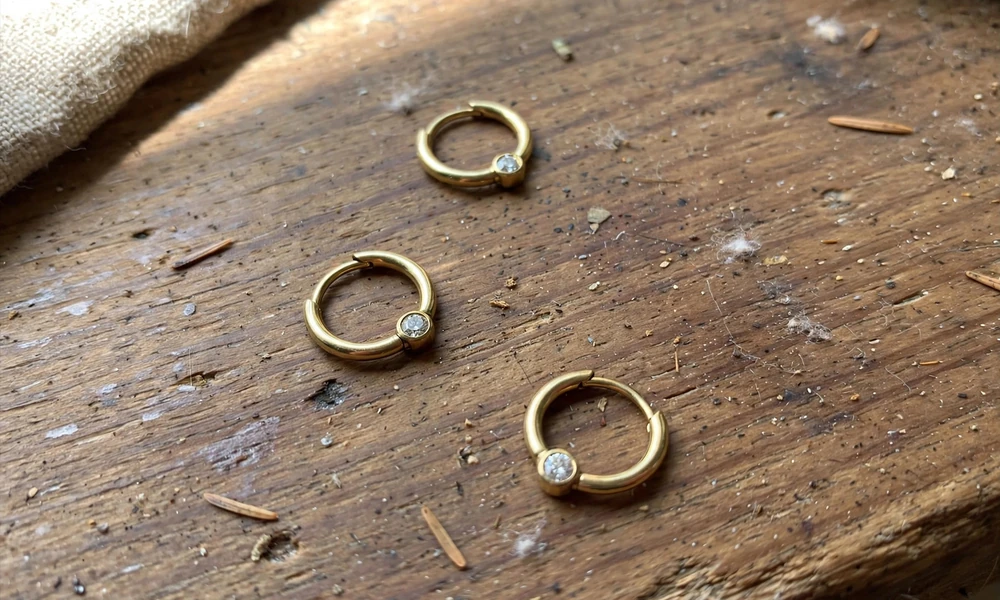
What we like: One round diamond set into a slim, seamless gold hoop, clean, bright, and easy to wear with anything. What to consider: The single stone is small, so it will not make a bold statement, and seamless rings need a little practice to open and close. Best For: Everyday wear and first diamond nose rings. Material: 14k solid gold, 0.10 carat round diamond. Price Range: Approximately £180 to £450. Standout Feature: The slim hoop disappears against the skin and lets the diamond do all the work.
The Pavé Diamond Half Hoop
What we like: Small diamonds set along half the band, so the ring sparkles from every angle and looks larger than a single stone. What to consider: Pavé settings need more care when cleaning, and tiny stones can loosen if the ring is knocked. Best For: Evening wear and special occasions. Material: 18k solid gold, 0.15 carats total pavé diamonds. Price Range: Approximately £350 to £900. Standout Feature: A continuous line of sparkle that catches light with every movement.
The Solitaire Diamond Stud Ring
What we like: A single larger diamond held in a four-prong setting on a straight post, secure, bright, and easy to clean. What to consider: The post sits flat against the nostril, so it suits healed piercings that are comfortable with a straight bar. Best For: People who want one clear, bright stone. Material: 14k solid gold, 0.20 carat round diamond. Price Range: Approximately £250 to £700. Standout Feature: A raised prong setting that lets light reach the diamond from all sides.
The Lab-Grown Diamond Hoop
What we like: A larger, brighter diamond for the same money, chemically identical to a mined diamond, with a clear certificate stating it is lab-grown. What to consider: Lab-grown diamonds usually hold less resale value than natural diamonds, so buy it to wear, not to keep as an investment. Best For: Getting the biggest sparkle for your budget. Material: 14k solid gold, 0.25 carat lab-grown round diamond. Price Range: Approximately £150 to £400. Standout Feature: A noticeably larger stone at a price that would buy a much smaller natural diamond.
The White Gold Diamond Hoop
What we like: A cool, bright white gold band that makes a colourless diamond look even whiter, with a modern, clean finish. What to consider: White gold is usually coated in rhodium, which wears over time and may need re-plating every year or two. Best For: Cool skin tones and minimal, modern styling. Material: 14k white gold, 0.12 carat round diamond. Price Range: Approximately £200 to £550. Standout Feature: A bright, silvery finish that suits silver jewellery and cool-toned outfits.
The Rose Gold Diamond Hoop
What we like: A warm rose gold band that softens the look of the diamond and flatters warm skin tones beautifully. What to consider: Rose gold contains copper, so it is not the best choice if you have a known copper sensitivity. Best For: Warm skin tones and romantic, soft styling. Material: 14k rose gold, 0.10 carat round diamond. Price Range: Approximately £180 to £500. Standout Feature: A warm, blushing tone that looks gentle against the skin.
The Titanium Diamond Nose Ring
What we like: Implant-grade titanium, the most skin-friendly metal for piercings, with a small diamond set into a lightweight, comfortable ring. What to consider: Titanium cannot be resized or repaired as easily as gold, and the choice of finishes is more limited. Best For: Sensitive skin and all-day comfort. Material: Implant-grade titanium, 0.08 carat round diamond. Price Range: Approximately £80 to £250. Standout Feature: Feather-light and hypoallergenic, comfortable enough to forget you are wearing it.
The Diamond Clicker Ring
What we like: A hinged clicker closure that opens and closes easily, with a row of small diamonds along the front of the ring. What to consider: The hinge is slightly bulkier than a seamless ring, and cheaper clickers can loosen over time. Best For: People who change their nose ring often. Material: 14k solid gold, 0.12 carats total pavé diamonds. Price Range: Approximately £280 to £750. Standout Feature: A secure hinge you can open and close in seconds, without tools.
The Vintage-Inspired Diamond Nose Ring
What we like: A milgrain-edged band with a small old-cut diamond, full of character, and a design that looks like a family heirloom rather than a new purchase. What to consider: Vintage-style settings can be harder to clean, and old-cut diamonds sparkle differently from modern brilliant cuts. Best For: Vintage lovers and anyone who wants a nose ring with personality. Material: 14k solid gold, 0.15 carat old-cut diamond. Price Range: Approximately £300 to £850. Standout Feature: Milgrain detailing and an old-cut stone that give it a one-of-a-kind feel.
Which diamond nose ring is right for you
Start with your piercing. If your nostril piercing is fully healed and comfortable, any of these styles will work. If it is still settling, or if your skin is sensitive, choose titanium or solid gold and a simple setting with no sharp edges.
Then think about how you will wear it. If you want one ring for every day, choose a small, secure style in a metal that matches the rest of your jewellery, and check that the diameter suits your nose. If you want a ring for evenings and occasions, a pavé half hoop or a larger solitaire will give you more sparkle. If you change your jewellery often, a clicker ring will save you time and frustration. Our guide to the best nose rings for women covers the wider range of styles, so you can compare hoops, studs, and clickers side by side before you decide.
Finally, set your budget before you shop, and decide whether you want a natural or a lab-grown diamond. A lab-grown stone gives you more size for the same money. A natural stone holds its value better. Neither is better in absolute terms. The right one is the one that fits your budget and your priorities, and that you will enjoy wearing every day.
The caveats that matter
A diamond nose ring is a piece of fine jewellery, and it needs the same care as any other. Diamonds are hard, but the settings that hold them are not. A knock against a hard surface can loosen a prong, a pavé stone can fall out if the ring is pulled, and a cheap plating can wear away and expose metal that irritates your skin. Check your ring regularly, clean it gently, and have a jeweller check the setting once a year if you wear it daily.
| Detail | What is known |
|---|---|
| Best metal for sensitive skin | Implant-grade titanium, or solid 14k or 18k gold |
| Typical diamond size | 0.05 to 0.30 carats for a nose ring stone |
| Natural vs lab-grown | Lab-grown is identical in sparkle and cheaper; natural holds resale value better |
| Common gauge | 20 or 18 gauge for most nostril piercings |
| Cleaning | Warm water, mild soap, and a soft brush; avoid harsh chemicals |
| Who should be careful | People with metal sensitivities, unhealed piercings, or a known copper allergy with rose gold |
| What to check before buying | Diamond weight, cut, clarity, natural or lab-grown, and the exact metal |
| What it does not do | It does not suit every face or piercing, and a large stone will not stay comfortable all day |
If your piercing is not fully healed, wait before wearing a diamond nose ring. A fresh piercing needs simple, implant-grade jewellery while it heals, and a heavier or more detailed ring can slow healing or cause irritation. If your piercing becomes red, swollen, or painful after changing jewellery, remove the ring, clean the area gently, and speak to your piercer before trying another style.
Checklist: buying a diamond nose ring honestly
Use these checks before you buy, and again after two weeks of wear.
- Check the stone: natural or lab-grown, carat weight, cut, and clarity should all be stated.
- Check the metal: solid gold, platinum, or implant-grade titanium, not plated fashion metal.
- Check the fit: gauge and hoop diameter must match your piercing and your nose.
- Check the closure: choose one you can open and close yourself, without tools if possible.
- Check the return policy: you need to be able to return it if it does not suit your face.
- Check the setting: look at the prongs or pavé closely, and have a jeweller check them once a year.
Frequently asked questions
How much should a diamond nose ring cost?
It depends on the diamond and the metal. A small titanium ring with a tiny diamond can cost under £100, while a solid gold ring with a larger natural diamond can cost £500 or more. As a guide, expect £150 to £500 for a good quality solid gold diamond nose ring, and less for lab-grown stones.
Are lab-grown diamonds real diamonds?
Yes. A lab-grown diamond has the same chemical composition, hardness, and sparkle as a mined diamond. The difference is where it was made and, usually, its resale value. A reputable seller will always state clearly whether a stone is natural or lab-grown.
Can I wear a diamond nose ring every day?
Yes, if your piercing is fully healed and the ring fits well. Choose a secure closure, a smooth setting with no sharp edges, and a size that does not catch on clothing or hair. Check the setting regularly, because daily wear loosens prongs over time.
What gauge is a diamond nose ring?
Most nostril piercings are 20 or 18 gauge. Your ring must match your piercing gauge. If you are unsure, ask your piercer to measure it, or check the gauge of a ring you already wear comfortably.
How do I clean a diamond nose ring?
Soak it in warm water with a drop of mild soap, then brush gently with a soft toothbrush and rinse. Dry it fully before you put it back in. Avoid ultrasonic cleaners on pavé settings, and avoid bleach, acetone, or harsh chemicals, which can damage the metal and loosen stones.
Will a diamond nose ring suit my face?
Most faces suit a small, well-fitted diamond nose ring. The key is proportion: a tiny stone suits a small nose, while a larger stone or a pavé band suits a stronger nose. If you are unsure, try a plain hoop first, or look at how a diamond necklace sits against your skin, as our guide to pearl necklaces for women shows how a single bright stone can frame the face without overwhelming it.
The bottom line
The best diamond nose ring in 2027 is not the biggest or the most expensive. It is the one that fits your piercing, suits your face, and feels comfortable enough to wear every day. For most people, that means a small round diamond in solid gold or titanium, with a secure closure and a setting you can keep clean. Lab-grown diamonds are the best value if sparkle matters most, while natural diamonds are the better choice if you care about resale value.
Choose one ring, check the stone and the metal before you buy, and wear it for a few weeks before you decide whether it is right for you. A diamond nose ring is a small purchase, but it is one you will see every time you look in the mirror, so it is worth choosing carefully.