Best Opal Nose Rings 2027
Opal nose rings are the quiet show-offs of the jewellery box. They do not sparkle the way a diamond does, and that is exactly the point. An opal shifts colour as you move, flashing green, blue, pink and gold from inside the stone, so a small nose ring can look different in morning light, in a restaurant, and under evening lamps. In 2027, opal nose rings have become a favourite for people who want something delicate and personal, rather than loud.
The catch is that opal is a soft, water-bearing stone, and a nose ring lives a hard life. It is touched, wiped, slept on, and exposed to makeup, cleanser and salt water. A well-chosen opal can be worn every day for years.
Below are nine opal nose rings worth considering in 2027, from a tiny white opal stud to a bold Ethiopian opal hoop. Each one is described by what it is good at, what to watch for, and who it suits best, so you can choose an opal nose ring that will actually last on your face, not just look good in a photograph.
Key takeaways
- Opal nose rings suit people who want colour that shifts with the light, rather than the fixed sparkle of a diamond or crystal.
- White opal is the most forgiving choice for daily wear; Ethiopian opal shows the strongest colour play but needs more care.
- Look for a bezel or half-bezel setting, which protects the soft stone far better than a tall prong setting.
- Keep opal away from ultrasonic cleaners, harsh chemicals, and long soaks in water, and store it somewhere it will not dry out.
- Opal is softer than most gemstones and can chip or cloud, so a nose ring with a very large, exposed opal is a poor choice for everyday wear.
What opal nose rings actually are
An opal nose ring is a small piece of nose jewellery set with opal, a gemstone made of silica and water that shows flashes of colour as light moves through it. That colour play is called play-of-colour, and it is what makes each opal different. No two stones show the same pattern, so even a simple opal stud feels personal in a way a crystal never quite does. Most opal nose rings use white opal, Ethiopian opal, or a man-made opal, often called synthetic opal, set in gold, silver, or titanium.
White opal has a milky base with soft flashes of green, blue and pink, and it is the most forgiving choice for a first opal nose ring. Ethiopian opal, usually sold as Welo opal, has a clearer base and stronger, brighter flashes, but it absorbs water more readily and can cloud temporarily if it gets soaked. Synthetic opal is tougher than natural opal and a sensible choice for daily wear on a budget.
The setting matters as much as the stone. A bezel setting wraps a rim of metal around the edge of the opal, protecting it from knocks and from catching on clothing. A prong setting lifts the stone higher and shows more of it, but leaves the edges exposed, which is risky for a soft stone worn on the face. For a nose ring, a low bezel or half-bezel in solid gold or titanium is the safest shape, and it also sits more comfortably against the skin.
How we chose these nose rings and what to look for
We looked first at the stone itself. A good opal nose ring should show clear colour play in ordinary daylight, not only under a shop spotlight. White opal should look milky and bright, not grey or chalky. Ethiopian opal should show flashes of more than one colour, and the stone should be free of visible cracks, which can spread.
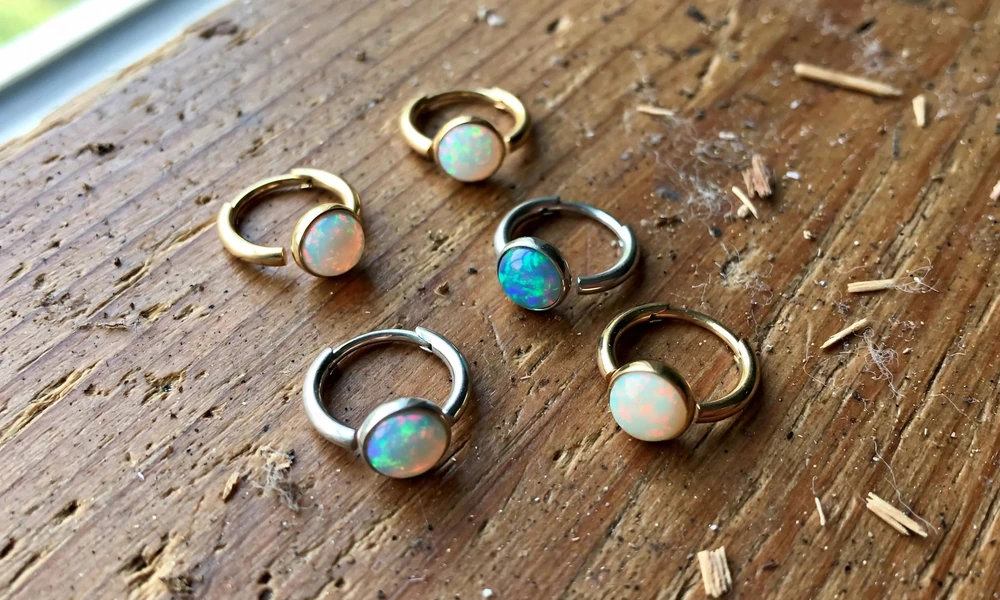
We looked next at the setting and the metal. The best opal nose rings in this guide use a bezel or half-bezel setting, a low profile that does not snag, and a metal that suits sensitive skin. Solid 14-carat gold and implant-grade titanium are the most reliable choices. Gold-plated silver can look lovely at first, but the plating wears thin on a nose ring that is handled every day, and the silver underneath can irritate sensitive skin. A guide to gold jewellery for everyday wear explains why solid gold holds up better than plated pieces over time.
Finally, we looked at size and wearability. A nose ring stone between 2 and 3 millimetres suits most faces and sits comfortably all day. Larger stones, 4 millimetres and above, make a statement, but they catch on scarves and pillowcases and put more weight on the piercing. We favoured rings that are easy to put on and take off, that sit flat against the nostril, and that come in a gauge that matches a standard healed nostril piercing.
The 9 best opal nose rings of 2027
The Classic White Opal Stud
What we like: A 2-millimetre white opal in a low gold bezel, milky with soft green and pink flashes, comfortable enough to forget you are wearing it. What to consider: The colour play is gentle rather than dramatic, so it suits people who want subtlety. Best for: First-time opal wearers and everyday use. Material: White opal in 14-carat gold. Price range: £40 to £90. Standout feature: A low, snag-free bezel that sits flat on the nostril.
This is the safest starting point in the whole guide. The white opal is forgiving, the gold bezel protects the stone, and the size works with almost any face shape or outfit.
The Ethiopian Opal Hoop
What we like: A bright Welo opal with strong flashes of blue and green, set at the front of a slim gold hoop. What to consider: Ethiopian opal absorbs water, so take it out before swimming or long showers. Best for: Evenings and occasions when you want the stone to be noticed. Material: Ethiopian opal in 14-carat gold. Price range: £80 to £180. Standout feature: The clearest, most vivid colour play in this guide.
If you want an opal that genuinely stops people, this is the one. It needs more care than white opal, but the colour is worth the extra attention.
The Tiny Opal Ball-End Pin
What we like: A 2-millimetre opal ball on a slim titanium pin, light, discreet, and kind to sensitive skin. What to consider: The stone is small, so the colour play is only visible up close. Best for: Work, school, and people who prefer minimal jewellery. Material: Synthetic opal in implant-grade titanium. Price range: £25 to £55. Standout feature: The lightest, most comfortable opal nose ring here.
A good choice if you love opal but do not want your nose ring to be the first thing people notice.
The Rose Gold Opal Stud
What we like: A warm rose gold bezel that makes the opal’s pink and peach flashes stand out, with a soft, romantic look. What to consider: Rose gold suits warm skin tones best and can look less striking on very cool skin. Best for: Warm skin tones and evening wear. Material: White opal in 14-carat rose gold. Price range: £50 to £110. Standout feature: The rose gold brings out the opal’s warmest colours.
Rose gold and opal are a natural pairing. The warm metal flatters the stone, and the combination looks soft rather than flashy.
The Silver Opal Nose Ring
What we like: A bright white opal in polished sterling silver, cool and clean-looking, at a friendly price. What to consider: Silver tarnishes and needs occasional polishing, and it is not the best choice for very sensitive skin. Best for: Cool skin tones and casual daytime wear. Material: White opal in sterling silver. Price range: £30 to £70. Standout feature: The most affordable natural opal option in this guide.
Silver keeps the look fresh and modern. Just be ready to polish it now and then, and choose gold or titanium if your skin reacts to silver.
The Opal and Diamond Accent Ring
What we like: A small opal flanked by two tiny diamonds, giving a little extra sparkle without overpowering the stone. What to consider: The most expensive style here, and the diamonds add small prongs that need checking. Best for: Weddings, celebrations, and gifts. Material: White opal and diamonds in 14-carat gold. Price range: £120 to £280. Standout feature: The diamonds frame the opal and catch the light first.
This is the dressiest opal nose ring in the guide, and the one most often bought as a gift. It is better saved for occasions than worn every day.
The Black Opal Stud
What we like: A dark-based opal with intense flashes of green, blue and red, the most dramatic stone in this guide. What to consider: Genuine black opal is rare and costly, so check that the stone is natural or clearly labelled as synthetic. Best for: Bold looks and evening wear. Material: Black opal in 14-carat gold. Price range: £90 to £250. Standout feature: The dark base makes the colour flashes look far stronger.
Black opal is the one to choose if you want drama. Ask the seller whether the stone is natural, doublet, or synthetic, and pay accordingly.
The Opal Seamless Hoop
What we like: A slim seamless hoop with a small opal set into the front, smooth, comfortable, and easy to wear all day. What to consider: The click closure needs a gentle touch, and the stone is small. Best for: People who prefer hoops to studs. Material: Synthetic opal in 14-carat gold. Price range: £60 to £130. Standout feature: A seamless hoop with no visible join or catch.
Seamless hoops are popular for a reason. They sit neatly, they do not snag, and the opal gives a plain hoop a quiet touch of colour.
The Double-Opal Nose Ring
What we like: Two small opals set side by side on a single ring, playful and unusual without being large. What to consider: Two stones mean twice the care, and the style suits a healed piercing that is fully settled. Best for: People who already wear nose jewellery and want something different. Material: White opal in 14-carat gold. Price range: £70 to £150. Standout feature: Two opals that flash different colours as you move.
This is the most playful pick in the guide. It is not the first opal nose ring to buy, but it is a lovely second one.
Which opal nose ring is right for you
Start with your skin tone and your daily routine. Warm skin tones suit rose gold and the peach flashes of white opal. Cool skin tones suit silver, white gold, and the blue-green flashes of Ethiopian opal. If your skin is sensitive, choose titanium or solid gold and avoid plated metals, which wear through and irritate the piercing over time.
Think honestly about how you will wear it. A small bezel stud is the best choice for everyday wear, work, and sleeping, because it sits flat and does not catch. If you swim, shower, or exercise a lot, a synthetic opal in titanium will cope far better than a large natural opal in a prong setting.
Finally, check the size against your face. A 2-millimetre stone suits most noses and looks delicate. A 3-millimetre stone is still wearable every day and shows more colour. Anything above 4 millimetres is a statement piece, and it will dominate your face in photographs, so try it on in daylight before you commit. Our guide to the best nose rings for women covers sizing and face shape in more detail, and the same principles apply to opal.
The caveats that matter
Opal is a beautiful stone, but it is not a hard one. On the Mohs scale it sits around 5.5 to 6.5, well below diamond, sapphire, or even quartz, which means it can scratch and chip if it is knocked against something hard.
| Detail | What is known |
|---|---|
| Hardness | Opal rates about 5.5 to 6.5 on the Mohs scale, so it can scratch and chip |
| Best setting | A low bezel or half-bezel protects the stone better than tall prongs |
| Best metals | Solid 14-carat gold and implant-grade titanium suit sensitive skin best |
| Water | Ethiopian opal can cloud if soaked; take it out before swimming |
| Cleaning | Warm water and mild soap only; never use an ultrasonic cleaner |
| Storage | Keep opal in a soft pouch away from hard jewellery that could scratch it |
| Who should avoid it | Anyone with a fresh or unhealed piercing, or very sensitive skin with plated metals |
| What it does not do | Opal does not sparkle like a diamond and can look plain in dim light |
If your piercing is still healing, wait. Opal is not the right stone for a fresh piercing, because it needs to be removed for cleaning more often, and a healing piercing needs a simple, smooth piece of jewellery that stays put. Once the piercing is fully healed, usually after several months, an opal nose ring is a lovely choice, but keep a plain titanium stud for days when your nose feels sore or irritated.
Checklist: choosing an opal nose ring honestly
Use these checks before you buy, and again when the ring arrives.
- Check the stone in daylight: it should show colour play, not look flat or chalky.
- Check the setting: a low bezel protects opal far better than tall prongs.
- Check the metal: solid gold or titanium for sensitive skin, not plated silver.
- Check the size: 2 to 3 millimetres suits most faces for everyday wear.
- Check the gauge: it should match your healed piercing, usually 18 or 20 gauge.
- Check the seller: ask whether the opal is natural, synthetic, or a doublet, and keep the receipt.
Frequently asked questions
Can I wear an opal nose ring every day?
Yes, if it is a small stone in a bezel setting and you look after it. A 2-millimetre white or synthetic opal in gold or titanium copes well with daily wear. Take it out for swimming, heavy exercise, and cleaning products, and it will last far longer.
Does opal cloud or change colour?
Ethiopian opal can cloud temporarily if it absorbs water, and it usually clears again as it dries. White opal is more stable. Opal can also dry out and crack if it is stored somewhere very dry for a long time, so keep it in a soft pouch rather than loose in a dry drawer.
How do I clean an opal nose ring?
Use lukewarm water and a drop of mild soap, rinse well, and pat dry with a soft cloth. Never use an ultrasonic cleaner, steam cleaner, or harsh chemical, and do not scrub the stone with a brush. A guide to pearl necklaces covers similar gentle care for soft stones, and the same habits apply to opal.
Is synthetic opal worth buying?
Often yes. Synthetic opal is tougher than natural opal, shows a neat, regular colour pattern, and costs less. It is a sensible choice for a nose ring you plan to wear every day, and most people cannot tell it apart from natural opal once it is on the face.
What size opal nose ring should I choose?
For most faces, 2 to 3 millimetres is the sweet spot. It shows the colour play without dominating your nose. Larger stones, 4 millimetres and above, are better for occasions, because they catch on things and feel heavier through the day.
Can I wear an opal nose ring if my skin is sensitive?
Yes, if you choose the right metal. Implant-grade titanium and solid 14-carat gold are the safest options. Avoid gold-plated silver and nickel-containing alloys, which are the usual cause of irritation, and take the ring out if your piercing feels sore or itchy.
The bottom line
The best opal nose ring in 2027 is a small stone in a protective bezel, in solid gold or titanium, in a size you can wear all day without thinking about it. White opal is the most forgiving choice for a first ring, Ethiopian opal is the most dramatic, and synthetic opal is the most practical for daily wear. Whichever you choose, look at the stone in daylight, check the setting, and ask whether the opal is natural, synthetic, or a doublet before you pay.
Opal will never be the toughest stone in your jewellery box, and that is part of its charm. Treat it gently, keep it out of water and harsh chemicals, and it will reward you with colour that no other stone can match.