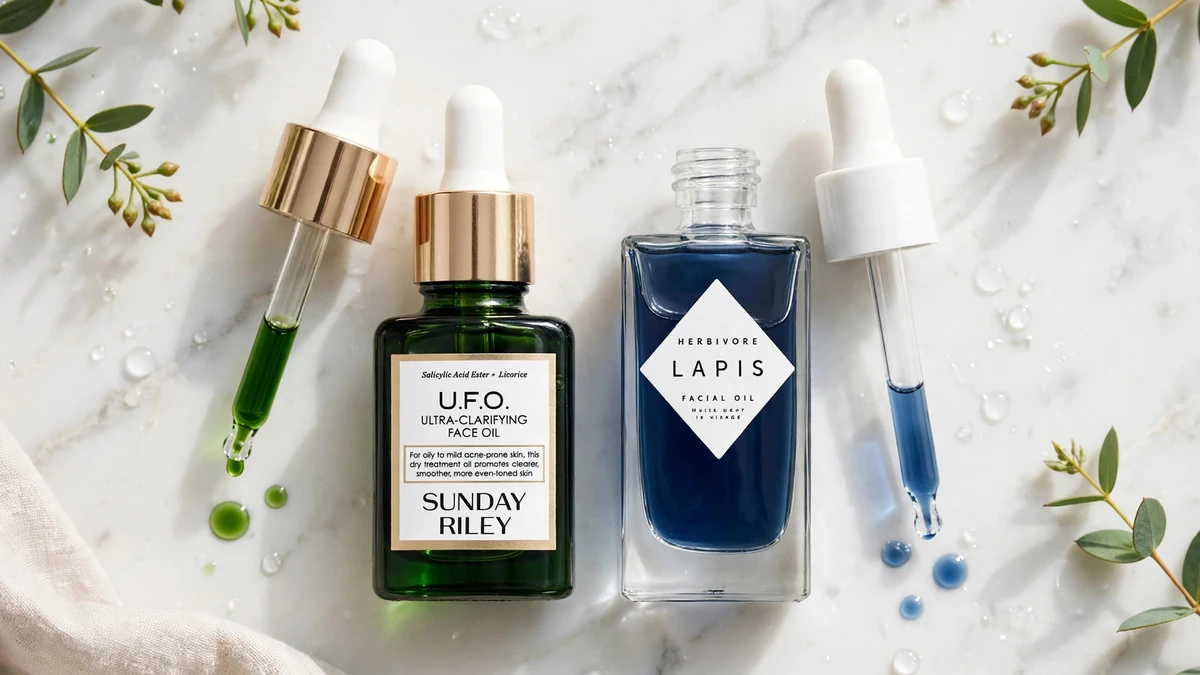

Putting oil on oily skin sounds like the worst idea in skincare. It feels counterintuitive, and for years the standard advice was to strip oil away at every step. Yet many people with oily skin find that the right face oil actually helps their skin look calmer, less shiny by midday, and more balanced overall. The trick is choosing an oil that works with oily skin instead of against it.
The science is straightforward. Skin produces sebum to protect itself, and when you strip it away aggressively with harsh cleansers and alcohol-heavy toners, skin often responds by producing more. A light, fast-absorbing oil can signal that the barrier is cared for, soften the look of pores, and add a healthy glow without the heavy, greasy film that makes oily skin look worse. The wrong oil, though, can clog pores, trigger breakouts, and sit on the surface all day.
Below are nine face oils worth considering for oily skin in 2027, from a clarifying salicylic-acid blend to a pure single-ingredient squalane. Each one is described by what it is good at, what to watch for, and who it suits best, so you can choose with your skin in mind, not just a bestseller list.
Key takeaways
- Light, non-comedogenic oils such as squalane, jojoba and rosehip suit oily skin far better than heavy oils such as coconut or wheatgerm.
- Face oils work best as the last step of a routine, over moisturiser, or mixed into moisturiser — two to four drops is usually enough.
- Clarifying oils with salicylic acid or blue tansy can help with congestion, but they are not a substitute for a proper cleanser or treatment.
- Patch test any new oil for a week before using it all over your face, and introduce only one new active at a time.
- No face oil controls oil production permanently or clears acne on its own, and an oil that causes breakouts, redness or itching should be stopped.
What face oils actually do for oily skin
A face oil is a blend of plant oils, and sometimes oil-soluble actives, designed to sit on the skin and support the barrier. For oily skin, the most useful oils share a few traits: they are light, they absorb quickly, and they are low on the comedogenic scale, which is a rough ranking of how likely an ingredient is to clog pores. Squalane, jojoba, grapeseed and rosehip are the usual names that come up, and for good reason — they feel dry to the touch within a minute or two and rarely leave a film.
What an oil does not do is dry your skin out, and that is the point. Oily skin still needs moisture, and dehydrated oily skin often looks shinier, not less so. A few drops of a light oil can keep the surface supple, help makeup apply more evenly, and make skin look like skin rather than like a sheet of shine by lunchtime.
The other thing an oil can do is carry useful ingredients. Salicylic acid dissolved in oil reaches into pores more easily than a water-based formula. Blue tansy and chamomile calm the look of redness. Vitamin C in an oil base can be more stable than in a water serum.
How we chose these oils and what to look for
Look first at the oil base. Squalane and jojoba are the safest starting points for oily skin, because they mimic the skin’s own lipids and absorb fast. Rosehip is a good choice if you also want help with the look of post-blemish marks, thanks to its natural vitamin A content. Heavy oils such as coconut, olive and wheatgerm are best avoided on the face if you are breakout-prone, even though they work well on the body.

Look next at the actives. A clarifying oil should contain something that actually helps congestion, such as salicylic acid, black cumin seed oil, or blue tansy. A calming oil should have chamomile, calendula, or rosehip. A brightening oil should have a stable vitamin C derivative or a fruit-seed oil rich in antioxidants. If an oil lists only fragrance and a heavy carrier oil, it is a scented moisturiser, not a treatment, and you should judge it on that basis.
Finally, look at the texture and the bottle. An oil for oily skin should sink in within a couple of minutes and leave skin looking healthy, not wet. A dropper bottle keeps the formula clean and lets you measure two to four drops precisely. Our guide to the best cleansers for oily skin explains the first half of the routine, because an oil works best on skin that has been cleansed gently, not stripped bare.
The 9 best face oils for oily skin of 2027
Sunday Riley U.F.O. Ultra-Clarifying Face Oil
What we like: A clarifying oil built around 1.5 percent salicylic acid, with black cumin seed, milk thistle and cucumber seed oils, designed to help with congestion and the look of pores without drying skin out.
What to consider: The salicylic acid means it can sting on broken or freshly exfoliated skin, and it is not suitable alongside a strong retinoid on the same night. Key ingredients: Salicylic acid, black cumin seed oil, milk thistle, cucumber seed oil. Skin type: Oily, combination, acne-prone. Size: 15 ml / 35 ml. Cruelty-free: Yes.
Herbivore Lapis Facial Oil
What we like: A deep-blue oil coloured by blue tansy, with squalane, jojoba and kukui nut oils, made to calm the look of redness and congestion. It has a cult following among people with oily, reactive skin, and the texture is light enough for daytime use.
What to consider: The blue colour can tint very fair skin slightly if you use too much, and the price per millilitre is high. Key ingredients: Blue tansy, squalane, jojoba, kukui nut oil. Skin type: Oily, combination, sensitive. Size: 8 ml / 50 ml. Cruelty-free: Yes.
The Ordinary 100% Plant-Derived Squalane
What we like: A single-ingredient oil that is hard to beat for value. Squalane is light, odourless, non-comedogenic, and mimics the skin’s own lipids, so it suits almost every oily skin type and layers under anything without pilling.
What to consider: It does nothing on its own for breakouts or dark spots — it is a barrier-supporting moisturiser, not a treatment — so pair it with an active if you want more. Key ingredients: 100% plant-derived squalane. Skin type: All skin types, including oily and sensitive. Size: 30 ml. Cruelty-free: Yes.
Drunk Elephant Virgin Marula Luxury Face Oil
What we like: A cold-pressed marula oil rich in antioxidants and omega fatty acids, with a dry, fast-absorbing finish that surprises people who expect a heavy oil.
What to consider: It is one of the more expensive single oils on this list, and it is fragrance-free but has a faint nutty scent that some people notice. Key ingredients: 100% virgin marula oil. Skin type: Oily, combination, normal. Size: 15 ml / 30 ml. Cruelty-free: Yes.
Pai Rosehip Bioregenerate Oil
What we like: A certified organic rosehip oil, cold-pressed to preserve its natural vitamin A and essential fatty acids, aimed at the look of post-blemish marks and uneven tone. It is one of the best-regarded rosehip oils for oily, breakout-prone skin.
What to consider: Rosehip oil has a natural orange tint and a mild earthy scent, and it oxidises faster than squalane, so keep it cool and use it within a few months of opening. Key ingredients: Organic rosehip seed oil, vitamin E. Skin type: Oily, combination, blemish-prone. Size: 10 ml / 30 ml. Cruelty-free: Yes.
Biossance Squalane + Vitamin C Rose Oil
What we like: A squalane base with a stable, oil-soluble vitamin C derivative and rose oil, aimed at brightening dull, oily skin without irritation. It gives an immediate glow and, over weeks, helps the look of uneven tone.
What to consider: The rose scent is noticeable, so skip it if you are sensitive to fragrance, and the glow it gives can look too dewy on very oily skin in humid weather. Key ingredients: Squalane, tetrahexyldecyl ascorbate, rose oil. Skin type: Oily, combination, dull. Size: 30 ml. Cruelty-free: Yes.
Indie Lee Squalane Facial Oil
What we like: A pure olive-derived squalane that is fragrance-free, fast-absorbing, and gentle enough for reactive oily skin. It is a good everyday oil for people who want barrier support without any active ingredients at all.
What to consider: Like any pure squalane, it is a moisturiser rather than a treatment, so it will not address breakouts or pigmentation on its own. Key ingredients: 100% olive-derived squalane. Skin type: All skin types, including oily and sensitive. Size: 30 ml / 60 ml. Cruelty-free: Yes.
Kiehl’s Daily Reviving Concentrate
What we like: A lightweight concentrate with sunflower, ginger root and tamanu oils, designed to be used in the morning to protect skin from daily environmental stress. It absorbs fast and layers well under sunscreen and makeup.
What to consider: It contains fragrance, so patch test if you are sensitive, and the ginger scent is distinctive. Key ingredients: Sunflower seed oil, ginger root oil, tamanu oil. Skin type: Oily, combination, normal. Size: 30 ml. Cruelty-free: No.
Youth to the People Superberry Hydrate + Glow Oil
What we like: A blend of maqui, prickly pear, acai and squalane, packed with antioxidants and aimed at dull, congested oily skin.
What to consider: It is one of the richer blends here, so start with two drops and build up, and keep it away from very active exfoliation nights. Key ingredients: Maqui, prickly pear, acai, squalane. Skin type: Oily, combination, dull. Size: 30 ml. Cruelty-free: Yes.
Which face oil is right for your oily skin
Start with your main concern. If breakouts and congestion are the issue, reach for a clarifying oil first — the Sunday Riley U.F.O. or the Herbivore Lapis are the two built for that job, because they pair a light base with an active that actually addresses pores.
If the look of post-blemish marks is your main frustration, rosehip is the ingredient to look for, and the Pai Rosehip Bioregenerate is the strongest option on this list for that purpose. If dullness is the problem, the Biossance Squalane + Vitamin C Rose Oil or the Youth to the People Superberry oil will give you both an immediate glow and a longer-term brightening effect. And if you simply want a reliable everyday oil that does nothing wrong, the Drunk Elephant Virgin Marula is the most versatile pick here.
Think about when you will use it, too. A clarifying oil belongs in the evening, when it can work overnight without competing with sunscreen and makeup. A light squalane or the Kiehl’s Daily Reviving Concentrate suits the morning, because both absorb fast and sit well under SPF. Our guide to the best moisturisers for oily skin covers the step that comes before the oil, because the right moisturiser underneath makes the oil work better, not worse.
The caveats that matter
Face oils are safe for most people with oily skin, but they are not free of risks. The biggest one is using the wrong oil. Heavy, highly comedogenic oils such as coconut oil, olive oil and wheatgerm oil can clog pores and trigger breakouts on oily skin, even though they are perfectly fine on the body.
The second caveat is overuse. More oil does not mean more benefit. Two to four drops is enough for the whole face, and using a full dropper will leave a film that traps heat and sweat, which can make congestion worse. The third caveat is mixing actives carelessly.
| Detail | What is known |
|---|---|
| Best base oils for oily skin | Squalane, jojoba, grapeseed and rosehip are light, fast-absorbing and low on the comedogenic scale. |
| Oils to avoid on oily skin | Coconut, olive and wheatgerm oils are heavy and more likely to clog pores on the face. |
| How much to use | Two to four drops for the whole face, pressed in as the last step, or mixed into moisturiser. |
| When to apply | Evening for clarifying oils, morning or evening for plain squalane; wait two to three minutes before makeup. |
| Patch testing | Test on one cheek or the jawline for a week before using a new oil all over your face. |
| Mixing with actives | Do not combine a salicylic-acid oil with a strong retinol or glycolic acid on the same night. |
| Storage | Keep oils in a cool, dark place and use within a few months of opening, as plant oils can go rancid. |
| Who should avoid face oils | Anyone with a known allergy to a listed ingredient, or with active severe acne, should check with a dermatologist first. |
Checklist: choosing a face oil for oily skin honestly
- Check the base oil first — squalane, jojoba, grapeseed or rosehip should come before any heavy oil on the ingredient list.
- Match the oil to your main concern: clarifying for congestion, rosehip for marks, vitamin C for dullness, plain squalane for simple hydration.
- Patch test on one cheek or the jawline for a week before using a new oil all over your face.
- Use two to four drops only, pressed in as the last step, and wait two to three minutes before makeup or sunscreen.
- Keep the rest of your routine gentle — a mild cleanser and a light moisturiser — so the oil is not fighting a stripped barrier.
- Stop using an oil that causes new breakouts, persistent redness or itching, and give your skin a week to settle before trying another.
Frequently asked questions
Will face oil make my oily skin oilier?
Not if you choose the right one. Light, non-comedogenic oils such as squalane and jojoba absorb quickly and do not add to surface shine in the way a heavy oil would.
Can I use face oil if I have acne?
Yes, with care. A clarifying oil with salicylic acid, such as the Sunday Riley U.F.O., is designed for acne-prone skin, and squalane is generally well tolerated. Avoid heavy oils, introduce one product at a time, and if your acne is severe, painful, or scarring, speak to a dermatologist before adding new products.
Should I use face oil before or after moisturiser?
After, as a general rule. Oil sits on top of water-based products and seals them in, so apply your serum and moisturiser first, then press two to four drops of oil over the top.
Can I use face oil in the morning?
Yes, if the oil is light and absorbs fast. Plain squalane and the Kiehl’s Daily Reviving Concentrate both work well in the morning. Clarifying oils with salicylic acid are better saved for the evening, and always follow a morning oil with sunscreen, because some oils can make skin more sensitive to sun.
How long does it take to see results from a face oil?
Hydration and glow show up immediately, but the real benefits — calmer-looking skin, fewer congested pores, softer-looking marks — take four to eight weeks of consistent use.
Can I mix face oil with my foundation?
You can, and many makeup artists do — a single drop mixed into foundation gives a dewy finish. Mixing too much oil into foundation can break the makeup down by midday, so start with less than you think you need.
The bottom line
The best face oil for oily skin is a light one with a clear job. If congestion is your main issue, a clarifying oil with salicylic acid or blue tansy will do more than any plain oil. If your skin is oily and dehydrated, a pure squalane is the simplest, safest place to start. If dullness or post-blemish marks bother you, look for rosehip or a stable vitamin C oil.
Our pick for most people with oily skin is a pure squalane, because it is the least likely to cause problems and the easiest to build a routine around. Add a clarifying oil in the evening if you need it, keep the rest of your routine gentle, and give any new oil at least a month before you judge it. Oily skin does not need to be fought into submission — it needs the right support, and the right oil is often the simplest way to give it. Our guide to the best face oils overall covers the full range if you want to compare these oily-skin picks with richer formulas for drier skin.