
A nose ring that is the wrong size is easy to spot and hard to live with. Too small, and it pinches, pulls when you smile, and leaves a mark. Too large, and it hangs low, catches on everything, and looks out of place. The difference between the two can be a single millimetre, which is why sizing a nose ring properly matters more than most people expect.
The confusion comes from the two numbers that define a nose ring: the gauge, which is the thickness of the wire, and the diameter, which is the width of the circle. Both matter, and neither can be guessed from a photograph. A ring that looks right on one person can look wrong on another, because nostrils differ in size, shape, and thickness.
This guide explains nose ring sizing in plain terms: what gauge and diameter mean, how to measure your piercing, the nine sizing facts every buyer should know, and how to choose a ring that fits the first time.
Key takeaways
- A nose ring has two sizes: gauge (wire thickness, usually 18 or 20) and diameter (circle width, usually 6, 8, or 10 millimetres).
- Your new ring should match the gauge your piercing was made with; a thicker ring can tear the tissue, and a thinner one can irritate it.
- Diameter is measured from the hole to the nostril edge, and 8 millimetres suits most people.
- Different ring styles fit differently: a seamless hoop, a hinged ring, and a horseshoe of the same diameter can sit differently.
- If you are unsure of your size, a professional piercer can measure your piercing in seconds, which is cheaper than buying three wrong rings.
What nose ring sizing actually means
Sizing a nose ring means matching two measurements to your piercing. The gauge is the thickness of the wire that passes through the hole. The diameter is the width of the circle the wire forms. Together, they decide whether the ring fits, how it looks, and whether it is comfortable all day.
Gauge is measured in a scale that runs backwards: a higher number means a thinner wire. Most nostril piercings are done at 18 gauge, about 1 millimetre thick. A 20 gauge ring is thinner, about 0.8 millimetres, and looks more delicate. A 16 gauge ring is thicker, about 1.2 millimetres, and it is less common for a nostril, though it is used for some septum piercings. The gauge is fixed by the needle that made the piercing, and only changes if the piercing is deliberately stretched.
Diameter is simpler to understand and harder to get right. It is the width of the circle, measured across its inside. A 6 millimetre ring is small and snug. An 8 millimetre ring is the most common size and suits most nostrils. A 10 millimetre ring is larger and looser. The right diameter depends on your nostril size and on where the piercing sits: a piercing placed high needs a smaller ring than one placed lower down.
How to measure and what to look for
The simplest way to find your size is to look at the ring you already wear. If it fits well, its gauge and diameter are your size. The gauge is usually printed on the packaging the ring came in, or your piercer will have a record of it. If you have neither, a piercer can measure it with a gauge wheel in seconds, often for free.
If you have no ring to copy, measure the diameter yourself. Stand in front of a mirror and measure from the piercing hole to the outer edge of your nostril, using a ruler or a piece of string. That distance is roughly the radius of the ring you need, so double it to get the diameter. A distance of 4 millimetres means an 8 millimetre ring. A distance of 3 millimetres means a 6 millimetre ring. Add a millimetre for a looser fit, take one away for a snug one.
Look next at where the piercing sits. A piercing close to the edge of the nostril needs a smaller diameter than one set further back, because the ring has less skin to wrap around. A piercing set high also needs a smaller ring, because the curve of the nose is tighter there. A thicker nostril needs a slightly larger diameter, because the ring has further to travel around the tissue. Our guide to the nose stud sizing guide explains the same measuring method for studs, and the principle is identical, even though the jewellery is shaped differently.
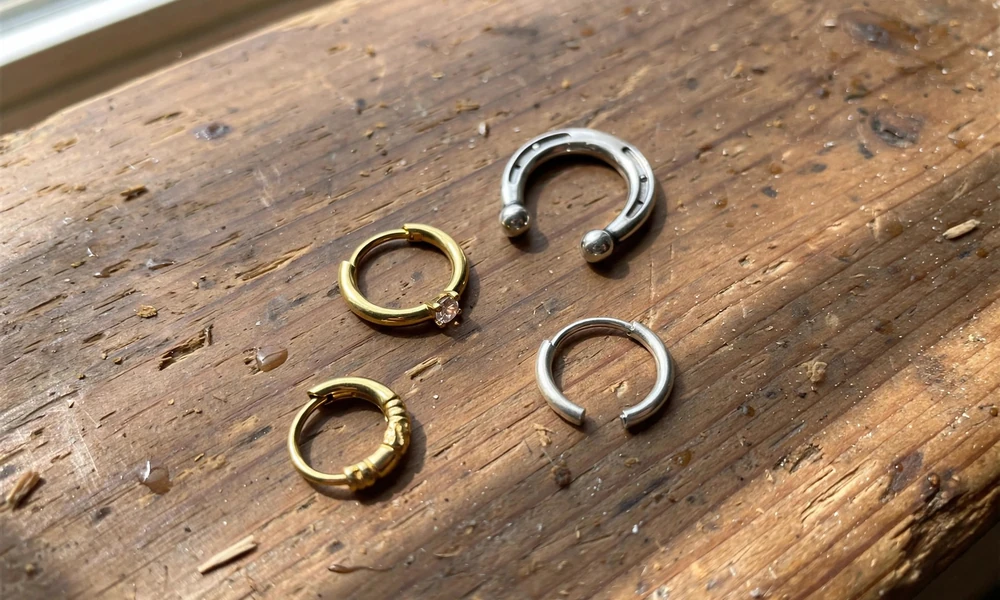
Finally, look at the style of ring. A seamless hoop and a hinged ring of the same diameter sit in almost the same way, but a horseshoe can feel slightly larger, because the ball ends add length. A captive bead ring can feel slightly smaller, because the bead sits inside the circle. These are small differences, but worth knowing if you are choosing between two sizes.
The 9 sizing facts every buyer should know
1. Gauge is fixed by the piercing, not by your preference
What to Do: Use the gauge your piercing was made with, usually 18 gauge. If you do not know it, ask the piercer who did it. What to Avoid: Do not buy a thicker ring to make a piercing look bolder, because forcing it through can tear the tissue. Best For: Anyone buying a first replacement ring. Time Needed: A minute to check the packaging or ask a piercer. Standout Tip: Write your gauge down somewhere safe. It is the one number you need every time you buy a nose ring.
2. Diameter is measured from the hole to the edge
What to Do: Measure from the piercing hole to the outer edge of the nostril, then double it. A 4 millimetre distance means an 8 millimetre ring. What to Avoid: Do not guess the diameter from a photograph: the same ring looks different on different nostrils. Best For: Anyone buying a ring without a previous one to copy. Time Needed: Two minutes with a ruler and a mirror. Standout Tip: Measure twice, relaxed and smiling, and use the larger number.
3. Eight millimetres suits most nostrils
What to Do: Start with 8 millimetres if you have no measurement. It is the most common diameter because it fits most nostrils without pinching or hanging. What to Avoid: Do not assume 8 millimetres is right for everyone, because a small nostril or a high piercing may need 6 millimetres. Best For: First-time buyers and gift buyers. Time Needed: No measuring needed to start. Standout Tip: If 8 millimetres feels tight, try 10 before a different style: diameter is usually the problem, not the design.
4. A snug fit is not the same as a tight fit
What to Do: Choose a ring that follows the curve of your nostril with a small amount of clearance, and that moves slightly when you touch it. What to Avoid: Do not accept a ring that presses into the skin, leaves a mark, or pulls when you smile, because that is too small, not snug. Best For: Anyone who likes a neat, close-fitting look. Time Needed: A minute in the mirror after fitting. Standout Tip: The smile test is the honest one: smile widely, and if the ring pulls, the diameter is too small.
5. A loose fit is not the same as a large look
What to Do: Choose a larger diameter if you want a ring that hangs lower and moves more freely, and accept that it will catch more easily. What to Avoid: Do not buy a ring two sizes too large for a bold look, because it will swing, snag, and irritate the piercing. Best For: Anyone who prefers a relaxed, visible ring. Time Needed: A minute to compare 8 and 10 millimetres side by side. Standout Tip: One size up is a style choice. Two sizes up is a sizing mistake.
6. Piercing placement changes the size you need
What to Do: A piercing close to the edge, or high up, needs a smaller diameter than one set further back or lower. What to Avoid: Do not copy a friend’s ring size, because their piercing is almost certainly in a different place from yours. Best For: Anyone whose ring never seems to sit the way it does in photographs. Time Needed: A minute to look at where your piercing sits. Standout Tip: The higher and closer to the edge, the smaller the ring.
7. Different styles fit differently at the same size
What to Do: Expect a horseshoe to feel slightly larger than a hoop of the same diameter, because the ball ends add length, and a captive bead ring to feel slightly smaller, because the bead sits inside the circle. What to Avoid: Do not assume that because an 8 millimetre hoop fits, an 8 millimetre horseshoe will fit in exactly the same way. Best For: Anyone switching between ring styles. Time Needed: A minute to compare the two in your hand. Standout Tip: If you switch styles, buy the new style in the same size first, and only change size if it clearly does not fit.
8. Nostril thickness affects diameter too
What to Do: Allow a slightly larger diameter if your nostril is thick, because the ring has further to travel around the tissue, and a slightly smaller one if your nostril is thin. What to Avoid: Do not ignore thickness when measuring, because a ring that fits the distance but not the tissue will still pinch. Best For: Anyone whose measured size still does not feel right. Time Needed: A minute to feel the thickness of the nostril between finger and thumb. Standout Tip: Pinch the nostril where the piercing sits: if it is thick, add a millimetre.
9. When in doubt, ask a piercer to measure
What to Do: Ask a professional piercer to measure your piercing and your current ring; most will do it in seconds, often for free. What to Avoid: Do not keep buying rings by trial and error, because each wrong size costs money and each forced fitting risks irritating the piercing. Best For: Anyone who has bought two wrong sizes already. Time Needed: Five minutes in a piercing studio. Standout Tip: Ask the piercer to write down your gauge and diameter.
Which size is right for you
The most common fit is 18 gauge with an 8 millimetre diameter, and it is the right starting point for most people. If your nostril is small, or the piercing sits high or close to the edge, try 6 millimetres. If your nostril is larger, or you prefer a looser ring, try 10 millimetres. If you prefer a finer look, 20 gauge in the same diameter is a good choice, but only if your piercing was made at 20 gauge or has settled to it over time.
The material is worth considering alongside the size. Titanium is light and strong, and the safest choice for sensitive skin, which matters when the piercing is adjusting to a new size. Solid gold is warm and classic, and suits a ring worn every day. Surgical steel is common and affordable, but it contains nickel, so it is not ideal for everyone. Our comparison of gold versus silver nose rings explains how the two metals differ in weight, colour, and care, and it is a useful read before you choose a metal as well as a size.
The honest test is always the mirror, not the packet. A ring that fits follows the curve of your nostril, sits close without pressing into the skin, moves slightly when you touch it, and does not pull when you smile. A ring that fails any of those tests is the wrong size, whatever the label says. Size is a starting point, not a verdict, and your nostril is the final judge.
The caveats that matter
Sizing mistakes are the most common reason a nose ring is returned, and they are almost always avoidable. The most frequent error is buying a thicker gauge, which cannot be forced through without tearing the tissue. The second is buying a diameter from a photograph, which says nothing about how the ring will sit on your nostril. The third is copying someone else’s size, which ignores differences in placement and shape.
| Detail | What is known |
|---|---|
| Most common gauge | 18 gauge, about 1 millimetre thick, for nostril piercings |
| Finer option | 20 gauge, about 0.8 millimetres, for a more delicate look |
| Most common diameter | 8 millimetres, suiting most nostrils |
| Snug fit | 6 millimetres, for small nostrils or high piercings |
| Loose fit | 10 millimetres, for larger nostrils or a relaxed look |
| How to measure diameter | Measure hole to nostril edge, then double the number |
| What changes the size | Piercing placement, nostril thickness, and ring style |
| What sizing does not do | It does not stretch a piercing, and a wrong size cannot be worn in |
A ring that is the wrong size will not settle in with time. A tight ring will keep pinching, a loose ring will keep catching, and a wrong gauge will keep irritating. The right move is to change the size, not to wait and hope. If you have bought two wrong sizes, stop guessing and have a piercer measure you, because the third purchase is the one that usually gets it right.
Checklist: sizing a nose ring honestly
Use these checks before you buy, and again after the ring is in.
- Check your gauge: use the gauge your piercing was made with, usually 18 gauge.
- Check your diameter: measure hole to nostril edge, then double it.
- Check the placement: a high or edge-close piercing needs a smaller diameter.
- Check the thickness: a thick nostril needs a slightly larger diameter.
- Check the style: a horseshoe feels larger, a captive bead ring feels smaller, at the same size.
- Check the fit in the mirror: the ring follows the nostril, moves slightly, and does not pull when you smile.
Frequently asked questions
What is the most common nose ring size?
18 gauge with an 8 millimetre diameter. That combination fits most nostrils, and it is the size most piercing studios start with. If you have no measurement, it is the safest choice.
How do I know if my nose ring is too small?
It presses into the skin, leaves a mark, pulls when you smile, or feels tight when you move it. A snug ring follows the curve closely; a tight ring digs in. If it hurts, it is too small, and a gold nose ring in a larger diameter will often solve it.
How do I know if my nose ring is too big?
It hangs low, swings freely, catches on clothes and towels, and looks out of proportion. A loose ring should move a little; one that is too big moves constantly, and that irritates the piercing.
Can I wear a 20 gauge ring in an 18 gauge piercing?
You can, and many people do, because a thinner ring slides through a wider channel easily. The ring may move around more than an 18 gauge ring, and can irritate the piercing if it constantly shifts. It is better to match the gauge, but a 20 gauge ring in an 18 gauge piercing is not harmful.
Can I wear an 18 gauge ring in a 20 gauge piercing?
No, not without stretching the piercing, which is a deliberate process that should be done by a professional. Forcing a thicker ring through a thinner channel can tear the tissue and set the piercing back by weeks.
Does nose ring sizing differ for septum piercings?
Yes. Septum piercings are usually done at 16 gauge, thicker than a nostril piercing, and the diameter is measured differently, because the ring hangs from the septum rather than wrapping around the nostril. Do not use nostril sizing for a septum ring.
The bottom line
Nose ring sizing comes down to two numbers and one honest look in the mirror. Match the gauge your piercing was made with, usually 18, and measure the diameter from the hole to the nostril edge, then double it. Eight millimetres suits most people, six a small nostril or high piercing, and ten a larger nostril or looser look.
If you are unsure, have a piercer measure you. It takes five minutes, costs little or nothing, and is cheaper than buying three wrong rings. A ring that fits follows the curve of your nostril, moves slightly, and does not pull when you smile, and that is the size worth wearing.