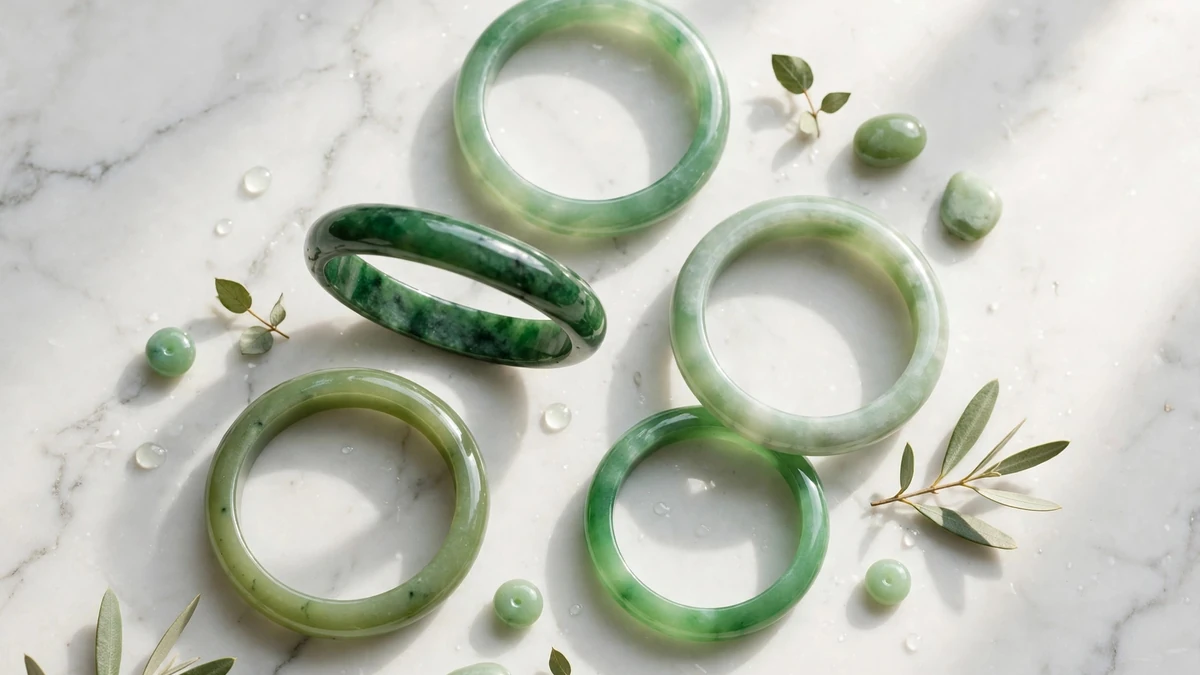

Jade is one of the oldest jewellery stones in the world, carved for thousands of years in China and Central America, and it still feels modern on the wrist. A jade bracelet can be a smooth green bangle, a strand of polished beads, or a single carved stone on a gold chain, and each style carries a different look. The colour ranges from deep imperial green to pale lavender, white and even black, so there is a jade bracelet for almost every taste.
The problem is that the word jade covers two different minerals, and the market is full of treated and dyed stones sold without clear labels. A bracelet that looks like fine imperial green jadeite may be dyed quartzite or heavily treated jade, and the difference in value is enormous. That is why choosing a jade bracelet is less about finding the greenest stone and more about knowing what you are buying, and from whom.
Below are nine jade bracelets worth considering in 2027, from a classic jadeite bangle to bead and chain styles. Each one is described by what it is good at, what to watch for, and who it suits best, so you can choose with your wrist in mind, not just a colour chart.
Key takeaways
- Jade is two minerals: nephrite, which is tougher, and jadeite, which is harder and more valuable, especially in vivid imperial green.
- Grade A jade is untreated. Type B jade has been bleached and filled with polymer, and Type C has been dyed. Always ask which it is.
- Jade is Mohs 6 to 7, tough enough for daily wear, but treated and dyed stones need gentle care and should never go in an ultrasonic cleaner.
- A good jade bracelet has an even colour, a smooth polish and no visible cracks, dye lines or cloudy patches.
- Jade has no proven healing properties, and jewellery is rarely a financial investment, however old the stone’s reputation is.
What jade actually is
Jade is not one stone but two: nephrite and jadeite. Nephrite is the older, tougher material, made of interlocking fibres that make it very hard to break, with a hardness of Mohs 6 to 6.5. It is usually a softer green, white or grey-green, and it has been carved in China for thousands of years. Jadeite is harder, at Mohs 6.5 to 7, and it takes a brighter polish. The most prized jadeite is imperial green, a vivid, even green with good translucency, and it commands the highest prices by far.
Treatment is the key thing to understand before you buy. Grade A jade is untreated, with only a traditional wax polish. Type B jade has been bleached to remove brown stains and then filled with a polymer resin, which improves its colour and translucency but makes it less stable over time. Type C jade has been dyed, often a bright green that looks unnatural once you know what to look for. A reputable seller will state the grade plainly, and for any significant purchase, a certificate from a recognised gemmological laboratory is worth asking for.
Colour is graded by evenness and tone. The most valued jadeite is a rich, even green that glows a little when held to the light. Pale, washed-out stones and stones with cloudy patches or brown staining are worth far less. Very dark stones can look almost black indoors, which is a common disappointment, so a medium green with good translucency is usually the better choice for everyday wear. Size matters less than colour and finish here. A small, well-coloured stone in a good setting will look better on the wrist than a large, dull one.
How we chose these bracelets and what to look for
Look first at the material and the grade. Ask whether the bracelet is nephrite or jadeite, and whether it is Grade A, Type B or Type C. Nephrite is the tougher, more affordable choice and suits a bangle worn every day. Jadeite is the more valuable choice and suits a finer bracelet or a single-stone piece. If the seller cannot answer, or the price seems too good for imperial green, step back. A very cheap vivid-green bracelet is almost always dyed or treated.
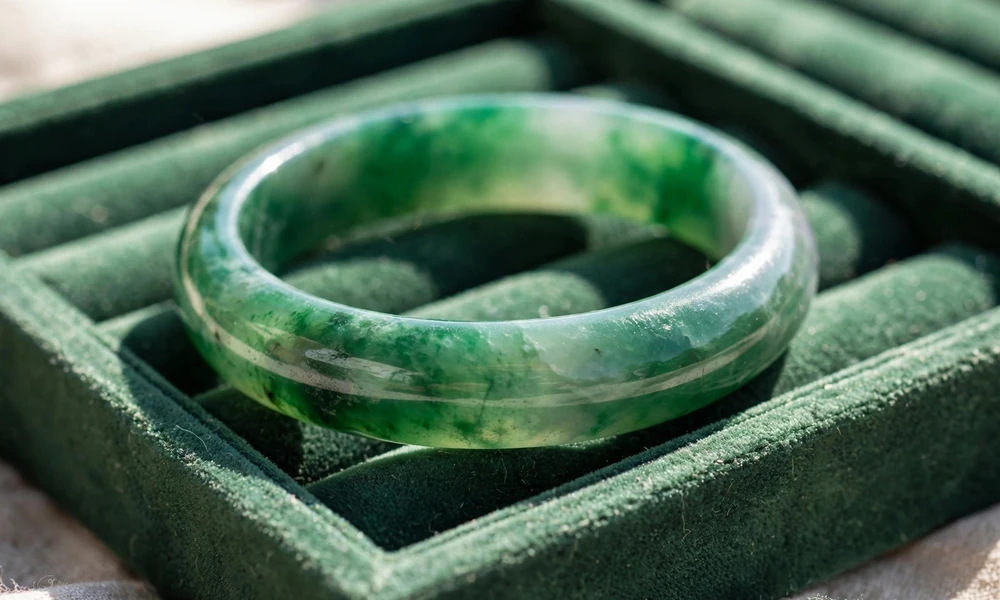
Look next at the colour and the finish. Hold the bracelet to the light and check that the colour is even, with no dye concentrated in cracks or along the edges. Run a finger over the surface: it should feel smooth and cool, with a high polish and no rough patches. In a bead bracelet, check that the beads match in colour and size, because mismatched beads are the first sign of a rushed piece.
Finally, look at the style and the fit. A bangle should slip over the hand with a little resistance and sit comfortably on the wrist, not spin loosely or pinch. A bead bracelet should fit snugly enough not to slide over the hand. Our guide to the chunky bracelet trend is a useful frame here, because a jade bangle is a statement piece, and the way it sits on the wrist changes how the colour reads in different light.
The 9 best jade bracelets of 2027
Tiffany & Co. Jade Bangle
What we like: A classic jade bangle with an even, soft green colour, a high polish, and the brand’s usual attention to finish and fit.
What to consider: Premium price, and the colour is a gentle green rather than vivid imperial green, so the effect is refined rather than dramatic. Stone: Jadeite, Grade A. Setting: Solid bangle, no metal setting. Best For: Everyday wear and special occasions. Price Range: Premium.
This is the bracelet other jade bangles are measured against. It is not the boldest, and it is not the cheapest, but for a first fine jade piece, it remains a strong choice.
Cartier Bead Bracelet
What we like: A bead bracelet with well-matched jade beads, a secure clasp, and a comfortable, even fit on the wrist.
What to consider: The beads are small, so the colour is subtle, and a bead bracelet needs restringing every year or two. Stone: Jadeite, Grade A. Setting: Strung beads with gold clasp. Best For: Everyday wear and layering. Price Range: Premium.
David Yurman Cable Bracelet
What we like: A sculptural cable bracelet with a jade centre stone, combining the brand’s signature twisted metal with a single vivid green stone.
What to consider: One stone means the colour has to be right, so check it in daylight, and the cable design suits a bolder wrist. Stone: Jadeite, Grade A. Setting: Bezel-set centre stone, sterling silver and 18k gold. Best For: Statement everyday wear. Price Range: High.
This is a good choice if you want jade as an accent rather than a full bangle. The bezel setting protects the stone well, which matters on a bracelet.
Mejuri Bead Bracelet
What we like: A slim bead bracelet with small, well-matched jade beads, designed for daily wear at a more accessible price.
What to consider: The beads are small, so the colour is subtle, and the string needs checking and restringing over time. Stone: Nephrite, Grade A. Setting: Strung beads with gold clasp. Best For: Daily wear and layering. Price Range: Mid-range.
Monica Vinader Chain Bracelet
What we like: A chain bracelet with a single jade drop, easy to wear every day, with a colour that reads clearly against gold.
What to consider: One stone means a chip is obvious, so remove it before sport or manual work. Stone: Jadeite, Grade A. Setting: Bezel-set drop, 18k gold vermeil. Best For: Everyday wear and gifting. Price Range: Mid-range.
A sensible, well-made choice for everyday wear, especially if you like fine jewellery that does not demand attention. It layers well with a watch.
Missoma Bead Bracelet
What we like: A bead bracelet with an even green colour, a secure clasp, and a finish that suits stacking with other fine bracelets.
What to consider: The beads are small and the colour is a softer green, so it is a gentle look rather than a bold one. Stone: Nephrite, Grade A. Setting: Strung beads with gold clasp. Best For: Stacking and daily wear. Price Range: Mid-range.
Maria Black Sculptural Bracelet
What we like: A sculptural bracelet with a jade stone set into an architectural form, for people who want jewellery that looks designed rather than traditional.
What to consider: The sculptural form means the stone sits proud, so it is more exposed to knocks than a bangle or bead bracelet. Stone: Jadeite, Grade A. Setting: Sculptural bezel, sterling silver. Best For: Fashion-led wear and special occasions. Price Range: Mid-range.
If your style is modern and architectural, this is the most interesting jade bracelet here. It is best kept for days when your hands are not doing heavy work.
Astrid & Miyu Bead Bracelet
What we like: A slim, well-priced bead bracelet with a good colour match, a secure clasp, and a finish that suits stacking with other fine bracelets.
What to consider: The beads are small, so the colour is subtle in low light, and the string needs care over time. Stone: Nephrite, Grade A. Setting: Strung beads, 18k gold plated. Best For: Stacking and daily wear. Price Range: Affordable.
Thomas Sabo Charm Bracelet
What we like: A link bracelet with a jade charm, easy to wear and easy to combine with other charms, with a strong clasp and a comfortable weight.
What to consider: The stone is small and set in a charm, so the colour is a detail rather than the main event. Stone: Nephrite, Grade A. Setting: Bezel-set charm, sterling silver. Best For: Casual wear and charm collecting. Price Range: Affordable.
Which jade bracelet is right for you
If you want a classic jade piece, a solid bangle in nephrite or jadeite is the safest choice. Nephrite is tougher and more affordable, and its interlocking fibres make it very hard to break, which is why it has been carved for thousands of years. Choose a medium green with good translucency, and make sure the bangle slips over your hand with a little resistance. A bangle that is too loose will spin and knock, and one that is too tight will pinch.
If you want jade every day, a bead bracelet or a single-stone chain bracelet is more practical. Beads are easy to wear and layer, but they need restringing every year or two, so check the string regularly. A single stone in a bezel setting is the most protected option. A gold jewellery guide for everyday wear is a useful frame here, because the metal you choose changes how the green reads and how often you will reach for the piece.
If you want a statement, a vivid jadeite bangle or a sculptural bracelet with a larger stone will give you the most colour, but it is also the most exposed. Wear it for occasions rather than for manual work, and take it off before the gym, the garden or the kitchen. Jade rewards gentle wear, and a bracelet that is treated well will keep its colour for decades.
The caveats that matter
Jade is tough, but it is not indestructible, and the market is full of treated stones sold without clear labels. Nephrite at Mohs 6 to 6.5 and jadeite at Mohs 6.5 to 7 are hard enough for daily wear, but Type B jade, bleached and filled with polymer, is less stable over time, and Type C dyed jade can fade. That does not mean you cannot wear jade daily, only that you should know the grade, ask for a certificate on a significant purchase, and keep treated stones away from ultrasonic cleaners, steam cleaners and harsh chemicals.
| Detail | What is known |
|---|---|
| What it is | Two minerals: nephrite, tougher, and jadeite, harder and more valuable |
| Hardness | Nephrite Mohs 6 to 6.5, jadeite Mohs 6.5 to 7, both tough enough for daily wear |
| Grades | Grade A is untreated; Type B is bleached and polymer-filled; Type C is dyed |
| Best colour | Imperial green jadeite, vivid and even with good translucency, is the most prized |
| Best style for a bracelet | A solid bangle or a bead bracelet, with a fit that is snug but not tight |
| Cleaning | Warm water, mild soap and a soft cloth only; never ultrasonic or steam for treated jade |
| What to avoid | Perfume, harsh chemicals, hard knocks, and wearing it for sport or manual work |
| What it is not | It has no proven healing properties, and jewellery is rarely a financial investment |
If you are buying jade as a gift, or spending a significant amount, ask for a certificate from a recognised gemmological laboratory. That is not a formality. A certificate confirms whether the stone is nephrite or jadeite, states the grade, and gives its weight and dimensions, so you know what you are paying for.
Checklist: choosing a jade bracelet honestly
Use these checks before you buy, and again after a month of wear.
- Check the material and grade: nephrite or jadeite, Grade A, Type B or Type C, stated plainly by the seller.
- Check the colour in daylight: it should be even, with no dye concentrated in cracks or along the edges.
- Check the finish: smooth and cool to the touch, with a high polish and no rough patches or cloudy areas.
- Check the fit: a bangle should slip over the hand with a little resistance; beads should sit snugly on the wrist.
- Check the string and clasp: bead bracelets need restringing every year or two, and a secure clasp is essential.
- Protect the stone: remove it for sport, cleaning and manual work, and clean it only with warm water and mild soap.
Frequently asked questions
What is the difference between nephrite and jadeite?
They are two different minerals sold under the name jade. Nephrite is tougher, with interlocking fibres, at Mohs 6 to 6.5, and it is usually a softer green. Jadeite is harder, at Mohs 6.5 to 7, takes a brighter polish, and the vivid imperial green variety is far more valuable.
What does Grade A jade mean?
Grade A jade is untreated, with only a traditional wax polish. Type B jade has been bleached and filled with polymer resin, and Type C has been dyed. Grade A is the most stable and the most valuable, and a seller should always state the grade.
How should I clean a jade bracelet?
Use warm water, mild soap and a soft cloth, then dry it gently. Never use an ultrasonic or steam cleaner on treated jade, which can crack or cloud, and keep it away from perfume and household chemicals.
How can I tell if jade is dyed?
Look for colour concentrated in cracks and along edges, an unnaturally bright or even green, and cloudy patches. A certificate from a recognised laboratory is the reliable check. If the price seems too good for vivid green jadeite, it is almost certainly dyed or treated.
Is jade a good investment?
No, not in the financial sense. Fine imperial green jadeite is valuable, but jewellery rarely holds its purchase price on resale, and most jade on the market is nephrite or treated jadeite. Buy it because you love the colour and the history, not because you expect it to appreciate. Our guide to jade roller benefits makes the same point about jade in general: enjoy it for what it is, and be wary of grand claims.
Can I wear a jade bracelet every day?
Yes. Jade is tough enough for daily wear, and a bangle or bead bracelet is one of the most practical fine-jewellery pieces. Take it off for sport, cleaning and manual work, check the string on bead bracelets regularly, and clean it with warm water and mild soap.
The bottom line
The best jade bracelet in 2027 is not the greenest or the most expensive. It is the one with an even colour, a smooth polish, a grade stated honestly, and a fit you can wear every day. For a classic piece, a solid nephrite or jadeite bangle is a strong choice. For everyday wear, a bead bracelet or a single-stone chain bracelet is the smarter start, and it will still give you that calm, cool green every time you look down.
Choose one bracelet, check the colour in daylight, ask about the grade, and wear it with care. That is the honest way to enjoy a stone that has been carved for thousands of years, without the dyed imitations and treated stones that make people give up on it.