Rose quartz is the softest-looking stone in the jewellery box, and one of the most misunderstood. Its pale pink colour feels gentle and romantic, which is exactly why it is so often sold with promises it cannot keep: love, calm, healing, and other claims with no evidence behind them. The stone itself is lovely, but it deserves an honest description.
That is why this guide is organised by what rose quartz actually is and how to judge a bracelet honestly, not by the stories attached to it. A good rose quartz bracelet starts with genuine quartz in a clear, even pink, strung or set securely, at a price that matches an abundant stone. A bead bracelet from a mid-priced brand can be a perfectly good buy, and a luxury cuff can be a poor one if the colour is dyed or the setting is weak.
Below are nine rose quartz bracelets worth considering in 2027, from classic beaded strands to sculptural cuffs. Each one is described by what it is good at, what to watch for, and who it suits best, so you can choose with the stone in mind, not just a bestseller list.
Key takeaways
- Rose quartz is pink quartz, Mohs 7, with a soft colour that ranges from pale blush to medium dusty pink.
- Look for an even, natural pink with a slightly milky translucency; an unnaturally bright or bubblegum pink often means dye or glass.
- Rose quartz can fade in prolonged sunlight, so store it away from a sunny windowsill and take it off for long days outdoors.
- Beaded bracelets should be strung on strong cord with a secure knot or clasp, and restrung when the cord frays.
- Rose quartz has no proven healing properties and is not an investment stone, so buy it because you like how it looks, not for a promised benefit.
What rose quartz actually is
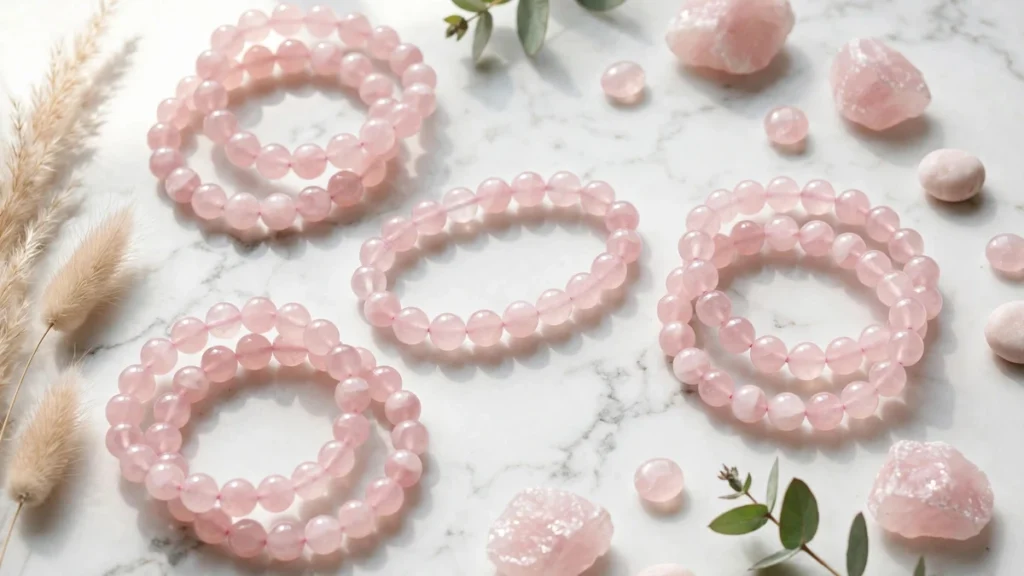
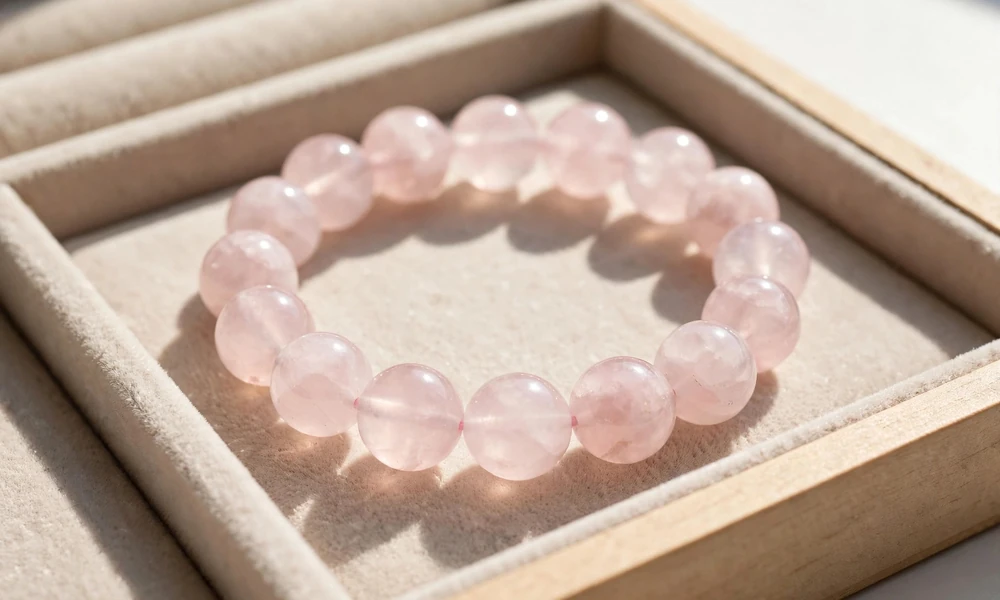
Rose quartz is a variety of quartz coloured pink by trace amounts of titanium, manganese, or iron. Its colour is usually soft and even, ranging from a pale blush to a medium dusty pink, with a slightly milky translucency that gives the stone its gentle glow. The best stones have a clear, consistent colour without grey or brown patches.
At Mohs 7, rose quartz is hard enough for daily wear on the wrist, which is more than can be said for many popular bracelet stones. It resists scratching from keys and desk edges, and it does not need the protective bezel settings that softer stones demand. Beads are the most common form, but the stone is also cut into cabochons for cuffs and link bracelets.
One honest weakness is fading. Rose quartz can lose colour after prolonged exposure to strong sunlight, so a bracelet worn every day in bright sun will gradually pale. That is a property of the stone, not a fault in the bracelet, and it is a good reason to store rose quartz away from a sunny windowsill and to rotate it with other bracelets in summer.
How we chose these bracelets and what to look for
Look first at the colour. Good rose quartz is a soft, even pink with a milky translucency, and the beads in a strand should match each other closely. If the colour is a bright, even bubblegum pink, or if it looks like coloured glass, the stone is probably dyed quartz or glass. Hold a bead up to the light; genuine rose quartz has a soft, cloudy depth rather than a flat, painted surface.
Look next at how the bracelet is made. Beaded bracelets should use strong elastic or silk cord, knotted securely, with beads that sit evenly and do not wobble on the strand. A bracelet that is too tight will strain the cord; one that is too loose will catch on everything. For metal settings, check that the stone sits firmly and that the clasp closes with a positive click. Our guide to the best pearl bracelets explains the same stringing and clasp checks in more detail, and they apply to stone bracelets just as much as to pearl ones.
Finally, look at the price against the material. Rose quartz is an abundant stone, so a beaded bracelet should not carry a luxury price for the stone alone. What you are paying for is the brand, the metal, the craftsmanship, and the design. A simple bead strand at a modest price can be excellent value; an expensive cuff should justify its price with solid metal, a strong setting, and a finish that will last.
The 9 best rose quartz bracelets of 2027
Tiffany & Co. Beaded Bracelet
What we like: Polished rose quartz beads in a soft, even blush pink with a gentle translucency, strung on durable cord with a sterling silver accent bead. The beads are well matched, and the finish is consistently clean. What to consider: Premium price for a beaded bracelet, and the cord will need restringing after a year or two of daily wear. Stone: Natural rose quartz, 8 mm beads. Setting: Beaded strand with sterling silver accent. Best for: Everyday wear and layering. Price range: $275–$450.
A reliable, understated choice from a house that matches its beads well. The colour is a soft, honest pink with no dyed or glassy beads in the strand.
Cartier Beaded Bracelet
What we like: Large, beautifully matched beads in a clear dusty pink, finished with a solid gold accent bead and a secure knot. The proportions feel considered rather than generic. What to consider: Luxury pricing, and the gold accent raises the price well above the stone’s value. Stone: Natural rose quartz, 10 mm beads. Setting: Beaded strand with 18-karat gold accent. Best for: A statement everyday bracelet. Price range: $1,200–$2,500.
This is the bracelet to choose if you want the best-matched beads and a gold finish that will not wear thin. Buy it for the design and the metal, not for the stone alone.
David Yurman Beaded Bracelet
What we like: Rose quartz beads paired with the brand’s signature cable detail in sterling silver, giving a beaded bracelet a more finished, jewellery-like feel. What to consider: The cable element adds weight, and the bracelet sits better on a slightly larger wrist. Stone: Natural rose quartz, 8 mm beads. Setting: Beaded strand with sterling silver cable accent. Best for: Layering with a watch or a plain bangle. Price range: $395–$650.
A good middle ground between a plain bead strand and a luxury cuff. The cable detail is well made and the beads are evenly matched.
Mejuri Beaded Bracelet
What we like: A clean, simple bead strand at a fair price, with a small gold vermeil accent and a comfortable, everyday fit. What to consider: Gold vermeil will wear with daily use, and the beads are smaller than luxury versions. Stone: Natural rose quartz, 6 mm beads. Setting: Beaded strand with gold vermeil accent. Best for: A first rose quartz bracelet. Price range: $85–$150.
One of the best value options here. The stone is genuine, the colour is soft and even, and the price is honest for what the bracelet is.
Monica Vinader Beaded Bracelet
What we like: Soft pink beads with a good translucency, finished with a gold vermeil toggle that feels more secure than a plain elastic strand. What to consider: The toggle adds a small amount of weight, and vermeil needs gentle care. Stone: Natural rose quartz, 8 mm beads. Setting: Beaded strand with gold vermeil toggle. Best for: Everyday wear with a slightly dressier finish. Price range: $130–$250.
A practical, well-finished bracelet that bridges casual and smart. The toggle clasp is a genuine improvement over a plain stretch strand.
Missoma Beaded Bracelet
What we like: A slim, stackable bead strand with a small gold vermeil charm, designed to layer with other bracelets without bulk. What to consider: The beads are small, so the colour is subtler, and it is best worn stacked rather than alone. Stone: Natural rose quartz, 5 mm beads. Setting: Beaded strand with gold vermeil charm. Best for: Stacking and layering. Price range: $95–$180.
Choose this one if you wear bracelets in stacks. On its own it is quiet; layered with a plain bangle it looks considered and soft.
Maria Black Sculptural Cuff
What we like: A bold, sculptural cuff with a polished rose quartz cabochon set in sterling silver, giving the stone a modern, architectural frame. What to consider: The cuff is a statement piece rather than an everyday bracelet, and the fit is less forgiving than a beaded strand. Stone: Natural rose quartz cabochon. Setting: Sterling silver cuff. Best for: Evenings and statement styling. Price range: $250–$450.
The most design-led bracelet on this list. The cabochon shows off the soft pink beautifully, and the silver work is clean and solid.
Astrid & Miyu Beaded Bracelet
What we like: An affordable bead strand with a soft pink colour and a small gold-plated accent, sized for smaller wrists as well as standard ones. What to consider: Gold plating will wear faster than vermeil, and the beads vary slightly in tone. Stone: Natural rose quartz, 6 mm beads. Setting: Beaded strand with gold-plated accent. Best for: Everyday wear on a budget. Price range: $65–$120.
A sensible entry point. The stone is genuine and the colour is soft, and the price leaves room to try the stone before spending more.
Thomas Sabo Link Bracelet
What we like: Rose quartz beads set into a sterling silver link bracelet, giving a beaded look with a proper clasp and a more structured fit. What to consider: Heavier than a cord strand, and the links need occasional cleaning to keep their shine. Stone: Natural rose quartz, 7 mm beads. Setting: Sterling silver link bracelet with lobster clasp. Best for: A structured everyday bracelet. Price range: $150–$300.
A good choice if you prefer a clasp to a stretch strand. The links are well made, the clasp is secure, and the beads sit evenly.
Which rose quartz bracelet is right for you
Start with how you will wear it. A beaded strand is the easiest daily choice: comfortable, light, and easy to layer with a watch or a plain bangle. A cuff or link bracelet is more structured and more visible, better for evenings or for a single statement piece. If you wear bracelets every day, a stretch strand with a strong cord is the most practical; if you wear them occasionally, a cuff will hold its shape better.
Consider the metal as much as the stone. Sterling silver is the honest choice for a rose quartz bracelet at a fair price, while solid gold makes sense only if you want the metal to last for decades. Gold vermeil and gold plating look good when new but wear with daily use, so treat them as fashion finishes rather than lifetime ones. Our guide to gold jewellery for everyday wear explains the difference between solid gold, vermeil and plating in plain terms, and it is worth reading before you pay a premium for a finish.
Finally, match the bead size to your wrist. Larger beads, 8 to 10 mm, show the colour best and suit a larger wrist or a bolder style. Smaller beads, 5 to 6 mm, are subtler and stack better. Try the bracelet on if you can; a strand that looks good in a photograph can feel too tight or too heavy on the wrist.
The caveats that matter
Rose quartz is a durable stone, but it has two honest weaknesses. The first is fading: prolonged sunlight can gradually pale the colour, so store the bracelet in a jewellery box rather than on a sunny windowsill, and take it off for long days in bright sun. The second is imitation: glass beads and dyed quartz are common at the lower end of the market, and both are usually a brighter, flatter pink than the real stone.
| Detail | What is known |
|---|---|
| What it is | Pink quartz, Mohs 7, coloured by trace titanium or manganese |
| Best colour | Soft, even blush to dusty pink with a milky translucency |
| Fading | Prolonged sunlight can gradually pale the colour |
| Imitations to watch for | Glass beads and dyed quartz, usually a brighter, flatter pink |
| Durability | Hard enough for daily wear; can still chip from a hard knock |
| Care | Soft damp cloth only; avoid ultrasonic cleaners and chlorine |
| Restringing | Check beaded strands regularly; restring when cord frays |
| What it does not do | It has no proven healing properties and is not an investment stone |
Be wary of any seller who claims rose quartz brings love, calm, or healing. There is no evidence for those claims, and a bracelet priced on a promised benefit is priced on a story, not on the stone. Buy rose quartz because you like the colour and the softness, and judge the price on the metal, the craftsmanship, and the design.
Checklist: choosing a rose quartz bracelet honestly
Use these checks before you buy, and again after a month of wear.
- Check the colour: it should be a soft, even pink with a milky depth, not a bright bubblegum pink.
- Check the translucency: genuine rose quartz looks slightly cloudy, not flat or painted.
- Check the matching: the beads in a strand should be close in tone, with no grey or brown patches.
- Check the stringing: the cord should be strong and evenly knotted, with no fraying or loose beads.
- Check the clasp: it should close firmly and stay closed; a weak clasp is the most common reason bracelets are lost.
- Check the price: rose quartz is abundant, so pay for the metal and the craftsmanship, not for the stone alone.
Frequently asked questions
Is rose quartz durable enough for a bracelet?
Yes. At Mohs 7 it resists everyday scratching well, which is why beaded rose quartz bracelets are so common. It can still chip from a hard knock against a stone or metal edge, so take it off for heavy manual work.
Will rose quartz fade in sunlight?
It can fade gradually after prolonged exposure to strong sunlight. Store the bracelet in a jewellery box rather than on a windowsill, and rotate it with other bracelets during long sunny days to slow the change.
How can I tell real rose quartz from glass?
Real rose quartz has a soft, milky depth and slight variations between beads, and it feels cool to the touch. Glass imitations are often a brighter, flatter pink, feel warmer, and sometimes show tiny bubbles under a loupe.
Does rose quartz need special care?
Very little. Wipe it with a soft, damp cloth and store it away from harder jewellery that could scratch it. Avoid ultrasonic cleaners, steam cleaners, and chlorine, and restring beaded strands when the cord starts to fray.
Can I wear a rose quartz bracelet every day?
Yes, it is one of the better stones for daily wear. Check the cord or clasp every few weeks, and take the bracelet off for the gym, swimming, or manual work to avoid knocks and chemical exposure.
Should I match rose quartz with other jewellery?
Its soft pink pairs naturally with yellow gold, rose gold, and white neutrals. If you want a matching set, our guide to rose quartz earrings for summer covers the same stone in studs and drops, so you can build a set that shares the same colour and softness.
The bottom line
The best rose quartz bracelet in 2027 is not the most expensive one. It is the one with a soft, even pink and a milky translucency, strung or set securely, at a price that reflects the metal and the craftsmanship rather than a story about the stone. A well-made bead strand from a mid-priced brand is often the smartest buy.
Choose one bracelet, check the colour and the clasp before you buy, and wear it because you like how it looks on your wrist. That is the honest way to enjoy rose quartz, without paying a luxury price for an abundant stone or believing a claim it cannot support.