The best luxury armchair brands do not sell you a place to sit. They sell you the chair you reach for every evening, the one that holds its shape after years of use. A well-made luxury armchair is a small piece of architecture: a hardwood frame, a suspension system that does not sag, foam and fibre that recover their shape, and upholstery cut and stitched by skilled makers.
The price of a luxury armchair tells you very little. Two chairs can cost the same amount and be built in completely different ways. One may have a kiln-dried beech frame, eight-way hand-tied springs, and full-grain leather that ages beautifully. The other may have a plywood frame, basic springs, and corrected-grain leather that looks flawless in a showroom and tired within two years. That difference is invisible in a photograph, which is why construction detail and warranty matter more here than in almost any other furniture purchase.
Below are nine brands worth considering in 2027, from Italian houses that have defined modern seating for decades to American and German makers whose chairs have become design classics. Each one is described by what it does best, what to watch for, and who it suits.
Key takeaways
- A luxury armchair is defined by its frame, suspension, and cushion construction, not by its price tag or its showroom photograph.
- Kiln-dried hardwood frames, eight-way hand-tied or quality sinuous springs, and high-resilience foam are the construction details worth paying for.
- Full-grain and top-grain leather age well and develop character, while bouclé, velvet, and wool change how a chair feels, wears, and cleans.
- Measure the chair, the doorway, and the room before ordering, and sit in it for at least ten minutes in your normal reading posture before deciding.
- No armchair suits every room or every body, and a chair that is beautiful but uncomfortable is a poor purchase at any price.
What makes an armchair genuinely luxurious
Luxury in an armchair starts where you cannot see it. The frame is the foundation, and the best makers use kiln-dried hardwood such as beech, oak, or ash, joined with dowels, corner blocks, and glue rather than staples alone. A frame like this does not creak or loosen over time. Cheaper frames often use softwood or engineered board, which is more likely to wobble or fail under years of daily use.
The suspension is the second hidden test. Eight-way hand-tied springs, in which each coil is tied to its neighbours in eight directions, give an even, supportive seat that recovers its shape. High-quality sinuous springs can also be excellent when properly spaced and clipped. What matters is that the seat does not sag in the middle and returns to shape when you stand up. A seat that stays dented after you rise is telling you something about its future.
Cushions are the third element, and the best chairs layer materials rather than relying on a single block of foam. High-resilience foam gives support, a feather or fibre wrap gives softness, and a down-blend cushion gives that sink-in feeling many people associate with luxury. The trade-off is maintenance: down-blend cushions need regular plumping, while a well-made foam cushion holds its shape with almost no attention.
Finally, there is the upholstery itself. Full-grain leather is the top layer of the hide, with its natural texture intact, and it develops a patina rather than wearing out. Top-grain leather is sanded and finished, smoother and more uniform, and easier to keep looking new. In fabric, wool is naturally resilient and hard-wearing, velvet is soft but shows pressure marks, and bouclé is warm and tactile but needs gentle cleaning. A good brand will tell you the rub count and cleaning code for each fabric, and that transparency is itself a sign of quality. Our guide to celebrity home decor shows how a single statement chair can anchor a room, but the chair has to earn that place by being comfortable as well as photogenic.
How we chose these brands and what to look for
Look first at construction and longevity. A luxury armchair should come with a clear frame warranty, often ten years or more, and the brand should be willing to say what the frame is made of, what suspension it uses, and how the cushions are filled. Vague language about premium materials, with no specifics, is a warning sign at this price. The brands below publish real construction detail and offer reupholstery or spare parts.
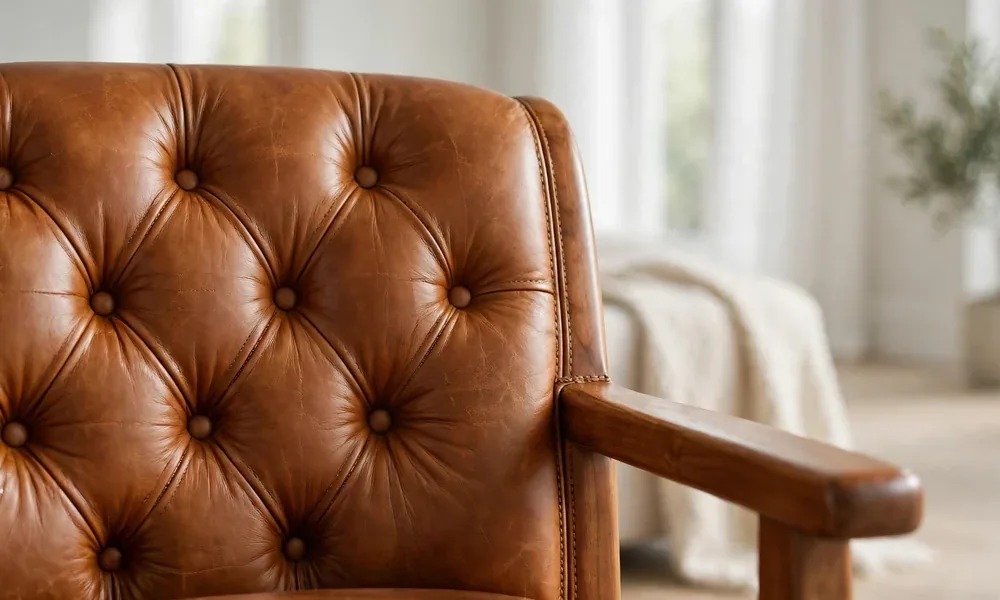
Look next at comfort in your own posture. Seat height, seat depth, back angle, and arm height all matter more than the overall look. A seat depth of around 55 to 60 centimetres suits most adults for reading, while a deeper seat suits lounging. If you are tall, check the back height and whether your head is supported. Sit in the chair the way you will actually use it, with a book or a phone in your hand, for at least ten minutes.
Look last at scale and proportion. An armchair that is 90 centimetres wide needs roughly 30 centimetres of breathing room on each side to look intentional rather than squeezed in. Measure the doorway, the lift, and the staircase as well as the room, because a luxury armchair is often delivered assembled and cannot be bent around a tight corner.
The 9 best luxury armchair brands of 2027
B&B Italia
What we like: Italian modern design with serious engineering behind it, from the Tufty-Time family to the Husk armchair. Frames are built to last and upholstery options are extensive.
What to consider: Premium pricing, long lead times for custom fabrics, and some designs are wide and low, so check the seat depth. Best for: Modern living rooms and design-led homes. Materials: Kiln-dried hardwood frames, high-resilience foam, fabric and leather upholstery. Price range: High.
Poltrona Frau
What we like: A century of leather craftsmanship, centred on the Pelle Frau leather programme. The 1919 and Archibald armchairs are benchmarks for comfort.
What to consider: Full-grain leather needs conditioning and care, and lighter colours show wear more quickly. Best for: Leather lovers and classic, tailored interiors. Materials: Full-grain Pelle Frau leather, hardwood frames, feather and foam cushions. Price range: Very high.
Cassina
What we like: The licensed maker of Le Corbusier, Pierre Jeanneret, and Charlotte Perriand designs, including the LC2 and LC3 armchairs, alongside contemporary pieces by Patricia Urquiola and Philippe Starck.
What to consider: Iconic designs are widely copied, so buy from an authorised dealer and keep the certificate of authenticity. Some classic models are firmer than modern lounge chairs. Best for: Design collectors and modernist interiors. Materials: Tubular steel frames, leather and fabric upholstery, high-density foam. Price range: Very high.
Fritz Hansen
What we like: Danish design heritage centred on Arne Jacobsen’s Egg and Swan chairs, both still in production and instantly recognisable. The moulded shell, the swivel base, and the quality of the leather or fabric upholstery make these chairs as comfortable as they are sculptural.
What to consider: The Egg chair is a deep, enveloping sit that suits a corner rather than a conversation circle, and the price reflects the hand-finished shell and the brand’s history. Best for: Design classics and statement reading corners. Materials: Moulded foam shell, aluminium swivel base, leather and fabric upholstery. Price range: High to very high.
Flexform
What we like: Family-owned Italian craftsmanship with a focus on comfort and longevity. The Guscio and Feel Good armchairs are deep and supportive, with a reputation for frames that last decades.
What to consider: Many models are generously sized, so measure carefully in smaller rooms. Best for: Everyday luxury and family living rooms. Materials: Solid wood frames, elastic webbing and foam, feather-blend cushions. Price range: High.
Roche Bobois
What we like: French flair and a huge range of contemporary designs, from the iconic Mah Jong modular seating to sculptural armchairs by leading designers. Strong in bold fabrics and colour.
What to consider: Quality and comfort vary by model, and some statement pieces prioritise form over long-session comfort. Always sit-test before ordering. Best for: Bold, expressive interiors and statement seating. Materials: Hardwood and engineered frames depending on model, foam and feather cushions, extensive fabric library. Price range: High to very high.
Herman Miller
What we like: The Eames Lounge Chair and Ottoman, designed by Charles and Ray Eames in 1956, remains one of the most comfortable armchairs ever made. Genuine pieces are built with moulded plywood, premium leather, and a swivel base.
What to consider: The Eames Lounge Chair is a low, reclined sit, which suits reading and relaxing rather than upright conversation. Counterfeits are common, so buy from Herman Miller or an authorised dealer. Best for: Reading corners and design classics. Materials: Moulded walnut or rosewood plywood, full-grain leather, down-blend cushions. Price range: High.
Vitra
What we like: German-Swiss precision and a catalogue that includes the Eames Lounge Chair in Europe, the Grand Repos by Antonio Citterio, and the Polder armchair. Excellent build quality and spare parts availability.
What to consider: The Grand Repos is a large, deep chair that needs space, and some Vitra designs are more architectural than soft. Best for: Modern design lovers who value engineering and longevity. Materials: Metal and wood frames, high-density foam, leather and fabric. Price range: High.
Giorgetti
What we like: Italian woodworking at its finest, with armchairs that showcase solid walnut and finely finished joinery. The Progetti and Mobius armchairs combine sculptural wooden frames with beautifully tailored upholstery.
What to consider: The emphasis on wood means some models are firmer than fully upholstered lounge chairs. Pricing is very high, and lead times reflect the handwork involved. Best for: Wood-led interiors and craftsmanship-focused buyers. Materials: Solid walnut and canaletto wood, leather and fabric, high-resilience foam. Price range: Very high.
Matching an armchair to your room
Start with the room, not the chair. A reading corner needs a chair, a lamp, and a surface for a book and a drink, arranged so the light falls over your shoulder rather than into your eyes. A living room armchair needs to relate to the sofa: similar seat height, a complementary rather than identical fabric, and enough space to move between the two. A bedroom armchair can be softer and deeper, because it is for slow mornings and quiet evenings rather than entertaining.
Colour and fabric should be chosen for the light in the room, not for the showroom. A pale bouclé chair looks serene in a bright room and shows marks quickly in a home with children or pets. A deep green velvet chair can anchor a neutral room, but it will absorb light and can make a small room feel smaller. Leather is forgiving in a busy household and improves with age, while a light fabric needs a removable, washable cover. Take fabric samples home and check them in morning and evening light before committing.
Lighting deserves as much attention as the chair itself. A reading chair without a good lamp is a chair you will not use after dark, however comfortable it is. A floor lamp placed behind and to the side of the chair, with a warm bulb, turns a corner into a place you return to every evening. Our guide to choosing an arc floor lamp explains how to match lamp height and reach to the chair, so the light lands on the page.
The caveats that matter
A luxury armchair is a long-term purchase, and the caveats are practical. Delivery is often the first surprise: many luxury chairs arrive assembled, and a chair that fits your living room may not fit through your front door, your lift, or a narrow staircase. Measure every doorway and turn on the delivery route, and ask whether the legs or back can be removed for delivery. Returns are the second surprise. Bespoke fabrics and leathers are often non-returnable, so a sit-test and a fabric sample are not optional extras, they are the return policy.
Care is the third caveat. Leather needs conditioning a few times a year and protection from direct sunlight, which dries and fades it. Velvet needs brushing and protection from damp, and bouclé needs gentle vacuuming with an upholstery attachment rather than aggressive cleaning. Ask the retailer for the cleaning code before the chair arrives, and keep the care instructions with the warranty.
| Detail | What is known |
|---|---|
| Frame to look for | Kiln-dried hardwood, dowelled and corner-blocked joints |
| Suspension to look for | Eight-way hand-tied springs or quality sinuous springs |
| Best leather choice | Full-grain for patina, top-grain for a uniform, easy-care finish |
| Best fabric choices | Wool for durability, velvet for softness, bouclé for warmth and texture |
| Typical seat depth | 55 to 60 centimetres for reading, deeper for lounging |
| What to measure first | Doorways, lift, staircase, and the space around the chair |
| What to check before ordering | Frame warranty, return policy, and whether bespoke fabric is non-returnable |
| What it does not do | No chair suits every body or every room, and comfort cannot be judged from a photograph |
Budget is a caveat of its own. A luxury armchair is expensive, and the price does not include delivery, care products, or the side table and lamp that make it usable. Plan for the whole corner, not just the chair, and remember that a well-made chair can be reupholstered in ten or fifteen years, which makes the cost per year far lower than a cheaper chair replaced three times. When luxury fashion houses design furniture for the home, the price often reflects the name as much as the construction, so compare the frame, suspension, and warranty, not just the label.
Checklist: choosing a luxury armchair honestly
Use these checks before you order, and again on delivery day.
- Sit in the chair for at least ten minutes, in your normal reading or resting posture, with a book or phone in hand.
- Check the frame, suspension, and cushion filling in writing, and confirm the frame warranty length.
- Measure the chair, every doorway, the lift, and the staircase on the delivery route.
- Take fabric or leather samples home and check them in morning and evening light.
- Confirm the return policy, especially for bespoke fabrics and leathers that may be non-returnable.
- Plan the whole corner: a lamp, a side table, and enough space to move around the chair comfortably.
Frequently asked questions
How much should a luxury armchair cost?
Most chairs from the brands in this guide cost from around two thousand to well over ten thousand pounds or dollars, depending on the model, size, and upholstery. Leather and bespoke fabrics add significantly to the price. The cost per year is a better measure than the price alone, because a well-made chair that lasts twenty years and can be reupholstered is often cheaper over time than a mid-priced chair replaced every five years.
Is leather or fabric better for a luxury armchair?
Neither is better in every case. Leather is easy to wipe clean, improves with age, and suits busy households, but it can feel cool in winter and warm in summer. Fabric is warmer to the touch and offers more colour and texture, but it stains more easily and needs more careful cleaning.
What is the most comfortable luxury armchair?
Comfort depends on your height, weight, and posture, so there is no single answer. The Eames Lounge Chair, the Vitra Grand Repos, and the Poltrona Frau Archibald are consistently praised for comfort, but a chair that suits a tall reader may not suit a smaller one. Sit-test any chair you are considering for at least ten minutes, in the posture you will actually use.
How do I know if a luxury armchair is genuine?
Buy from the brand or an authorised dealer, and keep the certificate of authenticity, the serial number, and the receipt. Genuine chairs have consistent stitching and correct labels, and construction details that match the brand’s published specification. If the price is far below the brand’s usual range, or the seller cannot provide documentation, treat it as a warning sign.
Can a luxury armchair be reupholstered?
Yes, and this is one of the strongest reasons to buy well. Brands such as B&B Italia, Poltrona Frau, Flexform, and Vitra support reupholstery and spare parts, and a good independent upholsterer can also recover a quality frame. Reupholstering a hardwood-frame chair typically costs far less than buying a new chair of the same quality.
What size armchair do I need for a small living room?
Look for a chair around 75 to 85 centimetres wide, with a slim profile and visible legs, which make a room feel larger than a wide, low chair on a plinth base. Leave at least 30 centimetres of breathing room on each side, and avoid a chair that blocks a walkway or crowds the sofa.
The bottom line
The best luxury armchair brands share the same priorities: a hardwood frame, honest suspension, cushions that recover their shape, and upholstery chosen for how it will wear rather than how it photographs. B&B Italia and Flexform are strong starting points for modern everyday luxury, Poltrona Frau and Giorgetti lead on leather and wood craftsmanship, and Cassina and Herman Miller offer design history that holds its value.
Choose the chair by sitting in it, measuring your room and your doorways, and reading the construction detail rather than the marketing copy. The right one is the chair you keep returning to, not the one that impressed you most in the showroom.