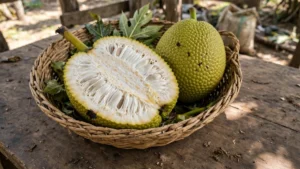
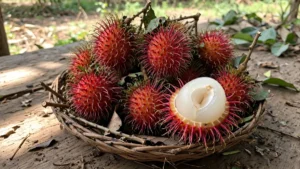
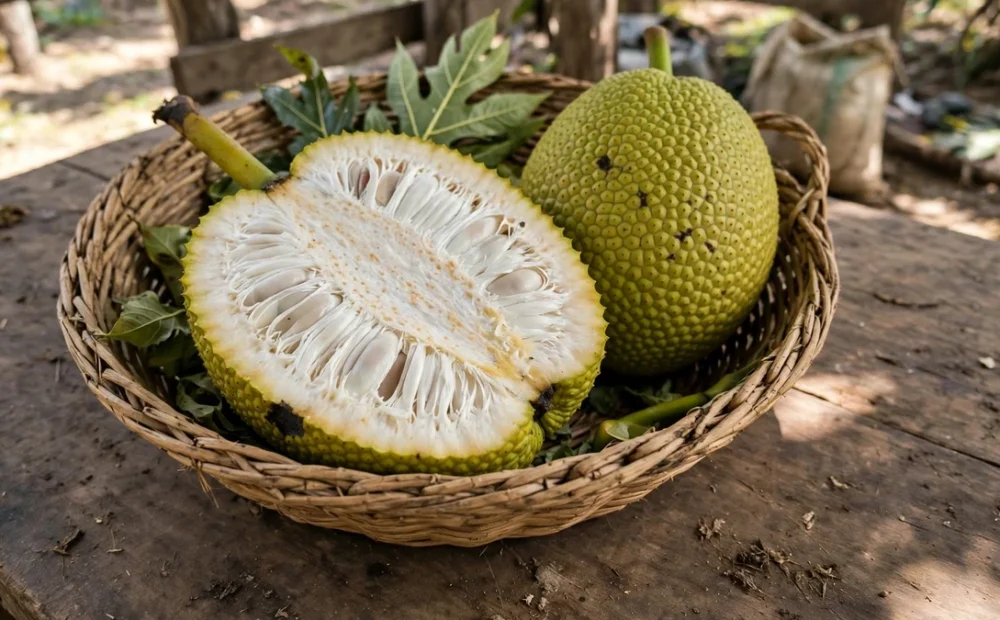
Breadfruit is a starchy green fruit about the size of a small melon, and it feeds whole islands. The skin is rough and patterned, the flesh pale and firm when picked, and it turns soft and floury only once it is cooked — roasted in an earth oven, fried in slices, or baked whole in the coals. Raw it is hard and useless; cooked it tastes of fresh bread and potato, which is how it got its name. The Pacific Islands are its classic home.
A breadfruit farm retreat is a working orchard stay built around that cooking. Guests sleep in a farmhouse at the orchard’s edge and spend the day learning how a fruit that feeds a village is handled: how to tell by skin and smell when it is ready, how to cut it without the milky sap sticking to everything, and how the kitchen turns one tree’s crop into roast, chips, pudding and flour. The roasting comes first and the sightseeing second.
These nine stays run from Samoa’s earth ovens to Jamaica’s Blue Mountain foothills, with room rates from $65–$95 a night to $345–$380 at the top. Each one is a working farm before it is a guesthouse, so the picking calendar matters more than the flight schedule.
Key takeaways
- Breadfruit is picked green and firm, and it must be cooked before eating — raw flesh is hard and indigestible.
- The main Pacific harvest runs roughly November to May, with Hawaii picking most of the year, so harvest weeks matter more than cheap flights.
- Roasted, fried or baked, breadfruit eats like a potato; dried and ground, it keeps as flour for months.
- The flesh is naturally gluten-free, but farm kitchens use soy sauce and wheat breads — tell the farm in writing.
- Breadfruit is related to jackfruit and fig, so guests with latex or fig allergies should ask the farm first.
What a breadfruit farm retreat actually is
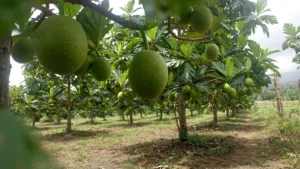
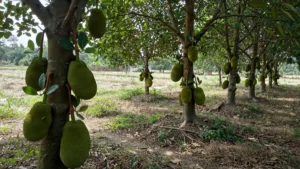
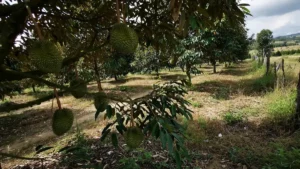
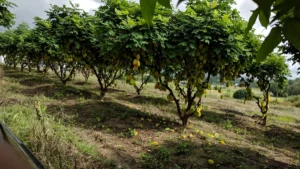
A breadfruit tree is a broad, shady giant with big lobed leaves, and a single tree can feed a family for months. The fruit hangs from the branches on short stems, green and heavy, and when it is ready the skin turns a duller green and gives slightly under the thumb. Farms pick with poles and nets because a falling fruit bruises easily, and the milky sap sticks to skin, clothes and blades alike.
The cooking is the point of the stay. A whole breadfruit goes into the earth oven wrapped in leaves and comes out soft enough to scoop; slices fry crisp in oil, and ripe fruit goes into puddings and cakes. Many farms also dry the flesh and grind it into flour, which is how the crop lasts through the off-season. This is a farm kitchen that happens to have guest rooms, not a resort with a fruit theme.
How we picked these stays, and what to ask first
We looked for farms where breadfruit is a real crop, not a decoration: trees in production, a kitchen that cooks the fruit daily, and guests who can join the picking and the roasting. Each stay below has working orchards, rooms on the farm itself, and a host who can name the picking weeks.
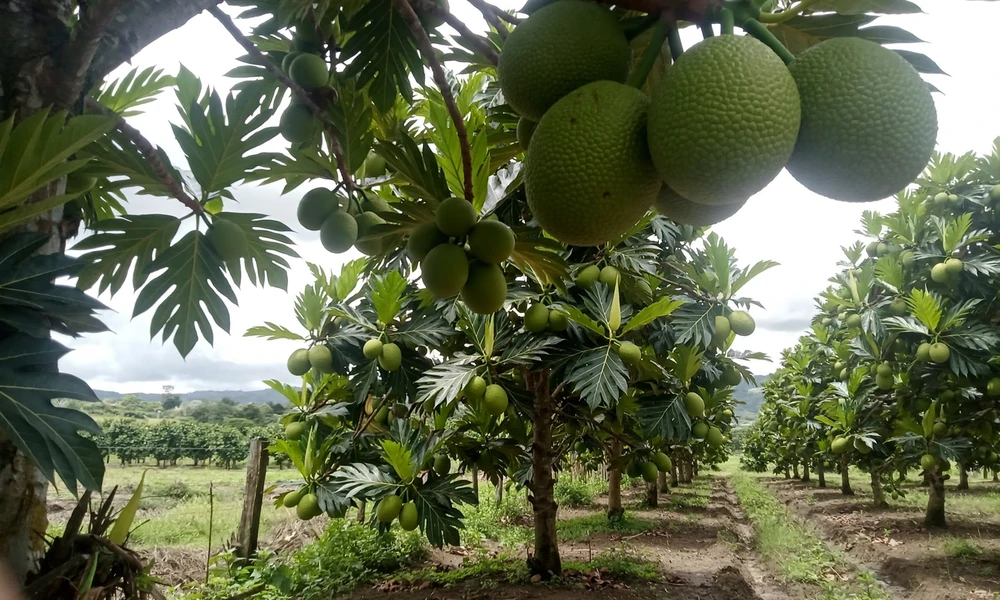
Ask three things before you pay: which weeks the farm picks, whether guests can join the earth-oven cooking, and what the kitchen will cook for a gluten-free guest. For a sense of how a tropical fruit stay is organised, the jackfruit farm retreats run on the same pattern — working orchards, harvest calendars and a kitchen at the centre of the stay.
The 9 best luxury breadfruit farm retreats of 2027
Upolu, Samoa — Breadfruit from the Earth Oven
Upolu is where the breadfruit story starts, and this farm outside Apia still cooks the old way. The trees stand in a grove behind the house, the fruit is picked green and firm, and the earth oven — the umu — is lit every evening. The rooms are simple fale-style houses with woven mats and open sides, and the sea is a short walk down the hill.
The farm keeps a dozen trees in production and a kitchen that uses the fruit at every meal. The picking weeks run from November to April.
What We Like: The umu is lit daily, the fruit is picked in front of guests, and the rooms sit inside the grove.
What to Consider: The rooms are open-sided, the rain is frequent, and the farm keeps four guest houses.
Best For: A first breadfruit trip that starts with the cooking.
Style: Fale houses in a working grove with a nightly earth oven.
Price Range: $65–$95 a night for two, breakfast and the farm walk included.
Standout Feature: The nightly umu, where guests wrap their own breadfruit in leaves.
Taveuni, Fiji — Breadfruit on the Garden Island
Taveuni is Fiji’s garden island, wet and green, and breadfruit grows fast in the rain. This farm sits on a ridge above the coast, the guest rooms look over a valley of banana and breadfruit, and the picking is done with poles from the lower branches. The kitchen roasts the fruit in the lovo, Fiji’s earth oven.
The trees fruit from December to May, and the host dries the surplus into flour sold by the bag.
What We Like: The ridge view, and a lovo lunch cooked in front of guests.
What to Consider: It rains most afternoons, the track up is rough, and the farm has just six rooms.
Best For: A green, rainy mountain stay with serious cooking.
Style: Ridge lodge with a covered outdoor kitchen and lovo pit.
Price Range: $95–$125 a night for two, breakfast and the farm walk included.
Standout Feature: The breadfruit flour, dried and ground on the farm and sold by the bag.
Moorea, French Polynesia — Breadfruit Beneath the Peaks
Moorea’s peaks rise straight out of the lagoon, and the breadfruit trees grow in the valleys between them. This farm is a family orchard on the north coast, with guest bungalows among the trees and a kitchen that cooks the fruit in every form. The picking season runs November to April.
Guests can join the morning picking and the afternoon cooking, and the farm’s boat takes them to the reef when the work is done.
What We Like: The lagoon view from every bungalow, and a kitchen that uses the fruit daily.
What to Consider: The island is small and the farm books out early in peak season.
Best For: A honeymoon-style stay where the orchard is the backdrop.
Style: Garden bungalows among the trees with a lagoon view.
Price Range: $125–$155 a night for two, breakfast and the farm walk included.
Standout Feature: The reef boat, free for guests once the morning picking is done.
Hilo, Hawaii — Breadfruit on the Wet Side
Hilo is the wet side of the Big Island, and breadfruit grows there all year. This farm sits on the edge of town, with a grove of old trees and a kitchen that treats breadfruit as a staple. The picking runs most of the year, with the heaviest crop in the summer months.
The farm is the easiest to reach on this list — a short drive from Hilo airport — and the host runs a weekly market stall.
What We Like: Year-round picking, an easy airport transfer, and a market stall to visit.
What to Consider: Hilo is rainy, the grove is small, and the farm sits close to town.
Best For: A first-timer who wants breadfruit without a long journey.
Style: Plantation house with a working grove and a market stall.
Price Range: $155–$190 a night for two, breakfast and the farm walk included.
Standout Feature: The weekly market stall, where the farm sells and cooks its own fruit.
Espiritu Santo, Vanuatu — Breadfruit in the Island Interior
Espiritu Santo is Vanuatu’s largest island, and this farm lies inland among the gardens and rivers. The breadfruit trees grow beside taro and yam plots, the fruit is picked from November to May, and the cooking is done in a ground oven with hot stones.
The farm is remote — the road is unsealed and the nearest town is an hour away — but the sessions are the most hands-on on this list.
What We Like: The most hands-on picking on this list, and a river for swimming after work.
What to Consider: The road is unsealed, the island is remote, and the farm keeps five rooms.
Best For: Travellers who want a remote farm and do not mind a rough road.
Style: Timber house on stilts beside garden plots and a river.
Price Range: $190–$220 a night for two, breakfast and the farm walk included.
Standout Feature: The hand-ground flour, made from fruit dried in the sun.
Tongatapu, Tonga — Breadfruit by the Lagoon
Tongatapu is flat, warm and quiet, and breadfruit grows in almost every garden. This farm is a family orchard near the lagoon, with guest rooms in a low timber house and a kitchen that cooks the fruit in the umu most evenings.
The farm is small — three guest rooms and a dozen trees — and the host’s family eats with the guests.
What We Like: The family-table meals, the quiet lagoon, and a farm small enough to feel personal.
What to Consider: The island is flat and quiet, flights are few, and the farm keeps three rooms.
Best For: A slow, quiet stay where the family table is the point.
Style: Low timber house with a family kitchen and a lagoon nearby.
Price Range: $220–$250 a night for two, breakfast and the farm walk included.
Standout Feature: The family-table dinners, cooked in the umu and eaten with the hosts.
Rarotonga, Cook Islands — Breadfruit on the Reef Road
Rarotonga is a small island with a road that circles the coast, and this farm sits on the inland side of it, with a grove of breadfruit trees and a view of the mountains. The fruit is picked from December to May and the chips are fried fresh every afternoon.
The rooms are modern bungalows with air conditioning, and the host runs a cooking class twice a week.
What We Like: Modern bungalows, a beach five minutes away, and a twice-weekly cooking class.
What to Consider: The island is small, the farm is inland, and peak season books out early.
Best For: A comfortable stay with a beach nearby.
Style: Modern bungalows with a grove behind and a beach in front.
Price Range: $250–$285 a night for two, breakfast and the farm walk included.
Standout Feature: The twice-weekly cooking class, built entirely around the farm’s fruit.
Guadalcanal, Solomon Islands — Breadfruit in the Rainforest Edge
Guadalcanal’s interior is rainforest and garden plots, and this farm sits on the forest edge above the coast. The breadfruit trees are old and tall, the fruit is picked with long poles, and the cooking is done over an open fire.
The farm is the most remote on this list, but the host knows the trees by name, and the picking sessions are unhurried.
What We Like: Old tall trees, a knowledgeable host, and unhurried picking.
What to Consider: The road is long and rough, the island is remote, and the cabins are basic.
Best For: Adventurous travellers who want old trees and a real forest-edge farm.
Style: Timber cabins on the rainforest edge with an open-fire kitchen.
Price Range: $285–$320 a night for two, breakfast and the farm walk included.
Standout Feature: The host’s tree-by-tree knowledge, built over thirty years on the farm.
Portland, Jamaica — Breadfruit in the Blue Mountains
Jamaica’s north-east parish is steep, green and rainy, and breadfruit has been a staple there since Captain Bligh brought it in the 1790s. This farm perches on a high ridge with the Blue Mountains behind it, its guest rooms facing a valley thick with banana and breadfruit trees.
This is the most polished stay on the list: a stone lodge with a pool and a chef who trained in Kingston.
What We Like: The mountain outlook from the terrace, and a chef’s tasting menu built entirely from the farm’s fruit.
What to Consider: Afternoon rain is the norm, the road up is rough, and only six rooms are kept.
Best For: A luxury stay where breadfruit is treated as fine dining.
Style: Stone lodge with a pool and a chef-led kitchen.
Price Range: $345–$380 a night for two, breakfast and the farm walk included.
Standout Feature: The chef’s tasting menu, built entirely from the farm’s breadfruit.
Which breadfruit region fits your trip
If this is your first breadfruit trip, start in Hawaii or Samoa. Hawaii picks most of the year and is easy to reach, while Samoa cooks the old way with the umu lit every evening. If you want a beach as well as a farm, Moorea and Rarotonga are the picks.
For a remote farm, choose Espiritu Santo or Guadalcanal, where the trees are old and the picking is unhurried. For luxury, Portland is the only answer: a stone lodge, a trained chef and a tasting menu. The coconut plantation retreats follow a similar island pattern, and several of these farms grow coconut beside their breadfruit.
The caveats that matter
| Detail | What is known |
|---|---|
| Harvest window | Main picking runs November to May across the Pacific; Hawaii picks most of the year. |
| Ripe test | A ready breadfruit is dull green and gives slightly under the thumb. |
| Never raw | Breadfruit must be cooked before eating; raw flesh is hard and indigestible. |
| Sap | Cutting releases sticky milky sap; farms provide gloves and oil for hands and blades. |
| Gluten | The flesh has no gluten, but kitchens cook with soy sauce and wheat breads — tell the farm in writing. |
| Allergies | Breadfruit is related to jackfruit and fig; guests with latex or fig allergies should ask first. |
| Weight | One fruit commonly weighs 1 to 4 kilograms, so picking uses poles and nets. |
| Flour | Dried and ground breadfruit keeps for months as flour. |
Checklist: booking a breadfruit farm stay honestly
- Ask the farm to name its picking weeks in writing before you pay.
- Flag any wheat or gluten allergy in your first note, and ask what the kitchen will cook for you.
- Check the rate includes meals and picking sessions.
- Wear closed shoes, a hat and long sleeves in the rows, and gloves at the cutting table.
- Carry notes for the farm shop and the town market.
- Book the earth-oven evening early — the best farms light the oven only a few nights a week.
Frequently asked questions
When does breadfruit ripen?
Across the Pacific the main season runs roughly November to May. Hawaii picks most of the year, and Jamaica’s heaviest crop comes from May to October. Ask the farm for its picking weeks in writing before you book.
Can guests help pick breadfruit?
Most farms on this list let guests join the picking, usually in the morning with poles and nets. The fruit is heavy and the sap is sticky, so gloves and old clothes are provided.
Is breadfruit safe for gluten-free guests?
The flesh itself is naturally gluten-free, but farm kitchens use soy sauce, wheat breads and shared cooking surfaces. Tell the farm about any wheat allergy in your first message, in writing.
What does breadfruit taste like?
Cooked green breadfruit tastes of fresh bread and potato, soft and floury with a mild, nutty note. Ripe fruit is sweeter and softer, closer to a sweet potato.
How long should a breadfruit farm stay last?
Three to four nights is enough to learn the picking, the roasting and the flour. A week lets you see the full cycle, from green fruit on the tree to flour in the bag.
What should I carry home from a breadfruit farm?
Breadfruit flour and chips travel best — dried and ground, the flour keeps for months. Fresh fruit bruises easily, so buy it only if you are flying home the same day. The pineapple plantation retreats have the same rule: dried goods travel, fresh fruit does not.
The bottom line
Breadfruit is the Pacific’s working fruit, and the best way to meet it is on a farm where it is picked, roasted and ground in front of you. Samoa’s earth oven and Jamaica’s tasting menu are the two ends of the same story, and every stay in between teaches the same lesson: the fruit must be cooked and the harvest calendar is the only schedule that matters.
Book the picking weeks first, tell the farm about any allergy in writing, and carry flour home instead of fresh fruit. Do that, and a breadfruit farm stay is one of the most honest trips in the tropics.