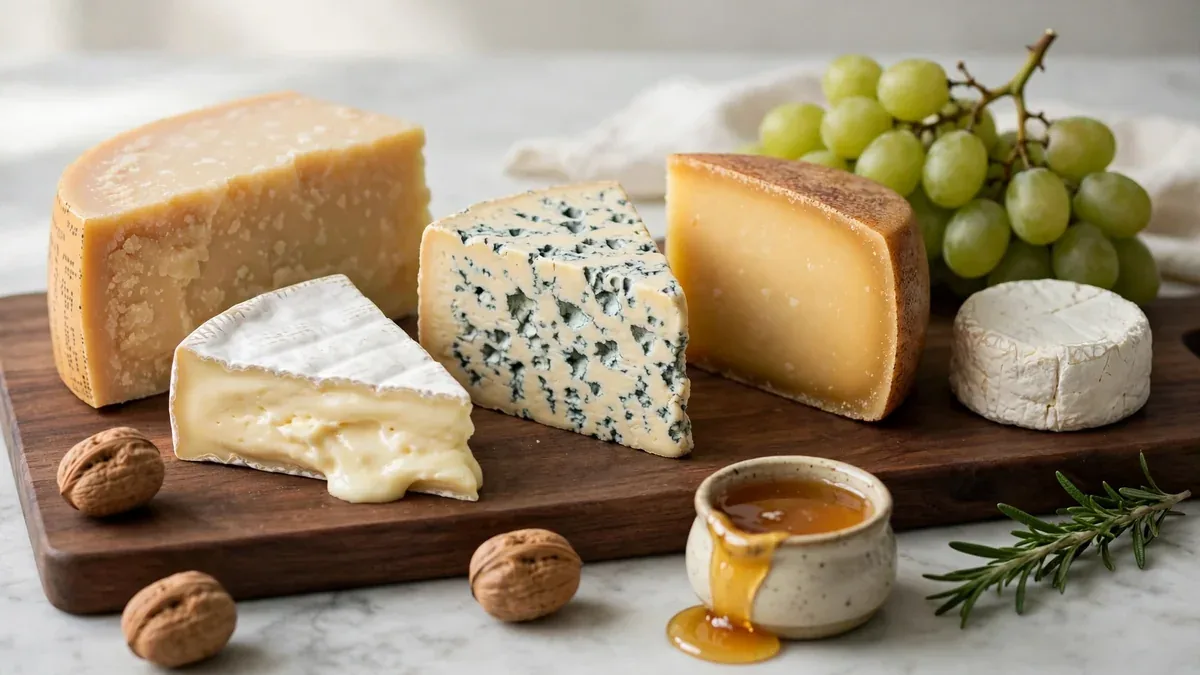
A good cheese board can turn an ordinary evening into something memorable, and a bad one can quietly waste a small fortune. The difference between the best luxury cheese brands and the expensive wedges that disappoint is rarely the price on the label. It is the age of the cheese, the milk, the place it comes from, and whether it was cut and stored properly before it reached you. A 36-month Parmigiano Reggiano and a pale, rubbery supermarket wedge may share a name on the shelf, but they are not the same cheese.
That is why this guide is organised by what actually makes a cheese worth its price, not by brand fame alone. A washed-rind Époisses belongs on a different kind of board from a crystalline aged Gouda, and the right choice depends on who is eating, what you are drinking, and whether the cheese is the centre of the evening or a quiet part of it. The best luxury cheese brands earn their place because they are consistent, age properly, and a single wedge can carry a whole course on its own.
Below are nine names worth knowing in 2027, from the great aged hard cheeses of Italy and Switzerland to the soft wheels of France and the bold blues of England. Each one is described by what it is good at, what to watch for, and who it suits best, so you can build a board or spend well on a single wedge with confidence.
Key takeaways
- Age matters more than brand: a 24-month Comté or a 36-month Parmigiano Reggiano tastes entirely different from a young version of the same cheese.
- Buy from a cheesemonger who cuts to order, and look for a protected name such as Parmigiano Reggiano DOP, Comté AOP, or Stilton PDO.
- Serve cheese at room temperature, out of the fridge for at least 30 to 45 minutes, and cut it just before serving so it does not dry out.
- Balance the board: one hard aged cheese, one soft bloomy cheese, and one blue or washed-rind cheese, plus honey, nuts, and fruit for contrast.
- No cheese stays good forever once cut, and a wedge that smells of ammonia, tastes bitter, or has dried, cracked edges should be replaced.
What makes a cheese a luxury cheese
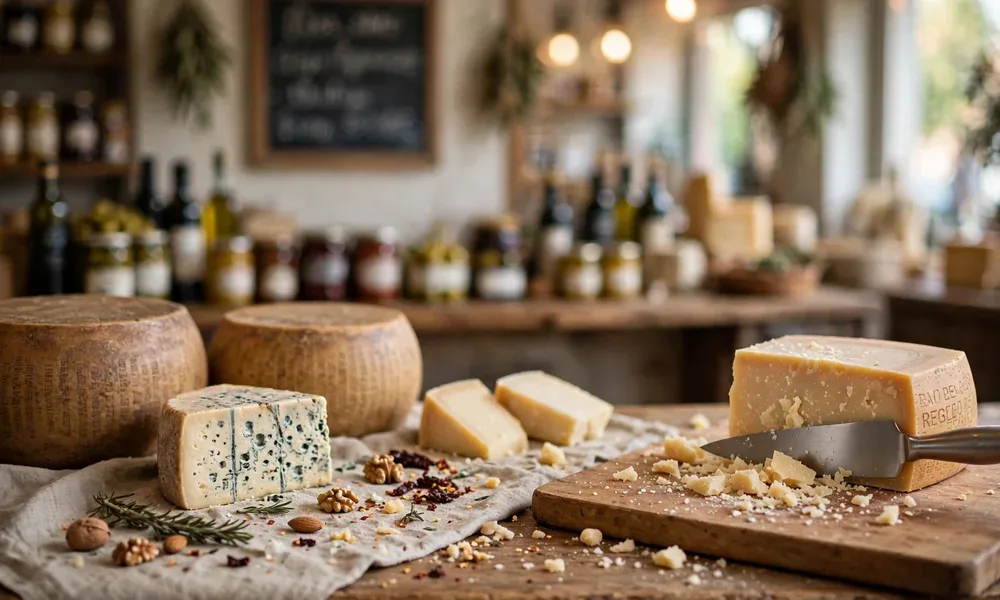
A luxury cheese is not simply an expensive one. It is a cheese made from good milk, in a specific place, by a method refined over generations, and aged long enough to develop real depth. The milk matters first. Raw milk cheeses carry more flavour than pasteurised milk, because the natural cultures in the milk survive and shape the taste, which is why a raw-milk Comté from the Jura is a different experience from a factory-made Swiss-style cheese.
Place matters just as much. Protected names exist for a reason. Parmigiano Reggiano can only be made in a small region of Italy, from cows fed on local forage, and every wheel is inspected before it earns the name. Comté must come from the Jura, from Montbéliarde cows, aged in mountain cellars. Stilton must be made in Derbyshire, Leicestershire, or Nottinghamshire. These rules are the reason a wheel tastes the same year after year, and why a cheaper imitation usually tastes flatter and simpler.
Age is the third thing to check, and the easiest to verify. Hard cheeses gain crystals, nuttiness, and depth as they age, and a 12-month cheese is a different food from a 36-month one. Soft cheeses work the other way: they are at their best in a window of ripeness, and an overripe Brie that has gone runny and ammoniated is past its best. A good cheesemonger will tell you the age of the wheel and when it was cut. If a shop cannot answer that, buy somewhere else.
What to look for when you buy luxury cheese
Look first at the rind and the cut. A hard cheese should look clean and even, with no cracks or dark staining, and the paste should be a warm, even colour with small, bright crystals in an aged wheel. A soft cheese should yield gently when pressed, not collapse, and the rind should be white and even, without pink or brown patches. A blue cheese should show even blue veining, not a grey, slimy surface. These small signs tell you whether the cheese was stored and handled properly.
Look next at how the cheese is sold. The best luxury cheese brands are sold by weight, cut from a wheel to order, and wrapped in cheese paper, not cling film. Pre-cut, vacuum-packed wedges can still be good, but they lose aroma and texture the longer they sit. If you are buying for a special occasion, ask for the cheese to be cut on the day, and keep it in its paper in the fridge until an hour before serving. For a regular supply of well-chosen wheels, cheese subscription boxes are a practical way to try new makers without hunting through a dozen shops.
Finally, look at the price per kilo, not the price per wedge. A small wedge of 36-month Parmigiano Reggiano can cost more than a large block of young cheddar, but a little goes a long way, grated over pasta or shaved onto a salad, and it keeps for weeks in the fridge. Luxury cheese is best bought in small amounts, eaten fresh, and chosen with a purpose in mind.
Parmigiano Reggiano
What we like: The king of hard cheeses, aged 24 to 36 months, with a granular, crystalline texture, notes of toasted hazelnut and brown butter, and a long, savoury finish.
What to consider: The price rises sharply with age, and young Parmigiano, at 12 months, is a different, milder cheese. Look for the pin-dot rind stamp that guarantees authenticity. Origin: Emilia-Romagna, Italy. Milk: Raw cow. Age: 24 to 36 months. Best for: Grating, shaving, and eating in chunks with honey.
Buy this one first if you are starting a luxury board: break it into rough chunks and serve it with honey and walnuts, which bring out its nutty, savoury side.
Comté
What we like: A raw-milk cheese from the Jura mountains, aged 12 to 24 months, with a supple, almost silky texture and flavours of roasted nuts, brown butter, and dried fruit.
What to consider: Quality varies by season and by cellar, so buy from a maker or affineur you trust, and ask for an 18-month wheel if you want the fullest flavour. Origin: Jura, France. Milk: Raw cow. Age: 12 to 24 months. Best for: Cheese boards, melting, and eating with cured meats.
Comté is the most versatile cheese here: it melts beautifully in a gratin or fondue, and is equally good on its own with white wine and good bread.
Stilton
What we like: England’s great blue cheese, creamy and rich, with a gentle, earthy tang rather than the sharp bite of some blues. The best makers produce wheels that are buttery, well-veined, and balanced.
What to consider: Stilton needs to be eaten at its peak, and a wheel that has been open too long can turn sharp and ammoniated. Buy a modest wedge and eat it within a week. Origin: Derbyshire, Leicestershire, and Nottinghamshire, England. Milk: Pasteurised cow. Age: Around 9 weeks. Best for: Cheese boards, crumbling over salads, and pairing with port.
Serve it with a sweet contrast, such as honey, fig, or port, and its richness turns mellow and almost sweet.
Époisses de Bourgogne
What we like: A washed-rind cheese from Burgundy, washed in marc de Bourgogne, with a soft, spoonable centre and a rich, meaty flavour that is far more refined than its famously strong aroma suggests.
What to consider: The smell is powerful, and the cheese is best served at room temperature, spooned onto bread, rather than cut into neat slices. Keep it in its wooden box and eat it within a few days of opening. Origin: Burgundy, France. Milk: Pasteurised cow. Age: Around 6 weeks. Best for: Spreading on bread, and as the bold centrepiece of a board.
Époisses turns a good board into a memorable one for people who love strong, savoury flavours, though it is not a cheese to hide among milder wedges.
Gruyère AOP
What we like: A Swiss alpine cheese with a firm, supple texture and a flavour that moves from nutty and sweet when young to deeply savoury at 12 to 18 months, with a pleasant, salty finish.
What to consider: There are many Gruyère-style cheeses, and only the AOP version guarantees Swiss origin and traditional method. Look for the AOP mark on the rind. Origin: Switzerland. Milk: Raw cow. Age: 5 to 18 months. Best for: Melting, fondue, gratins, and eating on its own.
Gruyère is the cook’s luxury cheese: the heart of a proper fondue, the best choice for French onion soup, and superb in thin slices with cornichons and cured ham.
Brie de Meaux AOP
What we like: The original Brie, made east of Paris, with a soft, creamy, almost buttery centre, a delicate mushroom and hazelnut aroma, and a white rind that ripens evenly from the outside in.
What to consider: Ripeness is everything. A Brie that is chalky in the centre is underripe, and one that smells of ammonia is overripe. Buy it close to the day you plan to serve it. Origin: Île-de-France, France. Milk: Raw cow. Age: 4 to 8 weeks. Best for: Cheese boards, baking whole, and spreading on baguette.
Serve it whole on the board with a crusty baguette and a little fig jam, and it will disappear faster than any other cheese on the table.
Manchego
What we like: A firm sheep’s milk cheese from La Mancha, with a distinctive herringbone rind, a buttery, slightly tangy flavour, and a nutty, caramel note that deepens with age.
What to consider: Young Manchego, at 3 months, is mild and semi-soft, while a 12-month wheel is firm, crumbly, and far more intense. Choose the age to match the occasion. Origin: La Mancha, Spain. Milk: Raw or pasteurised sheep. Age: 3 to 12 months. Best for: Cheese boards, tapas, and pairing with quince paste.
Its tang is gentle, and it pairs beautifully with quince paste, known as membrillo, the traditional Spanish accompaniment and worth seeking out.
Aged Gouda
What we like: A Dutch cheese aged for 3 to 5 years, transformed from a mild, creamy young cheese into a firm, crystalline wheel with flavours of butterscotch, toasted nuts, and a gentle, salty crunch.
What to consider: Very old Gouda can be dry and intensely salty, so taste before you buy a large wedge, and serve it in small chunks rather than thick slices. Origin: Netherlands. Milk: Pasteurised cow. Age: 3 to 5 years. Best for: Eating in chunks, shaving over salads, and pairing with dark beer or bourbon.
First-time tasters are often surprised, because it tastes almost like toffee; serve it in small chunks with toasted pecans.
Roquefort
What we like: A sheep’s milk blue from the caves of Roquefort-sur-Soulzon, sharp, salty, and intensely savoury, with a creamy, almost spreadable texture and a long, peppery finish.
What to consider: Roquefort is strong, and a little goes a long way. Serve small wedges, and balance it with something sweet, such as honey or pears, rather than letting it dominate the board. Origin: Roquefort-sur-Soulzon, France. Milk: Raw sheep. Age: Around 5 months. Best for: Cheese boards, crumbling into salads, and pairing with sweet wine.
Roquefort is the blue to choose when you want drama: a small wedge, a drizzle of honey, and a slice of pear is all it needs.
How to serve luxury cheese properly
Temperature is the single most important part of serving cheese, and the easiest to get wrong. Cheese straight from the fridge tastes muted, firm, and dull, because cold suppresses aroma and flavour. Take it out 30 to 45 minutes before serving, keep it in its paper until the last moment, and cut it only when you are ready to serve. Cut soft cheeses with a clean, thin knife, and break hard cheeses into chunks, which shows off their crystalline texture.
Pairing is the second part of the job. Hard aged cheeses love honey, nuts, and dried fruit. Soft cheeses love bread, fig jam, and a light white wine. Blue cheeses love something sweet, such as port, honey, or pears, which softens their saltiness. For wine, choose a red with enough acidity to cut through the fat, and a Pinot Noir is a reliable choice, because its bright acidity and gentle tannins work with soft, hard, and blue cheeses alike.
Order matters too. Serve the mildest cheese first and the strongest last, so the blue or washed-rind cheese does not overwhelm everything that follows. Give each cheese its own part of the board and its own knife, so flavours do not mix. A board with three or four well-chosen cheeses, served properly, will always beat a crowded board of eight mediocre ones.
Luxury cheese at a glance
| Detail | What is known |
|---|---|
| Best hard cheese to start with | Parmigiano Reggiano, aged 24 to 36 months, crystalline and nutty |
| Best all-rounder | Comté, aged 18 months, nutty, supple, and excellent for melting |
| Best blue cheese | Stilton for a mellow blue, Roquefort for a sharp, dramatic one |
| Best soft cheese | Brie de Meaux AOP, creamy and classic, best eaten at peak ripeness |
| Best bold choice | Époisses de Bourgogne, spoonable, rich, and strongly aromatic |
| How to store it | Cheese paper in the fridge, never cling film, and eat within a week of cutting |
| When to take it out | 30 to 45 minutes before serving, so it reaches room temperature |
| What to avoid | Pre-cut wedges that look dried out or cracked, and shops that cannot say how old the wheel is |
Checklist: buying luxury cheese honestly
Use these checks before you buy, and again when the cheese is on the board.
- Check the name: look for a protected name such as DOP, AOP, or PDO, which guarantees origin and method.
- Check the age: ask how old the wheel is, and choose the age that matches the occasion.
- Check the cut: buy from a cheesemonger who cuts to order, and avoid wedges with dried, cracked edges.
- Check the rind: clean and even, with no pink or brown patches on a soft cheese, and no grey, slimy surface on a blue.
- Check the temperature: take it out of the fridge 30 to 45 minutes before serving, and cut it at the last moment.
- Check the balance: serve one hard, one soft, and one blue or washed-rind cheese, with honey, nuts, and fruit for contrast.
Frequently asked questions
What is the best luxury cheese for a cheese board?
A board works best with three cheeses: a hard aged cheese such as Parmigiano Reggiano or Comté, a soft cheese such as Brie de Meaux, and a blue such as Stilton or Roquefort. Add honey, walnuts, grapes, and good bread, and the board is complete.
How much should I spend on luxury cheese?
Expect to pay more per kilo than for everyday cheese, but buy small amounts. A 200-gram wedge of a great cheese is enough for four people on a board. The value is in the flavour per bite, not the size of the wedge.
How long does luxury cheese keep?
Hard cheeses keep for several weeks in the fridge if wrapped in cheese paper. Soft and blue cheeses should be eaten within a week of cutting, and washed-rind cheeses within a few days.
Can I freeze luxury cheese?
You can freeze hard cheeses for cooking, but freezing ruins soft and blue cheeses, making them crumbly and watery. Buy small amounts and eat them fresh instead.
What wine goes best with luxury cheese?
A light, acidic red such as Pinot Noir works across a whole board, while a sweet wine such as port or Sauternes is the classic partner for blue cheese. For soft cheeses, a crisp white wine is a better match than a heavy red.
Is luxury cheese good for cooking, or only for eating?
Both, but choose wisely. Hard cheeses such as Parmigiano Reggiano and Gruyère are superb for cooking, grated into pasta, risotto, or gratins. Soft and blue cheeses are best eaten as they are, because heat hides the delicate flavours you paid for. The best cheese for burgers is a different question, and it is worth choosing a good melting cheese there too, rather than a luxury wedge made to be eaten on its own.
The bottom line
The best luxury cheese brands in 2027 are the ones that earn their price through origin, method, and age, not through packaging or fashion. Parmigiano Reggiano, Comté, Stilton, Époisses, Gruyère, Brie de Meaux, Manchego, aged Gouda, and Roquefort have all been made the same way for generations, and each offers a different pleasure, from the crystalline crunch of an aged hard cheese to the spoonable richness of a washed rind.
Start with three cheeses, buy small amounts from a cheesemonger who cuts to order, serve them at room temperature, and let the cheese speak for itself. The difference between a board people remember and one they forget is rarely the price. It is the care taken in choosing, storing, and serving it.