Makeup brushes are easy to buy and easy to neglect. They end up loose in a drawer, tossed in a makeup bag, or standing in a cup on a damp bathroom shelf, and then they surprise you: bristles bent out of shape, handles stained, a powder brush that sheds every time you use it. Most of that damage is not wear from use. It is damage from storage.
Good storage is simple, and it protects the money you spent on the brushes. Clean, dry brushes kept upright, out of humidity, and away from dust will hold their shape for years. Brushes left in a hot, damp bathroom or crushed at the bottom of a bag will not. The difference is not a special product. It is a handful of small habits.
Below are nine steps for storing makeup brushes properly in 2027, from the clean-and-dry routine that comes first to the holders, covers and travel cases that keep them safe. Each step explains what to do, what to avoid, and how long it takes, so you can set up a system that actually lasts.
Key takeaways
- Brushes should always be stored clean and fully dry, because damp bristles grow bacteria and lose their shape.
- Upright storage in a holder keeps bristles from bending, while loose storage in a drawer or bag crushes them.
- Bathrooms are the worst place for brushes, because steam and humidity damage bristles and handles over time.
- Travel covers and cases protect brush heads, but brushes should never be stored in a sealed bag while still damp.
- No storage system fixes a brush that is already shedding, splayed, or cracked, and a holder that traps moisture is worse than no holder at all.
What storing makeup brushes actually protects
Storage protects three things: the shape of the bristles, the glue in the ferrule, and the cleanliness of the brush. A powder brush that is pressed flat under other tools loses its dome shape and never picks up product evenly again. A brush stored damp in a closed bag becomes a warm, dark place where bacteria grow, and the next time you use it, that bacteria goes straight onto your skin.
The ferrule, the metal band that holds the bristles, is the most vulnerable part. Water and humidity loosen the glue inside it, and once the glue fails the bristles shed. That is why drying matters as much as storing, and why the way a brush dries is part of how it should be stored. A brush that dries upright in a cup with water running down into the ferrule is being damaged every time you wash it.
Storage also protects your makeup itself. A brush that has picked up dust, old powder or stray hairs from a drawer will transfer that onto your face. Keeping brushes covered or upright in a clean holder means the next application starts clean, and your colours stay true instead of muddy.
How we chose these steps and what to look for
Look first at where your brushes live now. If they are in a bathroom, that is the first thing to change. Steam from showers keeps the air humid for hours, and humidity is the enemy of natural-hair bristles, wooden handles and the glue in the ferrule. A bedroom vanity, a dressing table, or a cool shelf outside the bathroom is a far better home.
Look next at the holder. A good holder keeps brushes upright with the bristles up, gives each brush room so the heads do not crush each other, and lets air circulate. A cup, a jar, or a purpose-made brush holder all work, as long as the bottom is stable and the bristles are not pressed together. Glass, ceramic and acrylic holders are easy to clean, which matters, because the holder itself collects dust and product residue over time.
Finally, think about travel. Brushes need a different system on the road: a roll, a case, or individual covers that protect the heads. The rule does not change, though. Brushes travel clean and dry, and they come out of the case as soon as you arrive. Our guide to the best makeup brushes is a useful starting point if you are deciding which brushes are worth protecting in the first place.
The 9 steps to storing makeup brushes properly
Clean your brushes before you store them
What to do: Wash brushes with a gentle brush cleaner, rinse until the water runs clear, and let them dry fully before they go back in the holder. What to avoid: Putting a dirty or damp brush back in storage, where residue hardens and bacteria grow.
Best for: Every brush, every time. Time needed: Five to ten minutes for a weekly wash. Standout tip: Clean on the same day each week so it becomes a habit, not a chore.
A brush stored dirty is a brush that gets harder to clean each time, because pigment and oil set into the bristles. Cleaning first is the step everything else depends on.
Let brushes dry completely, bristles down
What to do: After washing, reshape the bristles and lay brushes flat on a clean towel, or hang them upside down so water drains away from the ferrule. What to avoid: Drying brushes upright in a cup, which lets water run down into the glue and loosen the bristles.
Best for: All brushes, especially natural-hair ones. Time needed: Four to eight hours of drying time. Standout tip: Wash brushes in the evening so they dry overnight.
Drying is the most commonly skipped part of brush care, and the most damaging to skip. A brush that feels dry on the outside can still be damp at the base of the bristles.
Store brushes upright in a holder
What to do: Stand brushes bristles-up in a stable cup, jar or brush holder, with enough space that the heads do not press against each other. What to avoid: Laying brushes flat in a pile, where the bottom ones get crushed and bent out of shape.
Best for: Daily-use brushes on a vanity or dressing table. Time needed: A minute to set up. Standout tip: Use a holder with a wide, heavy base so it cannot tip over.
Upright storage keeps the shape of the bristles, lets air circulate, and makes it easy to see and reach the brush you want. It is the simplest upgrade you can make.
Cover brush heads when you travel
What to do: Slip a brush guard, a silicone cover, or a soft cloth sleeve over each brush head before it goes into a bag or case. What to avoid: Tossing uncovered brushes loose into a makeup bag, where they bend, shed and pick up loose powder.
Best for: Travel and gym bags. Time needed: Two minutes to cover a set. Standout tip: Brush guards are cheap, reusable, and keep the shape of the head intact.
A brush that arrives with bent bristles is a brush that will never blend the same way again. Covers cost very little and prevent most travel damage.
Separate face brushes from eye brushes
What to do: Keep large face brushes in one holder and small eye brushes in another, so the big heads do not crush the small ones. What to avoid: Mixing all your brushes in one crowded cup, where the heavy face brushes press down on delicate eye brushes.
Best for: Anyone with more than a handful of brushes. Time needed: A few minutes to sort once. Standout tip: Two small holders are better than one overcrowded one.
Eye brushes are the most delicate tools you own, and they suffer most from being crushed. Giving them their own holder is a small change with a real payoff.
Keep brushes out of the bathroom
What to do: Store brushes in a bedroom, dressing area, or any dry room, away from shower steam and splashes. What to avoid: Leaving brushes on a bathroom shelf or in a bathroom drawer, where humidity damages bristles and handles.
Best for: Natural-hair brushes and wooden-handled brushes in particular. Time needed: A few minutes to move them once. Standout tip: If you must keep brushes in a bathroom, use a closed cabinet rather than an open shelf.
Steam is slow damage. You will not see it in a week, but over months the bristles go limp, the handles crack, and the glue weakens. Moving brushes out of the bathroom is the single best storage decision you can make.
Protect natural-hair brushes from dust and moths
What to do: Store natural-hair brushes in a covered holder or a closed drawer with a dust cover, and keep the storage area clean and dry. What to avoid: Leaving natural-hair brushes uncovered for months in a dusty room, where dust settles deep into the bristles.
Best for: Goat, squirrel and sable brushes. Time needed: A minute to cover them. Standout tip: A simple cloth cover over the holder keeps dust out without trapping moisture.
Natural hair is an animal fibre, and like any natural fibre it attracts dust and, in the worst cases, moths. A cover is cheap insurance for your most expensive brushes.
Rotate your most-used brushes to the front
What to do: Keep the brushes you use every day at the front of the holder, and move the ones you rarely use to the back or into a separate case. What to avoid: Digging through a crowded holder every morning, which bends bristles and knocks brushes over.
Best for: Busy morning routines. Time needed: A minute to rearrange. Standout tip: If a brush has not been used in three months, it belongs in storage, not on the vanity.
A holder you can reach into without a struggle is a holder your brushes will survive. Rotation also shows you which brushes you actually use, which makes the next clean-up easier.
Replace worn holders and brush rolls on a schedule
What to do: Wash holders and brush rolls regularly, and replace them when they are cracked, stained, or no longer hold brushes upright. What to avoid: Keeping a grimy, cracked holder because it still stands up, since it transfers dirt back onto clean brushes.
Best for: Long-term brush care. Time needed: Ten minutes to wash a holder; a few minutes to replace one. Standout tip: Wash the holder every time you deep-clean your brushes.
The holder is part of the system, not just a container. A clean holder keeps clean brushes clean, and a worn one quietly undoes your work.
Which storage setup suits your collection
A small collection of five or six brushes needs very little: one upright holder on a dry dressing table, a few brush guards for travel, and a weekly cleaning habit. That is the whole system, and it will keep those brushes in good shape for years.
A larger collection needs more structure. Two holders, one for face brushes and one for eye brushes, plus a roll or case for the brushes you use less often, keeps everything accessible without crowding. The brushes you use daily stay out. The rest live in a clean, dry drawer or case, covered, and come out when needed. If your collection includes a capsule makeup bag, the same rule applies: brushes travel in their own protected section, never loose among powders and pencils.
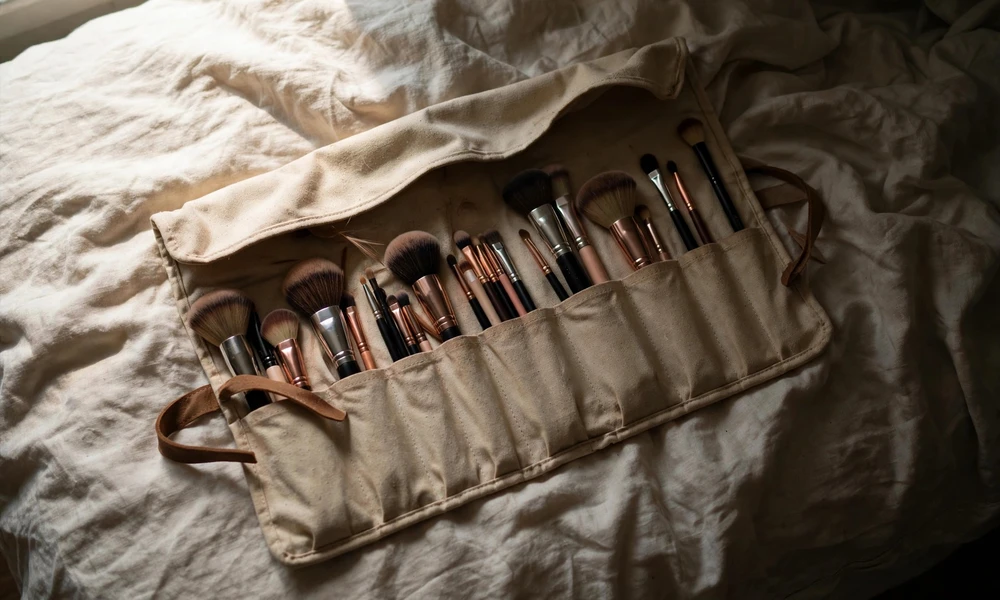
Travel is the one case where a roll beats a holder. A brush roll keeps each brush in its own pocket, protects the heads, and packs flat. Just remember the rule that never changes: brushes go into the roll clean and dry, and they come out as soon as you arrive. A sealed roll holding damp brushes is the fastest way to ruin a set. For the rest of your routine, our guide to how to store skincare follows the same principle, because dry, cool and covered is the right answer for almost every beauty product you own.
The caveats that matter
Storage can protect a brush, but it cannot repair one. A brush that sheds, splays permanently, or feels scratchy after cleaning has reached the end of its life, and no holder or cover will bring it back. Knowing when to replace a brush is part of looking after the rest of your collection, because a shedding brush leaves loose hairs in your makeup and on your face.
| Detail | What is known |
|---|---|
| Best place to store brushes | A dry bedroom or dressing area, never a steamy bathroom |
| Best position | Upright, bristles up, with room between brush heads |
| Before storing | Clean the brush and let it dry fully, bristles down or flat |
| For travel | Cover each brush head and use a roll or case, never a loose bag |
| Natural-hair brushes | Keep covered against dust and away from humidity |
| What damages brushes | Humidity, water in the ferrule, crushing, and dust |
| How often to wash holders | Every time you deep-clean your brushes |
| When to replace a brush | When it sheds, splays permanently, or feels scratchy after cleaning |
Another caveat is the sealed container. Airtight boxes and zip bags look tidy, but they trap any remaining moisture and stop air circulating, which is exactly what bacteria need. Open holders and breathable rolls are better for daily storage. Sealed cases are for transport only, and only with fully dry brushes inside.
Checklist: storing your brushes honestly
Use these checks when you set up your storage, and again every time you deep-clean your brushes.
- Check the room: brushes live in a dry room, not a steamy bathroom.
- Check the drying: brushes are fully dry before they go back in the holder.
- Check the position: brushes stand upright, bristles up, with space between them.
- Check the holder: it is clean, stable, and not overcrowded.
- Check the travel kit: brush heads are covered and the roll or case is clean and dry.
- Check the brushes themselves: no shedding, no splaying, no stale smell, or it is time to replace them.
Frequently asked questions
Is it better to store brushes upright or lying down?
Upright, bristles up, is best for daily storage, because it keeps the shape of the bristles and lets air circulate. Lying flat is fine for drying after a wash, but flat storage in a drawer crushes the bottom brushes.
Can I store makeup brushes in the bathroom?
It is best not to. Steam and humidity damage natural-hair bristles, wooden handles and the glue in the ferrule. If you have no other option, use a closed cabinet rather than an open shelf, and keep the brushes as far from the shower as possible.
Should I keep brushes in their original packaging?
No. Original packaging is for shipping, not storage. It crushes bristles and traps moisture. Use an open holder for daily brushes and a breathable roll or case for the rest.
How do I store brushes when I travel?
Clean and dry them first, cover each head with a brush guard or sleeve, and pack them in a roll or a dedicated brush case. Take them out as soon as you arrive and stand them upright.
Do brush holders need cleaning too?
Yes. Holders collect dust, loose powder and product residue, which transfers back onto clean brushes. Wash glass, ceramic or acrylic holders with warm soapy water every time you deep-clean your brushes.
When should I throw a brush away?
When it sheds constantly, splays permanently, or feels scratchy even after a thorough clean. A brush that has lost its shape will not apply makeup evenly, and keeping it risks transferring loose hairs and bacteria onto your skin.
The bottom line
Storing makeup brushes well is not complicated and it does not need expensive equipment. Clean them, dry them properly, stand them upright in a dry room, and cover them when they travel. Those four habits protect the shape, the glue and the hygiene of every brush you own, and they cost almost nothing.
Start today by moving your brushes out of the bathroom and into a holder with room to breathe. Then clean them, let them dry overnight, and put them back. Your makeup will apply better tomorrow, and your brushes will last years longer than the ones left loose in a drawer.