A tanzanite ring is one of the most romantic buys in fine jewellery, and one of the easiest to get wrong. Two rings can look almost identical yet differ enormously in colour, durability and price: tanzanite is a stone of extremes, with extraordinary colour from a single tiny patch of ground and a softness that demands respect.
Tanzanite is the blue-violet variety of zoisite, and it comes from one place only: a small mining area in the Merelani Hills of Tanzania, near Mount Kilimanjaro. No other mine on earth produces it, so supply is finite and quality varies wildly.
This guide covers what matters most before you buy: colour and pleochroism, clarity and cut, the heat treatment almost every stone has had, settings that protect a soft gem, sizes and prices, and the paperwork that protects you.
Key takeaways
- Colour matters most: a vivid blue-violet with strong saturation and a medium to medium-dark tone, checked in daylight and from several angles.
- Tanzanite is trichroic, showing blue, violet and burgundy from different directions; the best stones hold their blue-violet face-up.
- Almost every tanzanite has been heated to remove brown tones and bring out the blue; the treatment is permanent and standard, but it must be disclosed.
- Tanzanite scores only 6.5 to 7 on the Mohs scale and has perfect cleavage, so a protective bezel or halo setting matters far more than with sapphire.
- Get a lab report for any expensive stone, and buy from a seller who states the treatment, the origin and the return policy in writing.
Start with colour, because it decides almost everything
With a diamond, cut usually comes first. With tanzanite, colour comes first and drives nearly all of the value. Jewellers describe colour as hue, tone and saturation: the hue should sit between blue and violet, the tone medium to medium-dark, and the saturation strong, so the colour looks rich rather than washed out. A good tanzanite holds its colour in daylight, not only under shop spotlights, so always ask to see the ring by a window.
The finest tanzanites are a deep, velvety blue with a violet flash, the colour that made the stone famous when Tiffany & Co. introduced it in 1968. D-block stones are prized for the deepest blue, while C-block stones tend to be lighter and more violet. The market pays most for a saturated blue-violet, and a pale, greyish stone is worth far less however large it is.
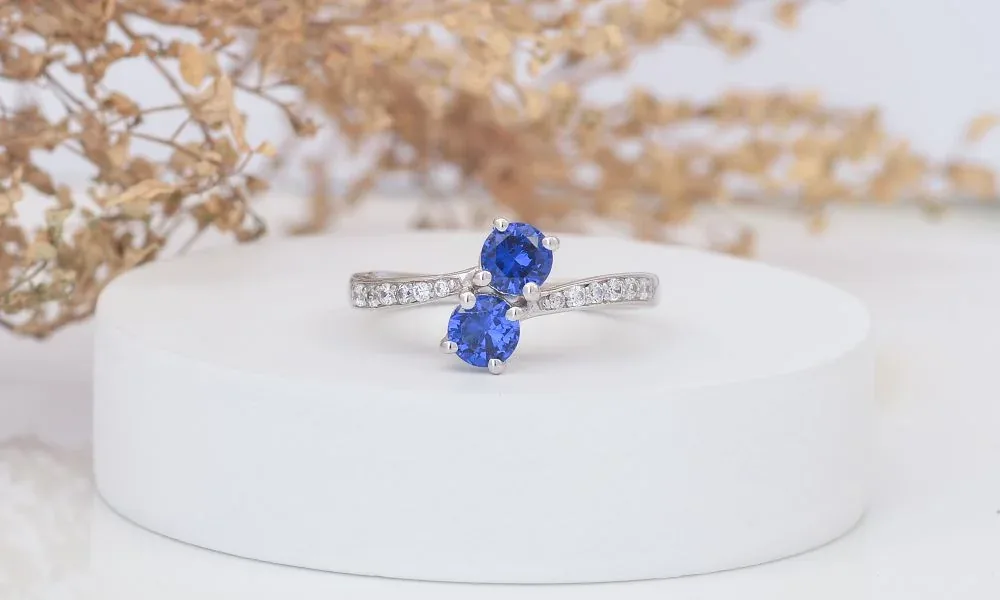
Pleochroism: the colour shift that defines tanzanite
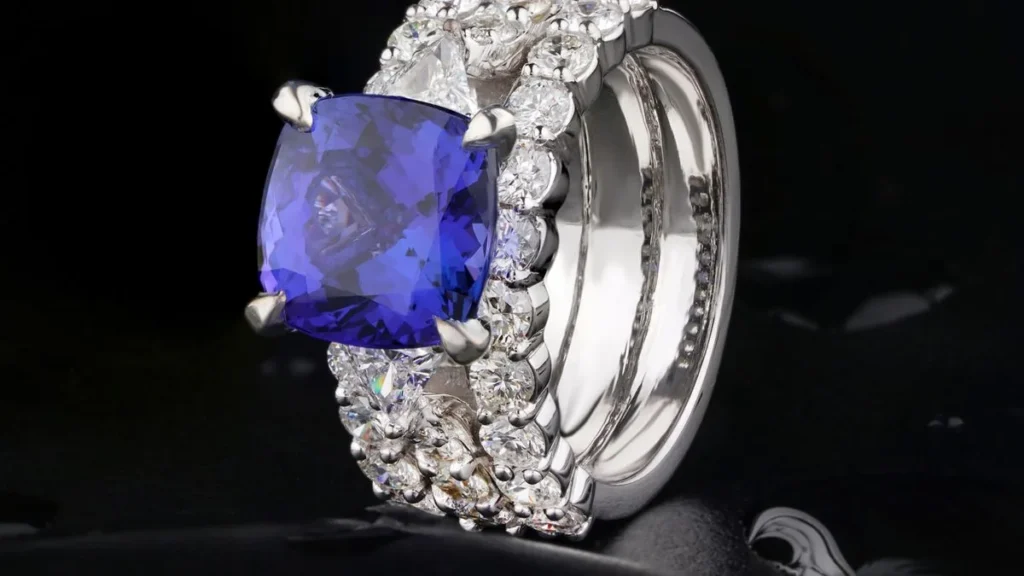
Tanzanite is strongly pleochroic: it shows different colours from different directions. A single crystal can appear sapphire blue from one angle, violet from another, and burgundy or bronze from a third. This is not a flaw; it is the stone’s signature, and it is why a tanzanite ring seems to change mood as your hand moves.
What matters is how the cutter has handled that pleochroism. A well-cut stone is oriented so its blue-violet face is the one you see from above, with the burgundy tones kept to the sides. A poorly oriented stone can look brownish face-up, even if the rough crystal was fine. Tilt the ring under the light: if the face-up colour stays a clean blue-violet through most of the tilt, the cut has done its job.
One source on earth, and why it matters
Tanzanite was discovered in 1967, when a prospector named Manuel de Souza found blue crystals in the Merelani Hills, after Maasai herders had noticed the stones before him. The entire known deposit covers only a few square miles, and despite decades of searching, no second commercial source has ever been found.
That single source has two practical consequences. Fine tanzanite is genuinely scarce, and large stones with top colour are rare enough that prices climb steeply with size. And origin claims add little, since there is nowhere else the stone could come from; you are paying for colour, size and clarity.
Clarity and cut: what to look for
Tanzanite is a Type I gemstone, which means good stones are expected to be eye-clean. A cloudy stone, or one with obvious cracks and dark spots, is a poor buy at any price. Hold the ring against a white background: it should be bright and transparent, with the colour even from edge to edge.
Cut matters even more with tanzanite than with most coloured stones, because the cutter must balance colour, pleochroism and weight. Oval and cushion cuts are the most common and suit the stone well; round stones waste more rough crystal, so they cost more per carat. Watch for windowing, the pale washed-out patch in a stone cut too shallow, and extinction, the dark dead areas in a stone cut too deep.
Treatments: the question that changes the price
Almost every tanzanite on the market has been heat-treated. Natural crystals are usually brownish or yellowish, and heating them to around 500 degrees Celsius removes the brown and brings out the blue-violet. The treatment is permanent and universally accepted, and it is the reason most tanzanite you will ever see is blue at all.
Because heating is so routine, it carries no price penalty, but it must still be disclosed. An unheated tanzanite with a naturally fine blue-violet colour is rare and commands a significant premium, so if a seller claims a stone is unheated, ask for a laboratory report that says so. Without that report, assume the stone has been heated and pay the heated price. Also ask about any treatment beyond heating, such as a coating or dye, and get the answer in writing.
Settings and metals that suit a tanzanite
Tanzanite scores 6.5 to 7 on the Mohs hardness scale, considerably softer than sapphire at 9 or diamond at 10, and it has perfect cleavage in one direction, so a sharp knock can chip or split it. The setting is therefore not a detail to leave to chance. A bezel setting, which wraps metal around the edge of the stone, or a halo, which surrounds it with small diamonds, protects the corners and edges where damage starts. A high prong setting on its own leaves a tanzanite far more exposed.
For the metal, white gold and platinum are the classic partners, because their cool tone makes the blue-violet look deeper and cleaner. Yellow gold warms the stone and brings out its violet side, while rose gold softens the colour. Look at the ring in daylight with the metal you are actually buying, because the metal changes how the colour reads.
Because of its softness, tanzanite suits occasional wear, or a ring worn with a little care, better than a ring that takes daily knocks. If you want a tanzanite engagement ring to wear every day, choose a protective setting and take it off for the gym, gardening and housework. If you live a rough-handed life, wear it as a dress ring and choose a harder stone for daily wear. Our guide to the best non-diamond engagement rings shows how other coloured stones compare.
Size, carat and what a tanzanite ring should cost
Tanzanite is priced by the carat, and the price per carat rises steeply with size and colour. Commercial stones of around one carat often sell for roughly $100 to $300 per carat, fine stones with vivid blue-violet colour typically run from around $500 to $1,000 per carat, and exceptional stones of two carats or more can reach $1,500 per carat or higher. A one-carat solitaire in a simple gold setting often costs from around $800 to $2,500, while a fine two-carat stone in a diamond halo can run from around $3,000 to $10,000 or more.
Size alone is a poor guide to value. A two-carat stone with pale, greyish colour can be worth less than a one-carat stone with vivid saturation, and a large stone with a window is worth less than a smaller stone that is lively throughout. Lab-created tanzanite also exists, grown in a laboratory rather than mined, and it costs far less than a natural stone; it must be sold and priced as lab-created. Glass imitations and lookalikes such as iolite and amethyst are also sold as tanzanite by careless sellers, and a lab report settles all of these questions. For a broader sense of how coloured-stone engagement rings are priced, see our best engagement rings guide.
Tanzanite at a glance
| Feature | What to look for |
|---|---|
| Colour | Vivid blue-violet, strong saturation, medium to medium-dark tone |
| Pleochroism | Blue, violet, burgundy by angle; clean blue-violet face-up |
| Origin | Merelani Hills, Tanzania, the only commercial source on earth |
| Hardness | 6.5 to 7 Mohs, perfect cleavage in one direction |
| Clarity | Eye-clean expected; avoid cloudiness, cracks and dark spots |
| Cut | Oval and cushion most common; no window, no dead dark areas |
| Treatment | Heating standard and permanent; unheated claims need a lab report |
| Best setting | Bezel or halo for protection; white gold or platinum to deepen the blue |
Certificates, sellers and the paperwork that protects you
For any tanzanite ring costing more than a few hundred pounds or dollars, ask for an independent laboratory report from a recognised lab such as the GIA or the AGL. It should confirm the stone is natural tanzanite, state whether it has been heated, and give its weight, dimensions and colour grade.
Buy from a seller who gives you the treatment, the identity and the price in writing, with a clear returns policy. A good seller will show you the stone in daylight, explain the heating without being asked, and encourage an independent appraisal. If a seller is vague about treatment, cannot produce a lab report for an expensive stone, or offers no returns, walk away. Choosing between a natural stone and a lab-created one is personal, and our comparison of diamond versus moissanite engagement rings explains the same trade-off. Keep every document: the lab report, the receipt, and the appraisal for insurance.
Checklist: what to look for in a tanzanite ring
- Check the colour in daylight: vivid blue-violet, strong saturation, medium to medium-dark tone, no grey or brown cast.
- Tilt the stone: the face-up colour should stay a clean blue-violet, not flash muddy brown.
- Check clarity: tanzanite should be eye-clean and transparent, with no cloudiness or surface-reaching cracks.
- Check the cut: no washed-out centre, no dead dark corners.
- Choose a protective setting: a bezel or halo guards the soft stone against the sharp knock its cleavage makes dangerous.
- Ask for a lab report on any expensive stone: an independent GIA or AGL report confirming natural tanzanite and treatment.
Frequently asked questions
What is the most important thing to look for in a tanzanite ring?
Colour, judged in daylight and from several angles: a vivid blue-violet, strong saturation, medium to medium-dark tone.
Is tanzanite a real gemstone?
Yes. Tanzanite is a natural gemstone, the blue-violet variety of zoisite, found only in Tanzania. Almost every stone has been heat-treated to bring out its blue colour, which is standard and permanent.
Is a tanzanite ring durable enough for everyday wear?
With care, yes, but it needs more protection than sapphire or diamond. Tanzanite scores 6.5 to 7 on the Mohs scale and has perfect cleavage, so a bezel or halo setting and removing the ring for rough work keeps it safe.
How can you tell a real tanzanite from a fake one?
By its pleochroism and by a lab report. Real tanzanite shows blue, violet and burgundy from different angles, while glass imitations do not.
How much should a tanzanite ring cost?
A one-carat solitaire often runs from around $800 to $2,500, while a fine two-carat stone in a diamond halo can run from around $3,000 to $10,000 or more. Colour, not size alone, decides the price.
How do you care for a tanzanite ring?
Clean it with warm soapy water and a soft brush, rinse well and dry with a soft cloth. Avoid ultrasonic and steam cleaners, knocks and chemicals, and store it separately from harder jewellery.
The bottom line
A good tanzanite ring is bought in a clear order: judge the colour first, in daylight and from several angles, then check clarity and cut, then ask the treatment question, then choose a setting that protects a soft stone. Fall in love with the blue-violet in natural light, and pay a premium only for a stone with a lab report.
Note: Prices here are indicative 2027 market ranges, not quotes, and vary with colour, size, origin, treatment and seller. Always confirm the treatment, identity and price of the exact stone in writing before you pay.