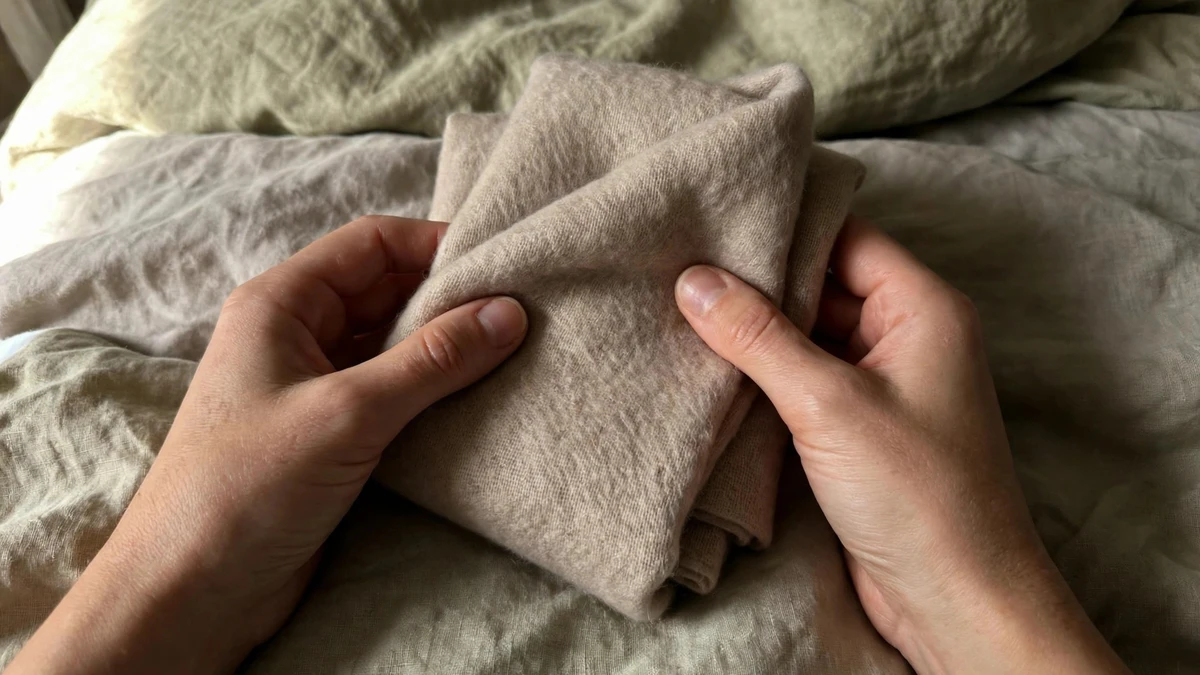
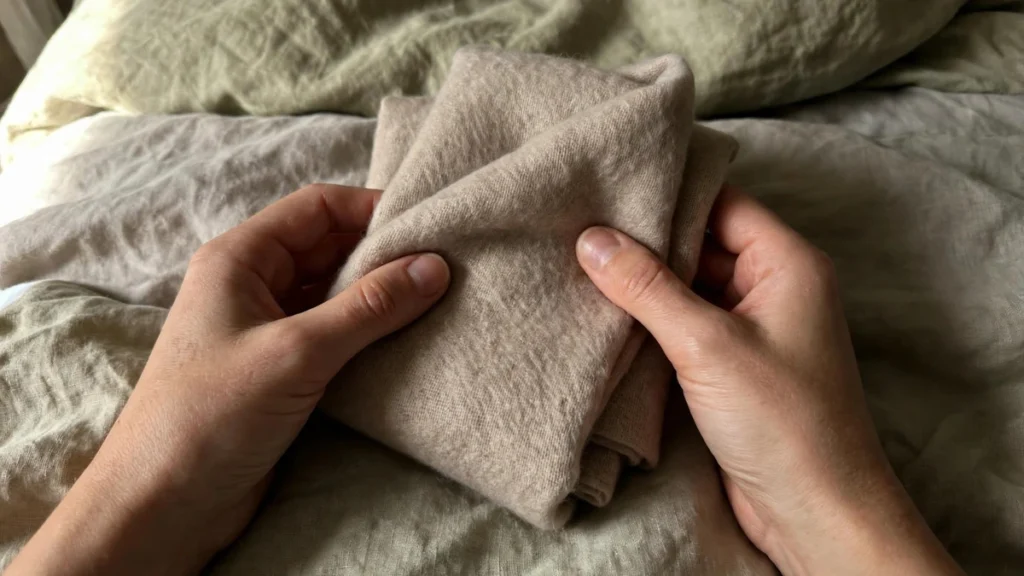
A cashmere scarf is one of the best things you can pack, and one of the easiest to ruin. Folded badly it comes out creased and misshapen. Stuffed into a corner it snags on a zip, catches on Velcro, and picks up pills from rubbing against rough fabric for hours. Left at the bottom of a bag it arrives damp, crumpled and smelling of everything else in the case.
The stakes are higher than they look, because a good cashmere scarf is not cheap, and it is often the most expensive single item in a carry-on. A scarf that cost a few hundred pounds deserves better than being crushed under shoes. At the same time, cashmere is a forgiving fibre.
Below are nine steps for packing a cashmere scarf in 2027, from choosing the right scarf for the trip to storing it properly when you get home.
Key takeaways
- Fold a cashmere scarf flat or roll it loosely; never scrunch it into a ball or stuff it into a corner of the bag.
- Keep cashmere away from zips, Velcro, rough straps and hard objects, which snag the fibres and cause pilling.
- Wear the scarf on the plane instead of packing it: it keeps you warm, saves space, and arrives crease-free.
- Use a packing cube, a cotton pouch or a clean pillowcase to protect the scarf inside your bag.
- Even good cashmere will pill and crease a little on a trip, and both are fixable, so do not panic if the scarf looks flat after a long flight.
Why packing matters for cashmere
Cashmere is a fine, soft fibre, and that is both its strength and its weakness. The same fine fibres that make it warm and soft also make it vulnerable to friction, snagging and stretching. A scarf that is scrunched into a ball and left under heavy items will come out with deep creases that take hours to relax. A scarf that rubs against a zip for a ten-hour flight will come out with pulls and pills that were not there when you packed it.
The good news is that cashmere is also resilient. It is a natural fibre with a memory, which means it wants to return to its shape. Cashmere forgives most packing mistakes, as long as you do not snag it, stretch it or get it wet and leave it wet.
Understanding that balance is the key to packing it well. Our guide to why cashmere scarves are worth it explains the fibre itself in more detail, but the packing rule is simple: treat it like something valuable, because it is, and it will arrive looking like it.
What you need before you start packing
You need very little. A clean, flat surface, a cotton pouch, a packing cube or a clean pillowcase, and a couple of minutes. If you do not, a clean pillowcase works just as well, and it has the advantage of being something you already own.
Check the scarf before you pack it. Look for loose threads, pills or marks, and deal with them now, not on the trip. Remove pills gently with a cashmere comb or a fabric shaver, never by pulling them off, because pulling stretches the fibres and makes the problem worse. A clean scarf packs better and smells better, and you will not be trying to dry cashmere in a hotel bathroom on your first night.
Finally, decide whether you are wearing the scarf or packing it. Wearing it on the plane is usually the best option, because it saves space, keeps you warm, and means the scarf never gets crushed at all.
The 9 steps to pack a cashmere scarf
Choose the right scarf for the trip
What to do: Pick one scarf in a dark neutral colour that goes with everything in your bag, in a size and weight suited to the destination. What to avoid: Packing two or three scarves, or taking a very fine luxury scarf on a rough, active trip. Best For: Every trip, and especially short trips where space is tight. Time Needed: 2 minutes. Standout Tip: One versatile scarf beats three pretty ones, because it saves space and you will actually wear it.
Start by being honest about the trip. A city break in spring needs a mid-weight scarf. A cold destination needs a larger, heavier one. A warm destination needs the lightest scarf you own, or none at all.
Fold it flat, not in a ball
What to do: Lay the scarf flat, fold it in half lengthways, then fold it in thirds, so it forms a neat, flat rectangle. What to avoid: Scrunching it into a ball, twisting it, or folding it into a tight, hard square. Best For: Any scarf, and especially large wraps and stoles. Time Needed: 1 minute. Standout Tip: A flat fold is the single most important packing step, because it prevents deep creases and keeps the scarf from stretching.
Cashmere holds a fold far better than it holds a scrunch. A flat rectangle stacks neatly, takes up less room than a ball, and comes out with only light creases that fall out quickly.
Roll it loosely to save space
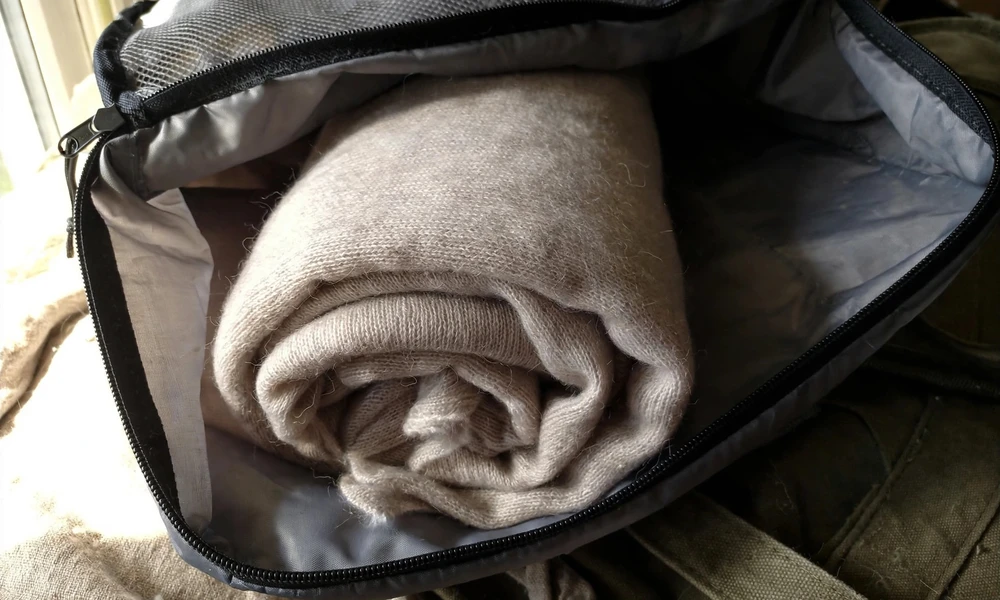
What to do: If you need to save space, roll the folded scarf loosely, like a sleeping bag, rather than folding it again. What to avoid: Rolling it tightly, which compresses the fibres and creates hard creases along the roll. Best For: Small bags, backpacks and carry-ons where flat space is limited. Time Needed: 1 minute. Standout Tip: A loose roll is the best compromise between flat packing and space saving, and it is how most experienced travellers pack a scarf.
Rolling works well because it spreads the pressure evenly, instead of concentrating it along fold lines.
Use a packing cube or a cotton pouch
What to do: Place the folded or rolled scarf in a packing cube, a cotton pouch or a clean pillowcase, and close it loosely. What to avoid: Putting the scarf loose in the bag, or sealing it in a plastic bag, which traps moisture. Best For: Any trip, and especially trips with checked luggage. Time Needed: 1 minute. Standout Tip: A breathable cotton layer is ideal, because it protects the scarf while letting air through.
A pouch or cube does two things. It stops the scarf from shifting around the bag, which is what causes most rubbing and pilling, and it keeps it clean if something else in the bag leaks or spills.
Keep it away from zips and Velcro
What to do: Place the scarf on top of soft clothes, away from zips, Velcro, buckles and hard objects. What to avoid: Packing the scarf next to a toiletry bag with a zip, a shoe, or anything with a rough surface. Best For: Protecting fine and luxury scarves. Time Needed: 30 seconds. Standout Tip: One snag from a zip can pull a thread and ruin a scarf, so this is the step that saves the most money.
Zips and Velcro are the worst enemies of cashmere. A single hook of Velcro can pull dozens of fibres, and a zip tooth can catch a thread and run it across the scarf. Keep the scarf in its pouch, on top of soft clothes, and it will never meet either of them.
Wear it on the plane instead of packing it
What to do: Wear the scarf through the airport and on the flight, as a scarf, a shawl or a blanket. What to avoid: Burying it at the bottom of your bag and then needing it mid-flight. Best For: Flights, trains and any long journey. Time Needed: None, it is already on you. Standout Tip: Wearing it is the only packing method that uses no space at all, and it keeps you warm on a cold plane.
This is the simplest and most effective option. A scarf worn on the plane cannot be crushed, snagged or lost, and it is there when the cabin gets cold, which it almost always does.
Do not overpack around it
What to do: Leave a little space around the scarf, and pack soft clothes on top of it rather than heavy items. What to avoid: Sitting on the case to force it shut, or cramming shoes and books on top of the scarf. Best For: Carry-ons and small cases where space is tight. Time Needed: 1 minute. Standout Tip: If you have to force the case shut, something has to come out, and it should not be the scarf that gets crushed.
Pressure is what creates deep creases and flattens the loft of cashmere. A scarf under a pile of heavy clothes will come out flat and lifeless, even if it was folded perfectly.
Freshen it on arrival
What to do: Hang the scarf in the bathroom while you take a hot shower, or hold a steamer a few centimetres away, then let it air for an hour. What to avoid: Ironing it directly, which can scorch and flatten the fibres, or hanging it on a hook by one corner, which stretches it. Best For: Any trip, and especially after a long flight. Time Needed: 10 to 15 minutes. Standout Tip: Steam is the gentlest way to remove creases, and a steamy bathroom is a free steamer in almost every hotel.
Almost every packed scarf benefits from a few minutes of steam on arrival. If you have a travel steamer, hold it a few centimetres from the fabric and move it slowly.
Store it properly when you get home
What to do: Fold the scarf flat, place it in a drawer or a breathable cotton bag, with a cedar block or lavender sachet nearby. What to avoid: Hanging it, which stretches it out of shape, or leaving it in a plastic bag, which traps moisture and attracts moths. Best For: Keeping the scarf in good condition between trips. Time Needed: 2 minutes. Standout Tip: Folded storage and a cedar block are the two cheapest ways to make a cashmere scarf last for years.
How you store a scarf between trips matters as much as how you pack it. Hanging stretches cashmere, because the weight of the fabric pulls it down over weeks and months. A drawer, folded flat, is far better. Moths love cashmere, so keep the drawer clean, add cedar or lavender, and check the scarf every few months.
Common packing mistakes and how to fix them
The most common mistake is scrunching the scarf into a ball and stuffing it into a corner. It feels quick, but it creates deep creases and pressure points that take hours to relax, and it leaves the scarf unprotected against everything else in the bag.
The second mistake is packing the scarf next to something rough. A zip, a Velcro strap, a shoe or a hard toiletry case can snag or pill a scarf in a single journey. Work the thread gently back through to the wrong side with a needle, or take it to a tailor if it is a valuable scarf. A cashmere versus silk comparison is worth reading here, because silk snags even more easily than cashmere, and the same packing rules protect both fibres.
The third mistake is washing the scarf badly on the road. If you must wash it while travelling, use cool water and a little gentle soap, soak it briefly, rinse it, and press the water out in a towel. Never wring it, never hang it wet, and never use hot water, which can shrink it.
The caveats that matter
Packing well helps, but it does not make cashmere indestructible. Even a perfectly packed scarf will pill where a bag strap rubs it, and even a carefully folded scarf will crease a little on a long journey. That is normal, and it is not a sign that you packed badly or that the scarf is poor quality. What packing well does is keep the damage small and fixable, instead of letting it become permanent.
| Detail | What is known |
|---|---|
| Best fold | Flat fold in thirds, or a loose roll, never a tight ball or a hard square |
| Best protection | A packing cube, cotton pouch or clean pillowcase, closed loosely |
| Biggest risks | Zips, Velcro, rough straps and hard objects, which snag and pill the fibres |
| Best place in the bag | On top of soft clothes, or worn on the plane, never underneath heavy items |
| Crease removal | Steam from a hot shower or a travel steamer, never an iron pressed directly on it |
| Washing on the road | Cool water, gentle soap, soak briefly, press dry in a towel, dry flat |
| What to avoid | Wringing, hanging wet, hot water, plastic bags, and sitting on the case to close it |
| Storage at home | Folded flat in a drawer with cedar or lavender, never hung up |
If your scarf is very valuable, or very fine, consider a dedicated scarf pouch. A simple cotton or silk pouch costs little, weighs nothing, and gives the scarf a layer of protection that a packing cube alone does not. A guide to caring for silk scarves covers the same storage principles in more detail, and most of them apply directly to cashmere, because both fibres dislike friction, damp and moths.
Checklist: packing a cashmere scarf
Use these checks before you close the bag, and again when you unpack.
- Check the scarf is clean and dry before you pack it, and remove any pills gently with a comb.
- Fold it flat in thirds, or roll it loosely, and never scrunch it into a ball.
- Put it in a packing cube, a cotton pouch or a clean pillowcase, closed loosely.
- Place it on top of soft clothes, away from zips, Velcro, buckles and hard objects.
- Wear it on the plane if you can, so it saves space and arrives crease-free.
- On arrival, steam it in a hot bathroom for a few minutes, then let it air before wearing it.
Frequently asked questions
Should I fold or roll a cashmere scarf for packing?
Either works, as long as you do it loosely. A flat fold is best for a large wrap in a case with room, and a loose roll is best for a small bag. Never scrunch it into a ball, and never roll it so tightly that the fibres are compressed.
Can I put a cashmere scarf in a vacuum bag?
It is better not to. Vacuum compression flattens the loft of the fibres and can leave deep creases that are hard to remove. If you must compress your luggage, keep the scarf out of the vacuum bag and wear it instead.
How do I remove creases from a cashmere scarf?
Hang it in a steamy bathroom for ten minutes, or hold a travel steamer a few centimetres away and move it slowly. Never press an iron directly onto cashmere.
Will a cashmere scarf get damaged in checked luggage?
It can, because checked bags are handled roughly and the scarf can shift around. Protect it in a packing cube or a pouch, place it on top of soft clothes, and consider wearing it on the plane instead, so it never goes into the hold at all.
Can I wash a cashmere scarf in a hotel sink?
Yes, if the label allows hand-washing. Use cool water and a little gentle soap or shampoo, soak for ten minutes, rinse, press the water out in a towel, and dry it flat on a towel.
How do I stop my cashmere scarf from smelling musty on a trip?
Pack it clean and dry, in a breathable cotton pouch rather than a sealed plastic bag, and air it out. A musty smell usually comes from damp and poor air circulation, so keeping the scarf dry and giving it air is the best prevention.
The bottom line
Packing a cashmere scarf well takes about two minutes, and it comes down to three things: fold it flat or roll it loosely, keep it in a pouch away from zips and Velcro, and wear it on the plane when you can. Do those three things and the scarf will arrive clean, flat and ready to wear, whether the trip is two days or two weeks.
Cashmere is a forgiving fibre, and most packing mistakes can be fixed with a little steam and a little patience. But a scarf that is packed well in the first place never needs fixing at all, and that is the real reward: a scarf that looks as good on the last day of the trip as it did on the first.