Snail mucin has survived the journey from Korean skincare curiosity to mainstream staple. Most beauty trends burn out within a year; this one has lasted over a decade. The reason is the mechanism underneath it: a blend of compounds that hydrates, soothes and supports repair at once, in a formula gentle enough for almost any skin type.
Snail secretion filtrate is the filtered mucus snails produce to protect and repair their own skin. That is the whole definition. The interesting part is how its chemistry behaves on human skin — and why that explains both the real results people see and the limits marketing tends to skip.
This guide stays on the mechanism: what each compound does, how the effects add up, what the evidence actually shows, who benefits most, and how to use it. No hype — just the science of why snail mucin works, and where it stops working.
Key takeaways
- Snail mucin works through a team of compounds: hyaluronic acid and glycoproteins hydrate, allantoin soothes and renews, and trace glycolic acid gently speeds surface turnover.
- Its strongest, best-supported effect is hydration and barrier support — it holds water at the surface and helps the barrier recover faster after damage or irritation.
- It stimulates the skin’s repair cells in laboratory studies, which explains the faster recovery from blemishes and irritation that users report.
- The collagen and anti-ageing claims are the weakest part of the story: the mechanism is plausible, but the human evidence is small, short and often industry-funded.
- It suits most skin types, including sensitive and acne-prone skin, and works best on damp skin, sealed in with moisturiser, used consistently for four to eight weeks.
The compounds doing the work
Snail mucin is not a single molecule. It is a complex mixture, and its effects come from several compounds acting at once — each doing a different job, which is what makes it more versatile than a single-purpose active.
| Compound | What it does on skin | Evidence strength |
|---|---|---|
| Hyaluronic acid | Binds water in the upper skin layers, plumping the surface | Strong |
| Glycoproteins and glycosaminoglycans | Form a hydrating film; help skin hold moisture | Moderate |
| Allantoin | Soothes irritation; promotes cell renewal and surface repair | Strong |
| Glycolic acid (trace amounts) | Loosens dead skin cells, gently speeding turnover | Moderate |
| Copper peptides and zinc | Support collagen synthesis and tissue repair | Moderate |
| Heparan sulfate | Binds growth factors and helps them connect with repair receptors | Emerging |
| Antimicrobial peptides | Help protect irritated skin from microbial overgrowth | Emerging |
| Collagen and elastin (trace) | Film-forming feel; too large to rebuild skin | Weak |
Notice the pattern: the hydration and soothing compounds carry the strongest evidence, while the anti-ageing claims sit at the bottom. That is the honest summary — primarily a hydrator and repair supporter, with the rest a bonus that depends on the formula and concentration.
How snail mucin hydrates skin

Hydration is the effect you will notice first, and the mechanism is straightforward. The filtrate is rich in glycosaminoglycans — the family that includes hyaluronic acid — and these molecules are covered in chemical groups that love water. On skin, they bind water and hold it in the upper layers, which is why skin looks plumper and fine dehydration lines soften within hours.
There is a second, subtler mechanism. Glycoproteins form a thin, flexible film over the surface that slows water loss while still letting the skin breathe. That combination — pulling water in and slowing its escape — is why snail products leave skin feeling dewy rather than greasy. In a split-face trial, a cream with 80% snail mucin applied twice daily for four weeks significantly improved moisture retention, density and elasticity versus the untreated side. The studies are small and several were manufacturer-funded, but the direction is consistent. To compare formulas that specialise in this job, see our guide to the best hydrating serums of 2027.
How it supports skin repair
The repair mechanism traces back to the job the secretion does for the snail itself. In the wild, snails use this mucus to heal damage to their soft bodies, and the same compounds act on human skin cells too. In a 2008 study from the University of Alcalá, researchers found that Cryptomphalus aspersa secretion stimulated the growth and movement of keratinocytes — the cells forming the skin’s outer barrier — and fibroblasts, the cells that produce collagen and elastin. Repair is a two-layer job: keratinocytes rebuild the surface barrier, while fibroblasts rebuild the structure underneath.
Growth factors add another layer. The mucin binds growth factors the body uses during wound repair, and heparan sulfate helps those factors connect with their receptors on repair cells, amplifying the signal. Research in Nature Communications found that snail mucus also encourages immune cells toward an anti-inflammatory state, improving regeneration of new skin cells and blood vessels.
The strongest human evidence comes from wound healing rather than cosmetics. A 2013 study in the journal Burns found that a snail filtrate cream on partial-thickness burns healed faster, with less scarring, than standard silver sulfadiazine cream. That is a clinical setting, not a beauty counter — but it shows the repair mechanism is real and measurable.
How it calms irritation and protects the barrier
The third mechanism is the one sensitive skin will appreciate most. Allantoin has been used in wound-care and anti-irritant formulations for decades because it promotes cell renewal while calming the skin. In snail mucin it works alongside the hydrating film, which shields the barrier while it recovers — which is why it is so often recommended after peels, microneedling or laser.
A 2022 systematic review in the Journal of Cosmetic Dermatology, analysing 14 controlled studies, found the strongest consensus around barrier support and anti-inflammatory modulation. In one trial of 42 people, barrier recovery was 22% faster on the snail-treated side than on placebo over four weeks. That barrier effect is also why snail mucin pairs well with stronger actives: retinol, exfoliating acids and vitamin C all work best on a healthy barrier, and all can temporarily weaken it. If your barrier is already struggling, a dedicated repair formula may be better — see our roundup of the best barrier repair creams of 2027.
Where the mechanism runs out
Honesty requires saying where the science thins out, and for snail mucin that is the anti-ageing story. The mechanism is plausible — fibroblast stimulation plus copper peptides plus mild exfoliation should, in theory, support collagen over time — but the evidence is the problem. A 90-day study reported collagen organisation improvements of roughly 17–21%, but it was small and industry-linked, and the growth-factor claims remain the most uncertain part of the profile. Topically applied growth factors are large, fragile molecules, and whether they survive formulation and penetrate skin in meaningful amounts is still an open question.
The trace ingredients deserve the same scepticism. The collagen and elastin in the filtrate are present in small amounts and far too large to penetrate skin; their main contribution is the smooth, film-forming feel. The glycolic acid sits at roughly 0.1–0.5%, far below dedicated exfoliating products, so it gives gentle surface turnover rather than a real peel. Concentration varies wildly too: some products contain over 90% snail secretion filtrate, others a few percent, mostly for the label. Check where it sits on the list — near the top means a meaningful concentration.
Who benefits most
Dehydrated skin benefits first, because hydration is the mechanism with the strongest evidence. If your skin feels tight, looks dull or shows fine lines that vanish after moisturiser, snail mucin addresses the cause directly. Sensitive skin is the second clear winner: the ingredient is gentle, non-comedogenic and rarely irritating, and the allantoin-plus-film combination calms rather than stimulates. Acne-prone skin is a good fit too — the antimicrobial peptides and barrier support help skin recover from breakouts without the drying effect of many acne treatments.
Mature skin benefits, but with realistic expectations. The hydration and texture improvements are real — one 12-week study found a 53% reduction in roughness, a 26% improvement in brightness and a 12% reduction in uneven pigmentation. What snail mucin will not do on its own is rebuild lost collagen or erase deep wrinkles; for that it is a supporting player, not the lead. Anyone on prescription treatments or with a diagnosed skin condition should check with a dermatologist before adding any new active, however gentle.
How to use snail mucin so the mechanism works
- Apply to damp skin: the humectant compounds need water to bind, so use it right after cleansing or toning while skin is still slightly wet.
- Layer it early: essences and serums go on before heavier creams and oils, so the water-binding compounds sit close to the skin.
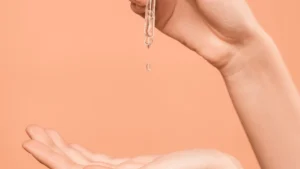
- Use two to three drops, twice daily: a little goes a long way — the texture is concentrated, and more product does not mean more repair.
- Seal it in: without a moisturiser on top, much of the bound water evaporates; a cream with ceramides or squalane locks it in.
- Give it four to eight weeks: hydration shows within days, but texture, redness and post-blemish fading need a full skin cycle or two to judge fairly.
- Patch-test first if you are reactive: snail mucin is gentle, but anyone with a shellfish or dust-mite allergy should test a small area first, as cross-reactivity is occasionally reported.
Layering order matters more with this ingredient than most: water first, then the humectant film, then the seal. Used after a heavy cream, the filtrate cannot reach the skin properly. It pairs well with hyaluronic acid, niacinamide, peptides and ceramides, and it genuinely helps skin tolerate retinol and exfoliating acids better. The Korean tradition that made snail mucin famous built entire routines around this layering logic — see our guide to the best Korean skincare products of 2027.
Frequently asked questions
How does snail mucin actually work on skin?
Several compounds act together. Hyaluronic acid and glycoproteins bind water and form a hydrating film, allantoin soothes irritation and supports cell renewal, trace glycolic acid gently speeds turnover, and peptides support repair.
How long does it take for snail mucin to work?
Hydration and a softer, plumper feel can appear within hours or days. Improvements in texture, redness and post-blemish marks take longer: most studies showing measurable change ran for four to twelve weeks of twice-daily use. If nothing has changed after eight weeks, the concentration or layering order is the likely problem.
Does snail mucin really help with acne scars?
It helps with the marks acne leaves behind — post-inflammatory redness and pigmentation — by supporting repair and cell turnover. It does not treat deep, pitted scarring on its own; that needs procedures or stronger actives.
Can snail mucin replace hyaluronic acid?
Not exactly. Snail mucin contains hyaluronic acid and hydrates well, but a dedicated serum delivers a higher, more predictable dose. Snail mucin adds repair and soothing that hyaluronic acid alone does not offer.
Is snail mucin safe for sensitive skin?
For most people, yes. It is gentle, non-comedogenic and rarely irritating, which is why it is often recommended for reactive skin and after procedures. Patch-test first if you have a shellfish or dust-mite allergy, and stop if redness or itching persists.
Why do some snail mucin products work better than others?
Concentration and formulation. Products range from over 90% snail secretion filtrate to a token few percent, and the filtrate’s composition varies by species, harvest and filtration. Check the ingredient’s position on the label, and judge by results over four to eight weeks.
The bottom line
Snail mucin works because it is not one ingredient pretending to do everything, but a team of compounds that each do a real job: hyaluronic acid and glycoproteins hydrate, allantoin soothes and renews, trace glycolic acid keeps the surface turning over, and peptides nudge the skin’s own repair systems. The evidence is strongest where the mechanism is simplest — hydration and barrier recovery — and weakest where the marketing is loudest, in anti-ageing. Honestly understood, it is a gentle support ingredient that makes skin healthier, more hydrated and more resilient.
Used correctly — on damp skin, under moisturiser, consistently for a month or two — it earns its place through chemistry that holds up, not novelty. The results are quiet rather than dramatic, and that is exactly what a good support ingredient should deliver.
Note: This article explains how snail mucin works in general terms and is not medical advice. If you have a skin condition, a shellfish or dust-mite allergy, or use prescription treatments, speak to a dermatologist before changing your routine.