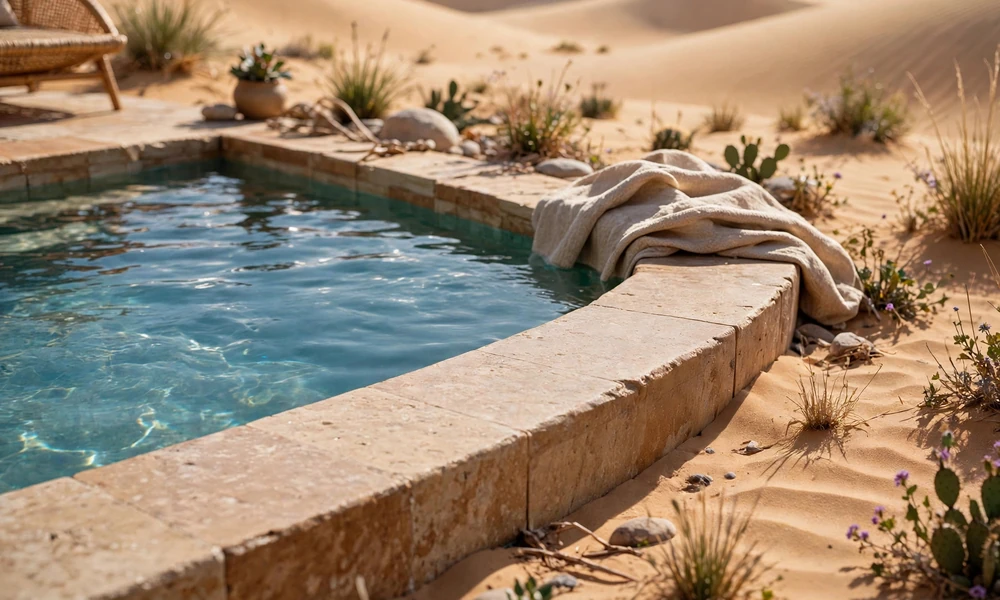
A luxury desert resort is a strange promise. It takes the most empty landscape on earth and turns it into the most private one, swapping noise and crowds for silence, open sky and a horizon that does not end. The best luxury desert resorts in 2027 understand that the desert itself is the amenity. The room, the pool and the dinner are all built around it, not in spite of it.
What separates a real desert resort from a hotel that happens to sit near sand is intent. A true desert stay is designed around the landscape, the light and the climate. Rooms face the dunes, not a car park. Days are built around sunrise and sunset, when the desert is at its most beautiful and the temperature is kind. Activities mean guided walks, stargazing, camel rides and quiet, not a crowded lobby and a buffet.
Below are nine luxury desert resorts worth considering in 2027, from Utah canyons to the dunes of Abu Dhabi, the Negev and the Namib. Each one is described by what it does well, what to watch for, and who it suits best, so you can choose with your travel style in mind, not just a photograph.
Key takeaways
- A luxury desert resort is defined by its setting: rooms, dining and activities should be built around the desert, not just near it.
- Desert days run on sunrise and sunset. Plan outdoor activities for the early morning and late afternoon, and rest through the midday heat.
- Location matters more than the room count. A remote resort buys silence and dark skies, but it also means a long transfer and fewer alternatives nearby.
- Desert resorts are at their best in the cooler months, roughly October to April in most northern-hemisphere deserts, and the reverse in the southern hemisphere.
- No desert resort removes the desert itself. Heat, dust, altitude and remoteness are part of the experience, and a stay that ignores them will disappoint.
What a luxury desert resort actually offers
A luxury desert resort offers three things that are hard to find anywhere else: space, silence and sky. Space, because desert resorts sit on large plots with very few rooms, so you rarely share a view with anyone else. Silence, because there is almost nothing to hear beyond wind and, at night, nothing at all. And sky, because desert air is dry and dark, which makes for some of the best stargazing on earth.
The rooms are usually low, spread out and built from local stone, adobe or canvas. That is deliberate. A desert resort that built a glass tower would miss the point. The best ones feel as if they grew out of the ground, with shaded terraces, plunge pools and outdoor showers that make the landscape part of the room.
Dining is another marker. A good desert resort cooks with local ingredients and serves dinner outdoors whenever the weather allows. Breakfast is early, before the heat. Dinner is late, under stars. If a resort’s restaurant feels like it could be in any city, it has not understood its setting.
How we chose these resorts and what to look for
Look first at the setting and the sense of place. The resort should sit inside the desert, not on its edge next to a highway. Ask how far the nearest town is, and whether the views from the rooms are dunes, canyons or rock, rather than a road or a car park.
Look next at what is included. Desert resorts are often far from anywhere else, so meals, transfers and activities are usually part of the price. A resort that charges separately for every walk, ride and dinner can end up far more expensive than the headline rate suggests. Check the transfer too. Some desert resorts are a two-hour drive from the nearest airport, and that journey is part of the trip, not an afterthought.
Finally, look at the season. Desert heat is real, and it changes everything. A resort that is glorious in November can be punishing in July. Our guide to the best luxury ski resorts follows the same logic in reverse, because the right season is what turns a good resort into a great stay.
The 9 best luxury desert resorts of 2027
Amangiri, Utah, USA
What we like: A concrete-and-stone retreat set in a protected valley of the Utah desert, with suites built into the rock, a spa carved into the canyon and some of the darkest skies in North America. What to consider: Very expensive, and the nearest town is a long drive away. Location: Canyon Point, Utah. Best for: Quiet, design-led stays and stargazing. Price range: From around $2,000 a night. Standout feature: The desert lounge pool, set into the canyon floor.
Amangiri is the desert resort other desert resorts are measured against. It is not a place for nightlife or crowds. It is a place for long walks, long lunches and long silences, and it does that better than almost anywhere else.
Qasr Al Sarab Desert Resort by Anantara, Abu Dhabi, UAE
What we like: A palace-style resort in the middle of the Empty Quarter, with rooms that open onto the dunes, a desert spa and camel treks at sunset. What to consider: A long drive from Abu Dhabi, and summer temperatures are extreme. Location: Liwa Desert, Abu Dhabi. Best for: Classic dune scenery and Arabian hospitality. Price range: From around $400 a night. Standout feature: The dune-top sunset viewing, with the Empty Quarter stretching in every direction.
This is the desert as most people picture it: endless golden dunes, a low sun and a cool evening breeze. The resort leans into that picture without making it feel staged.
Al Maha, a Luxury Collection Desert Resort, Dubai, UAE
What we like: A small, tented resort in a conservation reserve, with private pools, falconry, horse riding and wildlife drives through the dunes. What to consider: Only around 40 suites, so it books up early, and it is a full resort experience rather than a quick stop. Location: Dubai Desert Conservation Reserve. Best for: Wildlife, privacy and a first desert stay. Price range: From around $800 a night, all-inclusive. Standout feature: The private plunge pool that comes with every suite.
Al Maha works well for travellers who want the desert without the logistics. Everything is arranged for you, from the transfer to the activities, and the conservation setting gives the stay a purpose beyond luxury.
Six Senses Shaharut, Negev Desert, Israel
What we like: A hilltop resort above the Arava Valley, with villas that frame the desert like a photograph, a spa built into the rock and a strong focus on local food and sustainability. What to consider: Remote, with a long drive from Tel Aviv or Jerusalem, and a quiet, adults-focused atmosphere. Location: Shaharut, Negev Desert. Best for: Wellness, design and slow days. Price range: From around $900 a night. Standout feature: The open-air desert cinema, with the valley below and the stars above.
Shaharut is a resort for people who want to do very little, very well. The days are built around the spa, the pool and the view, and the resort is honest about that.
Longitude 131°, Uluru, Australia
What we like: Sixteen tented pavilions facing Uluru, with a dune-top restaurant, guided walks with local Anangu guides and some of the clearest night skies in Australia. What to consider: Very remote, with flights via Alice Springs, and a short season of comfortable weather. Location: Uluru-Kata Tjuta National Park, Northern Territory. Best for: Uluru at sunrise and Indigenous-guided experiences. Price range: From around $2,000 a night, all-inclusive. Standout feature: Waking up to Uluru framed in the window of your tent.
This is one of the few resorts in the world where the view is a sacred site, and the resort treats it that way. The guided walks are the heart of the stay, not an optional extra.
Sossusvlei Desert Lodge, Namib Desert, Namibia
What we like: A lodge in the oldest desert on earth, with suites built from stone and glass, a stargazing observatory and dawn access to the dunes of Sossusvlei. What to consider: A long, dusty drive to reach it, and the Namib is a serious desert, hot by day and cold at night. Location: NamibRand Nature Reserve, Namibia. Best for: Photography, stargazing and true remoteness. Price range: From around $700 a night, all-inclusive. Standout feature: The observatory, with a resident astronomer and some of the darkest skies on the planet.
Sossusvlei is for travellers who want the desert at its most dramatic. The dunes are enormous, the colours change by the hour, and the silence is complete.
Four Seasons Resort Tented Camp Golden Triangle, Thailand
What we like: Luxury tents on the banks of the Mekong, where Thailand, Laos and Myanmar meet, with elephant encounters, jungle walks and a spa in the bamboo forest. What to consider: A long journey from Bangkok, and the camp is more jungle than desert, which suits some travellers better than others. Location: Chiang Rai, Thailand. Best for: Adventure, wildlife and a tented stay with real comfort. Price range: From around $1,500 a night, all-inclusive. Standout feature: The open-air spa, set above the Ruak River.
This is the most adventurous stay on the list, and the least desert-like. It earns its place because it does what the best desert resorts do: it puts you inside a landscape, with very little between you and it.
The Ritz-Carlton Ras Al Khaimah, Al Wadi Desert, UAE
What we like: Private villas with pools in a desert reserve, with falconry, archery, horse riding and a spa that uses desert botanicals. What to consider: A large resort by desert standards, so it feels less remote than the smaller stays on this list. Location: Al Wadi Desert, Ras Al Khaimah. Best for: Families and first-time desert travellers. Price range: From around $600 a night. Standout feature: The private villa pools, each with its own stretch of desert view.
Al Wadi is a good first desert resort. It is polished, comfortable and easy to reach, and it gives you the dunes, the wildlife and the quiet without asking you to work for them.
Banyan Tree AlUla, Saudi Arabia
What we like: Tent villas set among the sandstone rock formations of AlUla, with a spa in the rocks, stargazing and easy access to Hegra, a UNESCO World Heritage site. What to consider: AlUla is still developing as a destination, so dining and activities outside the resort are limited. Location: AlUla, Saudi Arabia. Best for: Rock formations, history and a new destination. Price range: From around $800 a night. Standout feature: The tent villas, set between towering sandstone outcrops.
AlUla is the newest desert destination on this list, and the most striking. The rock formations are unlike anything else in the region, and the resort was built to frame them, not compete with them.
Which luxury desert resort is right for you
Choose by what you want the desert to do. If you want silence and design, Amangiri and Six Senses Shaharut are the purest stays on this list. If you want the classic dune picture, Qasr Al Sarab and Al Maha deliver it most directly. If you want wildlife and photography, Sossusvlei and Longitude 131° are the strongest choices.
Families should look at Al Wadi first. It has the space, the activities and the comfort that make a desert stay work with children, and it is the easiest to reach. Couples planning a honeymoon should look at the same logic as our best honeymoon destinations, because a desert resort works best when the setting, the season and the pace all suit two people travelling together.
Budget matters too, but in a desert resort the headline rate is only part of the cost. Transfers, meals and activities can add a lot, so compare the full price, not the room rate. An all-inclusive stay in a remote desert is often better value than a cheaper room that charges for everything separately.
The caveats that matter
Desert resorts are wonderful, but they are not for everyone, and they are not without risks. Heat is the obvious one. Desert temperatures can pass 45 degrees in summer, and even in the cooler months the midday sun is strong. Drink water constantly, wear a hat and sunscreen, and do not plan a long walk for the middle of the day.
| Detail | What is known |
|---|---|
| Best season, northern deserts | October to April, when days are warm and nights are cool |
| Best season, southern deserts | May to September, the cooler and drier months |
| What to pack | Light layers, a wide-brimmed hat, sunscreen, closed walking shoes |
| What to check before booking | What is included: meals, transfers, activities and taxes |
| Who should take care | People with heart or breathing conditions, and anyone sensitive to heat |
| What to avoid | Long walks at midday, and driving off marked desert tracks |
| Stargazing | Best on clear, moonless nights, away from resort lights |
| What it does not do | It does not remove heat, dust or remoteness, and it is not a city break |
Remoteness is the other caveat. A desert resort can be hours from the nearest hospital, and phone signal is often weak. That is part of the appeal, but it is worth knowing before you go. Tell someone your plans, carry water on every walk, and take the resort’s advice on routes and timing seriously.
Checklist: booking a luxury desert resort honestly
Use these checks before you book, and again before you travel.
- Check the season: book the cooler months for the desert you are visiting.
- Check what is included: meals, transfers, activities and taxes, in writing.
- Check the transfer: how long it takes, and whether the resort arranges it.
- Pack for the desert: layers, a hat, sunscreen and proper walking shoes.
- Plan your days around the sun: early mornings and late afternoons outdoors, midday rest.
- Buy travel insurance that covers remote locations and medical evacuation.
Frequently asked questions
When is the best time to visit a desert resort?
For most northern-hemisphere deserts, October to April. Days are warm, nights are cool, and the light is at its best. For southern-hemisphere deserts such as the Namib, the cooler months are May to September. Avoid the peak summer heat unless the resort is built for it.
Are desert resorts suitable for children?
Yes, at the larger resorts. Al Wadi and Al Maha both welcome families and offer activities for children. The smaller, quieter resorts such as Amangiri and Shaharut are better suited to adults, and some have age limits, so check before booking.
How much should I budget for a desert resort?
Rates on this list start at around $400 a night and rise above $2,000 at the most remote stays. Add transfers, meals and activities if they are not included. An all-inclusive rate is often the simplest way to compare, because it covers the costs that would otherwise surprise you.
What should I wear in the desert?
Light, loose layers in natural fabrics, a wide-brimmed hat and closed walking shoes. Nights can be cold, even after a hot day, so bring a warm layer. Sunscreen is essential, and sunglasses help with the glare off the sand.
Is it safe to walk in the desert?
On marked trails and with a guide, yes. Do not walk alone in the midday heat, do not leave marked tracks, and carry water. Desert resorts know their terrain, and their advice on routes and timing is worth following. Our St Barts travel guide makes the same point for a different kind of heat, because sun and dehydration do not care which destination you are in.
Do desert resorts have good food?
Usually yes, and often better than you expect. Remote resorts take food seriously, because there is nowhere else to eat. Menus tend to use local ingredients, and dinner outdoors under the stars is a regular part of the experience, not a special occasion.
The bottom line
The best luxury desert resort in 2027 is not the most expensive or the most remote. It is the one whose setting, season and pace suit the trip you actually want. For silence and design, Amangiri and Shaharut are hard to beat. For classic dunes, Qasr Al Sarab and Al Maha are the most direct. For wildlife and photography, Sossusvlei and Longitude 131° are the strongest choices.
Choose one resort, book it in the cooler months, plan your days around sunrise and sunset, and let the desert do the work. That is the honest way to enjoy a landscape that asks very little of you, and gives back a great deal.