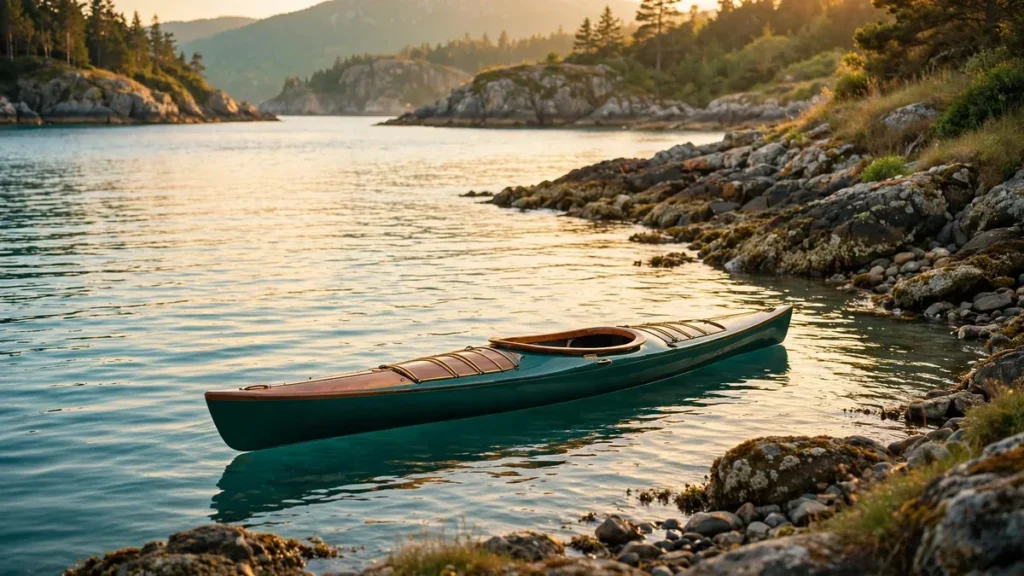
A cheap kayak gets you on the water. A great one changes how the water feels. The best luxury kayak brands build boats that glide further with each stroke, hold a straight line in a crosswind, and still look beautiful pulled up on a beach at sunset. They are lighter, stiffer, and far better finished than the plastic boats sold in big-box stores, and the difference is obvious within the first ten minutes of paddling.
The luxury in a kayak is not decoration. It is a hand-laid composite hull that weighs a few kilos less, a seat you can sit in for six hours without shifting, watertight hatches that stay dry in rough water, and a skeg or rudder that works smoothly year after year. These are the details that separate a boat you tolerate from a boat you look forward to using.
Below are nine brands worth your money, from British expedition builders to American innovators in lightweight materials and pedal drive. Each one is described by what it does best, what to watch for, and who it suits, so you can choose a kayak for the water you actually paddle. Many of the best places to use one are the calm lakes and sheltered bays around the best luxury lake resorts, where a quiet morning paddle is the highlight of the stay.
Key takeaways
- A luxury kayak is defined by its hull material, weight, and finish: composite fibreglass, carbon, or thermoformed ABS beats heavy rotomoulded plastic for speed and glide.
- British sea kayak builders such as P&H, Valley, and NDK set the standard for expedition boats, while American brands lead on lightweight materials and pedal drive.
- Expect to pay from around $3,500 to $7,000 for a premium sea kayak, with folding and custom-built boats costing more.
- Fit matters more than brand: cockpit size, seat comfort, and a hull you can carry to the water decide whether you paddle often or rarely.
- No kayak, however expensive, replaces skill, a life jacket, and checking the weather before you launch.
What a luxury kayak actually is
A luxury kayak is a performance boat built from premium materials by a maker with a reputation to protect. Most are sea kayaks between 15 and 18 feet long, designed to cover distance efficiently and handle open water. The hull is usually hand-laid fibreglass, carbon, or Kevlar, which makes it stiff and light. A stiff hull does not flex and waste your energy, and a light hull is easier to carry, load onto a car, and accelerate.
The second difference is outfitting. Luxury boats have comfortable, adjustable seats with good back support, thigh braces shaped to hold you without pressure, bulkheads that create sealed storage compartments, and hatches with rubber covers that genuinely keep water out. The deck fittings are low-profile, the lines are clean, and nothing rattles or snags. After a full day on the water, these details are the difference between comfort and fatigue.
The third difference is design heritage. The best brands have spent decades refining hull shapes for real conditions: wind, waves, loaded touring, and long crossings. Their boats track straight, turn predictably when edged, and stay stable when the water gets rough. That is why expedition paddlers, guides, and coaches tend to paddle the same handful of brands, and why those brands hold their value well on the second-hand market.
How we chose these brands and what to look for
We looked for makers with a long track record, boats used by expedition paddlers and coaches, and a clear strength in materials or design. Every brand below builds at least one boat that is widely regarded as a benchmark in its class. We also weighed build quality, dealer support, and how well each boat holds its value, because a luxury kayak is a purchase you should enjoy for a decade or more.

When you compare boats, start with the hull material, then the weight, then the fit. A carbon boat is lighter and stiffer but costs more and needs care on rocky shores. Fibreglass is the classic balance of weight, toughness, and repairability. Thermoformed ABS is lighter than rotomoulded plastic and almost as tough. Sit in the boat before you buy it, check that your knees meet the braces comfortably, and lift it onto your shoulder to see whether you can carry it alone.
P&H Sea Kayaks
What we like: British-built expedition boats with a superb reputation for handling in rough water, excellent outfitting, and a range that covers everyone from beginners to ocean crossers. The Cetus and Scorpio are modern classics.
What to consider: Premium pricing and a cockpit fit that suits average to larger paddlers best, so smaller paddlers should try the LV versions. Material: Fibreglass, carbon-Kevlar, or Diolen. Best for: Sea touring and expeditions. Weight: Around 22 to 26 kg. Price from: Around $5,000.
P&H has built sea kayaks in Britain since the 1970s, and its boats are a familiar sight on expeditions worldwide.
Valley Sea Kayaks
What we like: The Nordkapp is one of the most famous expedition kayaks ever made, and the current range keeps that heritage with precise handling, beautiful composite work, and a loyal following among guides.
What to consider: The Nordkapp is a committed expedition boat, so it feels less playful than shorter, more manoeuvrable designs. Material: Fibreglass, carbon-Kevlar, or carbon. Best for: Long expeditions and open water. Weight: Around 23 to 27 kg. Price from: Around $5,500.
Valley has shaped sea kayaks since 1970, and its boats carry a quiet confidence from decades of testing in real ocean conditions.
NDK (Nigel Dennis Kayaks)
What we like: Hand-built in Anglesey, Wales, by one of sea kayaking’s best-known names. The Explorer and Romany are trusted by coaches and expedition leaders for their predictable handling and toughness.
What to consider: A deliberately traditional feel, with less modern gadgetry than some rivals, and waiting times can be long. Material: Fibreglass or carbon-Kevlar. Best for: Coaching, expeditions, and rough water. Weight: Around 24 to 27 kg. Price from: Around $5,000.
NDK boats are built for people who paddle in serious conditions and want a boat that behaves the same way every time.
Current Designs
What we like: A North American maker since 1977 with a huge range, from the fast Prana to the steady Solstice, and excellent Kevlar lay-ups that keep weight down without sacrificing strength.
What to consider: The range is so wide that choosing the right model takes care, and some models are aimed more at North American waters. Material: Fibreglass, Kevlar, or carbon. Best for: Touring and fast day paddling. Weight: Around 20 to 25 kg. Price from: Around $4,500.
Current Designs is the safe, well-supported choice for North American paddlers who want a premium composite boat with a dealer nearby.
Eddyline Kayaks
What we like: The Carbonlite 2000 thermoformed hull is light, stiff, glossy, and far tougher than it looks. Eddyline boats are noticeably lighter than plastic rivals and a pleasure to carry and paddle.
What to consider: Thermoformed ABS can scratch on rocky launches, and the designs favour touring comfort over surf play. Material: Carbonlite 2000 thermoformed ABS. Best for: Lightweight touring and day trips. Weight: Around 20 to 24 kg. Price from: Around $3,800.
Eddyline, based in Washington State, has spent decades proving that a kayak does not need to be heavy to be durable. For paddlers who carry their boat alone, the weight saving is worth the price on its own.
Stellar Kayaks
What we like: Exceptionally light, fast boats with a racing pedigree. The S18 touring kayak and the surfski range are among the quickest ways to cover distance on flat water.
What to consider: Speed comes with a narrower, tippier feel that suits confident paddlers, and the lightest carbon versions need careful handling ashore. Material: Fibreglass, Kevlar, or carbon. Best for: Fast touring, fitness paddling, and surfski. Weight: Around 12 to 20 kg. Price from: Around $4,500.
Stellar is the brand for paddlers who count their pace and love the feeling of a boat that responds to every stroke. If fitness and speed are your priorities, few brands go faster for the weight.
Hobie
What we like: The MirageDrive pedal system lets you move with your legs, leaving your hands free for fishing, photography, or simply relaxing. Hobie boats are stable, comfortable, and brilliantly engineered.
What to consider: Pedal boats are heavier and wider than paddle-only sea kayaks, and they are not designed for surf or narrow rivers. Material: Rotomoulded polyethylene. Best for: Fishing, photography, and relaxed cruising. Weight: Around 30 to 40 kg. Price from: Around $3,500.
Hobie has innovated on the water since 1950, and the pedal drive remains its defining idea.
Klepper
What we like: Folding kayaks with a wooden frame and a tough skin, built in Germany since 1907. The Aerius packs into bags for travel and has a genuine expedition history, including famous crossings and military use.
What to consider: Assembly takes time and practice, and a folding boat will never be quite as stiff as a hard-shell composite. Material: Wood frame with Hypalon skin. Best for: Travel, expeditions, and paddlers without storage space. Weight: Around 25 to 32 kg. Price from: Around $6,000.
Klepper is the romantic choice and a practical one for travellers: a full-size sea kayak that fits in a car boot or a plane hold, with more than a century of heritage behind it.
Seaward Kayaks
What we like: Hand-built fibreglass sea kayaks from British Columbia, with a reputation for tough, well-finished boats and excellent customer care. The Quest is a dependable expedition tourer.
What to consider: A smaller maker, so availability outside North America is limited and colour and fitting choices are simpler. Material: Fibreglass or Kevlar. Best for: Touring and expeditions on the Pacific coast and beyond. Weight: Around 24 to 27 kg. Price from: Around $4,000.
Seaward has quietly built some of the toughest composite kayaks in North America since 1987.
Which kayak suits your water
Open sea and big lakes call for a long sea kayak, 16 to 18 feet, with sealed bulkheads, a skeg or rudder, and enough storage for a multi-day trip. The British builders in this guide excel here, and their boats are designed to stay composed when the wind picks up and the water turns choppy. If your trips are mostly calm lakes and slow rivers, a shorter, lighter touring kayak such as an Eddyline or a Stellar will be faster to load, easier to turn, and more fun for an hour after work.
Fishing and photography suit a different kind of boat entirely. A stable pedal kayak like a Hobie keeps your hands free and lets you hold position in a breeze, while a folding Klepper suits travellers who fly to their paddling. If you prefer an open boat and a single-blade paddle, our guide to the best canoes for river paddling covers the other side of the paddle world, and the choice between a canoe and a kayak often comes down to how you like to sit and carry your gear.
Think honestly about transport and storage before you fall in love with a boat. A 17-foot sea kayak needs roof bars and a place to keep it, while a folding kayak lives in a cupboard. The best luxury kayak is the one you can get to the water easily.
The caveats that matter
Price does not guarantee fit. A top-of-the-range expedition kayak that is too wide for your hips or too long for your car is a worse purchase than a cheaper boat that fits you well. Always sit in a kayak, and ideally paddle it, before you buy. Dealers and demo days exist for this reason, and a good dealer will help you adjust the seat, footrests, and thigh braces until the boat feels like it was made for you.
Weight is the hidden cost of a cheap boat and the hidden benefit of a luxury one. A boat that is five kilos lighter is easier to carry, easier to load, and less tiring to paddle, and over a season that adds up to more time on the water. Carbon is the lightest option but chips more easily on rocks, while fibreglass is easier and cheaper to repair. Neither is a wrong choice, but each suits a different kind of paddling.
| Detail | What is known |
|---|---|
| Best for expeditions | P&H, Valley, and NDK, with decades of ocean-crossing heritage |
| Lightest boats | Stellar carbon models, from around 12 kg, and Eddyline thermoformed hulls |
| Best folding kayak | Klepper Aerius, a full-size sea kayak that packs into bags |
| Best pedal kayak | Hobie MirageDrive, hands-free cruising and fishing |
| Best value in luxury | Eddyline and Seaward, premium build below the top expedition prices |
| Best for beginners in luxury | Current Designs and Eddyline, stable, comfortable, and easy to paddle |
| Best for speed | Stellar surfskis and touring kayaks, built for fast flat-water paddling |
| What no brand can fix | Fit, skill, and safety: a life jacket, weather check, and practice matter more than price |
Finally, remember that a kayak is only part of the kit. A good paddle, a well-fitting life jacket, and dry storage for your phone and keys matter just as much as the hull. Budget for those from the start, and buy them from the same dealer who fitted your boat, so everything works together.
Checklist: choosing a luxury kayak honestly
Use these checks before you buy, and again before your first long trip.
- Check the hull material and weight: composite or thermoformed, and light enough for you to carry alone.
- Check the fit: sit in the boat, meet the thigh braces comfortably, and adjust the seat and footrests.
- Check the hatches: open them, feel the seals, and ask whether they stay dry in rough water.
- Check the skeg or rudder: it should move smoothly and lock in place without sticking.
- Check transport and storage: roof bars, a trolley, and a dry place to keep an 18-foot boat.
- Check the safety kit: a life jacket that fits, a paddle float, a bilge pump, and a weather check before every launch.
Frequently asked questions
How much should a luxury kayak cost?
Most premium sea kayaks cost from around $3,500 to $7,000, depending on the material and the maker. Carbon versions, folding boats, and custom builds cost more. A lower price usually means rotomoulded plastic or a shorter recreational design, which suits casual paddling but is not the same class of boat.
Fibreglass, carbon, or thermoformed: which is best?
There is no single best choice. Carbon is lightest and stiffest, and suits paddlers who value speed and carry their boat far. Fibreglass is the classic balance of weight, toughness, and easy repair. Thermoformed ABS, as used by Eddyline, is light, glossy, and tough, and a good middle ground for many paddlers.
Are folding kayaks as good as hard-shell kayaks?
For touring on calm to moderate water, a well-built folding kayak such as a Klepper performs well and has crossed oceans. It will not be as stiff or as fast as a composite hard-shell in rough conditions, and it takes time to assemble, but it is the only luxury kayak you can take on a plane.
How heavy is a luxury sea kayak?
Most composite sea kayaks weigh between 20 and 27 kg, with carbon models going lighter still. Thermoformed boats are similar, while pedal kayaks are heavier at 30 to 40 kg. If you paddle alone, choose a weight you can lift onto a car roof without help.
Do I need a rudder or a skeg?
Most sea kayaks have one or the other, and both help the boat track straight in wind. A skeg is simpler and suits paddlers who steer by edging the boat. A rudder gives more control, especially for beginners and in strong crosswinds, but adds moving parts to maintain.
Can a beginner buy a luxury kayak?
Yes, and many do. Choose a stable, forgiving model such as a Current Designs or Eddyline touring kayak, take a lesson or two, and paddle sheltered water first. A good boat will not make you a good paddler overnight, but a comfortable, well-fitted one will make learning far more enjoyable.
The bottom line
The best luxury kayak brands are the ones that have earned their reputation on real water over decades: P&H, Valley, and NDK for expeditions, Current Designs and Seaward for dependable touring, Eddyline and Stellar for light, fast boats, Hobie for pedal-powered freedom, and Klepper for travel. Each suits a different kind of paddler.
Choose by fit and by water, not by price tag alone. Sit in the boat, lift it, paddle it if you can, and buy the one you will actually use. A luxury kayak should make every paddle feel easier and every destination feel closer, whether that is a quiet lake at dawn or a coastline you have always wanted to explore. If you want a crew and a cabin rather than a paddle, a week on one of the best luxury yachts to charter is the other end of the same pleasure.