Best Luxury Scarf Brands: 8 Names Worth the Investment in 2027
A great luxury scarf earns its price every time you wear it. Unlike a handbag that lives on a shelf, a silk or cashmere scarf goes to work immediately: it warms a coat, lifts a plain outfit, and adds colour in seconds. The best luxury scarf brands understand this.
But the market is full of traps. A famous name does not always mean a good scarf, and a high price does not always mean good silk, good cashmere, or good craftsmanship. Some houses charge four figures for a printed square that is thinner and less well finished than a scarf at a third of the price.
This guide compares the eight luxury scarf brands that consistently deliver in 2027. Each is judged on materials, construction, versatility, and value at its price.
Key takeaways
- Hermès remains the benchmark for printed silk scarves, thanks to its silk twill, hand-rolled hems, and decades of consistent design.
- For warmth, look to cashmere specialists such as Loro Piana and Burberry, where fibre quality matters more than the logo.
- Silk twill squares in the 90 cm range are the most versatile size, working as neck scarves, headscarves, bag accessories, and belt alternatives.
- Price is not a reliable guide to quality: check the fibre content, the hem, the weight, and the print before you check the label.
- No single brand suits every buyer, so treat this guide as a starting point rather than a final verdict.
What this guide covers
This guide covers the luxury scarf brands that matter most in 2027: houses whose scarves are made from good materials, finished properly, and designed to last for years. It includes the classic Parisian silk houses, the Italian and Scottish cashmere specialists, and the fashion houses whose scarves have earned a place in their collections.
It does not cover every brand that makes a scarf, but for a first luxury scarf purchase, these eight offer the safest combination of quality, availability, and long-term value. If you are new to luxury fibres, our guide to the best natural fibres in clothing explains how silk, cashmere, and wool differ in feel, warmth, and care.
How we chose
These brands were chosen on five measures: material quality, construction, design range, versatility, and value at the price charged. Material quality means the grade of silk or cashmere and whether the fibre content is stated honestly. Construction means the finishing: hand-rolled hems on silk squares and properly finished fringes on woven scarves.
Brands were excluded when their scarves relied mainly on the logo, when fibre content was vague, or when finishing was visibly poor for the price. Prices are approximate and vary by country, season, and retailer.
What to look for
First, the fibre. For silk, look for mulberry silk twill, which has a slight diagonal texture, a soft sheen, and enough body to hold a fold. For cashmere, look for long fibres and a tight weave. Blends are not automatically worse, but the label should state the exact percentages. Second, the finish: a good silk square has a hand-rolled hem.
Third, the size: a 90 cm square is the classic silk size and the most versatile, while a long stole suits winter layering better. Fourth, the print: screen-printed designs should be sharp on both sides. Finally, consider the care: silk usually needs dry cleaning, and cashmere needs moth protection. If you are thinking of a scarf as a long-term investment, our guide to luxury fashion investments that pay off sets out the same buy-once, buy-well logic for the rest of your wardrobe.
Hermès
What We Like: Hermès makes the most consistently excellent printed silk scarves in the world. Its Carré 90, a 90 cm square of silk twill, is woven and printed in Lyon with hand-rolled hems. The silk is smooth and substantial, and it works as a neck scarf, headscarf, bag charm, and belt.
What to Consider: Hermès scarves are expensive, typically from around $930 for a Carré 90. The brand is also the most counterfeited in this guide, so buying from an unofficial source carries real risk.
Hermès has made silk scarves since 1937, when the first Carré was produced, and the house has kept the same Lyon workshops and hand-rolling tradition ever since.
The main caveat is that Hermès rewards patience. A design you love may not be available in the colourway you want. Buy the design you genuinely like, from a Hermès boutique or an authorised source.
Burberry
What We Like: Burberry is the best-known name for a classic cashmere scarf, and the reputation is earned. Its signature check scarf is woven in Scotland from cashmere, with a soft, dense weave and twisted fringes. It is warm without being bulky and suits almost any coat.
What to Consider: The classic check cashmere scarf typically costs from around $490. Check the label: a scarf labelled as a cashmere blend is not the same as the pure cashmere classic.
The check began as a coat lining in the 1920s and became a scarf pattern in its own right.
The caveat is the copy problem: Burberry’s check is one of the most imitated patterns in fashion. Buy from Burberry or an authorised retailer, and be suspicious of any price that looks too good.
Chanel
What We Like: Chanel scarves combine some of the softest silk and cashmere in this guide with designs that are unmistakably Chanel without being loud. The silk squares feature camellias, quilting motifs, and the interlocked CC logo used sparingly, while the cashmere stoles are light, warm, and beautifully finished.
What to Consider: Chanel scarves are priced at the top of this guide, typically from around $600 for a silk square and considerably more for cashmere. Availability can be limited, since popular designs sell through quickly.
Chanel has made scarves since the early days of the house. The house works with specialist French and Italian mills, and its quality control is famously strict.
The caveat is that Chanel’s scarf range is seasonal and fashion-led, so the design you want may only be available for a few months. If you fall in love with a specific print, buy it when you see it.
Gucci
What We Like: Gucci offers the widest design range of any fashion house in this guide. Its scarves run from the classic GG monogram and Web stripe to bold floral prints and animal motifs, all on good-quality silk twill and wool-silk blends.
What to Consider: Gucci’s designs change quickly, so a print you love this season may be gone next season. Prices typically start from around $400 for a silk square.
Silk printing has been part of Gucci’s identity since the 1950s, when its floral scarves became famous, and the brand still produces its scarves in Italy.
The caveat is fashion risk. A bold Gucci print can look dated within a few years, while a classic design holds up for decades. If you are buying one scarf to keep, choose a design you would still like in ten years.
Loro Piana
What We Like: Loro Piana is the connoisseur’s choice in this guide. Its scarves use some of the finest cashmere, vicuña, and silk blends available, woven in Italy. The Grande Unita stole is one of the finest winter scarves money can buy.
What to Consider: Loro Piana is expensive, with scarves typically from around $700 and the finest vicuña pieces costing several thousand. The designs are deliberately quiet, and the brand is less widely available than the fashion houses.
Loro Piana began as a textile merchant in the nineteenth century and became a weaver of fine cloth before it became a fashion brand. It sources its own cashmere from Mongolia and its vicuña from the Andes.
The caveat is that Loro Piana rewards knowledge. If you cannot tell good cashmere from ordinary cashmere, you may not appreciate what you are paying for. Handle one in a boutique before you buy.
Saint Laurent
What We Like: Saint Laurent scarves have a sharp, Parisian attitude. The silk squares and long stoles feature bold graphics, leopard print, and the YSL monogram used with restraint. The brand is particularly strong on large squares that work as headscarves and shawls.
What to Consider: Saint Laurent scarves typically start from around $450 for a silk square, but the range is smaller than Gucci’s and the designs are more seasonal. Some prints are very trend-driven.
Its scarves reflect the house’s identity, sharp tailoring and black, rather than following the classic silk-square tradition. The house produces its scarves in Italy.
The caveat is fit with your wardrobe. A Saint Laurent scarf looks best with sharp, dark, tailored outfits, and it can look out of place with soft or very casual clothes. Buy it because it matches how you actually dress.
Dior
What We Like: Dior’s scarves are among the most beautifully printed in this guide, with a romantic, artistic quality. The silk squares feature toile de Jouy, floral illustrations, and celestial motifs on fine silk twill. The iconic Mitzah, a narrow silk scarf for the neck or a handbag, is one of the most affordable ways into the brand.
What to Consider: Dior silk squares typically start from around $500, while the Mitzah is considerably cheaper, often from around $200. Some of the most popular prints sell out quickly.
Dior has made scarves since the house was founded in 1946, and the Mitzah is named after Christian Dior’s muse, Mitzah Bricard. The house’s archive of prints is one of the richest in Paris.
The caveat is that Dior’s prettiest designs are also its most seasonal. A print from one season may be replaced the next, so if you love a specific design, do not assume it will still be there in six months.
Etro
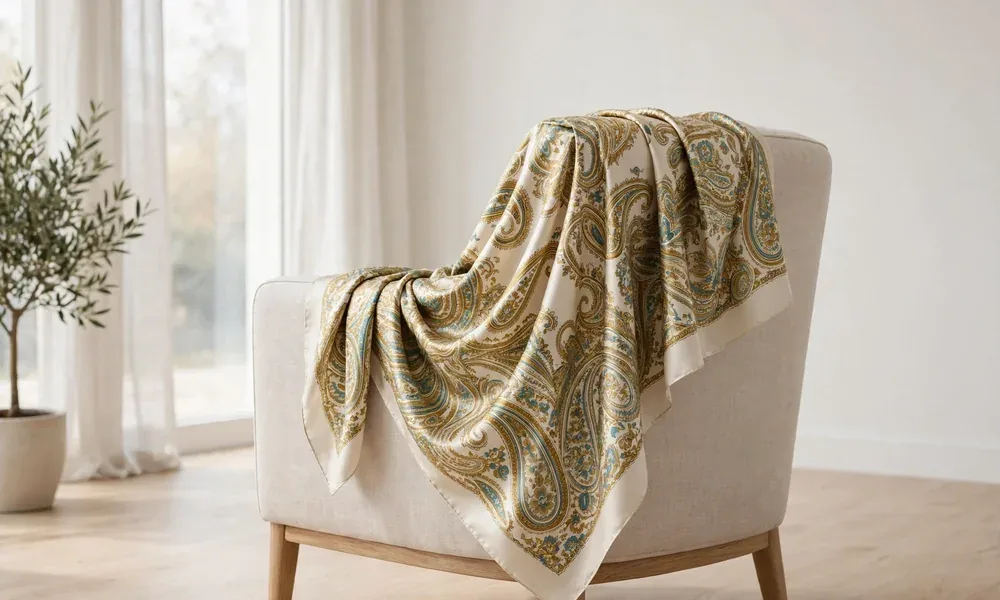
What We Like: Etro is the paisley specialist, and no other brand in this guide does paisley as well. Its silk scarves feature the intricate, jewel-coloured paisley patterns the house has made its signature since the 1980s, printed on good silk twill with hand-rolled hems. The colours are rich and unusual.
What to Consider: Etro scarves typically start from around $300 for a silk square, which is good value, but the brand is less widely available than Gucci or Hermès. Some buyers find the designs too busy for everyday wear.
Etro is a family-owned Italian house founded in Milan in 1968, and its paisley archive is one of the largest in the world. The brand still prints and finishes its scarves in Italy.
The caveat is that Etro’s strength is also its limit. If you love paisley, nothing else will do, but if you want a plain, quiet scarf, Etro is the wrong brand.
Background
The luxury scarf as we know it began in the nineteenth century, when silk squares became a practical accessory for travellers and a decorative one for fashionable women. Hermès formalised the silk square in 1937, but printed silk had been made in Lyon for centuries. In the twentieth century, houses such as Hermès, Chanel, and Gucci turned the scarf into a signature product.
Cashmere scarves have a parallel history. Cashmere weaving in Scotland dates back to the nineteenth century, when Scottish mills began working with fibre imported from Kashmir, and Italian mills later refined it into lighter, softer cloth. Neckwear has always rewarded attention to craft, and our guide to how to wear a necktie shows the same principle at work in a different accessory.
The caveats that matter
Every luxury scarf purchase carries risks, and the most expensive mistake is buying the wrong scarf for the wrong reason. The first risk is counterfeiting. The most popular scarves from Hermès, Burberry, and Chanel are among the most copied accessories in the world. Buy only from the brand’s own boutiques, its official website, or an authorised retailer, and keep the receipt and packaging.
The second risk is buying for the label rather than the scarf: check the fibre content, the weight, and the hem before you buy. The third risk is care: silk and cashmere need gentle handling, and a scarf that is dry-cleaned badly or stored without moth protection will not last. The fourth risk is fashion: a trendy print can date within a few years, while a classic design lasts for decades.
| Brand | Best for | Key material | Typical price from | Watch out for |
|---|---|---|---|---|
| Hermès | Printed silk squares | Silk twill | $930 | Counterfeits; sold-out designs |
| Burberry | Classic cashmere check | Cashmere | $490 | Blends sold as pure cashmere |
| Chanel | Soft silk and cashmere | Silk; cashmere | $600 | Seasonal availability |
| Gucci | Bold, expressive prints | Silk twill | $400 | Trendy prints dating quickly |
| Loro Piana | Finest cashmere wraps | Cashmere; vicuña | $700 | Quiet designs; high prices |
| Saint Laurent | Sleek Parisian style | Silk twill | $450 | Smaller, seasonal range |
| Dior | Romantic printed silk | Silk twill | $500 | Popular prints selling out |
| Etro | Paisley and colour | Silk twill | $300 | Busy patterns; limited availability |
Prices in the table are approximate starting prices and vary by country, season, and retailer. Always confirm the current price and the exact fibre content before you buy.
Checklist
- Check the label for exact fibre content before you check the price.
- Feel the fabric: good silk twill has body and a smooth sheen, and good cashmere feels soft, not thin.
- Inspect the hem or fringe: hand-rolled hems and twisted fringes signal proper finishing.
- Hold the scarf up to the light: a good print is sharp on both sides.
- Try the size on: a 90 cm square suits most neck and head styles, while a long stole suits winter layering.
- Buy from the brand’s boutique, official website, or an authorised retailer.
FAQ
Which luxury scarf brand is best for a first purchase?
For a first luxury scarf, Hermès is the safest choice if your budget allows, because the Carré 90 is versatile, well made, and holds its value. If your budget is lower, Burberry’s classic cashmere scarf and Etro’s silk squares both offer excellent quality.
Are luxury scarves worth the price?
A well-made luxury scarf can be worth its price if you wear it often and keep it for years. The cost per wear of a silk square worn weekly for a decade is very low. A scarf that sits in a drawer is never worth the price.
What size luxury scarf should I buy?
A 90 cm square is the most versatile size for silk scarves: it folds into a neck scarf, ties as a headscarf, wraps as a shawl, and decorates a bag. Smaller squares, around 45 cm, suit neck ties and bag charms. For winter warmth, a long cashmere stole is more practical than a square.
How do I tell a real luxury scarf from a fake?
Check the fibre, the hem, and the print. Real luxury silk has a substantial hand and a hand-rolled hem. Real cashmere feels dense and soft rather than thin and scratchy. Most importantly, buy from the brand’s own boutique or an authorised retailer, and be suspicious of any price far below the standard retail price.
How should I care for a silk or cashmere scarf?
Silk scarves are best dry-cleaned, or hand-washed very gently in cool water with a mild detergent if the care label allows it. Never wring silk, and dry it flat away from direct sunlight. Cashmere should be folded rather than hung and stored with moth protection.
Do luxury scarves hold their value?
Some do. Hermès Carré scarves, particularly classic designs in popular colourways, hold their value well and sometimes sell for more than their original price on the resale market. Buy a scarf to wear it, and treat any resale value as a bonus.
The bottom line
The best luxury scarf brand for you depends on what you want the scarf to do. For the finest printed silk square, buy Hermès. For the warmest classic cashmere scarf, buy Burberry or Loro Piana. For soft, elegant silk and cashmere with a Parisian feel, buy Chanel or Dior. For bold design and personality, buy Gucci or Saint Laurent. For the most beautiful paisley at a fair price, buy Etro.
Whatever you choose, buy the scarf you will wear, check the fibre and the finish before you pay, and buy from a source you trust. A luxury scarf is worn close to the face and kept for years, so quality is visible every single time you wear it.
Meet Our Experts
Our fashion editors research luxury accessories, fibres, and craftsmanship, and review published product information, brand histories, and retailer guidance before recommending a product.
Why Trust BrassSmile
BrassSmile covers beauty, fashion, and luxury with a focus on practical, specific advice. We name the materials, the prices, and the caveats behind every recommendation, and we update our guides when prices and availability change.
Sources
Hermès; Burberry; Chanel; Gucci; Loro Piana; Saint Laurent; Dior; Etro; Vogue; Harper’s Bazaar; Elle; The Business of Fashion; Financial Times.