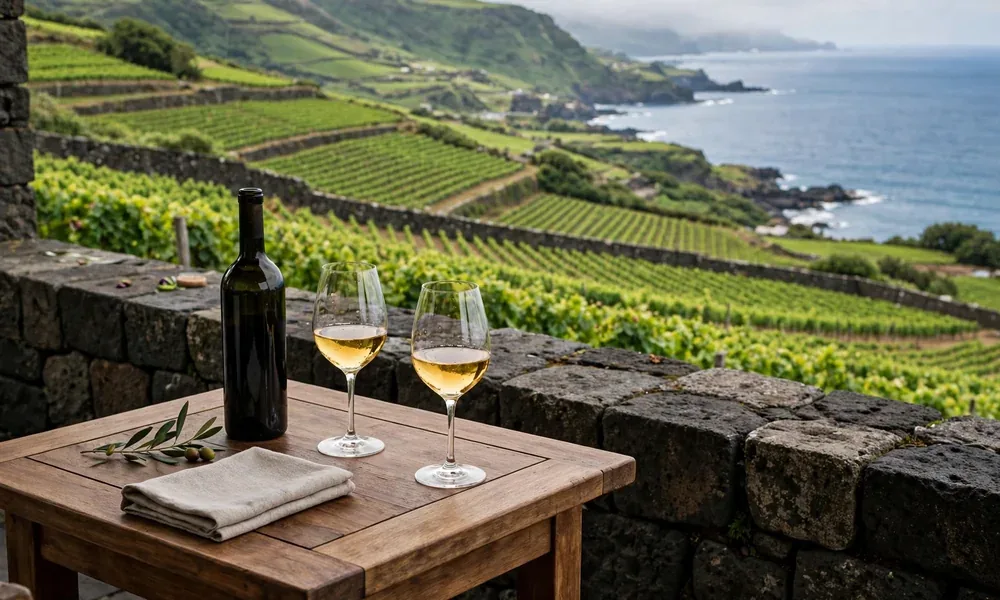
Best Luxury Azores Brands are the names to know before this small Atlantic wine region becomes impossible to buy into at sensible prices. The Azores are nine Portuguese islands scattered across the middle of the Atlantic Ocean, and their vineyards are unlike anything else in Europe. Vines grow inside low walls of black volcanic stone called currais, built by hand over centuries to shelter each plant from the wind and the salt spray. The result is a landscape that UNESCO has recognised as a World Heritage Site, and a set of wines shaped by lava soil, ocean air and long, cool growing seasons.
For luxury buyers, the appeal is simple. Production is tiny, the best bottles are made in small batches, and the leading producers already sell out of their flagship wines most years. The signature grape is Arinto dos Açores, a crisp white variety that produces wines with bright acidity, saline minerality and a freshness that suits modern tables perfectly.
This guide brings together the ten producers and labels that matter most, from the pioneering Azores Wine Company on Pico Island to the small cooperatives of Graciosa and Terceira. Each entry explains what the producer does best, what to buy first and what to expect to pay. Whether you are building a cellar, planning a tasting trip or simply looking for a white wine that no one else at the table has tried, these are the Azores names worth your attention.
Key takeaways
- Arinto dos Açores is the signature grape, producing crisp, saline white wines with bright acidity and real ageing potential.
- Pico Island is the heart of Azores wine, where vines grow in black basalt currais that are protected as a UNESCO World Heritage Site.
- Production is genuinely small, so flagship bottles from the best producers sell out quickly and reward early buying.
- Expect to pay roughly £15 to £60 a bottle, with the finest single-vineyard and older-vintage wines at the top of that range.
- The best way to understand Azores wine is to visit Pico, taste at the source and buy directly from the producers.
Why Azores Wine Belongs in a Luxury Collection
Luxury wine is usually defined by scarcity, a sense of place and a story that cannot be copied anywhere else. The Azores deliver all three in unusual measure. The vineyards of Pico Island sit on lava fields where almost nothing else will grow, and the black stone walls absorb heat during the day and release it at night, helping grapes ripen in a climate that is cooler and wetter than almost any other wine region in Europe. No other major wine region looks like this, and no other tastes quite like it either.
The wines themselves are defined by freshness rather than power. Azores whites are typically light to medium bodied, with citrus and green apple fruit, a distinct salty minerality and an acidity that keeps them lively for years. They pair beautifully with seafood, which is exactly what the islands are famous for, and they offer a refreshing alternative to heavier white wines from warmer climates. Red wines from the islands are lighter and more aromatic, made for drinking with food rather than for long ageing, although the best examples develop real complexity with a few years in bottle.
There is also a practical argument for buying now. Azores wine remains far less expensive than comparable bottles from Burgundy, Barolo or Napa Valley, even though the best producers work at a similar level of care and the quantities are far smaller. Collectors who buy the leading labels today are getting in early on a region that has the landscape, the grapes and the producers to become a lasting name.
The 10 Best Luxury Azores Brands at a Glance
The table below summarises the ten producers and labels covered in this guide. Pico Island dominates the list, which reflects where the finest vineyards are, but Graciosa, São Miguel and Terceira each contribute something worth seeking out. Prices are typical retail ranges in the United Kingdom and will vary by vintage, retailer and availability.
| Brand | Island | Signature Wine | Style | Typical Price | Best For |
|---|---|---|---|---|---|
| Azores Wine Company | Pico | Arinto dos Açores | Dry white | £30–£55 | Collectors |
| Adega do Pico | Pico | Verdelho do Pico | Dry white and fortified | £18–£40 | Classic tasting |
| Frei Gigante | Pico | Frei Gigante red | Red blend | £35–£60 | The cellar |
| Curral Atlântico | Pico | Curral Atlântico | Red blend | £25–£45 | Food pairing |
| Terras de Lava | Pico | Terras de Lava white | Dry white | £20–£35 | Everyday luxury |
| Insula Vinus | Pico | Insula Arinto | Dry white | £30–£55 | Small-batch rarity |
| Adega A Buraca | Pico | A Buraca Verdelho | Dry white | £15–£30 | An authentic visit |
| Adega da Graciosa | Graciosa | Graciosa white | Dry white | £15–£30 | Island hopping |
| Quinta do Comendador | São Miguel | Comendador white and red | White and red | £20–£40 | A São Miguel base |
| Adega de Angra do Heroísmo | Terceira | Terceira white | Dry white | £15–£30 | Terceira tasting |
Five Producers to Know First
Ten names is a useful shortlist, but five producers do most of the work in defining what luxury Azores wine means today. These are the estates and cooperatives to buy first, to taste first and to follow vintage by vintage.
Azores Wine Company
The Azores Wine Company is the producer that put modern Azores wine on the international map. Founded by winemaker António Maçanita on Pico Island, it works with old vineyards inside the UNESCO-protected currais and focuses on expressing the volcanic terroir as clearly as possible. Its flagship Arinto dos Açores is the benchmark white wine of the islands, all citrus, sea salt and stony minerality, with the structure to age gracefully for five to ten years.
Beyond the flagship, the company produces a range of wines that show the breadth of the islands, including the Terras de Lava white, the Frei Gigante red and the Curral Atlântico blend. For a first purchase, the Arinto dos Açores is the obvious choice, and for collectors, the older vintages and limited releases are the bottles to watch.
Adega do Pico
Adega do Pico is the island cooperative, the Cooperativa Vitivinícola da Ilha do Pico, and it represents the traditional heart of winemaking on the island. Where the Azores Wine Company is a modern pioneering estate, the cooperative gathers grapes from many small growers farming tiny plots inside the stone currais. Its wines are honest, well made and fairly priced, and they offer the most direct taste of what Pico wine has been for generations.
The cooperative is best known for its Verdelho wines, both dry and in the traditional fortified style that was once the island’s most famous export. The dry Verdelho is aromatic and fresh, while the fortified wines offer notes of dried fruit, nuts and spice that reward slow sipping.
Insula Vinus
Insula Vinus is a small producer on Pico Island whose name captures the spirit of the place, since insula is Latin for island. Working at a deliberately small scale, it focuses on careful vineyard work and minimal intervention in the cellar, allowing the volcanic soil and Atlantic climate to speak. Production is limited, and the wines are most often found in specialist shops and restaurants rather than on general retail shelves.
The flagship Arinto is precise and mineral, with a saline edge that makes it a natural partner for shellfish and grilled fish. For buyers who value rarity and craftsmanship, Insula Vinus is exactly the kind of producer to follow.
Adega A Buraca
Adega A Buraca is a small family adega in Madalena on Pico Island, and it represents the most personal side of Azores wine. Family-run wineries like this one have kept the island’s wine tradition alive through decades when it would have been easier to abandon the vineyards altogether. The scale is tiny, the welcome is warm, and the wines are made in the traditional way, with an emphasis on freshness and drinkability.
The Verdelho here is the wine to try first, bright and aromatic with a clean finish that suits the local seafood perfectly. A visit to a small adega like this one is often the highlight of a wine trip to Pico, because it shows the human side of a landscape that can otherwise feel monumental and remote. Buy a few bottles to take home, because they are rarely available anywhere else.
Adega da Graciosa and the Other Islands
Wine is not only a Pico story. Graciosa, São Miguel and Terceira each have their own producers and traditions, and they add depth to any collection of Azores wines. Adega da Graciosa, the cooperative on the island of Graciosa, makes fresh white wines from vineyards shaped by the same volcanic soils and Atlantic winds, while producers on São Miguel and Terceira, including Quinta do Comendador and Adega de Angra do Heroísmo, offer wines that reflect their own islands’ character.
These wines are generally lighter, more approachable and less expensive than the top Pico bottles, which makes them ideal for everyday drinking and for understanding the full range of the archipelago. They are also harder to find outside the islands, so tasting them usually means visiting. For travellers, that is a good reason to build more than one island into the trip, and for collectors, it is a reminder that the Azores story is bigger than a single island.
How to Taste Azores Wine Like a Collector
Tasting Azores wine rewards a slightly different approach from tasting the big names of the mainland. Start with the whites, served cool but not ice cold, so that the aromatics have room to open. Look for citrus and green apple on the nose, then a saline, almost maritime quality on the palate, and a finish that is clean and mouthwatering rather than heavy. The best wines have a tension between ripeness and acidity that is unmistakable once you have tasted it.
Pay attention to texture as much as flavour. The finest Arinto dos Açores wines have a stony, mineral grip that sets them apart from simpler whites, and some show a subtle smokiness from the volcanic soils. Older vintages develop honeyed and nutty notes while keeping their freshness, which is why the best bottles age better than many buyers expect.
When tasting reds, expect aromatic, medium-bodied wines rather than blockbusters. Frei Gigante and Curral Atlântico show red fruit, herbs and a volcanic earthiness that pairs well with grilled meats and rich fish dishes. Serve them slightly cooler than a typical red, around sixteen degrees, and give them time in the glass. The fortified Verdelho wines are best served lightly chilled as an aperitif or with cheese and desserts.
What to Pay, What to Cellar and What to Drink Now
Azores wine is still excellent value, but prices vary widely by producer and by how the wine reaches you. Everyday bottles from the cooperatives and smaller adegas typically cost between £15 and £30, which is fair for handmade wine from tiny vineyards. Mid-range wines from the leading producers sit between £30 and £45, while the flagship wines and limited releases reach £55 to £60 and occasionally beyond.
For the cellar, the best candidates are the flagship Arinto dos Açores wines from the top producers, along with Frei Gigante and the fortified Verdelho styles. The whites generally drink well for five to ten years, developing honey and nut notes while keeping their acidity, and the fortified wines last far longer. Buy at least three bottles of anything you intend to cellar, so you can taste one now and follow the other two over time.
For drinking now, the cooperative wines and the Terras de Lava white are ideal. They are fresh, affordable and made for the table, and they show the character of the islands without demanding patience. The lighter reds are also best enjoyed young, within three to five years of the vintage. Whatever you buy, store the bottles lying down in a cool, dark place, and remember that these are small-production wines, so the best vintages do not stay available for long.
Planning a Luxury Azores Wine Trip
Pico Island is the natural base for an Azores wine trip, and Madalena is the best town to stay in. From there, the UNESCO vineyard landscape is a short drive away, and the island’s producers, museums and tasting rooms are easy to reach. Allow at least three days for Pico alone, with time for vineyard walks, tastings and the ferry crossing to Faial for a change of scene.
Sleeping among the vines makes the trip considerably more memorable, and the wider world of wine travel has plenty to teach here. If the idea appeals, our guide to the best luxury vineyard hotels shows how the finest wine estates combine serious tasting with exceptional hospitality. On Pico itself, look for small hotels and guesthouses built from black basalt, many of them converted from traditional houses, where breakfast comes with a view over the currais and the ocean.
Most visitors reach the Azores through Lisbon or Porto, and both cities reward an extra night on the way. The best places to visit in Portugal include the mainland wine regions and historic cities that put the Azores in context, and routing through Porto in particular adds a second wine story to the journey. The best luxury hotels in Porto offer a comfortable base for a night of port tasting before the short flight out to the islands, turning a simple transfer into part of the holiday.
Your Azores Wine Checklist
- Buy the flagship Arinto dos Açores first, then explore Verdelho and the leading red blends.
- Check the vintage and buy at least three bottles of anything you plan to cellar.
- Visit Pico Island and walk the UNESCO currais vineyards before tasting at the source.
- Taste the fortified Verdelho style, which is the islands’ most historic wine.
- Serve whites cool but not ice cold, and reds slightly cooler than usual.
- Order directly from producers where possible, since the best bottles sell out quickly.
Frequently Asked Questions
What is the best Azores wine to buy first?
The best first purchase is a flagship Arinto dos Açores from the Azores Wine Company. It is the benchmark white wine of the islands, widely available through specialist retailers, and it shows the saline minerality and bright acidity that define the region. After that, try a dry Verdelho from Adega do Pico to compare the two great white grapes of the Azores.
Where is Azores wine made?
Most Azores wine is made on Pico Island, where vineyards grow in black basalt stone enclosures called currais that are protected as a UNESCO World Heritage Site. Smaller quantities are produced on Graciosa, São Miguel, Terceira and other islands in the archipelago. The region is one of the most westerly wine regions in Europe, sitting in the middle of the Atlantic Ocean.
How much does Azores wine cost?
Expect to pay roughly £15 to £30 for everyday bottles from the cooperatives and smaller adegas, £30 to £45 for mid-range wines from the leading producers, and £55 to £60 or more for flagship wines and limited releases. Prices vary by vintage, retailer and country, and wines bought directly on the islands are often less expensive than the same bottles abroad.
Does Azores wine age well?
Yes, the best white wines age well for five to ten years, developing honeyed and nutty notes while keeping their freshness. The flagship Arinto dos Açores wines are the strongest candidates for the cellar, and the traditional fortified Verdelho wines last considerably longer. Lighter reds are best enjoyed within three to five years of the vintage.
What food pairs best with Azores wine?
Azores whites are natural partners for seafood, especially grilled fish, shellfish and the islands’ famous limpets. Their acidity and saline character also suit sushi, fresh salads and light pasta dishes. The reds pair well with grilled meats and rich fish, while the fortified Verdelho styles work beautifully with cheese, nuts and desserts.
When is the best time to visit the Azores for wine?
The best months to visit are May to October, when the weather is warmest and the vineyards are green and active. September is particularly rewarding, as it is harvest time and the islands are at their liveliest. Winter visits are quieter and can be atmospheric, but some smaller producers and tasting rooms keep reduced hours outside the main season.
The Bottom Line
Best Luxury Azores Brands offer something that is becoming rare in the wine world: genuinely distinctive wines from a spectacular place, made in small quantities by producers who care deeply about their land. The flagship Arinto dos Açores wines belong in any serious collection of Atlantic and volcanic wines, and the cooperatives and smaller adegas add depth, value and authenticity to the story.
Start with the Azores Wine Company, explore the cooperatives and the smaller producers, and plan a trip to Pico to taste these wines where they are made. The Azores are not a region to collect from a distance for long. Visit once, walk the black stone vineyards above the Atlantic, and the wines will make sense in a way that no tasting note ever can.