There is a kind of tired skin that no amount of moisturiser seems to fix. Your face looks dull, your makeup sits unevenly, and the glow from your last facial has faded. That is usually when someone first reaches for a face mask.
A face mask is the concentrated treatment step of a skincare routine: a product applied to the face in a thick layer, or as a serum-soaked sheet, and left on for several minutes so its ingredients have time to work. It is not a cleanser, and it is not a moisturiser. It is the most useful product for skin that needs a targeted boost, whether that means hydration, oil control, brightness, or calm.
Yet face masks are among the most misused products in the bathroom cabinet: left on until they crack, used daily, or chosen for the wrong problem. This guide explains what a face mask actually is, how it works, which type suits your skin, and how to use one properly.
Key takeaways
- A face mask is a short-contact, high-dose treatment that stays on the skin for five to twenty minutes, delivering a concentration of ingredients a daily product cannot match.
- It works by keeping active ingredients in contact with the skin and slowing evaporation, so they absorb more effectively.
- Different types solve different problems: sheet and cream masks for hydration, clay masks for oil and congestion, exfoliating masks for dullness, soothing masks for redness.
- Most people benefit from masking one to three times a week, on clean skin, with moisturiser layered over afterwards.
- A mask cannot permanently shrink pores, detoxify the skin, or replace a daily routine, and the wrong type used too often can leave skin dry or irritated.
What a face mask actually is
A face mask is a topical skincare product applied to the face for a limited period before being rinsed off, peeled away, or left to absorb, depending on the type. Unlike a daily cleanser, which touches the skin for seconds, a mask is a short, concentrated dose: more product, stronger ingredients, and far longer contact time.
The difference is concentration and time. A mask sits on the skin for five to twenty minutes, forming a layer that slows evaporation, so ingredients that would otherwise be wiped away stay put and absorb more fully.
Most masks come as a cream, gel, or clay in a jar or tube, or as a sheet of cotton or hydrogel soaked in serum. Whatever the format, the job is the same: a focused treatment a daily routine cannot deliver on its own. A mask is an add-on to cleansing, moisturising, and sunscreen, never a replacement for them.
How a face mask works
A face mask does two things. First, it keeps an ingredient in contact with the skin for minutes instead of seconds, allowing concentrations and textures that would be impractical in a daily product: a thick clay that absorbs oil, or a gentle acid that needs a few minutes to loosen dead skin.
Second, depending on the type, it either absorbs or contributes. A clay mask pulls sebum and surface oil out of the skin and leaves it matte. A hydrating mask does the opposite, leaving behind water and moisture. What a mask does not do is deep-clean, empty pores, or detoxify anything: the body’s elimination is handled by the liver and kidneys, and a cosmetic product works on the surface. The visible result, which is real, comes from removing oil, adding moisture, and leaving a smoother texture for a few hours or days.
Types of face masks
Choosing the wrong one is the most common reason a mask disappoints: a clay mask will not fix dehydration, and a hydrating mask will not clear congestion.
| Type | Main job | Key ingredients | How often | Best for |
|---|---|---|---|---|
| Sheet mask | Delivers a serum dose under a fitted sheet | Hyaluronic acid, glycerin, niacinamide | One to three times a week | Dehydrated, dull, or tired skin |
| Clay mask | Absorbs excess oil and unclogs pores | Kaolin, bentonite, charcoal | Once or twice a week | Oily, combination, or congested skin |
| Cream mask | Deep hydration and nourishment | Shea butter, ceramides, squalane | One to three times a week | Dry, mature, or sensitive skin |
| Gel mask | Lightweight hydration and cooling | Aloe, cucumber, hyaluronic acid | One to three times a week | Sensitive, red, or overheated skin |
| Peel-off mask | Lifts away dead skin and surface debris | Polyvinyl alcohol, fruit enzymes | Once or twice a month | Dull texture, occasional blackheads |
| Exfoliating mask | Smooths texture and brightens tone | Glycolic acid, lactic acid, salicylic acid | Once a week | Dull, rough, or uneven skin |
| Sleeping mask | Overnight moisture and repair | Ceramides, panthenol, peptides | One to three times a week | Very dry or dehydrated skin |
| Soothing mask | Calms redness and irritation | Colloidal oatmeal, green tea, centella | One to three times a week | Redness-prone or reactive skin |
If you are unsure where to start, a hydrating sheet or cream mask is the safest first choice, because dehydration is the most common complaint and it suits almost every skin type. Clay needs restraint: used too often, it strips the skin’s natural oils and leaves it tight and irritated.
Who actually needs a face mask
The clearest candidate is anyone with dehydrated skin. If your face feels tight after washing, your makeup creases by midday, or your skin looks flat and dull despite moisturiser, a hydrating mask one to three times a week is the most direct fix.
Oily and acne-prone skin is the next case. A clay mask once or twice a week absorbs the excess sebum that makes the T-zone shine and helps keep pores clear. It will not cure acne or replace a proper acne treatment, but it keeps oil and congestion under control. The right cleanser for acne-prone skin matters just as much here, because a mask cannot do its job on skin that has not been cleaned first.
Others need a mask less often, or for a specific occasion. Dull skin before an event benefits from an exfoliating or brightening mask the night before, and sensitive skin benefits from a soothing mask after sun or cold weather. Healthy, balanced skin does not need a mask at all, though a weekly hydrating one is a pleasant habit rather than a necessity.
Face mask vs moisturiser
The confusion between masks and moisturisers is understandable, because they sit side by side on the shelf and promise similar things: hydration, softness, and glow. They are not the same product.
The practical differences are concentration, time, and frequency. A mask has a higher dose of active ingredients and needs five to twenty minutes to work, while a moisturiser does its job in seconds and is designed for every day. Used daily, most masks would over-treat the skin, leaving it irritated, stripped, or broken out.
Moisturiser still matters: it locks in what the mask delivered and keeps the barrier healthy between treatments. A mask is the treatment; moisturiser is the daily habit that protects the result.
How to use a face mask
Start with clean skin. A mask cannot penetrate through makeup, sunscreen, oil, or residue, so cleanse first and pat the skin dry, with hair pulled back and the skin bare.
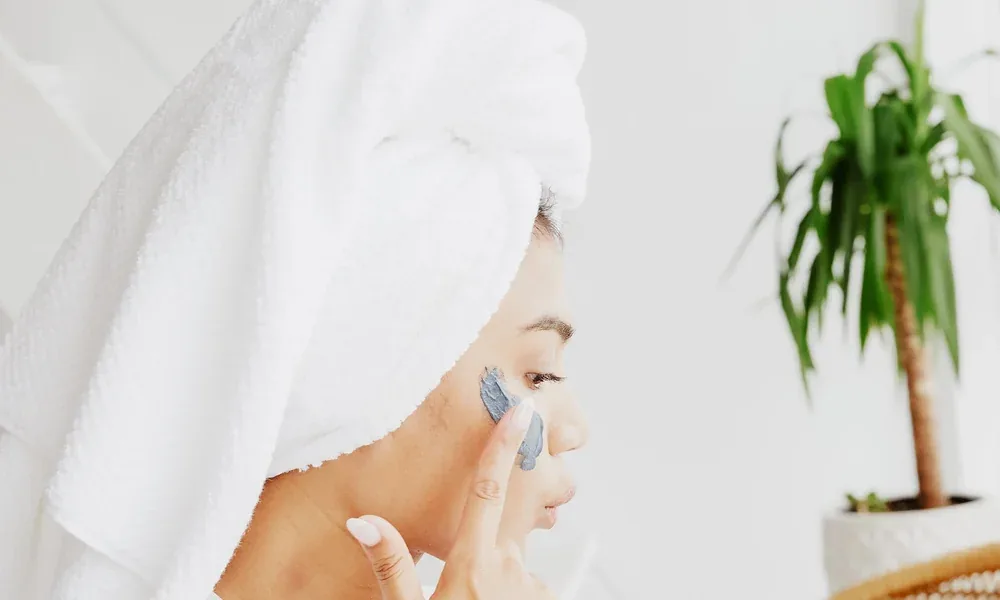
Spread a thin, even layer over the face with clean fingers, staying away from the eyes and lips. For a sheet mask, unfold it and smooth it onto the face, aligning the cut-outs with your eyes, nose, and mouth. Time it as the label directs, usually five to twenty minutes. Remove a clay mask before it cracks; never let a sheet mask dry stiff on your face.
Rinse with lukewarm water and pat dry. With a sheet mask, remove the sheet and gently pat the leftover serum into the skin rather than washing it off. A hydrating serum layered on after a rinse-off mask adds a second dose of moisture while the skin is still receptive. Finish with moisturiser, and after an exfoliating mask, wear sunscreen the next day, because freshly exfoliated skin is more sensitive to sun.
Before your first mask: a quick checklist
- Identify the main problem first: tightness needs hydration, shine needs clay, dullness needs exfoliation, redness needs soothing.
- Follow the label timing: five to twenty minutes is the usual window, and more is not always better.
- Apply to clean, dry skin, avoiding the eye and lip areas.
- Patch-test on your jawline or behind your ear before a new product, especially with sensitive skin.
- Remove a clay mask before it cracks, and never let a sheet mask dry out stiff on your face.
- Start once a week and adjust: tight skin means less often or a gentler formula; still-dull skin means a richer one.
Common face mask mistakes to avoid
The most common mistake is leaving a mask on too long. A clay mask left until it cracks does not work better; it works against you, because once the water in the layer is gone, it starts drawing water from the skin underneath. A sheet mask left until it dries stiff has the same problem. Follow the timing on the product: longer is not stronger.
The second mistake is using a mask every day. A face mask is a treatment, not a daily step, and daily use of clay or exfoliating masks strips the skin barrier. That barrier is what keeps moisture in and irritants out, and once it is damaged, the skin becomes dry, red, and reactive. Understanding the skin barrier shows why restraint matters: a healthy barrier does more for your skin than any mask can.
The third mistake is combining a mask with strong actives on the same day. Never use an exfoliating acid mask on the same day as a retinoid or another exfoliant, because the combined irritation can leave skin raw and peeling. And do not expect a mask to shrink pores permanently or detoxify the skin: pores do not open and close, and no cosmetic product detoxifies anything.
Frequently asked questions
How often should I use a face mask?
One to three times a week suits most people, and it is the frequency most masks are designed around. Hydrating, sheet, and soothing masks are the gentlest, usable up to three times a week. Clay and exfoliating masks should be limited to once or twice a week, peel-off masks to once or twice a month at most.
Can I use a face mask every day?
Most masks are not designed for daily use. Gentle hydrating sheet masks are the exception and are generally well tolerated daily, but clay, exfoliating, and peel-off masks used every day will strip the skin and damage the barrier.
Should I apply a face mask to wet or dry skin?
Clean, dry skin suits most masks: cleanse first, pat dry, then apply. A few hydrating masks work well on slightly damp skin, because the water underneath boosts absorption, so check the label. Never apply a mask over makeup or sunscreen.
Can I leave a face mask on overnight?
Only if the product is designed for overnight use. Sleeping masks are formulated to be left on while you sleep, but a regular clay, sheet, or exfoliating mask left on all night can over-treat the skin and cause irritation.
Do face masks work on sensitive skin?
Yes, but choose a soothing or hydrating formula and patch-test first. Look for colloidal oatmeal, green tea, centella, or ceramides, and avoid masks with fragrance, drying alcohol, or strong acids.
Can a face mask get rid of blackheads?
It can make them look less obvious for a short time, by absorbing surface oil and lifting away dead skin. But it cannot remove blackheads permanently or empty pores, and peel-off masks in particular can irritate the skin if used too often.
The bottom line
A face mask is the simplest upgrade to a skincare routine. It is not a miracle product, and it will not transform your skin in a single use. What it does, reliably, is give your skin a deeper dose of what it needs than a daily product can, and that shows up as softness, hydration, and skin that looks rested.
Start with the problem, not the product: hydration for tightness, clay for oil, gentle exfoliation for dullness, soothing ingredients for redness. Apply it to clean skin once or twice a week and moisturise afterwards.
Note: This article is for general information only and is not a substitute for professional advice. If you have a skin condition, an allergy to skincare products, or persistent irritation, speak to a dermatologist first.