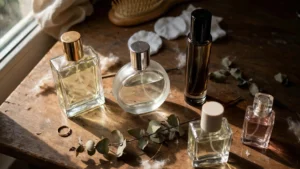
Eau de parfum is the label most people see on a perfume bottle, and the one few people can explain. It is a concentration, a measure of how much perfume oil is mixed into alcohol and water. That single number decides how long a scent lasts, how strongly it projects, how much you should spray, and how much you should expect to pay. It also changes how a perfume behaves on your skin through the day, from the first bright spray to the warm base that is still there in the evening.
That matters because the same scent can exist as an eau de parfum, an eau de toilette, and a parfum, and each one smells different. The parfum is stronger still, but also quieter and closer to the skin. Choosing between them is not about which is better. It is about how long you want the scent to last, how close you want people to stand, and how much you want to spend.
Below are nine facts that explain what eau de parfum really is, how it compares with the other concentrations, and how to choose and wear it well.
Key takeaways
- Eau de parfum is a concentration, not a scent, and it usually contains 15 to 20 percent perfume oils.
- It lasts longer and smells richer than eau de toilette, because the base notes have more room to develop.
- The same scent can smell quite different as an eau de parfum and as an eau de toilette, so test the version you plan to buy.
- Apply eau de parfum lightly, because two sprays often last all day, and a third spray can overwhelm a small room.
- No concentration suits every occasion, and a strong eau de parfum can be too much for hot weather, small offices, or close quarters.
What eau de parfum actually means
Eau de parfum, often shortened to EDP, is a perfume concentration. It means the bottle contains roughly 15 to 20 percent perfume oils, mixed with alcohol and a little water. That is more oil than an eau de toilette, which is usually 5 to 15 percent, and less than a parfum, also called an extrait, which is usually 20 to 40 percent.
The concentration matters because perfume oils are what you smell. Alcohol carries them onto the skin and then evaporates, and the oils are left behind to develop over hours. That slow development is what people mean when they talk about a perfume having depth, because the scent keeps changing instead of staying flat. More oil means more scent, for longer, and a fuller development of the base notes, the warm, woody and sweet notes that appear late.
It also matters for price. Perfume oils are the expensive part of a perfume, so a higher concentration usually costs more per millilitre.
How to read a perfume label and what to look for
Look first at the words under the name on the bottle. Eau de parfum, eau de toilette, eau de cologne and parfum are the main labels, and they tell you the concentration before you smell anything. If the bottle says nothing, it is usually an eau de toilette, but it is worth checking the box or the brand’s own description, because some houses use their own terms.
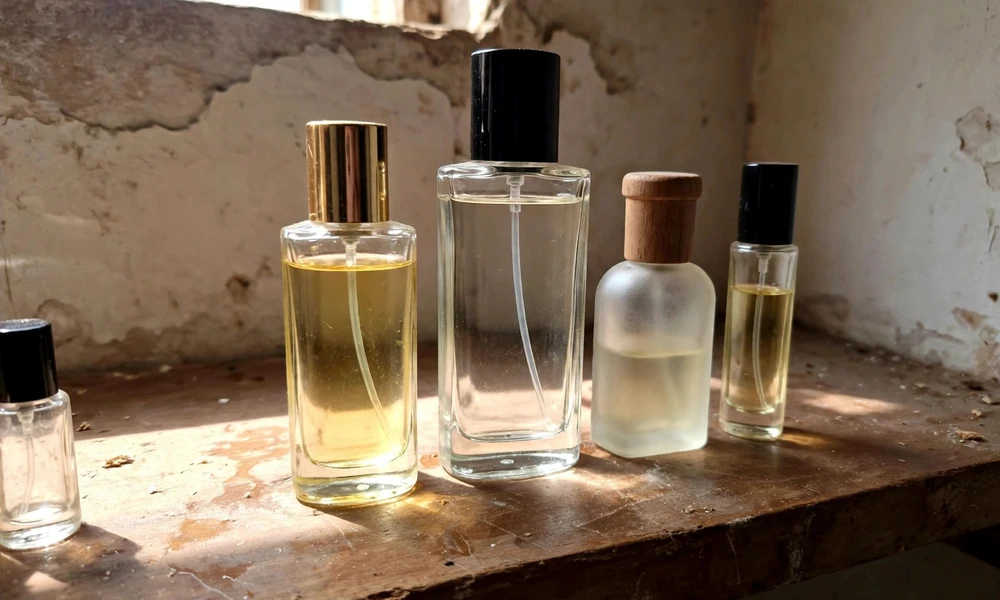
Look next at the size and the spray. Eau de parfum is usually sold in 30, 50 and 100 ml bottles, and a little goes a long way, so a 50 ml bottle can last months of daily use.
Finally, look at the occasion. A guide to making perfume last longer is a useful companion here, because the same habits that extend wear, such as applying to moisturised skin and avoiding rubbing your wrists together, matter even more with a higher concentration.
9 facts about eau de parfum
Eau de parfum is a concentration, not a scent family
What it shows: The label tells you how much perfume oil is in the bottle, not what it smells like. A floral, a woody and a vanilla scent can all be eau de parfum.
What to consider: Do not judge a perfume by its concentration alone. A poorly made eau de parfum can smell worse than a well-made eau de toilette. Best for: Anyone choosing between versions of the same scent. Material: Perfume oils, alcohol, water. Price range: Around £60 to £250 for 50 ml, depending on the house. Standout feature: The label is the most reliable clue to strength and longevity before you spray.
Eau de parfum usually contains 15 to 20 percent perfume oils
What it shows: The standard range for eau de parfum is 15 to 20 percent perfume oils, against 5 to 15 percent for eau de toilette and 20 to 40 percent for parfum.
What to consider: The numbers are not fixed by law, so one house’s 15 percent can feel stronger than another’s 20 percent, and skin chemistry changes how it wears. Best for: Comparing bottles fairly when you are choosing between concentrations. Material: Perfume oils at 15 to 20 percent, in alcohol. Price range: Usually 20 to 50 percent more per millilitre than the eau de toilette of the same scent. Standout feature: The middle ground, stronger than eau de toilette, softer and more wearable than parfum.
Eau de parfum lasts longer than eau de toilette
What it shows: More perfume oil means a slower evaporation, so an eau de parfum typically lasts six to ten hours on skin, against three to five for an eau de toilette.
What to consider: Longevity depends on skin type, weather and dose, and dry skin can make even a strong eau de parfum fade faster. Best for: Long days, evenings, and anyone who does not want to reapply. Material: Higher oil content, with a stronger base of woods, resins and musks. Price range: Around £70 to £200 for 50 ml for most designer houses. Standout feature: The long dry-down, where the base notes have hours to develop.
The base notes have more room in an eau de parfum
What it shows: Because there is more oil, the base notes, vanilla, amber, woods, musk and resins, are fuller and more obvious, and the dry-down lasts longer.
What to consider: A scent with a heavy base can feel too warm or too sweet in hot weather, even if the opening is fresh. Best for: Cold weather, evenings, and anyone who loves the dry-down more than the opening. Material: Base notes such as vanilla, amber, sandalwood, cedar and musk. Price range: Around £80 to £250 for 50 ml for richer, base-heavy scents. Standout feature: The dry-down, which is where an eau de parfum earns its price.
The same scent smells different as an eau de parfum and an eau de toilette
What it shows: Houses often reformulate between concentrations, not just dilute, so the eau de parfum can have different proportions, extra base notes, or a warmer balance.
What to consider: Do not assume the eau de parfum is simply a stronger version of the eau de toilette you already know. Test the exact version you plan to buy. Best for: Anyone switching concentrations of a scent they already own. Material: The same scent family, rebalanced with more base notes. Price range: The eau de parfum is usually the more expensive version of the same scent. Standout feature: The reformulation, which can make the two versions feel like close relatives rather than twins.
Eau de parfum projects more strongly at first
What it shows: More oil means a stronger scent cloud in the first hour, so people nearby will notice an eau de parfum more easily than an eau de toilette.
What to consider: Strong projection is not always welcome, and in a small office or a warm room it can overwhelm the people around you. Best for: Evenings, outdoors, and occasions where you want to be noticed. Material: Perfume oils at a higher share, with a stronger opening. Price range: Around £60 to £200 for 50 ml for most designer houses. Standout feature: The first hour, when the scent is at its most noticeable.
Parfum is stronger still, but quieter and closer to the skin
What it shows: Parfum, or extrait de parfum, contains 20 to 40 percent perfume oils, lasts longest of all, but projects less, sitting close to the skin rather than filling a room.
What to consider: Parfum is the most expensive per millilitre, and it is usually dabbed rather than sprayed, which suits people who want a private scent. Best for: Anyone who wants the longest wear with the least projection. Material: Perfume oils at 20 to 40 percent, often with less alcohol. Price range: Around £150 to £400 for 30 ml, depending on the house. Standout feature: The intimacy, a scent that lasts all day but only for the people close to you.
Eau de toilette is lighter, fresher and better for heat
What it shows: With 5 to 15 percent perfume oils, an eau de toilette is lighter and fresher, with a brighter opening and a shorter life on skin, usually three to five hours.
What to consider: It needs reapplying for a long day, and its base notes are thinner, so a scent you love as an eau de parfum can feel incomplete as an eau de toilette. Best for: Hot weather, daytime, the gym, and anyone who prefers a light scent. Material: Perfume oils at 5 to 15 percent, in more alcohol. Price range: Usually 20 to 50 percent less per millilitre than the eau de parfum of the same scent. Standout feature: The freshness, which makes it the better choice when the air is warm and the room is small.
How you apply eau de parfum matters as much as the bottle
What it shows: Two sprays on pulse points, such as the wrists and the neck, on moisturised skin, will last longer and smell better than five sprays on dry skin or clothes.
What to consider: Rubbing your wrists together breaks down the top notes, and spraying directly onto silk or pale fabric can leave a mark. Best for: Anyone who wants a full day of wear from two sprays. Material: Pulse points, moisturised skin, and a fine, even spray. Price range: No extra cost, and a bottle lasts longer when you spray less. Standout feature: The technique, which can add hours to a scent for free.
When to choose eau de parfum over the other concentrations
Choose eau de parfum when you want a scent to last from morning to night without reapplying, when the weather is cool, and when the occasion is an evening out, a long day, or a formal event. For most people it is the safest single bottle to own, because it covers more situations than the lighter or the stronger options.
Choose eau de toilette instead when the weather is hot, when you will be in a small room with other people, or when you want a fresh, bright scent that you can reapply at lunchtime. Choose parfum when you want the longest wear with the least projection, and when you are happy to pay more per millilitre for a scent that stays close to the skin. Our roundup of luxury perfume brands is a useful next step here, because most of the houses on that list offer the same scent in several concentrations, and comparing them side by side is the fastest way to learn what suits you.
Skin type matters too. Oily skin can make a scent project more strongly, so one spray is often enough.
The caveats that matter
Eau de parfum is the most popular concentration, but it is not right for every situation. It can be too strong in a hot room, too heavy for a small office, and too expensive when a lighter concentration would do the same job for less.
| Detail | What is known |
|---|---|
| Typical concentration | 15 to 20 percent perfume oils, in alcohol and water |
| How long it lasts | Usually six to ten hours on skin, longer on fabric |
| Compared with eau de toilette | Richer, warmer and longer-lasting; eau de toilette is lighter, fresher and shorter-lived |
| Compared with parfum | Parfum is stronger still at 20 to 40 percent, but quieter and closer to the skin |
| How much to apply | One or two sprays on pulse points, on moisturised skin, then wait twenty minutes |
| Best occasions | Long days, evenings, cold weather and formal events |
| Storage | Cool, dark place, away from light and heat, with the cap on |
| What it does not do | It does not suit every occasion, and a strong eau de parfum can overwhelm a small room or a hot day |
If you are sensitive to strong scents, or if you work in a scent-free environment, choose a light eau de toilette for the office and save the eau de parfum for evenings. A clear explanation of why luxury perfume costs more shows how much of the price is oil, craft and concentration, and how much is branding.
Checklist: choosing an eau de parfum honestly
Use these checks before you buy, and again after a full day of wear.
- Check the label: eau de parfum, eau de toilette, cologne and parfum are different concentrations, not different scents.
- Check the version: test the exact concentration you plan to buy, because the same scent can smell different as an eau de parfum and an eau de toilette.
- Check the dose: start with one or two sprays, because eau de parfum grows stronger and warmer over the first hour.
- Check the weather: save rich eau de parfum for cool days and evenings, and choose a lighter concentration for heat.
- Check the dry-down: wait at least an hour on skin before you decide, because the base notes are where eau de parfum earns its price.
- Check the storage: keep the bottle cool, dark and capped, because light and heat break down perfume oils over time.
Frequently asked questions
Is eau de parfum better than eau de toilette?
Not always. Eau de parfum lasts longer and smells richer, but eau de toilette is lighter and fresher, and it is often the better choice in hot weather or for daytime.
How many sprays of eau de parfum should I use?
One or two sprays is enough for most people. Apply to pulse points such as the wrists and neck, on moisturised skin, then wait twenty minutes before deciding whether you need more.
Does eau de parfum last all day?
Often yes. Most eau de parfum lasts six to ten hours on skin, and longer on fabric, because the base notes are fuller and evaporate more slowly. Dry skin can shorten that, so moisturise first if your scent fades fast.
Why is eau de parfum more expensive than eau de toilette?
Perfume oils are the expensive part of a perfume, and eau de parfum contains more of them.
Can I wear eau de parfum in summer?
Yes, if you choose a light, fresh eau de parfum and apply it sparingly. A heavy, sweet or smoky eau de parfum can feel sticky in heat, so save those for cold weather and choose a citrus or floral eau de parfum for summer days.
How should I store eau de parfum?
Keep it in a cool, dark place, away from light and heat, with the cap on. A bedroom drawer is better than a sunny bathroom shelf.
The bottom line
Eau de parfum is the most versatile perfume concentration, and for most people it is the right default. It lasts longer than eau de toilette, smells richer in the dry-down, and needs only one or two sprays to carry you through a long day.
Read the label, wear it for a full day before you judge it, and let the dry-down decide. That is the honest way to buy perfume, and it will save you from paying eau de parfum prices for a scent you would have preferred as an eau de toilette, and that one habit, reading the label and testing the exact version, will save you more money than any sale.