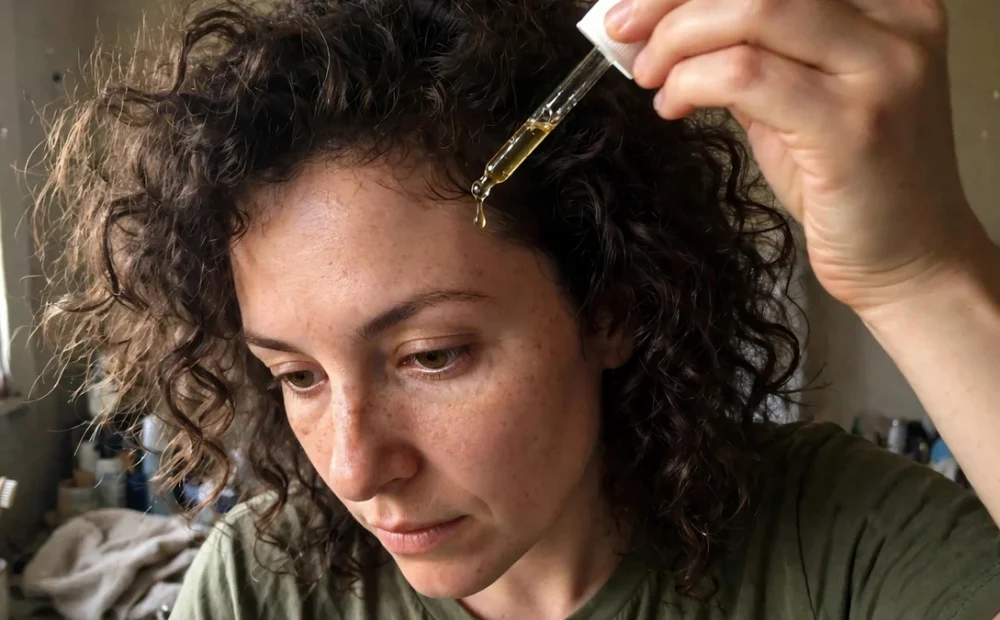
Curly hair dries out faster than straight hair, and it is not because curly hair is unhealthy. The natural oils made by the scalp travel easily down a straight strand and struggle to follow a spiral, so the lengths and ends of curls are often drier than the roots. That dryness is what makes curls frizz in humidity, tangle at the ends, and snap when they are brushed dry.
The problem is that most hair oils are sold as if one bottle suits everyone, and for curly hair that is simply not true. A heavy castor oil that transforms thick, coily hair can leave fine waves flat and greasy by lunchtime. The right choice depends on your curl type, your hair’s thickness, and whether you want shine, frizz control, scalp care, or all three.
Below are nine hair oils worth considering in 2027, from weightless finishing oils for fine curls to rich sealing oils for thick, coily hair.
Key takeaways
- Curls dry out faster because scalp oil cannot travel down a spiral strand, so the ends need help that straight hair does not.
- Lightweight oils such as jojoba, grapeseed and argan suit fine and wavy curls, while richer oils such as castor and coconut blends suit thick and coily hair.
- Apply oil to damp hair to seal in water; applying it to dry hair only adds shine and tames frizz.
- A few drops are enough for most curls, and too much oil makes curls limp and greasy and is hard to wash out.
- No oil repairs split ends or changes a curl pattern, and an oil that causes itching, flaking or breakouts should be stopped.
What a hair oil actually does for curly hair
A hair oil is a sealant, not a moisturiser. Water is what hydrates hair, and oil sits on the outside of the strand and slows down how quickly that water escapes. That is why oil works best on damp hair, after washing or after a leave-in conditioner.
For curly hair, that sealing effect matters more than for straight hair. The bends in a curl lift the cuticle slightly, which lets moisture out and lets humidity in. A thin layer of oil smooths the cuticle, reduces friction between strands, and gives curls a more even surface, which is why oiled curls usually look shinier and hold their shape for longer.
Oil also helps with the practical side of curly hair care. It makes detangling gentler, because strands slide past each other instead of catching, and it protects the ends from rubbing against clothing, pillowcases and hats.
How we chose these oils and what to look for
Look first at weight. A lightweight oil spreads thinly, absorbs quickly and leaves little residue, which is what fine and wavy curls need. A heavier oil stays on the surface longer, which is what thick and coily hair needs to stay sealed through the day.

Look next at the formula. A single-ingredient oil, such as pure jojoba or argan, is easy to judge and easy to mix, while a blended oil can combine a light carrier with a richer butter or a fragrant essential oil. Silicones are common in finishing oils and are not harmful in themselves, but they build up, so if you use a silicone oil you need a clarifying wash now and then.
Finally, look at the bottle and the price per millilitre. A dropper or pump gives you control, which matters when the difference between enough and too much is a single drop. Our guide to how to use hair oil covers the basic method, and the advice below builds on it specifically for curls, where sectioning and amount matter more than they do for straight hair.
The 9 best hair oils for curly hair 2027
Moroccanoil Treatment Original
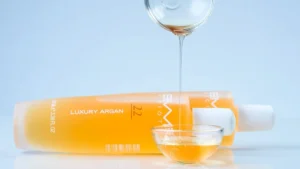
What we like: A classic argan-oil finishing oil that smooths frizz, adds shine and makes detangling easier, with a light texture that suits most curl types. What to consider: It contains silicones, so it can build up if you never clarify, and the scent is strong. Best For: Medium to thick curls, frizz control, daily finishing. Material: Argan oil with silicones. Price Range: Around £35 to £45 for 100 ml. Standout Feature: The original argan finishing oil, and still the easiest to find.
Two drops smoothed over damp curls give a visible shine without a heavy feel, and it works as a quick frizz fix on dry hair too.
Olaplex No. 7 Bonding Oil
What we like: A very light, concentrated oil that adds shine and softness without weight, protects against heat up to 230°C, and helps colour-treated curls look healthier. What to consider: The bottle is small at 30 ml, and it is easy to use too much because it is so thin. Best For: Damaged or colour-treated curls, heat styling, fine to medium hair. Material: Lightweight bonding oil with bis-aminopropyl diglycol dimaleate. Price Range: Around £25 to £30 for 30 ml. Standout Feature: Heat protection and shine in a genuinely weightless oil.
One drop per section is usually enough, and it suits bleached or heat-styled curls because it smooths without coating the hair in a heavy layer.
Kérastase Elixir Ultime L’Huile Originale
What we like: A blend of camellia, argan and marula oils that gives a soft, glossy finish, smells pleasant without being overpowering, and works on damp or dry hair. What to consider: Premium price, and it is richer than a true lightweight oil, so fine curls should use half a pump. Best For: Dull curls needing shine, medium to thick hair, special occasions. Material: Camellia, argan and marula oil blend. Price Range: Around £35 to £45 for 100 ml. Standout Feature: A versatile shine oil that doubles as a pre-wash treatment.
Use it as a finishing oil on wash day and as a light pre-wash treatment on the ends, and the bottle lasts a long time.
Bread Beauty Supply Hair-Oil: Everyday Gloss
What we like: A silicone-free oil made for thick, curly and coily hair, with safflower oil and kakadu plum, that adds gloss without stickiness and does not weigh curls down. What to consider: It is richer than most lightweight oils, so fine curls may find it too much for daily use. Best For: Thick, curly and coily hair, everyday gloss, wash-day sealing. Material: Safflower oil with kakadu plum. Price Range: Around £20 to £25 for 100 ml. Standout Feature: Silicone-free and designed specifically for textured hair.
It sinks in rather than sitting on top, which makes it a good daily oil for hair that usually drinks up lighter products within an hour.
Pattern Jojoba Oil Blend
What we like: A light, mostly jojoba blend that mimics the scalp’s own sebum, absorbs well, and works for both the scalp and the lengths without leaving a greasy film. What to consider: It is a gentle, quiet oil, so it will not give the dramatic shine of a silicone finishing oil. Best For: Scalp care, lightweight sealing, all curl types. Material: Jojoba, sunflower and safflower oils. Price Range: Around £25 to £30 for 115 ml. Standout Feature: Jojoba’s close match to natural sebum makes it unusually easy for hair to accept.
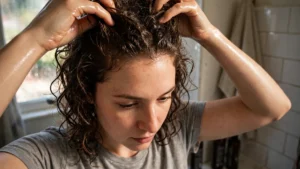
Use a few drops on damp curls to seal, or massage a little into the scalp before washing. It is also a good first oil for anyone who has found richer oils too heavy.
Mielle Organics Rosemary Mint Scalp & Hair Strengthening Oil
What we like: An affordable scalp oil with rosemary, mint and biotin that feels cooling, supports a healthy scalp, and can be used as a pre-wash treatment on the lengths. What to consider: It has a strong mint scent, it is heavier than a finishing oil, and it must be washed out properly. Best For: Scalp care, pre-wash treatments, hair that is thinning or shedding. Material: Rosemary and mint oils with biotin. Price Range: Around £8 to £12 for 59 ml. Standout Feature: A budget scalp oil with a large following among curly-haired users.
Massage it into the scalp, leave it for 20 to 30 minutes before washing, and shampoo twice if needed. The cooling tingle is normal, but stop if your scalp stays red or itchy.
Gisou Honey Infused Hair Oil
What we like: A honey-infused oil that smooths frizz, adds a soft shine and leaves curls feeling flexible rather than coated, with a light floral scent. What to consider: Premium price, and the honey makes it slightly tacky if you use too much. Best For: Frizz control, shine, medium curls. Material: Mirsalehi honey with coconut and argan oils. Price Range: Around £40 to £50 for 100 ml. Standout Feature: Honey as a humectant, which helps curls hold moisture.
One to two drops per section smooths the cuticle without flattening the curl pattern, and the scent fades within an hour.
Verb Ghost Oil
What we like: A genuinely weightless oil with moringa that smooths frizz and adds shine without any greasy feel, and it is one of the most affordable lightweight oils available. What to consider: It is so light that very thick or coily hair may find it disappears too fast. Best For: Fine curls, wavy hair, weightless finishing. Material: Moringa oil blend. Price Range: Around £16 to £20 for 60 ml. Standout Feature: The lightest oil on this list, made for hair that is easily weighed down.
It is light enough to use daily on fine curls, and it layers well over a leave-in conditioner without making the hair feel coated.
Davines OI Oil
What we like: A softening oil with roucou that detangles, adds shine and makes curls feel smooth and flexible, with a large 135 ml bottle that lasts for months. What to consider: It is richer than a lightweight oil, so fine curls should use a single drop per section. Best For: Softness and detangling, all curl types, long hair. Material: Roucou oil. Price Range: Around £35 to £45 for 135 ml. Standout Feature: Excellent value per millilitre for a salon-quality oil.
Smooth it over damp hair before detangling with your fingers or a wide-tooth comb, and knots come out with far less pulling and breakage.
Which oil suits your curl type
Wavy hair, types 2A to 2C, needs the lightest touch. Waves are easily weighed down, and a heavy oil will pull the wave out and leave the hair looking flat and greasy. A lightweight oil such as Verb Ghost Oil or a few drops of jojoba blend, applied only to the mid-lengths and ends, gives shine and frizz control without losing the wave.
Curly hair, types 3A to 3C, has more room to work with. The curls are springy enough to hold a little weight, and the ends are usually the driest part, so a medium-weight oil such as Moroccanoil, Gisou or Davines OI Oil works well. Our roundup of the best curly hair products covers the creams and gels that pair well with these oils, because oil alone does not define a curl.
Coily hair, types 4A to 4C, usually needs the richest oils and the most of them. The tight curl pattern means natural oils barely reach the ends, and the hair is often dense and coarse, so it can absorb a heavier product without going limp. Bread Everyday Gloss, Pattern Jojoba Oil Blend and a castor-based oil are good choices,
The caveats that matter
Hair oil is a helpful tool, but it has limits that are worth knowing before you spend money on a premium bottle. Oil does not repair split ends, and no oil can change your curl pattern, make hair grow faster, or fix damage from bleach and heat. If a product promises to repair damage or regrow hair, treat that claim with scepticism.
| Detail | What is known |
|---|---|
| What oil does | Seals in moisture, smooths the cuticle, reduces friction and frizz |
| What it does not do | It does not hydrate dry hair, repair split ends, or change curl pattern |
| Best time to apply | On damp hair after washing, or as a pre-wash treatment 20 to 30 minutes before shampoo |
| How much to use | Two to three drops per section for most curls; one drop per section for fine hair |
| Who should avoid heavy oils | Fine and wavy hair, and anyone whose scalp gets greasy quickly |
| Scalp oils | Use on the scalp only, leave 20 to 30 minutes, and wash out properly |
| Build-up | Silicone oils and heavy butters build up; clarify every few weeks |
| When to stop | If itching, flaking, redness or breakouts appear, stop and switch to a lighter, fragrance-free oil |
Porosity matters as much as curl type. Low-porosity curls have a tightly closed cuticle and resist absorbing products, so light oils work best and heavy oils tend to sit on the surface. High-porosity curls absorb quickly and lose moisture just as fast, so they usually need a richer oil and more of it. Night care matters too, and a silk pillowcase for curly hair reduces the friction that undoes a good oiling overnight.
Checklist: choosing a hair oil honestly
Use these checks before you buy, and again after two weeks of use.
- Match the weight to your curls: light oils for fine and wavy hair, richer oils for thick and coily hair.
- Check the ingredients: know whether it is a single oil, a blend, or a silicone-based finishing oil.
- Check the scent: strong fragrance can irritate a sensitive scalp, so choose unscented or lightly scented for your first bottle.
- Start with two drops: apply to damp hair, section by section, and add more only if the ends still look dry.
- Patch-test first: try a new oil on one small section for two to three days before using it all over.
- Clarify regularly: wash with a clarifying shampoo every few weeks if you use silicone or heavy oils.
Frequently asked questions
Can I use hair oil every day on curly hair?
Yes, if you use a light oil and a small amount. One to two drops on the ends each morning is fine for most curls. Save richer oils for wash days and pre-wash treatments.
Should I apply hair oil to wet or dry curly hair?
Damp hair is best for sealing in moisture, because the oil traps the water that is already in the strand. Dry-hair application is useful for shine and frizz control, but it does not hydrate.
Will hair oil make my curls greasy?
It will if you use too much or apply it to the roots. Curls need oil on the mid-lengths and ends, where they are driest, not on the scalp, where natural oil already gathers. Start with two drops per section and keep it away from the roots.
Is coconut oil good for curly hair?
It can be, for thick and coily hair, because it penetrates the strand and reduces protein loss. But it is heavy, it can be hard to wash out, and some people find it makes their hair feel stiff or causes breakouts on the forehead. Use it as a pre-wash treatment rather than a daily finishing oil.
Can hair oil help with curly hair frizz?
Yes, frizz is the main problem oil solves well. By smoothing the cuticle and sealing in moisture, oil stops curls absorbing humidity unevenly, which is what makes them swell and frizz. A single drop smoothed over dry curls can also tame flyaways.
Do I need a different oil for my scalp?
Usually yes. Scalp oils are meant to be massaged in and washed out, and they often contain rosemary, mint or tea tree, which can irritate if left on the lengths. Finishing oils are meant to stay on the hair. Use a scalp oil before washing and a finishing oil after.
The bottom line
The best hair oil for curly hair in 2027 is the one that matches your curl type and your hair’s thickness, not the most expensive bottle on the shelf. Fine and wavy curls need a light oil used sparingly, medium curls need a balanced finishing oil, and thick, coily hair needs a richer oil used generously.
Choose one oil, use it consistently for three to four weeks, and change only one thing at a time if the result is not right.