The mudroom is the smallest room with the biggest job: it takes the wet boots, the school bags, the dog lead and the coats, and decides whether any of them reach the rest of the house. For years it was a corridor with hooks, a place to hurry through. In 2027 the mudroom is a proper room, and the best ones feel less like a back-door afterthought and more like a calm arrival hall.
Luxury here does not mean marble and brass. It means a room that works: a bench at the right height, a hook for every coat, a place for every pair of shoes, and a floor you can mop in two minutes. When the layout is right, even simple finishes feel expensive, because nothing is ever in the way.
This guide works through the room: layout, the working wall, storage, floors and walls, colour and light, the drop zone, and where to spend. It follows the same approach as our guide to creating a luxury laundry room, but every choice here is made for rain, grit and the twice-daily rush out of the door.
Key takeaways
- Give every person one locker bay, about 18 inches wide, with their own hooks, cubby and shoe space.
- Build the working wall first — bench, hooks, lockers — and let everything else follow from it.
- Choose floors and walls that can be mopped and wiped: porcelain tile, sealed wood, washable paint.
- Plan the drop zone for keys, charging and the morning exit, not as an afterthought.
- Costs vary widely by scope, so price the built-in wall before committing to a full addition.
Start With the Layout — Where the Mudroom Lives
A mudroom works when it sits where the mess enters the house: the back door, the garage door or the side entrance — the door the family actually uses. Anywhere else, coats and boots will still pile up by the door that is used, and the pretty room will stand empty.
Size matters less than people think. A useful mudroom can be a 30 to 50 square foot slice of hallway, a converted coat closet or a corner of the garage entry. What matters is a clear path: in, shoes off, coat on a hook, bag in a cubby, on into the house without doubling back. Keep at least 36 inches clear in front of the bench so two people can pass while one sits to lace boots.
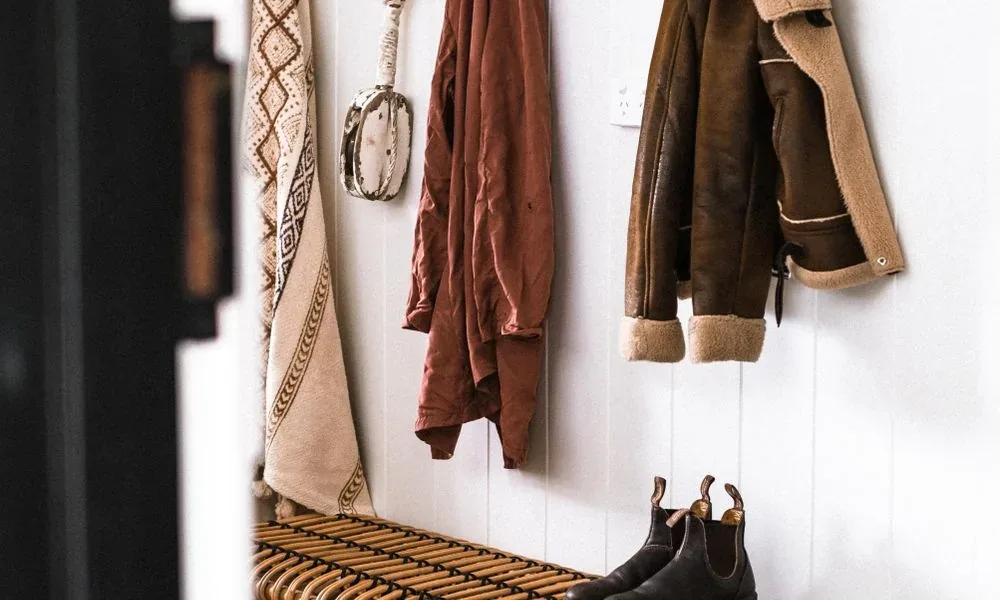
Where space is tight, a closet conversion does the same job: remove the door, fit a bench with shoe cubbies below and hooks above, and add a shelf for baskets. Some homes pair the mudroom with the laundry, so muddy kit goes straight into the machine; a combined fit-out typically costs $3,000 to $10,000.
The Bench, Hooks and Lockers — The Working Wall
Almost every mudroom is one good wall. Get it right and the room works; get it wrong and no decoration saves it. The classic arrangement runs in three layers: a bench with boot storage at the bottom, open cubbies or lockers with hooks in the middle, and closed upper cabinets for off-season gear.
Dimensions are worth getting exact. A bench seat 17 to 19 inches high suits adults tying shoes, and a bench 15 to 18 inches deep gives a proper seat without eating the walkway. Allow 15 to 24 inches of locker width per person, with 18 inches the sweet spot. Hang adult hooks about 60 inches high, and add a second row at 36 to 42 inches so children can reach their own.
Hooks beat hangers in a mudroom: a coat goes on in one motion and comes off in one. Choose hooks rated for heavy coats, fixed into studs or a solid backer board — a hook that pulls out of plasterboard in January is worse than none. Copper develops a living patina where hands grab it most.
Lockers or open cubbies is the one real argument in mudroom design, and 2027 has settled it with a hybrid: open hooks and a bench below for daily grab-and-go items, closed doors above for spare kit and out-of-season coats. You get the speed of open cubbies with the calm look of closed storage.
Storage for Every Person, Pet and Season
A mudroom stores more kinds of things than any other room its size, so plan storage around the jobs. Shoes go low, in cubbies under the bench or pull-out boot tray drawers with a removable, washable tray. Hats, gloves and scarves go in labelled baskets above the hooks, one per person. A deep cubby per child holds a school bag upright.
Rotate seasonally: heavy winter coats and wellingtons need a home from November to March, then need to disappear into the closed upper cabinets. Rotate twice a year, in October and April. Pets have moved in too — pull-out feeding stations under a cabinet, a low drawer for leads and towels, and, in larger mudrooms, a pet-wash nook with a handheld sprayer.
Floors, Walls and the Sink — Materials That Take Mud
A mudroom is a wet room in disguise, and luxury here means materials that look good after years of rain, grit and the occasional dropped bottle of bleach. Specify like a bathroom: moisture-resistant boards behind the sink and bench, and finishes that wipe down easily.
For floors, large-format porcelain tile with an absorption rate below 0.5% is the toughest choice — mud dries, gets swept, and the floor looks new. Slate is the 2027 favourite for character: cleft slate shrugs off water and grit and looks better as it wears. Luxury vinyl plank, installed at $4 to $8 per square foot, is a warmer, quieter alternative; porcelain tile installed runs $10 to $25 per square foot.
Walls want beadboard, shiplap or panelling up to hook height, painted in a satin or semi-gloss zero-VOC enamel that wipes clean. Keep the colour warm: warm white and mushroom, natural birch, and earthy colours drawn from clay, stone and botanicals. Sage green leads the 2027 palette. A sink earns its place in any mudroom bigger than a closet: a deep utility sink with a high pull-down tap handles soaking, muddy boots and washing the dog.
Colour, Light and the Finishing Luxuries
Mudrooms are often small and sometimes windowless, so colour and light do more work here than anywhere else. The 2027 palette has moved away from all-white towards warmth: warm white and mushroom cabinets, natural wood, and earthy colours drawn from clay, stone and botanicals. A dark floor against pale lockers makes a narrow room feel taller.
Light the room in layers: bright task lighting over the bench and hooks, a dimmable overhead plus under-cabinet strips, and a lantern by the door. If there is a window, keep it clear; in a windowless mudroom, a large mirror and pale, warm finishes stop it feeling like a cupboard. Then add the small luxuries: a washable runner in a pattern that hides mud, matching baskets, and a cushion in a wipeable fabric.
The Drop Zone — Keys, Charging and the Morning Exit
The drop zone is the newest part of the mudroom, and in 2027 it is the part designers are asked about most. A shallow shelf or small drawer at hip height takes keys, sunglasses and the post; a row of small hooks takes the dog lead and the reusable bags. Charging is the defining 2027 addition: a drawer or cubby with a built-in outlet or a USB-C module means phones charge where they are picked up. Use a listed in-drawer outlet, keep cables short and hidden, and allow two charging points per household plus one spare for guests.
Where to Spend and Where to Save
Costs vary by region, but recent 2026 guides give a useful frame: a basic conversion costs $1,500 to $5,000, a built-in mudroom with custom lockers, bench and tile costs $8,000 to $20,000, and a full bump-out addition runs $25,000 to $65,000. The national average, according to Angi, is around $10,000. Custom cabinetry runs $500 to $1,200 per linear foot, and a locker bay in painted MDF costs $600 to $1,200.
| Element | Spend on this | Save on this |
|---|---|---|
| Built-in wall | Bench, hooks and lockers fitted to your wall | Ornate doors; flat fronts age better |
| Bench | Right height and depth, solid top that takes scuffs | Expensive cushion fabric; choose washable |
| Hooks | Heavy-duty hooks fixed into studs | Designer hooks; strength matters more than brand |
| Flooring | Porcelain tile or slate that handles water and grit | Heated floors |
| Sink | A deep utility sink with a high pull-down tap | A designer basin; depth matters more than brand |
| Drop zone | Built-in charging and a proper key shelf | A charging point for every person |
| Lighting | Bright task light over bench and hooks, plus dimming | Statement pendants |
| Finishing touches | Matching baskets, washable runner and good hooks | Dust-collecting decor |
Spend where your hands and coats go every day — the built-in wall, the bench, the hooks, the floor — and save on the things you only look at.
Your Luxury Mudroom Checklist
- One locker bay per person, about 18 inches wide, with hooks, cubby and shoe space.
- A bench 17 to 19 inches high and 15 to 18 inches deep, with boot storage below.
- Hooks at the right heights: 60 inches for adults, 36 to 42 inches for children.
- A floor that can be mopped: porcelain tile, slate or sealed vinyl, with a drain nearby.
- A drop zone with keys, charging and a mirror for the morning exit.
- Closed storage above for off-season gear, rotated twice a year.
Frequently Asked Questions
How much does a luxury mudroom cost?
A basic conversion costs $1,500 to $5,000, a built-in mudroom with custom lockers, bench and tile costs $8,000 to $20,000, and a full addition runs $25,000 to $65,000. The national average is around $10,000.
What size should a mudroom be?
A useful mudroom can be 30 to 50 square feet — a slice of hallway, a converted closet or a corner of the garage entry. What matters is the layout: a clear path, 36 inches clear in front of the bench, and one locker bay of about 18 inches per person.
Should mudroom lockers be open or closed?
Both, in a hybrid wall: open hooks and a bench below for the coat and bag in daily use, closed cabinets above for off-season gear and sports kit. Open cubbies are fastest; closed lockers look calmest. The hybrid gives you the speed of open storage with the calm look of closed cabinetry.
What is the best flooring for a mudroom?
Porcelain tile with an absorption rate below 0.5% is the toughest choice, and cleft slate is the 2027 favourite for character. Luxury vinyl plank at $4 to $8 per square foot installed is a warmer, quieter alternative. Avoid hardwood and carpet at the back door.
How do I make a small mudroom feel luxurious?
Hide everything above bench level, keep the palette warm and pale, and spend on the two things you touch: a solid bench and heavy-duty hooks. Add a washable runner, matching baskets, a mirror by the door and bright layered light.
Do luxury mudrooms add value to a home?
A well-designed mudroom is a strong selling feature, and a calm entry is one of the first things a buyer notices. It rarely pays back its full cost alone, but it photographs well and shows well.
The bottom line
A luxury mudroom is not about marble and gold. It is about a room that respects the work it does: one bay per person, a bench at the right height, hooks that hold, a floor that can be mopped, a sink for the mess, and a drop zone that sends you out organised. Get those right and the room feels expensive, because it makes the whole house calmer.
Start with the working wall, walk the route with a bag and boots, and build outwards. The mudroom is part of a whole house: our guide to creating a luxury bedroom covers the room you return to at night, and our guide to creating a luxury living room completes the picture. Build it well, and the busiest doorway becomes the calmest room in the house.
Note: Costs and trend guidance reflect widely reported 2026–2027 sources and vary by region; treat them as planning ranges, get itemised quotes, and choose what suits your room, your light and your household.