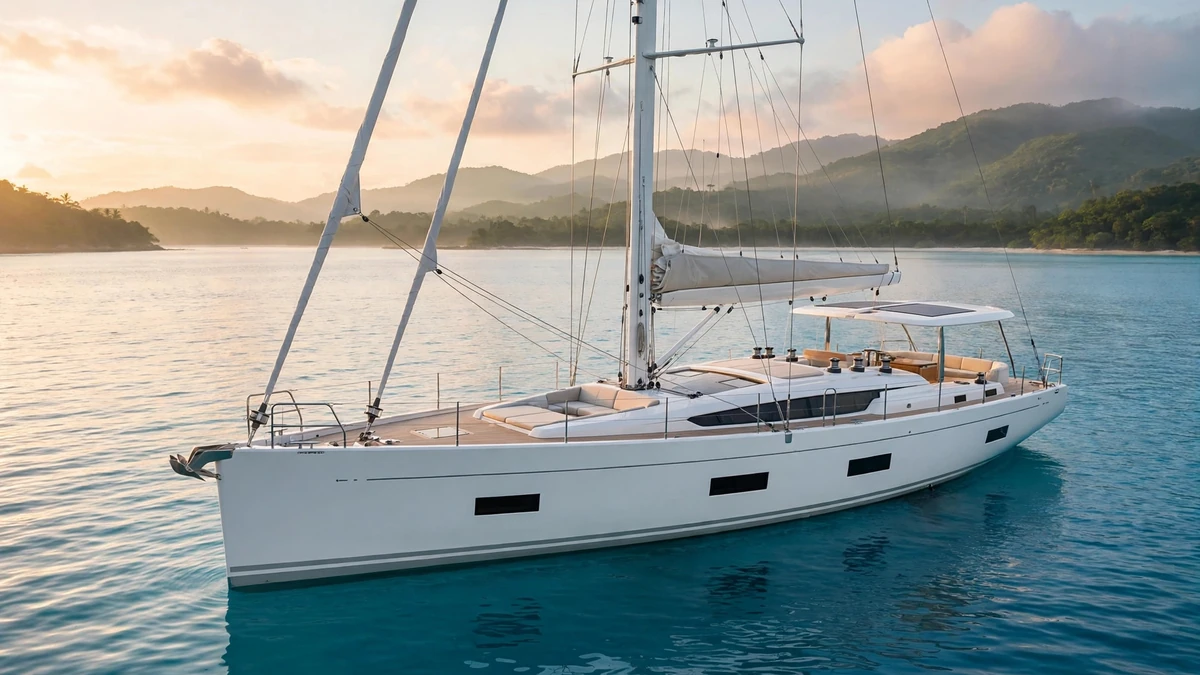
A sailing yacht is a different kind of holiday from a motor yacht. It moves at the speed of the wind, it leans gently into a breeze, and it arrives in a new anchorage without the hum of an engine. For people who love the sea itself, that is the point. The best sailing yachts for 2027 are not the fastest or the most technical. They are the ones that combine real sailing with the comfort of a luxury charter: a good crew, a calm deck, and a route that follows the wind instead of fighting it.
The mistake is to choose a sailing yacht for its size alone. A very large sailing yacht can be magnificent, but it needs a big crew, a deep harbour, and careful handling in a crowded anchorage. A mid-size sailing yacht is often the better holiday, because it can slip into smaller bays, anchor closer to shore, and sail properly in a light breeze instead of motoring through it. The right size depends on your group, your experience, and how much sailing you actually want to do.
Below are nine luxury yachts for sailing trips in 2027, from a 47-metre classic sloop to a 106-metre three-masted superyacht. Each one is described by what it does well, what to watch for, and who it suits best, so you can choose a yacht for the sailing you want, not just for the number on the brochure.
Key takeaways
- The best sailing yachts combine real sailing with luxury comfort: a good crew, a calm deck, and a route that follows the wind.
- Mid-size sailing yachts often make better holidays than very large ones, because they anchor closer to shore and sail well in light wind.
- Ask how much of the trip will be sailed and how much motored, because the answer changes the feel of the whole week.
- Check the crew: a good sailing crew will let guests help with the sails if they want to, and will handle everything if they do not.
- No yacht can guarantee wind, and a sailing itinerary that cannot change with the weather will disappoint; flexibility is part of the trip.
What a sailing yacht trip actually covers
A sailing yacht trip is a charter where the sailing is part of the holiday, not just the transport. The yacht moves between islands under sail when the wind allows, anchoring in sheltered bays for swimming, lunch and the night. Most days follow a simple rhythm: a morning sail to a new anchorage, a slow afternoon on the water, and an evening in a quiet bay with dinner on deck.
The regions that suit sailing best are the ones with steady, predictable wind. The Mediterranean in summer has reliable afternoon breezes and short passages between islands, which is why the Greek islands, the Amalfi coast and the Balearics are so popular. The Caribbean in winter has the trade winds, long reaches between islands, and warm water. The South Pacific has longer passages and more open water, which suits experienced sailors and longer charters.
What the yacht adds is the feeling of sailing itself. The quiet of a boat moving under wind, the heel of the deck, the sound of the water along the hull. It also adds a crew who handle the sails, the navigation and the anchoring, so you can take part as much or as little as you like. Some guests want to steer and trim sails. Others want to sit on deck with a book while the crew do the work. A good sailing yacht suits both, because the crew are used to reading what a group wants.
How we chose these yachts and what to look for
Look first at the rig and the sailing performance. A yacht with a modern rig, good sails and a well-kept hull will sail properly in a light breeze, which matters more than top speed. Ask the broker how much of a typical week is sailed and how much is motored, because a yacht that motors most of the time is a motor yacht with a mast. A yacht that sails well in eight to twelve knots of wind will give you real sailing most days in the Mediterranean and the Caribbean.
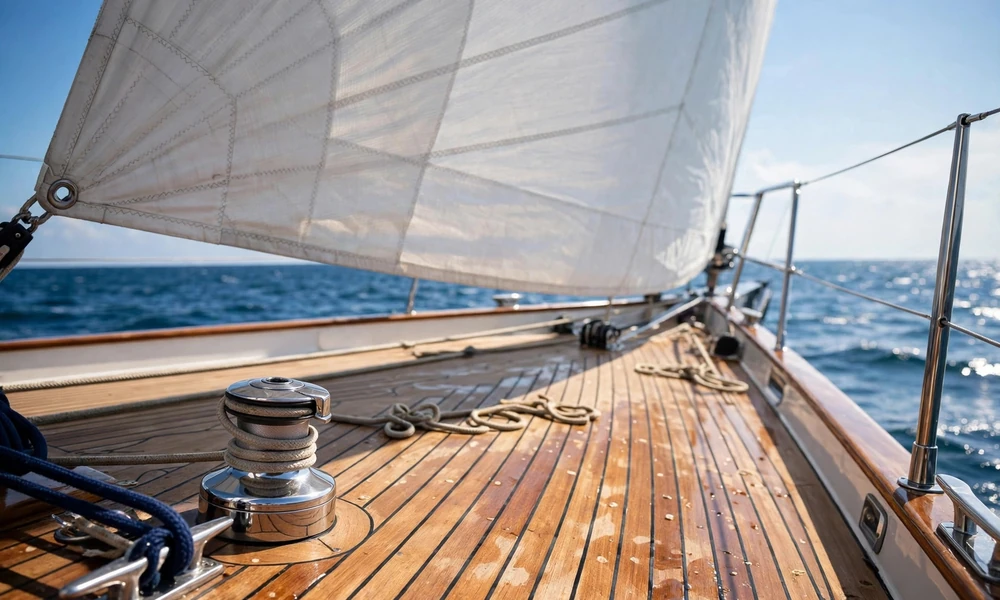
Look next at the deck and the living space. A sailing yacht needs a comfortable cockpit, shade, and a deck you can move around safely when the boat heels. Check the cabins too, because sailing yachts often have smaller cabins than motor yachts of the same length, and the space below deck is shaped by the hull. A yacht with a wide cockpit, a good bimini, and a swim platform is worth more than one with an extra cabin you will not use. Our guide to chartering a luxury yacht explains the booking basics, including how to read a charter agreement and what to ask before you sign.
Finally, check the crew and the itinerary. A good sailing crew will plan the route around the wind, not around a fixed schedule, and will change the plan if the forecast changes. Ask the broker which routes the yacht has actually sailed, not just which ones are on the brochure. A crew who know the Greek islands or the Grenadines well will know which anchorages are sheltered, which bays are quiet, and where to be when the wind picks up.
The 9 best luxury yachts for sailing trips 2027
S/Y Black Pearl
What we like: A 106-metre three-masted yacht with a striking rig, a large deck, and a full crew, built to sail properly at a scale few yachts can match.
What to consider: Very large, so it needs deep water and a big crew, and the experience is formal and grand rather than intimate. Length: 106 m. Guests: 12. Best for: Groups who want the grandest sailing yacht afloat. Charter price range: From around €1,400,000 per week.
S/Y Sea Eagle II
What we like: An 81-metre three-masted yacht with a modern rig, a large beach club, and a crew experienced in the Mediterranean and the Caribbean.
What to consider: A large yacht, so it anchors further out and needs a tender for shore, and the rate is high. Length: 81 m. Guests: 12. Best for: Groups who want a large, modern sailing yacht. Charter price range: From around €750,000 per week.
S/Y Maltese Falcon
What we like: An 88-metre three-masted yacht with a famous rotating rig, a large deck, and a reputation for sailing well in a wide range of conditions.
What to consider: A complex rig, so the crew is large and the yacht is best in open water rather than small bays. Length: 88 m. Guests: 12. Best for: Sailors who want a legendary yacht. Charter price range: From around €750,000 per week.
S/Y Aquijo
What we like: An 85-metre two-masted yacht with a large deck, a beach club, and a calm, well-run charter programme in the Mediterranean and the Caribbean.
What to consider: A deep draft, so it stays off shallow anchorages, and the rate reflects the size and the service. Length: 85 m. Guests: 12. Best for: Groups who want a grand ketch with strong sailing. Charter price range: From around €950,000 per week.
S/Y Vertigo
What we like: A 67-metre two-masted yacht with a modern rig, a large cockpit, and a crew known for relaxed, well-run charters in the Mediterranean.
What to consider: A big yacht for a sailing holiday, so it needs a tender for shore, and the interior is modern rather than classic. Length: 67 m. Guests: 11. Best for: Families who want a large, easy sailing yacht. Charter price range: From around €460,000 per week.
S/Y Twizzle
What we like: A 57-metre two-masted yacht with a classic look, a large deck, and a crew experienced in the Mediterranean, with good sailing in light wind.
What to consider: Smaller cabins than a motor yacht of the same length, and the deck is the main living space, so it suits groups who live outdoors. Length: 57 m. Guests: 10. Best for: Couples and small groups who love classic sailing. Charter price range: From around €400,000 per week.
S/Y Rosehearty
What we like: A 56-metre two-masted yacht with a beautiful classic interior, a large cockpit, and a crew who know the Mediterranean routes well.
What to consider: A classic design, so the cabins are smaller and the layout is traditional, and it suits groups who value character over space. Length: 56 m. Guests: 10. Best for: Groups who want a classic sailing yacht. Charter price range: From around €350,000 per week.
Rosehearty is the yacht to choose if you love the look and feel of a classic sailing yacht and want a week that feels like sailing, not like a hotel with a mast.
S/Y Andromeda La Dea
What we like: A 47-metre classic sloop with a warm interior, a large cockpit, and a crew experienced in the Mediterranean, at a more accessible rate than the larger yachts here.
What to consider: The smallest yacht here, so it suits a small group and the cabins are compact, and it is best in sheltered waters rather than open ocean. Length: 47 m. Guests: 10. Best for: First-time sailing charterers. Charter price range: From around €310,000 per week.
Andromeda La Dea is a good first sailing charter. It is big enough to be comfortable, small enough to feel like sailing, and the crew are used to guests who are new to it.
S/Y Zenji
What we like: A 57-metre two-masted yacht with a modern interior, a large deck, and a crew experienced in the Mediterranean and the Caribbean.
What to consider: A modern layout, so it feels more like a superyacht than a classic sailing yacht, and the rate is mid-range for this list. Length: 57 m. Guests: 10. Best for: Groups who want modern comfort with real sailing. Charter price range: From around €330,000 per week.
Zenji suits a group that wants a contemporary sailing yacht with good space, a strong crew, and a route that follows the wind rather than a fixed plan.
Which sailing yacht is right for your trip
Start with how much sailing you want. If you want to sail every day and take part in handling the boat, choose a mid-size yacht like Twizzle or Rosehearty, where the sailing is hands-on and the crew welcome help. If you want to sit on deck while the crew sail, any of these yachts will work, but a larger one like Aquijo or Sea Eagle II gives you more space to relax in.
Next, think about the region. The Mediterranean suits mid-size yachts, because the passages are short and the anchorages are close together. The Caribbean suits larger yachts, because the passages are longer and the trade winds are steady. The South Pacific suits the largest yachts and the most experienced crews, because the distances are long and the water is open. A guide to luxury hotels in Santorini is worth reading alongside this one, because many sailing charters start or end in the Cyclades, and the hotels there know the same winds and anchorages.
Finally, be honest about your group. A small group of experienced sailors will be happiest on a 47 to 57-metre yacht, where the sailing feels real and the crew are part of the trip. A larger group, or one with children, will be happier on a 67 to 85-metre yacht, where there is more space, more crew, and more room to spread out. Ask the broker how the crew handle mixed experience, because the answer tells you more than the brochure does.
The caveats that matter
Sailing is weather-dependent, and a sailing itinerary that cannot change will disappoint. Wind can drop for a day, or pick up more than expected, and a good crew will change the route rather than force a passage. That flexibility is part of the trip, not a failure of planning. Always ask what happens if the weather changes, and make sure the charter agreement covers a change of itinerary clearly.
| Detail | What is known |
|---|---|
| Best sailing regions | Mediterranean in summer, Caribbean in winter, South Pacific for longer passages |
| How much is sailed | Ask the broker; a good sailing yacht sails most of the week in fair wind |
| Who should take part | Anyone who wants to; a good crew welcome help and handle everything if you do not |
| What to confirm is included | Fuel, food and drink, crew tips, and local taxes, which are usually extra |
| What to bring | Soft-soled shoes, a light jacket for evenings, and sun protection for long days on deck |
| When to book | Six to twelve months ahead for peak season in the Mediterranean and Caribbean |
| What affects the route | Wind, weather and sea state; a good crew change the plan rather than force a passage |
| What no yacht can guarantee | Wind on any given day, or a fixed itinerary in changing weather |
Charter prices in this guide are indicative weekly rates, usually before tax, fuel, food and crew tips, and they change with season, region and availability. Confirm the full price in writing with the broker before you commit, and ask what the plan is if the wind drops or the weather turns. A good charter agreement covers that clearly, and a good crew will have a sheltered alternative ready.
Checklist: choosing a sailing yacht honestly
Use these checks before you book, and again before you board.
- Check the sailing: ask how much of a typical week is sailed and how much is motored.
- Check the deck: a comfortable cockpit, shade, and a deck you can move around safely.
- Check the crew: ask whether guests can help with the sails and how the crew handle mixed experience.
- Check the cabins: sailing yachts often have smaller cabins than motor yachts of the same length.
- Check the itinerary: a good crew plan around the wind, not a fixed schedule.
- Check the price in writing: confirm the full cost, including tax, fuel, food and tips.
Frequently asked questions
Do I need sailing experience to charter a sailing yacht?
No. The crew handle the sails, the navigation and the anchoring. You can help as much or as little as you like, and most crews are happy to teach guests who want to learn.
What happens if there is no wind?
The yacht motors to the next anchorage. A good crew will plan around the forecast, and a calm day is often a good day for swimming, paddleboarding and a long lunch on deck.
Is a sailing yacht safe for children?
Yes, with supervision. The crew will brief children on deck safety, provide life vests, and choose calm anchorages. Tell the crew the children’s ages before you board.
How much of the week will we spend under sail?
It depends on the region and the weather. In the Mediterranean in summer and the Caribbean in winter, most passages are sailed. Ask the broker for a realistic estimate for your dates.
Can a sailing yacht visit the same places as a motor yacht?
Mostly, yes, but more slowly. A sailing yacht covers shorter distances each day, so the itinerary is tighter. A guide to St Barts covers an island that suits both, with sheltered anchorages and good sailing between the islands.
What should I pack for a sailing yacht trip?
Soft-soled shoes, a light jacket for the evening, sun protection, and a small soft bag rather than a hard suitcase. The crew will tell you what space is available in the cabins.
The bottom line
The best luxury yacht for a sailing trip in 2027 is the one that sails well in the wind you will actually get, with a crew who plan around the weather and a deck you enjoy spending the day on. A mid-size yacht will often serve you better than a very large one, because it sails properly in light wind and anchors closer to shore.
Choose the region first, then the size, then the yacht, and confirm the full price and what is included before you commit. Do that, and the week will be measured in quiet mornings under sail and evenings at anchor, which is what a sailing trip is for.