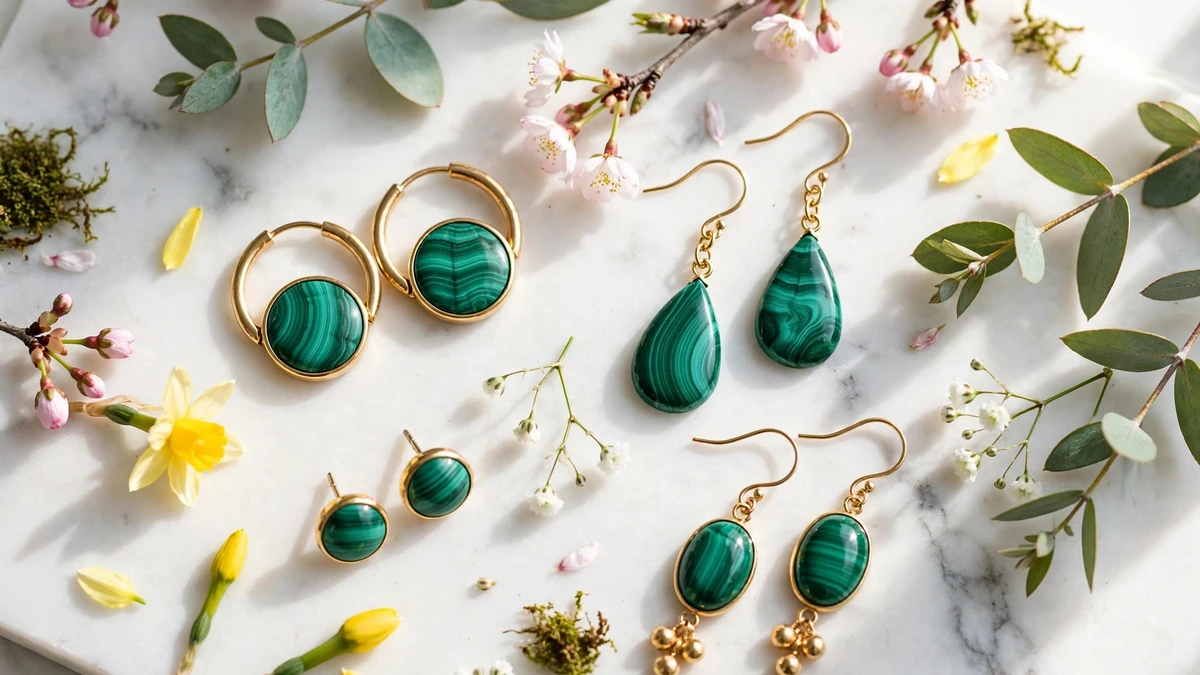

Malachite is the green stone that refuses to be quiet. Its bands of deep forest green and pale mint swirl across the surface like a landscape seen from above, and no two stones look alike. In spring, when wardrobes turn lighter and brighter, a pair of malachite earrings brings a bold, natural colour that stands out without needing a single diamond to help it.
The problem is that malachite is also one of the softest stones commonly sold in earrings, and one of the most imitated. It scratches easily, hates ultrasonic cleaners and acids, and is often stabilised with resin or copied in dyed stone, glass, and plastic. A good pair should be honest about all of that: a natural stone, a protective setting, and a price that reflects the craftsmanship rather than a fantasy about rarity.
Below are nine malachite earrings worth considering for spring 2027, from classic studs to longer drops. Each one is described by what it is good at, what to watch for, and who it suits best, so you can choose with your eyes open, not just by the colour in the photo.
Key takeaways
- Malachite is a copper carbonate mineral, famous for its vivid green bands and swirls, with no two stones ever looking the same.
- It is soft, at Mohs 3.5 to 4, so it needs a bezel setting and gentle care, and it should never go in an ultrasonic or steam cleaner.
- Stabilising with resin is standard practice and fine when disclosed, but dyed howlite, dyed jasper, glass, and plastic imitations are common.
- Look for even, vivid banding, a secure bezel, and a price that matches the metal and craftsmanship rather than a precious gem.
- Malachite has no proven healing properties and is not an investment stone, so buy it because you love the pattern, not because it will gain value.
What malachite actually is
Malachite is a copper mineral, formed in the oxidised zones of copper deposits, and its colour comes from the copper itself. The stone grows in layers, which is why it shows those unmistakable bands, swirls, and bullseye patterns in shades of green from almost black to pale mint. A good piece looks like a tiny landscape, and that pattern is the whole point of the stone. If the banding looks printed on or too regular, it probably is not malachite at all.
That beauty comes with a weakness. Malachite is soft, at Mohs 3.5 to 4, which makes it one of the most delicate stones sold in earrings. It scratches on hard surfaces, chips if knocked, and reacts badly to acids, including vinegar, lemon juice, and some perfumes. It also needs care in the workshop: the dust produced when cutting malachite is toxic, which is why reputable makers stabilise the stone with resin and cut it with proper protection. Stabilising is normal, honest practice, and it makes the stone tougher, but a seller should say so.
For spring, malachite’s deep green is a natural partner for the season’s lighter colours. It looks striking against cream, white, and pale yellow, and it pairs beautifully with gold, which warms the green, or silver, which keeps it cool. Because the pattern is so bold, the setting should stay simple. A plain bezel lets the stone do the talking.
How we chose these earrings and what to look for
Look first at the pattern. Real malachite has vivid, irregular bands that flow into each other, with sharp contrasts between dark and light green. Dyed howlite and dyed jasper tend to show grey or brown undertones and a softer, blurrier pattern, while glass and plastic imitations look too smooth and too even. If the pattern looks like it was painted on, walk away.

Look next at the setting. A bezel is almost essential for malachite, because it protects the soft edges of the stone from knocks and scratches. Low prongs can work for a well-cut stone, but tall, thin prongs leave too much of the stone exposed. Check that the stone sits firmly, the back is secure, and there are no gaps where the stone could catch on fabric. Our guide to the best diamond earrings of 2027 explains the same setting checks in more detail, and they matter even more for a soft stone like this one.
Finally, look at the price and the disclosure. Malachite itself is affordable, so most of what you pay should be for the metal, the craftsmanship, and the brand. Ask whether the stone has been stabilised, and expect a yes. That is normal. What you should not accept is a seller who will not answer, or a price that suggests the stone is rare or precious. It is neither, and that is part of its charm.
The 9 best malachite earrings for spring 2027
Tiffany & Co. Studs
What we like: A classic bezel-set stud in sterling silver, with a well-chosen stone and a polished, understated finish. What to consider: Premium price for the brand name, and the stone is small, so the banding is subtle rather than dramatic. Stone: Malachite, cabochon cut. Setting: Bezel, sterling silver. Best for: Everyday wear, a first pair of malachite earrings. Price range: Premium.
The Tiffany stud is the safe, polished choice. It will not shout, but it will look right with everything from a white shirt to a spring dress, and the bezel keeps the soft stone protected.
Cartier Studs
What we like: Understated elegance, a secure screw back, and a stone chosen for vivid, even banding. What to consider: Luxury pricing, and the design is deliberately plain, so it suits minimal tastes only. Stone: Malachite, cabochon cut. Setting: Bezel, 18k gold. Best for: A quiet luxury look, gifting. Price range: Luxury.
Cartier does simple very well. These studs are for someone who wants the green to be a whisper rather than a statement, and who values the setting as much as the stone.
David Yurman Studs
What we like: A sculptural cable setting that gives the stone a modern frame, with a comfortable post and a secure back. What to consider: The cable design is distinctive, so it will not suit everyone, and the price sits in the luxury bracket. Stone: Malachite, cabochon cut. Setting: Cable bezel, sterling silver with 18k gold accents. Best for: A modern, sculptural look. Price range: Luxury.
David Yurman’s cable work turns a simple stud into something recognisable. If you like jewellery with a signature, this is the pair to try.
Mejuri Stud Earrings
What we like: Fair pricing for solid gold, a clean bezel setting, and a stone that is honestly described as natural, stabilised malachite. What to consider: The stone is modest in size, and the design is simple, so there is no drama here. Stone: Malachite, cabochon cut. Setting: Bezel, 14k solid gold. Best for: Everyday gold earrings, a first fine-jewellery buy. Price range: Mid-range.
Mejuri is the sensible middle ground. You get solid gold and a real stone at a price that makes sense, without paying for a heritage brand name.
Monica Vinader Studs
What we like: A neat, well-finished stud in gold vermeil, with good banding and a secure butterfly back. What to consider: Vermeil is gold over silver, so it needs gentler care than solid gold, and the stone is small. Stone: Malachite, cabochon cut. Setting: Bezel, 18k gold vermeil on sterling silver. Best for: An affordable everyday pair, trying the colour before committing to solid gold. Price range: Affordable to mid-range.
A good entry point. If you are not sure malachite is your colour, this is a low-risk way to find out, and the quality is better than the price suggests.
Missoma Stud Earrings
What we like: A modern, slightly organic setting, vivid banding, and a price that leaves room to buy the matching necklace. What to consider: Gold vermeil, so keep them dry and store them carefully, and the pattern varies a little from pair to pair. Stone: Malachite, cabochon cut. Setting: Bezel, 18k gold vermeil on recycled sterling silver. Best for: Layering with other gold jewellery, a spring wardrobe refresh. Price range: Affordable to mid-range.
Missoma’s strength is making everyday jewellery feel considered. These studs are easy to wear, easy to match, and easy on the budget.
Maria Black Studs
What we like: A slightly edgier, sculptural setting that suits a modern wardrobe, with a deep green stone. What to consider: The design is more directional than classic, and the price reflects the brand’s positioning. Stone: Malachite, cabochon cut. Setting: Bezel, sterling silver. Best for: A contemporary look, wearing with silver jewellery. Price range: Mid-range.
If classic studs feel too safe, Maria Black is the answer. The stone is the same, but the attitude is different, and it shows.
Astrid & Miyu Drops
What we like: A longer drop that shows off the banding as it moves, with a light, comfortable feel on the ear. What to consider: Drops catch on hair and scarves more than studs, and the soft stone is exposed, so handle them with care. Stone: Malachite, faceted drop. Setting: Prong, 18k gold plated on recycled sterling silver. Best for: Evenings, spring occasions, wearing with hair up. Price range: Affordable to mid-range.
Drops are the way to make malachite feel like an occasion. The banding is more visible in a larger stone, and the movement is half the point.
Thomas Sabo Drops
What we like: A playful, well-made drop with a good-sized stone and a secure hook, at a fair price. What to consider: The design is bolder than the studs on this list, and gold plating will wear with heavy use. Stone: Malachite, faceted drop. Setting: Prong, 18k gold plated sterling silver. Best for: A statement spring pair, gifting. Price range: Affordable.
Thomas Sabo is the fun option. If you want malachite to be noticed rather than whispered, these drops do the job.
Which malachite earrings are right for you
Start with how you wear earrings. If you wear them every day and rarely take them off, choose a bezel-set stud in solid gold or sterling silver, with a screw or secure butterfly back. A stud sits close to the ear, catches less on clothing, and keeps the soft stone out of harm’s way. The Tiffany, Mejuri, and Monica Vinader studs all fit that brief, at very different prices.
If you want earrings for occasions, choose a drop. A larger malachite stone shows the banding far better than a small stud, and a drop moves with you in a way that makes the pattern come alive. Wear drops with your hair up, or accept that you will be untangling them from a scarf now and then. A guide to diamond necklaces is a useful companion read here, because the same thinking about scale applies: a bigger stone shows more of what makes it special.
Colour and pattern are the last decision, and they are worth taking seriously. Some malachite is dark and dramatic, with near-black bands; some is lighter, with soft mint swirls. Neither is better, but they suit different wardrobes. A darker stone feels richer and more formal, while a lighter stone feels fresher and more spring-like. Look at the stone in daylight before you commit, and remember that no two pieces will ever match exactly. That is the nature of the stone, not a flaw.
The caveats that matter
Malachite is a beautiful stone, but it is also a demanding one, and it is one of the most imitated stones in the trade. The most common problems are dyed imitations, glass and plastic copies, and sellers who do not disclose stabilising or who make unrealistic claims about healing or investment value. The table below covers the points that matter most.
| Detail | What is known |
|---|---|
| What it is | A copper carbonate mineral, famous for vivid green bands and swirls |
| Hardness | Mohs 3.5 to 4, soft, scratches and chips easily, needs a bezel setting |
| Stabilising | Resin stabilising is standard practice and fine when disclosed |
| Common imitations | Dyed howlite, dyed jasper, glass, and plastic are all sold as malachite |
| Cleaning | Warm soapy water and a soft cloth only; never ultrasonic or steam |
| What to avoid | Acids, perfume sprayed directly on the stone, hard knocks, harsh chemicals |
| Handling | Store separately from harder stones, and take them off for sport and housework |
| What it does not do | It has no proven healing properties and is not an investment stone |
If a seller claims a stone is natural and untreated, ask for that in writing, and be suspicious of prices that are either suspiciously low or suspiciously high for the metal involved. A real malachite stud in silver should not cost a fortune, and a gold pair should not cost as much as an emerald. The stone is affordable; the value is in the setting and the craftsmanship.
Checklist: choosing malachite earrings honestly
Use these checks before you buy, and again when the earrings arrive.
- Check the pattern: vivid, irregular green bands, not a flat, printed, or too-regular design.
- Check the setting: bezel preferred, low prongs at most, a secure back, and a stone that does not wobble.
- Check the metal: solid gold or sterling silver for everyday wear; vermeil and plating need gentler care.
- Check the disclosure: ask whether the stone is stabilised, and get the answer in writing.
- Check the price: most of the cost should be the metal and craftsmanship, not the stone.
- Check the return policy: buy from a seller who accepts returns, so you can inspect the stone in daylight.
Frequently asked questions
Is malachite a real gemstone?
Yes. Malachite is a genuine copper mineral, and it has been used in jewellery and decoration for thousands of years. It is a semi-precious stone, which means it is real and beautiful, but also affordable, so it should be priced accordingly.
How can I tell real malachite from an imitation?
Real malachite has vivid, irregular bands with sharp contrasts between dark and light green, and the pattern flows naturally. Dyed howlite and jasper show grey or brown undertones, while glass and plastic look too smooth and too even. If the pattern looks printed on, be suspicious.
Can I wear malachite earrings every day?
Yes, in a bezel setting, with care. Malachite is soft, so take the earrings off for the gym, swimming, and heavy housework, and store them separately so they do not get scratched by harder stones.
Why is my malachite described as stabilised?
Stabilising means the stone has been treated with resin to make it tougher and easier to cut and polish. It is standard practice for malachite, it does not change the look, and it is nothing to worry about, as long as the seller discloses it.
How do I clean malachite earrings?
Warm water, mild soap, and a soft cloth are enough. Rinse well and dry gently. Never use an ultrasonic cleaner, a steam cleaner, or any acid, and never spray perfume directly onto the stone.
Is malachite worth anything as an investment?
No. Malachite is abundant and affordable, and it does not appreciate in value. Buy it because you love the pattern and the colour. A guide to non-diamond engagement rings makes the same point about coloured stones generally: choose them for how they look, not for what they might be worth one day.
The bottom line
The best malachite earrings for spring 2027 are not the most expensive or the most dramatic. They are the pair with a vivid, natural banded stone, a protective bezel setting, and a price that matches what the stone actually is. A bezel-set stud in gold or silver is the safest everyday choice; a larger drop is the better pick for occasions, where the pattern can really show. Either way, look for vivid, irregular banding that changes as the stone moves.
Choose a stone with lively banding, check it in daylight, ask whether it has been stabilised, and buy from a seller who accepts returns. Do that, and a pair of malachite earrings will be one of the boldest, most distinctive additions to your spring jewellery box.