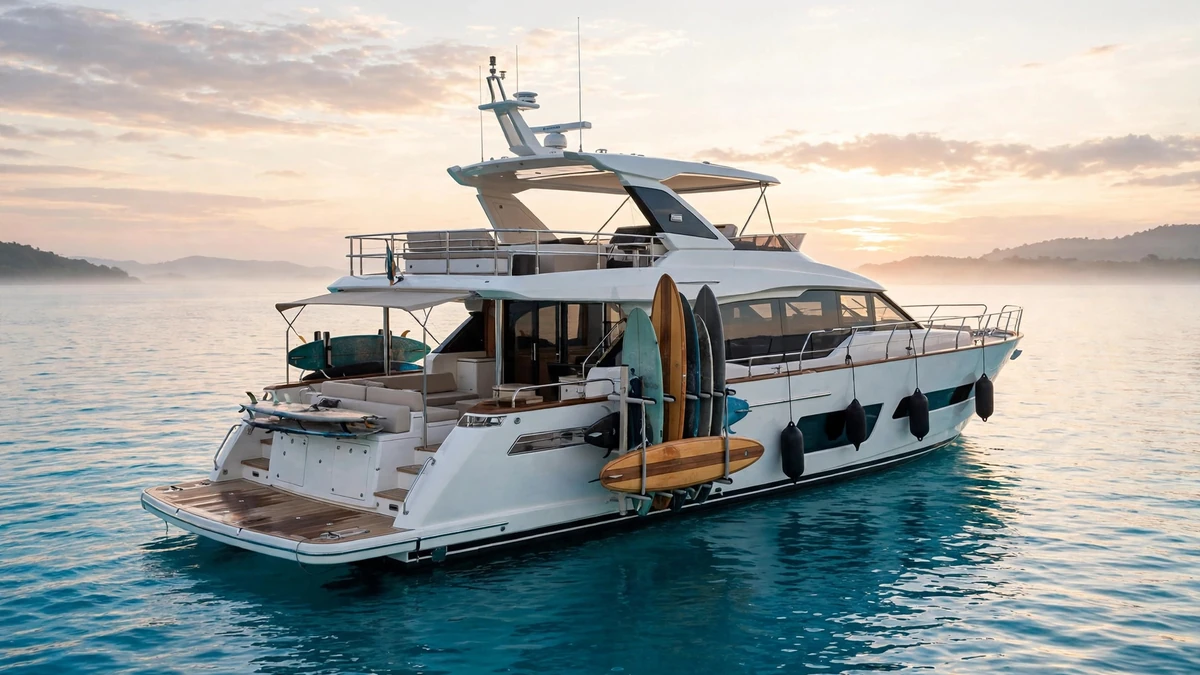
Surfing from a yacht is a different sport from surfing at a beach break. The yacht is your hotel, your base and your transport all at once, and the best surfing yachts are built around that idea, with a proper tender, a full rack of boards, a crew who know how to read a swell, and enough deck space that the surfer waiting their turn is as comfortable as the surfer in the water.
The problem is that not every big yacht is a good surfing yacht. A yacht can be long, luxurious and beautifully finished and still be a poor choice for a surfing trip, because its tender is too small, its board selection is too narrow, or its itinerary never gets near a proper break. Length and luxury matter, but the tender, the boards and the crew’s surf experience matter more.
Below are nine yachts worth considering for a surfing trip in 2027, from a 162-metre explorer with a full water-sports garage to a nimble 43-metre explorer built for days on the water. Each one is described by what it does well, what to watch for, and who it suits best, so you can choose with your surfing in mind, not just the brochure.
Key takeaways
- The tender is the real surf boat, so check its size, engine and capacity before you check the yacht’s length.
- A good surfing yacht carries several boards, in a range of sizes and shapes, plus leashes, wax and rash guards, not one board for the whole group.
- Surfing needs swell and the right wind, so ask which breaks the yacht plans to visit and how the captain reads the forecast.
- Charter rates are weekly and indicative, and they exclude tax, fuel, food, drinks, tips and licences.
- No yacht can guarantee swell, a clean break or a particular wave on a given day, and everyone should surf with a buddy and a leash.
What surfing on a yacht actually means
On a yacht charter, surfing happens at reef breaks and island passes reached by tender. The yacht anchors nearby in calm water, the tender carries surfers and boards to the break, and the yacht stays close enough that a tired surfer can come back for lunch, shade and a freshwater shower. That is why the tender matters so much. A tender with a strong outboard, room for several boards and a driver who knows the break is the difference between a good session and a frustrating one.
The yacht itself provides the comfort around the surfing. After a session, surfers come back to a swim platform, cold drinks and a proper meal. The best surfing yachts also carry a full water-sports inventory, so a group of mixed abilities can all surf. A beginner needs a long, stable board and a gentle break. An experienced surfer wants a shorter board, a faster wave and a reef break with a clean wall.
Itinerary matters too. Surfing needs swell, which means open ocean exposure, and the right wind, which usually means offshore breezes in the morning. A good charter broker and captain will plan the route around the swell forecast, anchoring near the best breaks and moving on once the wind turns onshore. That planning is part of what you are paying for.
How we chose these yachts and what to look for
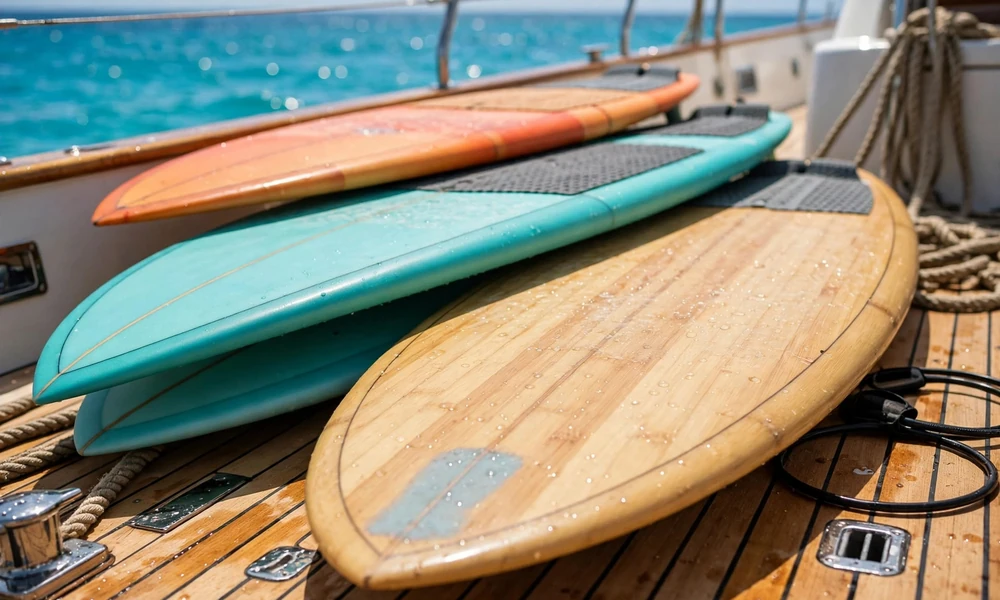
Look first at the tender and the surf inventory. Ask how long the tender is, how powerful its engine is, and how many boards it can carry at once. Ask how many surfboards the yacht carries, what sizes and shapes they are, and whether there are boards for beginners as well as experienced surfers. A yacht that lists surfing in its brochure but carries one board and no leashes is not a surfing yacht.
Look next at the crew. A good surf crew includes a tender driver who has surfed the local breaks and a deckhand who can spot, coach and help a tired surfer back on board. Ask whether the crew includes a dedicated surf guide or whether the captain drives the tender himself. The best charters brief every surfer on the break, the currents and the exit, and they never send a surfer out alone.
Finally, look at the yacht’s layout and the charter terms. A large swim platform, a beach club at water level and a garage that launches the tender quickly all make surf sessions smoother. Our guide to chartering a luxury yacht explains how weekly rates, the advance provisioning allowance and crew gratuity work, because those costs sit on top of the headline rate and they shape the real price of the trip.
The 9 best luxury yachts for surfing trips in 2027
M/Y Eclipse
What we like: A 162-metre yacht with one of the largest water-sports garages afloat, including a proper tender fleet, a full rack of boards and a crew experienced in running surf sessions in the Indian Ocean and the Pacific.
What to consider: The largest and most expensive yacht on this list, and it needs deep, sheltered anchorages, so it suits long trips rather than short hops. Length: 162 m. Guests: 24. Best for: Large groups and long expeditions. Charter price range: From about €2,500,000 per week.
Eclipse is the closest thing to a floating surf base. The scale of the garage means the tender, the boards and the safety kit are all properly organised, and the crew can run several activities at once.
M/Y Flying Fox
What we like: A 136-metre yacht with a strong tender, a well-stocked water-sports inventory and a crew used to running full days on the water for active guests.
What to consider: A big yacht with a big rate, and its size limits the shallow passes it can enter, so the captain plans surf spots carefully. Length: 136 m. Guests: 25. Best for: Experienced surfers and families. Charter price range: From about €3,000,000 per week.
Flying Fox suits a group that wants serious surf time plus the comfort of a large yacht. The tender is the workhorse, and the crew know how to keep sessions moving.
M/Y Serene
What we like: A 134-metre yacht with a large beach club, a proper tender and a water-sports programme that includes surfing alongside diving and paddleboarding.
What to consider: Premium pricing, and the beach club is busiest at anchor, so surf sessions are best scheduled early in the day. Length: 134 m. Guests: 24. Best for: Mixed groups with varied interests. Charter price range: From about €2,000,000 per week.
Serene works well when only part of the group wants to surf. The rest can swim, dive or relax on deck while surfers take turns at the break.
M/Y Dilbar
What we like: A 156-metre yacht with a strong tender fleet, a full water-sports inventory and a crew experienced in running surf sessions in the sheltered passes of the Indian Ocean.
What to consider: One of the largest yachts afloat, with a rate to match, and its best surf spots are often a short tender ride from the anchorage. Length: 156 m. Guests: 36. Best for: Large groups and luxury-first trips. Charter price range: From about €1,500,000 per week.
M/Y Kismet
What we like: A 122-metre yacht with a well-equipped water-sports garage, a large swim platform and a crew who run surf sessions as a daily routine, not an afterthought.
What to consider: Twelve guests is the limit, so large groups need to rotate, and the tender is the main surf boat, so a good swell forecast is essential. Length: 122 m. Guests: 12. Best for: Families and keen surfers. Charter price range: From about €1,800,000 per week.
Kismet hits a sweet spot of size, comfort and surf focus. The swim platform makes getting in and out of the water easy, which matters when surfers are paddling out all day.
M/Y Amadea
What we like: A 106-metre yacht with a strong tender, a full board selection and a crew experienced in surfing the reef breaks of the Pacific and the Indian Ocean.
What to consider: A large yacht with a large rate, and its surf programme is best for confident surfers rather than complete beginners. Length: 106 m. Guests: 16. Best for: Confident surfers and explorers. Charter price range: From about €1,200,000 per week.
Amadea is the choice for a group that wants to surf proper reef breaks in comfort. The crew are used to launching tenders at dawn and reading the swell before anyone else is awake.
M/Y Here Comes The Sun
What we like: An 83-metre yacht with a good-sized tender, a solid board selection and a crew who run surfing as a core part of the charter, not a favour.
What to consider: Twelve guests is the limit, and the tender is smaller than on the big explorers, so surf sessions are best at breaks close to the anchorage. Length: 83 m. Guests: 12. Best for: Small groups and first-time charters. Charter price range: From about €750,000 per week.
Here Comes The Sun is a sensible first surfing charter. The yacht is large enough to be comfortable and small enough that the crew know every guest by name.
M/Y Loon
What we like: A 67-metre yacht with a dedicated water-sports setup, a strong tender and a crew who know how to find the best breaks in less-visited anchorages.
What to consider: A smaller yacht with a simpler interior, and its surf programme suits confident surfers who are happy to paddle out in remote spots. Length: 67 m. Guests: 12. Best for: Confident surfers and small groups. Charter price range: From about €495,000 per week.
Loon suits a group that cares more about the waves than the wallpaper. The tender is well matched to the yacht, and the crew are hands-on with every session.
M/Y Seawolf X
What we like: A 43-metre explorer built for days on the water, with a fast tender, a practical deck and a crew who live and breathe water sports.
What to consider: The smallest yacht on this list, with simpler cabins and less deck space, so it suits surf-focused groups rather than luxury-first guests. Length: 43 m. Guests: 12. Best for: Serious surfers and explorers. Charter price range: From about €230,000 per week.
Seawolf X is the most surf-focused yacht here. If the group wants to surf all day and does not need a spa and a cinema, it is hard to beat for value.
Which surfing yacht is right for you
Start with the group. A family with children and beginners needs a yacht with several boards, a patient crew and a gentle break close to the anchorage. A group of experienced surfers needs a stronger tender, a better board selection and a crew who understand reef breaks, currents and priority rules. A mixed group needs both, plus space for the non-surfers to enjoy the trip.
Then think about the destination. The Maldives offers some of the most consistent reef breaks in the world, and our guide to luxury hotels in Santorini is a useful reference for the kind of island-hopping rhythm that also works well on a surf charter, moving between breaks as the wind and swell change. Indonesia offers longer, more powerful waves in season, with anchorages close to the breaks.
Finally, be honest about the budget. The weekly rate is only the start. Fuel, food, drinks, crew gratuity and the provisioning allowance all sit on top, and a larger yacht burns more fuel moving between anchorages. A smaller yacht with a good tender often delivers more surf time per pound than a larger yacht that spends its days steaming.
The caveats that matter
Surfing is a physical sport, and a yacht charter does not remove the risks. Reef breaks are shallow, currents are real, and falls happen at speed. A good charter minimises the risk with proper kit, a spotter, a qualified driver and clear rules, but it cannot remove it entirely. Everyone who surfs should be a confident swimmer, wear a leash, and agree the exit and the hand signals before the first paddle out.
| Detail | What is known |
|---|---|
| Who takes you to the break | The tender, with a driver who knows the local breaks |
| What the rate excludes | Tax, fuel, food, drinks, crew gratuity and licences |
| Best surf conditions | Swell with light offshore wind, usually cleanest in the early morning |
| Essential kit | Boards in several sizes, leashes, wax and rash guards |
| Who should not surf | Non-swimmers, anyone with a recent injury, and anyone who has been drinking |
| What to ask before booking | Tender size and engine, board inventory, crew surf experience |
| What no yacht can guarantee | Swell, a clean break, or a particular wave on a given day |
| When to surf | Morning sessions before the onshore wind, with rest days built in |
If anyone in the group is a beginner, tell the broker before booking. The crew can then plan shorter, easier sessions, bring a longer board and arrange basic coaching, rather than discovering on day one that nobody in the group has ever stood up on a surfboard.
Checklist: booking a surfing yacht honestly
Use these checks before you sign, and again before you board.
- Check the tender: ask its length, engine power and how many boards it can carry at once.
- Check the board inventory: several boards in a range of sizes and shapes, leashes, wax and rash guards.
- Check the crew: a driver experienced in surfing the local breaks, a spotter on every session, and a safety briefing before the first paddle out.
- Check the itinerary: anchorages near the best breaks, planned around the swell forecast, with flexibility if the wind changes.
- Check the full cost: weekly rate plus tax, fuel, food, drinks, gratuity and the provisioning allowance.
- Check the insurance: confirm the charter covers surfing and that every surfer is a confident swimmer.
Frequently asked questions
Do I need to be an experienced surfer to charter one of these yachts?
No. Most of these yachts carry boards for beginners and crews who can coach a first-timer. Tell the broker your level before booking, so the crew bring the right boards and plan easier, shorter sessions.
Is surfing included in the charter rate?
Usually the use of the yacht’s boards and tender is included, but fuel, food, drinks and crew gratuity are extra. Confirm exactly what is included in writing before you sign, because the details vary from yacht to yacht.
What is the best time of day to surf from a yacht?
Early morning, when the wind is light and offshore and the waves are cleanest. Afternoon winds often turn onshore and chop up the breaks, so most crews plan surf sessions before lunch and use the afternoon for swimming, diving or cruising.
Can children surf from a yacht?
Yes, if they are confident swimmers and the crew provide a suitable board, a leash and a rash guard. Children should always surf with a buddy, at a gentle break, and only in calm conditions. A family trip that mixes surfing with other activities, such as the kind of island itinerary in our guide to St Barts, works well when the yacht also offers swimming, paddleboarding and beach stops for the non-surfers.
What happens if there is no swell?
The captain will move the yacht to a break with better exposure or reschedule the session. A good charter builds flexibility into the itinerary, and the best yachts carry enough other activities that a flat day is still a good day.
How many people can surf in a day?
It depends on the break and the group. A typical session runs for one to two hours per surfer, so a group of eight can all surf in a morning if the crew keep the rotation tight. Larger groups should expect to split into surfing and non-surfing halves.
The bottom line
The best luxury yacht for a surfing trip in 2027 is not the longest or the most expensive. It is the one with the right tender, the right boards, a crew who know how to read a swell, and an itinerary built around the breaks. A smaller yacht with a strong water-sports programme will give you more surf time than a larger yacht that treats surfing as an afterthought.
Choose the yacht that matches your group’s level, confirm the tender and the board inventory in writing, and plan your surfing for the early morning. Do that, and a surfing charter becomes one of the most memorable ways to spend a week on the water.