

A nose screw can be the quietest piece of jewellery you own, and that is exactly what makes it work for the office. The small L-shaped or corkscrew post sits close to the nostril, the visible end is no bigger than a pinhead, and from a normal conversation distance it reads as a tiny glint rather than a statement. For many people that discretion is the whole point: they want to keep their piercing without making it the first thing a colleague notices.
The problem is that not every nose screw behaves well at work. A long or loose screw can catch on a scarf or a face mask, a bright crystal can flash under office lighting, and a cheap metal can irritate skin that spends eight hours under air conditioning. Choosing well means thinking about size, metal, and how the screw sits, not just how it looks in a product photo.
Below are nine nose screws worth considering for work in 2027, from a plain implant-grade titanium screw to small gold and crystal options that stay subtle. Each one is described by what it does well, what to watch for, and who it suits best, so you can choose with your working day in mind, not just a bestseller list.
Key takeaways
- A nose screw is one of the most discreet nose jewellery styles, because the visible end is small and sits flat against the nostril.
- Implant-grade titanium and niobium are the safest starting points for sensitive skin and long days at a desk.
- The smallest end that still feels secure is usually the best choice for work; a 1.5 to 2 millimetre end disappears at conversation distance.
- Wait until a piercing is fully healed before changing jewellery, and check your workplace dress code before wearing a new piece.
- No nose screw suits every workplace, and a piece that snags, spins, or irritates skin is not worth keeping for the sake of looking polished.
What a nose screw for work actually means
A nose screw is a straight or gently curved post with a small decorative end, held in place by an L-shaped bend or a corkscrew tail inside the nostril. The tail keeps the screw from sliding out, while the visible end stays close to the skin. Compared with a hoop or a ring, there is almost nothing to catch on clothing, and compared with a stud, the screw shape holds its position through a long day of talking, smiling, and moving around an office.
For work, the difference between a good screw and a distracting one is usually size and shine. A flat metal ball or a tiny crystal reads as neat and intentional. A large stone, a long post, or a bright coloured end draws the eye and can look out of place in a formal meeting. The most office-friendly screws are the ones you forget you are wearing until you catch a glimpse of them in a mirror.
Comfort matters as much as looks. A screw that is too long presses inside the nostril, a screw that is too short pulls at the piercing, and a screw made from a metal your skin dislikes will make itself known by the afternoon. Getting the fit and the metal right is what turns a nose screw from a piece you tolerate into a piece you can wear every working day without thinking about it.
How we chose these screws and what to look for
Look first at the metal. Implant-grade titanium and niobium are the usual recommendations for sensitive skin because both are nickel-free and well tolerated by most people. Solid gold is another good option if it fits your budget, while gold-plated pieces can wear through over time and expose a base metal underneath. If your skin has reacted to jewellery before, start with titanium or niobium and see how it settles.
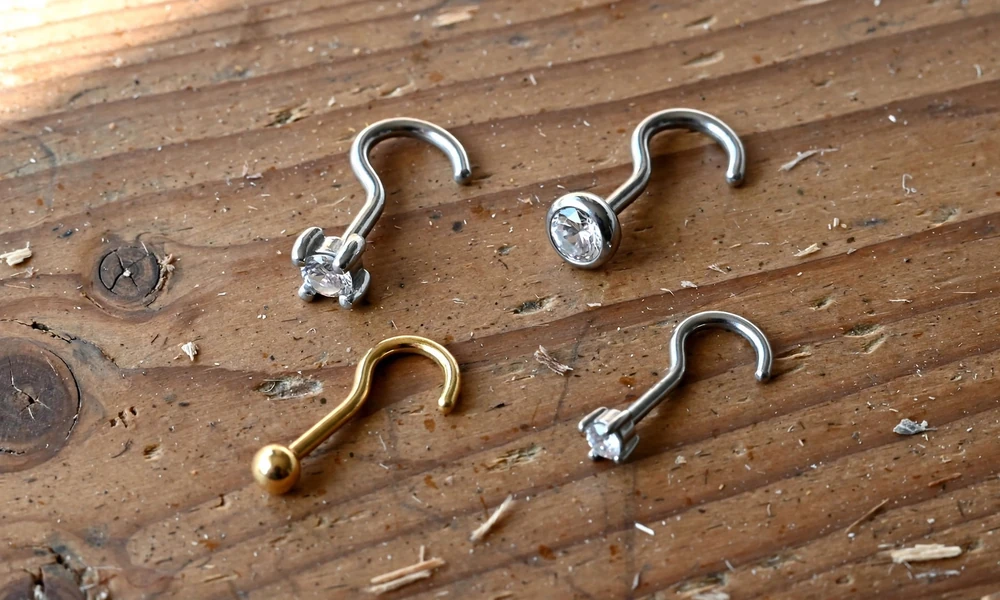
Look next at the end size and the shape of the tail. An end of 1.5 to 2 millimetres is discreet without being hard to see or handle, and a corkscrew tail tends to hold more securely than a simple L-shape, though it takes a little more care to put in. A screw that spins freely or slides in and out of the piercing is the wrong size, and it will keep distracting you. Our roundup of the best nose screws for women covers the same sizing ideas in more detail, and the advice applies just as well to a work wardrobe.
Finally, think about shine and colour. A plain polished ball in silver, gold, or black is the safest choice for a conservative office. A tiny crystal adds a little sparkle without shouting, and it works well if your workplace is relaxed about jewellery. Save the larger stones and coloured ends for evenings and weekends, when a bolder look has room to breathe.
The 9 best nose screws for work in 2027
The Classic Implant-Grade Titanium L-Shaped Screw
What we like: A plain, polished titanium screw with a small ball end, nickel-free and light enough to forget. It sits flat, does not catch, and suits almost every skin tone. What to consider: It is deliberately plain, so it will not add sparkle to an outfit. Best For: First work screw, sensitive skin. Material: Implant-grade titanium. Price Range: Low. Standout Feature: The small, flat ball end that stays put all day.
This is the screw to choose if you want the safest, simplest option for the office. It does nothing flashy, and that is precisely why it works in every meeting, from a job interview to a client lunch.
The Slim Gold-Tone Corkscrew Screw
What we like: A slim gold-tone screw with a corkscrew tail that holds securely, warm in colour and neat at the nostril. It pairs well with gold earrings and warm-toned outfits. What to consider: The gold tone is a coating, so it can fade with heavy wear. Best For: Warm skin tones, gold jewellery lovers. Material: Gold-tone titanium. Price Range: Low to mid. Standout Feature: The secure corkscrew tail.
The Tiny Crystal-Topped Screw
What we like: A tiny clear crystal set on a slim titanium post, just enough sparkle to catch the light without drawing attention across a room. What to consider: The crystal can flash under bright office lighting, so keep the stone small. Best For: A subtle touch of sparkle at work. Material: Titanium post, crystal end. Price Range: Mid. Standout Feature: The small, clear crystal that reads as a glint, not a statement.
The Nickel-Free Niobium Screw
What we like: A smooth niobium screw in a soft grey tone, completely nickel-free and kind to reactive skin. It is light, comfortable, and easy to wear for a full working day. What to consider: Niobium comes in fewer colours than titanium, so choices are limited. Best For: Very sensitive skin, metal allergies. Material: Niobium. Price Range: Low to mid. Standout Feature: The hypoallergenic, nickel-free metal.
The Rose Gold-Tone Titanium Screw
What we like: A soft rose gold tone on a titanium base, warm and flattering against most skin tones, with a small ball end that stays discreet. What to consider: The rose tone suits warm outfits best and can clash with cool silver jewellery. Best For: Warm and neutral skin tones. Material: Rose gold-tone titanium. Price Range: Low to mid. Standout Feature: The warm rose gold finish.
The Black Niobium Screw
What we like: A matte black niobium screw with a tiny ball end, modern and understated, with none of the shine that draws the eye. It suits dark hair and monochrome outfits well. What to consider: Black jewellery can look stark against very fair skin, so try the size first. Best For: Minimal and monochrome work looks. Material: Black niobium. Price Range: Low to mid. Standout Feature: The matte black finish that absorbs light instead of reflecting it.
The Fine 14k Gold Screw
What we like: A fine solid 14k gold screw with a small polished ball end, made to last and gentle on skin. It keeps its colour, unlike plated pieces, and looks polished in any setting. What to consider: It costs more than titanium or niobium, and the ball end is small. Best For: A long-term work piece, gold lovers. Material: Solid 14k gold. Price Range: High. Standout Feature: Solid gold that will not fade or flake.
The Tiny Opal-Topped Screw
What we like: A tiny opal set on a slim post, with a soft milky glow that is interesting up close and barely visible from a distance. What to consider: Opal is a soft stone, so handle it gently and keep it away from harsh cleaners. Best For: A gentle pop of colour at work. Material: Titanium post, opal end. Price Range: Mid. Standout Feature: The small opal with a soft, shifting glow.
The Two-Tone Titanium Screw
What we like: A titanium screw with a two-tone ball end, silver and gold together, so it matches either metal in the rest of your jewellery. It is practical and a little playful at once. What to consider: Two tones can look busy if the ball is large, so choose the smallest end. Best For: Mixed-metal jewellery wearers. Material: Two-tone titanium. Price Range: Low to mid. Standout Feature: The two-tone end that works with gold and silver alike.
Which nose screw is right for your workplace
Start with your dress code, not with the jewellery. A creative studio, a design office, or a relaxed tech workplace will usually accept a small crystal or a coloured end without a second thought. A law firm, a bank, or a client-facing role may call for the plainest option you own, a small polished ball in a neutral metal. If you are unsure, wear the plainest screw on your first week and watch what others wear.
Match the metal to your skin and to the rest of your jewellery. Titanium and niobium are the safest bets for sensitive skin, and they come in silver, gold, rose gold, and black tones, so there is no need to compromise on colour. Gold suits warm skin and warm outfits, silver suits cool skin and cool outfits, and a two-tone piece covers the days when you mix both. A guide to buying a nose screw walks through gauge and length as well, which matter just as much as the metal when you want a comfortable fit.
Think about your working day itself. If you wear a face mask, a headset, or a scarf for part of the day, a screw with a small, flat end and a secure corkscrew tail will cause the least trouble. If you spend the day on video calls, remember that a camera picks up shine more than the eye does, so a matte or small-ball end photographs more quietly than a crystal. The right screw is the one that lets you forget about it until you take it out at night.
The caveats that matter
A nose screw is a small piece of jewellery, but it sits in a piercing that needs respect. The most common mistake is changing jewellery before the piercing has healed, which usually takes four to six months. A new screw in an unhealed piercing can irritate the skin, lengthen healing, and make the piercing sore at work, which is the opposite of what you want. Wait until the piercing feels settled and comfortable before you swap anything.
| Detail | What is known |
|---|---|
| Best metal for sensitive skin | Implant-grade titanium or niobium, both nickel-free and well tolerated |
| Smallest work-friendly end | 1.5 to 2 millimetres, visible only at close range |
| When to change jewellery | Only once the piercing is fully healed, usually 4 to 6 months |
| What to check first | Your workplace dress code and any client-facing rules |
| What to avoid at work | Large crystals, long posts, and metals that irritate your skin |
| How to keep it secure | Check the fit each morning; a screw that spins needs adjusting |
| Cleaning | Rinse with warm water and a saline solution, as your piercer advised |
| What it does not do | It does not hide a piercing completely, and it cannot fix an unhealed one |
If your skin becomes sore, swollen, or red around the piercing, take the jewellery out only if your piercer advises it, and see a professional piercer or a clinician promptly. Do not try to treat a painful piercing with home remedies, and do not keep wearing a piece that is clearly irritating your skin in the hope that it will settle on its own.
Checklist: choosing a nose screw for work honestly
Use these checks before you buy, and again after a week of wearing the screw at work.
- Check the metal: implant-grade titanium or niobium if your skin is sensitive, solid gold if you want a lasting piece.
- Check the end size: 1.5 to 2 millimetres is discreet at conversation distance and easy to handle.
- Check the fit: the screw should sit close to the nostril without pulling, spinning, or sliding out.
- Check the dress code: read your workplace rules and watch what colleagues wear before choosing a bold end.
- Check the healing: only change jewellery once the piercing is fully healed, usually after 4 to 6 months.
- Check the comfort: wear it for a full working day at home first, including with a mask or headset, before taking it to the office.
Frequently asked questions
Can I wear a nose screw to work?
Yes, in most workplaces. A small, discreet nose screw is one of the least noticeable forms of nose jewellery, and many offices accept it without comment. Always check your workplace dress code first, especially for client-facing or uniformed roles, and choose the plainest end if you are unsure.
What size nose screw is most discreet for work?
An end of 1.5 to 2 millimetres is the most discreet size that still feels secure. It is visible up close as a tiny glint and barely noticeable at conversation distance. Larger ends, especially crystals over 2 millimetres, draw the eye more and suit relaxed workplaces better.
Which metal is best for sensitive skin?
Implant-grade titanium and niobium are the usual first choices because both are nickel-free and well tolerated by most people. Solid gold is another good option. Avoid cheap plated metals if your skin has reacted to jewellery before, as the coating can wear away and expose an irritating base metal.
How long should I wait before changing my nose screw?
Wait until the piercing is fully healed, which usually takes 4 to 6 months. Changing jewellery too early can irritate the piercing and slow healing. If you are unsure whether yours is ready, ask the piercer who did it before you swap the piece.
Is gold or silver better for the office?
Both work well, and the choice comes down to your skin tone and the rest of your jewellery. Gold suits warm skin and warm outfits, silver suits cool skin and cool outfits, and a two-tone end covers both. Our comparison of gold versus silver nose screws looks at how each metal behaves in everyday wear, including at work.
What if my nose screw keeps catching on things?
Choose a screw with a smaller, flatter end and a secure corkscrew tail, and check that the length is right for your nostril. A screw that sticks out too far will catch on scarves, masks, and clothing. If it keeps catching even after a refit, ask a piercer to check the size and shape for you.
The bottom line
The best nose screw for work in 2027 is not the prettiest or the most expensive. It is the one that fits your piercing, suits your skin, and stays out of your way through a long working day. For most people that means implant-grade titanium or niobium, a small end of 1.5 to 2 millimetres, and a secure tail that does not need adjusting between meetings.
Start with your dress code, choose a metal your skin trusts, and wear the screw for a full day at home before you take it to the office. That is the honest way to keep a piercing you love and a professional look you can rely on, without either one getting in the way of the other.