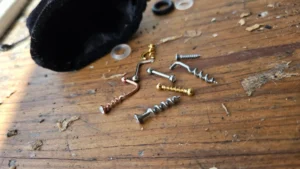
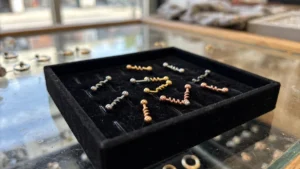
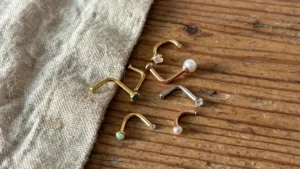
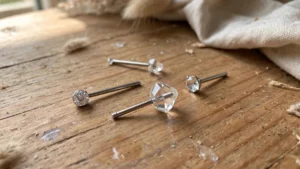
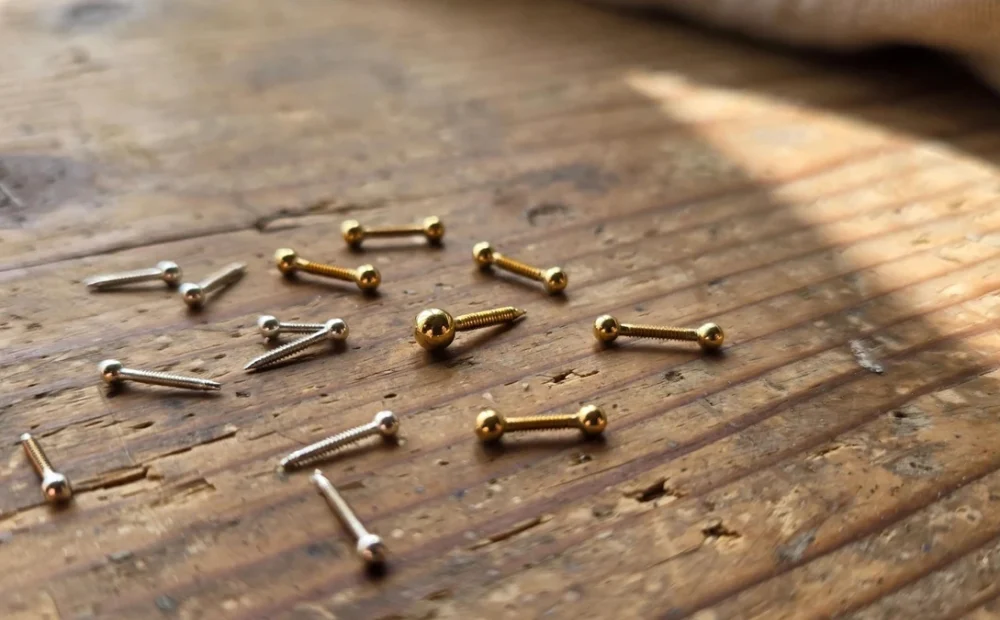
A nose screw is the quiet workhorse of nose jewellery. It is a small stud with a post that twists into a gentle corkscrew or L shape, so it sits flat against the nostril and stays put through sleep, scarves, and long days. It is the metal: gold or silver. Both are classic, both suit a nose screw, and both look completely different on the face.
Gold brings warmth. It catches the light softly, flatters warm and olive skin tones, and reads as jewellery first, piercing second. Silver brings coolness. Neither is better in the abstract. The right one depends on your skin, your other jewellery, how much care you are willing to give it, and what you can comfortably spend.
Below are nine comparisons that matter in 2027, from first impressions and skin tone to cost, care, and what the piece is worth years later. Each one is written so you can weigh gold against silver honestly, then choose the metal you will actually enjoy wearing every day.
Key takeaways
- Gold nose screws look warm and soft on the face and suit warm, olive, and deeper skin tones best, while silver looks crisp and cool and suits fair and cool-toned skin best.
- Solid gold and titanium are the safest metals for sensitive skin, while sterling silver can tarnish and may irritate skin that reacts to copper or nickel traces.
- A nose screw needs a fully healed nostril piercing, and the post length and gauge matter more than the stone or the design on the front.
- Gold costs more up front but holds value well, while silver costs less and is easier to replace, which suits people who like to change styles often.
- No metal makes a nose screw painless or risk-free, and a screw that is too short, too tight, or made from a metal your skin dislikes can irritate a healed piercing.
What gold and silver nose screws actually are
A nose screw is a nostril stud whose post bends into a corkscrew or L shape inside the nose. That bend is what holds it in place. The visible part is small, usually a ball, a tiny stone, or a flat disc, which is why the metal matters so much. With so little on show, the colour and finish of the metal do most of the work.
Gold nose screws are usually made from solid gold in 14-carat or 18-carat, or from gold-filled and gold-plated bases. The colour also varies: yellow gold is warm and traditional, white gold is cooler and closer to silver, and rose gold sits in between with a soft pink warmth.
Silver nose screws are usually sterling silver, which is 92.5 percent pure silver mixed with other metals, most often copper, to make it hard enough to wear. For most people, the practical choice is between solid gold and sterling silver, with titanium as a sensible third option for very sensitive skin.
How we chose these comparisons and what to look for
We chose these nine comparisons by looking at what actually changes the experience of wearing a nose screw: how it looks on the face, how it feels after a full day, how much care it needs, what it costs over time, and what it is worth when you stop wearing it.

Look first at the metal and the hallmark. Solid gold should be stamped 14k or 18k, and sterling silver should be stamped 925. If there is no stamp, ask before you buy, because an unstamped piece is often plated or filled, and that changes how long it will last. Our guide to gold jewellery for everyday wear explains the difference between solid, filled, and plated gold in more detail, and it is worth reading before you spend on a piece you plan to wear daily.
Look next at the post, not just the front. A nose screw post should be smooth, with no rough edges or sharp bends, and the length should match your piercing. Finally, check the stone setting if there is one. A stone held by prongs should sit firmly with no wobble, and a glued stone should sit flush with no visible glue.
The 9 comparisons that matter in 2027
First impressions and how they look on the face
What we like: Gold reads warm and soft, like a small point of light on the face, and it photographs beautifully in daylight. What to consider: Silver reads bright and crisp, and on some faces it can look sharper and more noticeable than gold. Best for: Gold for a soft, classic look; silver for a clean, modern look. Material: Solid 14-carat gold and sterling silver. Price range: Gold from around £40 to £250; silver from around £12 to £60. Standout feature: Gold’s warmth flatters the face; silver’s brightness draws the eye.
Warmth against skin tone
What we like: Gold warms up olive, warm, and deeper skin tones, and it sits beautifully beside warm hair colours. What to consider: Silver cools down fair and cool-toned skin, and it can look washed out against very warm skin. Best for: Gold for warm and olive undertones; silver for cool and fair undertones. Material: Yellow gold and sterling silver. Price range: Gold from around £40 to £250; silver from around £12 to £60. Standout feature: The right metal makes skin look healthier and more even.
Everyday wear and durability
What we like: Solid gold is hard-wearing, resists tarnish, and keeps its colour for years with minimal care. What to consider: Sterling silver scratches more easily and tarnishes, so it needs more attention to stay bright. Best for: Gold for daily wear with little upkeep; silver for occasional wear or for people who enjoy cleaning their jewellery. Material: Solid 14-carat gold and sterling silver. Price range: Gold from around £40 to £250; silver from around £12 to £60. Standout feature: Gold holds its finish; silver needs regular polishing.
Tarnish, care and upkeep
What we like: Gold needs almost no care beyond a rinse in warm water and a soft cloth. What to consider: Silver tarnishes in air and moisture, so it needs a silver cloth or a gentle dip to stay bright. Best for: Gold for low-maintenance wearers; silver for people who do not mind a short weekly clean. Material: Solid gold and sterling silver. Price range: Gold from around £40 to £250; silver from around £12 to £60. Standout feature: A silver cloth restores shine in under a minute.
Comfort and weight on the face
What we like: Both metals are light at nose-screw size, and a well-made screw is barely noticeable after a day. What to consider: Gold is denser than silver, so a chunky gold screw can feel slightly heavier, while a thin silver post can bend if handled roughly. Best for: Either metal for all-day comfort, as long as the post length and gauge are right. Material: Solid gold, sterling silver, and titanium for very sensitive skin. Price range: Gold from around £40 to £250; silver from around £12 to £60. Standout feature: A smooth post and the right length matter more than the metal for comfort.
Cost for one screw and for a collection
What we like: Silver is affordable, so building a small collection in different stones and finishes is easy. What to consider: Gold costs several times more, so a collection takes longer to build, but each piece lasts longer. Best for: Silver for trying styles and changing often; gold for one or two pieces worn every day. Material: Sterling silver and solid 14-carat gold. Price range: Silver from around £12 to £60; gold from around £40 to £250. Standout feature: One gold screw can outlast five silver ones.
Matching outfits and other jewellery
What we like: Gold pairs naturally with warm metals, autumn colours, and classic outfits, while silver pairs with cool metals, monochrome, and modern looks. What to consider: Mixing metals is fine, but a gold screw with silver earrings can look accidental if the tones clash. Best for: Gold with warm wardrobes; silver with cool wardrobes. Material: Yellow gold, rose gold, and sterling silver. Price range: Gold from around £40 to £250; silver from around £12 to £60. Standout feature: Matching the screw to your everyday jewellery makes the whole look feel deliberate.
Occasion and dress code
What we like: Gold reads as classic and dressed-up, which suits weddings, formal dinners, and workplaces with a traditional dress code. What to consider: Silver reads as modern and minimal, which suits creative workplaces, festivals, and casual settings. Best for: Gold for formal and traditional occasions; silver for casual and creative ones. Material: Solid gold and sterling silver. Price range: Gold from around £40 to £250; silver from around £12 to £60. Standout feature: A small gold screw is the easiest nose jewellery to wear to a formal event.
Keeping it afterwards: resale and keepsake value
What we like: Solid gold holds its value because the metal itself is worth something, and a well-made gold screw can be resold or kept as a keepsake. What to consider: Sterling silver has little resale value, because the metal is cheap and the piece is small. Best for: Gold if you want value that lasts; silver if you are buying to wear, not to keep. Material: Solid 14-carat or 18-carat gold and sterling silver. Price range: Gold from around £40 to £250; silver from around £12 to £60. Standout feature: A gold nose screw is a small piece of jewellery with real material value.
Which nose screw is right for you
Start with your skin. If your skin is sensitive, or if you have reacted to jewellery before, solid gold or titanium is the safest choice, because both are unlikely to cause a reaction. If you are unsure, wear a silver screw for a week and watch for redness, itching, or a sore feeling that does not settle. If any of those appear, switch to gold or titanium.
Next, look at the jewellery you already wear. A gold screw makes sense if your everyday pieces are gold, and a silver screw makes sense if they are silver. Our guide to the best nose rings for women is useful here too, because the same metal rules apply across nose jewellery, and choosing one metal for your whole collection keeps the look coherent. If you wear both metals, pick the one that suits your skin tone best, and let the other pieces follow.
Finally, be honest about care and budget. If you will not polish jewellery, buy gold, because silver will dull and you will stop wearing it. Either way, buy the best metal you can afford in the style you will actually wear, and spend a little more on the post and the setting, because those are the parts that decide whether the screw is comfortable.
The caveats that matter
Both metals are safe for most people, but neither is right for everyone. A nose screw should only be worn in a fully healed piercing, which usually takes two to three months for a nostril, and sometimes longer. If your piercing is still sore, crusty, or swollen, wait, and wear the plain stud your piercer fitted until it is fully settled.
| Detail | What is known |
|---|---|
| Best metal for sensitive skin | Solid gold or titanium; sterling silver can irritate skin that reacts to copper |
| Which suits warm skin tones | Gold, especially yellow and rose gold, flatters warm, olive, and deeper skin |
| Which suits cool skin tones | Silver flatters fair and cool-toned skin with its bright, crisp finish |
| Tarnish | Gold does not tarnish; sterling silver tarnishes and needs regular polishing |
| Typical price | Silver around £12 to £60; solid gold around £40 to £250, more with a diamond |
| Resale value | Solid gold holds value by weight; sterling silver has little resale value |
| When to wear it | Only in a fully healed nostril piercing, usually after two to three months |
| What neither metal fixes | A wrong gauge or post length will irritate a piercing in gold or in silver |
If you are pregnant, have a skin condition, or take medication that affects healing, check with your piercer or clinician before changing nose jewellery. That is not a formality. A piercing that heals slowly needs more care, and a metal that suits most people can still cause a reaction in skin that is already sensitive.
Checklist: choosing between gold and silver
Use these checks before you buy, and again after a week of wear.
- Check your skin tone: hold gold and silver against your cheek in daylight and see which makes your skin look healthier.
- Check the hallmark: solid gold should be stamped 14k or 18k, sterling silver should be stamped 925.
- Check the post: it should be smooth, with no rough edges, and the gauge should match your piercing, usually 20 or 18 gauge.
- Check the length: the screw should sit close to the nostril without pulling or moving around freely.
- Check your other jewellery: choose the metal you already wear most, so the screw feels like part of your collection.
- Check your patience for care: if you will not polish jewellery, buy gold, because silver will dull and go unworn.
Frequently asked questions
Is gold or silver better for a nose screw?
Neither is better in general. Gold is warmer, more durable, and kinder to sensitive skin, while silver is brighter, cheaper, and easier to replace. Choose gold if you want one piece to wear for years, and silver if you want to try styles and change often.
Can sterling silver irritate a nose piercing?
It can, for some people. Sterling silver contains copper, and skin that reacts to copper may become red, itchy, or sore. If that happens, switch to solid gold or titanium, and give the piercing a few days to settle before trying a new piece.
Does a gold nose screw tarnish?
No. Solid gold does not tarnish, which is one of its main advantages. It can pick up a film of soap or makeup, but a rinse in warm water and a soft cloth restores it. Gold-plated screws are different: the thin gold layer can wear away and expose the base metal underneath.
How do I clean a silver nose screw?
Use a silver polishing cloth, which restores shine in under a minute. A gentle silver dip also works, but rinse well afterwards. Avoid harsh cleaners and toothpaste, which can scratch the surface. Store the screw in a sealed pouch when you are not wearing it to slow tarnishing.
Can I wear a gold nose screw with silver earrings?
Yes, if it looks deliberate. Mixing metals works when the pieces are similar in style and size, or when one metal is clearly the main one and the other is an accent. A gold screw with silver earrings can look accidental if the tones clash, so try the combination in a mirror before wearing it out. Our guide to pearl necklaces for women shows the same principle with necklaces: matching the metal to the rest of your jewellery makes the whole look feel planned.
How long does a gold nose screw last?
A solid gold nose screw can last for many years with minimal care, because gold does not tarnish and resists wear. A sterling silver screw lasts well too, but it needs regular polishing and is more likely to bend or lose a stone over time. The post and the setting usually wear out before the metal does, in either metal.
The bottom line
The best metal for a nose screw in 2027 is the one that suits your skin, matches the jewellery you already wear, and fits the care you are willing to give it. Gold is the low-maintenance, long-lasting choice: warm, durable, kind to sensitive skin, and worth keeping. Silver is the flexible, affordable choice: bright, modern, easy to replace, and ideal for trying styles before you commit.
Choose by skin tone first, then by your existing jewellery, then by budget and care. Buy the best metal you can afford, check the hallmark and the post before you pay, and wear the screw for a week before you decide. That is the honest way to find a nose screw you will reach for every morning, in a metal that suits you.