Diamond vs Crystal Nose Bars 2027: 9 Comparisons That Matter
A nose bar is one of the quietest pieces of jewellery you can wear, and one of the easiest to get wrong. It is a straight or gently curved bar that sits through a nose piercing, with a small stone at each end, and because it is so small, every detail shows. A bar is also one of the most secure styles, because it has no hoop to catch and no back to lose.
The choice most people face is between diamond and crystal. Diamonds are the real thing, with a price to match, while crystal is usually glass or cubic zirconia, made to catch the light at a fraction of the cost.
Below are nine comparisons that matter in 2027, from sparkle and durability to comfort, care and what the piece is worth afterwards.
Key takeaways
- Diamonds sparkle with a sharp, white fire that holds up in every light, while crystal gives a softer, rainbow flash that can look just as pretty at a glance.
- Crystal nose bars cost far less, so they are the easier choice for trying a style, a size or a new piercing, while diamonds suit a piece you plan to keep for years.
- Diamond is far harder and more scratch-resistant, so it keeps its polish through daily wear, while crystal needs gentler handling and more frequent replacement.
- Both stones suit most skin, but the metal matters more than the stone for sensitivity, so choose implant-grade titanium or solid gold if your skin reacts easily.
- No nose bar, diamond or crystal, is an investment in the financial sense, and a crystal stone will never be worth what a diamond of the same size is worth.
What diamond and crystal nose bars actually are
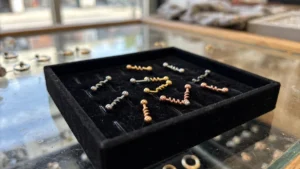
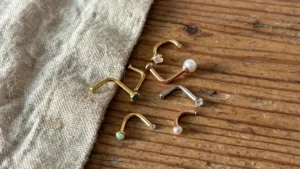
A nose bar is a straight or slightly curved post, usually 6 to 8 millimetres long, with a decorative stone set at the visible end and a small flat disc or ball at the other end to hold it in place. The style suits people who want something neater and more structured than a hoop, and it works well on nostril piercings that have fully healed.
The diamond in a diamond nose bar is a real, mined or laboratory-grown diamond, usually very small, often between 1 and 2.5 millimetres. A crystal nose bar uses a glass stone, most often cubic zirconia or a lead-free crystal, cut to imitate a diamond. It is set in the same metals and the same styles, and from a normal distance it can be hard to tell the two apart.
That similarity is exactly why the comparison matters. Because they look close, the real differences are in how they wear, how they age, how they feel on the skin and what they cost over time. The sections below take each difference in turn, so you can see where diamond earns its price and where crystal is the smarter buy.
How we chose these comparisons and what to look for
Look first at the stone itself, not the setting. A diamond should come with some note of its size and quality, even at this scale, while a crystal should be described honestly as cubic zirconia or glass, not sold as something it is not.

Look next at the metal and the bar. The bar should be smooth, with no rough edges, and the ends should be secure enough that the stone does not wobble. Implant-grade titanium is the safest choice for a new or sensitive piercing, while solid 14-carat gold is a good everyday option for healed skin. Our guide to gold jewellery for everyday wear explains why solid gold holds up better than plated gold for pieces you wear daily, and the same logic applies to a nose bar you rarely take out.
Finally, look at the length and the gauge. A bar that is too long moves around and catches on clothing, while one that is too short presses into the skin. Most nostril piercings take a 6 or 7 millimetre bar in 18 or 20 gauge, but if you are unsure, ask your piercer to measure before you order.
The 9 comparisons that matter in 2027
First impressions and how they look on the face
What we like: A diamond gives a crisp, white sparkle that reads as clean and expensive, even at 1.5 millimetres, while a good crystal gives a bright, cheerful flash that is easy to spot. What to consider: A poorly cut crystal can look flat or milky, and a very small diamond can disappear on the face in dim light. Best for: Anyone choosing a first nose bar. Material: Diamond or cubic zirconia, set in titanium or gold. Price range: Crystal bars from around £8 to £40; diamond bars from around £120 to £600. Standout feature: The diamond’s sharp white fire against the skin.
Sparkle in daylight vs evening light
What we like: Diamond keeps its brilliance under warm indoor light, while crystal throws colourful flashes in direct sun that many people find prettier. What to consider: Crystal can look washed out under fluorescent light, and diamond can look plain if the stone is very small. Best for: Evenings out and photographs. Material: Diamond or cubic zirconia, in a polished setting. Price range: Crystal bars from around £10 to £45; diamond bars from around £150 to £700. Standout feature: Crystal’s rainbow flash in sunlight.
Warmth against skin tone
What we like: Diamond’s cool white light suits cool and neutral skin tones, while crystal’s softer flash works well on warm skin, especially set in yellow or rose gold. What to consider: A very white stone can look stark on deep skin, and a warm-toned crystal can look yellowish on very fair skin. Best for: Matching the stone to your skin and your other jewellery. Material: Diamond or crystal, in gold, rose gold or silver-toned metal. Price range: Crystal bars from around £8 to £40; diamond bars from around £120 to £600. Standout feature: How a diamond lifts cool skin tones.
Everyday wear and durability
What we like: Diamond is the hardest natural stone, so it resists scratches from everyday knocks, while crystal is light and comfortable and easy to replace if it chips. What to consider: Crystal scratches more easily and can cloud over time, while a diamond can still chip if it takes a hard knock at the wrong angle. Best for: Daily wear without fuss. Material: Diamond, or cubic zirconia in a sturdy setting. Price range: Crystal bars from around £8 to £40; diamond bars from around £120 to £600. Standout feature: Diamond’s scratch resistance over years of wear.
Care, cleaning and upkeep
What we like: Both stones clean easily with warm water and mild soap, and a diamond needs no special treatment to stay bright. What to consider: Crystal clouds faster if it is exposed to perfume, hairspray or harsh cleaners, and it needs gentler handling when you clean it. Best for: Low-maintenance routines. Material: Diamond or crystal, in titanium or solid gold. Price range: Crystal bars from around £8 to £40; diamond bars from around £120 to £600. Standout feature: How little care a diamond needs to stay bright.
Comfort and weight on the face
What we like: Both stones are tiny, so a well-made bar of either kind feels weightless, and crystal’s lightness can make it slightly more comfortable for long days. What to consider: A heavy setting or a long bar can irritate the piercing, whatever the stone, and a loose stone can catch and pull. Best for: All-day wear and sensitive piercings. Material: Diamond or crystal, on a smooth titanium or gold bar. Price range: Crystal bars from around £8 to £40; diamond bars from around £120 to £600. Standout feature: Crystal’s feather-light feel on the nose.
Cost for one bar and for a collection
What we like: Crystal lets you own several bars in different metals and styles for the price of one diamond bar, while a diamond bar is a single, lasting purchase. What to consider: Replacing crystal bars every year or two adds up, and a cheap crystal bar in a poor setting can cost more in irritation than it saves. Best for: Building a small collection, or buying one piece to keep. Material: Diamond or cubic zirconia, in titanium, gold or silver-toned metal. Price range: Crystal bars from around £8 to £40; diamond bars from around £120 to £600. Standout feature: Crystal’s freedom to try new styles cheaply.
Matching outfits and other jewellery
What we like: Diamond’s clean white sparkle goes with everything, from work clothes to evening dress, while crystal’s playful flash suits casual and festival looks. What to consider: A large or colourful crystal can clash with fine jewellery, and a diamond can look too formal for a relaxed outfit. Best for: Everyday styling and special occasions. Material: Diamond or crystal, in a metal that matches your other pieces. Price range: Crystal bars from around £8 to £40; diamond bars from around £120 to £600. Standout feature: Diamond’s ability to suit any outfit.
Keeping it afterwards: resale and keepsake value
What we like: A diamond keeps some of its value and can be reset into another piece, while a crystal bar is easy to pass on or replace without a second thought. What to consider: A tiny diamond resells for far less than it cost, and a crystal stone has no resale value at all. Best for: Keepsakes and long-term pieces. Material: Diamond, or crystal in a good-quality metal. Price range: Crystal bars from around £8 to £40; diamond bars from around £120 to £600. Standout feature: A diamond’s ability to be reset into new jewellery.
Which nose bar is right for you
Start with your piercing. If it is fully healed and comfortable, either stone will work, and the choice comes down to budget and style. If your piercing is still settling, or your skin reacts easily, put the metal first and the stone second, and choose implant-grade titanium with a smooth bar.
Think next about how you wear jewellery. If you wear the same pieces for months and want one nose bar that does everything, a small diamond in solid gold or titanium is a strong choice. It will look the same in a year as it does today, and it will suit almost every outfit.
Finally, be honest about your budget. A diamond nose bar is a treat, not a necessity, and a good crystal bar looks lovely on the nose. Our guide to the best nose rings for women covers the wider range of styles if you want to compare bars with hoops and studs before you decide, because the shape matters as much as the stone.
The caveats that matter
Both stones are safe for most people, but a nose piercing is still a piercing, and it needs care. Never change a nose bar in a piercing that has not fully healed, which usually takes at least six months for a nostril, and wash your hands before you touch it.
| Detail | What is known |
|---|---|
| Stone | Diamond is a real, very hard gemstone; crystal is usually cubic zirconia or glass made to imitate it |
| Sparkle | Diamond gives a sharp white fire; crystal gives a softer, rainbow flash |
| Durability | Diamond resists scratches far better; crystal can scratch and cloud over time |
| Price | Crystal bars from around £8 to £40; diamond bars from around £120 to £600 |
| Best metal for sensitive skin | Implant-grade titanium or solid 14-carat gold |
| Care | Warm water and mild soap; keep crystal away from perfume and harsh cleaners |
| Healing time before changing | At least six months for a nostril piercing, and only when fully healed |
| Resale value | A small diamond keeps some value and can be reset; crystal has no resale value |
Price is another caveat worth stating. A very cheap diamond nose bar is often not a diamond at all, or it is a stone so small and so poorly cut that it does not sparkle. If the price looks too good to be true, it usually is.
Checklist: choosing between diamond and crystal honestly
Use these checks before you buy, and again when the bar arrives.
- Check the stone is named honestly: diamond, laboratory-grown diamond, cubic zirconia or crystal, with its size in millimetres.
- Check the metal: implant-grade titanium or solid gold for sensitive skin, and avoid plated metals for daily wear.
- Check the length and gauge: most nostril piercings take a 6 or 7 millimetre bar in 18 or 20 gauge.
- Check the setting: the stone should sit firmly, with no wobble, and the bar should feel smooth, not rough.
- Check it in daylight: look at the sparkle in natural light, not just under shop lights, before you decide to keep it.
- Check the return policy: buy from a seller who lets you return the bar if it does not suit you or irritates your skin.
Frequently asked questions
Can you tell a diamond nose bar from a crystal one?
Up close, often yes, because a diamond has a sharper white fire and a crystal throws more rainbow colour. At a normal distance, a well-cut crystal can look very similar to a small diamond, which is why the choice matters less for how it looks and more for how it wears and what it costs.
Is a diamond nose bar worth the price?
It depends on how you wear it. If you want one bar to wear every day for years, a diamond’s durability and steady sparkle can justify the price. If you change your jewellery often, or you are still deciding what suits you, a crystal bar gives you almost the same look for a fraction of the cost.
Does crystal scratch easily on a nose bar?
More easily than diamond, yes. Crystal is much softer, so it can pick up fine scratches from glasses, scarves and everyday knocks, and those scratches dull its sparkle over time. Gentle handling and regular cleaning slow that down, but a crystal bar will not stay as bright as a diamond bar after a year of daily wear.
Which metal is best for a nose bar?
Implant-grade titanium is the safest choice for sensitive or newly healed skin, because it rarely causes reactions. Solid 14-carat gold is a good everyday option for healed piercings. Avoid plated metals for a bar you wear daily, because the plating wears away and the metal underneath can irritate the skin.
How long should I wait before changing my nose bar?
Wait until the piercing is fully healed, which usually takes at least six months for a nostril. Changing a bar too early can irritate the piercing, cause swelling and set healing back by weeks. If you are unsure, ask your piercer to check before you swap the jewellery.
Can a diamond nose bar be reset into another piece?
Yes, and that is one of its real advantages. A small diamond can be taken out of a nose bar and set into a ring, a pendant or a pair of earrings, which gives it a second life. A crystal stone cannot be reused in the same way, because it has no value beyond the piece it sits in. Our guide to pearl necklaces for women shows how a single good stone can anchor a whole piece, and the same idea applies here.
The bottom line
Diamond and crystal nose bars are closer than their prices suggest. A good crystal bar looks lovely on the nose, costs very little, and lets you try styles freely, while a diamond bar offers a sharper sparkle, far better durability and a stone you can keep or reset for years. That closeness is good news, because it means the choice is yours to make on comfort and budget, not on looks alone.
Choose the metal first, the fit second and the stone third. A smooth, well-fitting bar in titanium or solid gold will feel good every day, whatever stone sits in it. Then pick the stone that matches how you live: crystal for freedom and variety, diamond for a single piece you plan to keep.