What Is a Nose Screw? 2027
A nose screw is one of the quietest pieces of nose jewellery you can wear, and one of the easiest to misunderstand. It looks like a tiny stud from the front, a small gem or ball sitting flat against the nostril, but behind it sits a post that twists or bends into place, which is what gives the piece its name and its staying power. Unlike a ring that loops through the piercing or a straight bar that passes through it, a nose screw holds itself in with the shape of its own post.
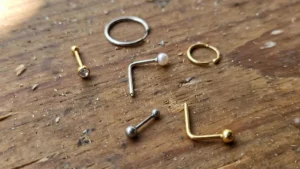
That shape is the whole point. A corkscrew post winds gently inside the piercing, while an L-shaped post bends at a right angle and rests against the inside of the nostril. Both designs are made to sit still, which is why nose screws suit people who sleep on their side or want something that does not catch on scarves. They are discreet, comfortable, and far more secure than they look.
This guide explains what a nose screw actually is, how the two main shapes differ, which metals are safest, and how to choose, wear, and look after one in 2027. It covers the nine facts that matter most, from healing and sizing to cleaning and value, so you can decide whether a nose screw is right for your piercing before you spend anything.
Key takeaways
- A nose screw is a stud-style piece with a twisted or bent post that holds it in place without a separate back or clasp.
- Corkscrew posts wind into the piercing and suit most nostrils, while L-shaped posts are easier to insert and remove.
- Only wear a nose screw in a fully healed nostril piercing, and match the gauge and length to your own piercing.
- Titanium and solid gold are the safest metals for most people, while cheap plated pieces are more likely to irritate.
- A nose screw is not a cure for a piercing problem, and a sore, swollen, or unhealed piercing needs a piercer, not new jewellery.
What a nose screw actually is
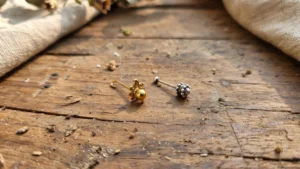
A nose screw is a piece of nostril jewellery with a decorative end on the outside and a shaped post on the inside. The visible end is usually a small gem, a ball, a disc, or a tiny cluster, and it sits flat against the outside of the nostril, much like an ordinary nose stud. The difference is hidden. Instead of a straight pin with a separate back, the post is formed into a corkscrew spiral or bent into an L shape, and that shape is what keeps the piece in place.
The name comes from the corkscrew version. To put it in, you guide the tip through the piercing and turn it gently, letting the spiral follow the channel of the piercing until the decorative end sits against the skin. The L-shaped version works differently: you push the straight part through, then turn the piece so the bent tail rests flat inside the nostril. Neither version needs a butterfly back, a screw-on ball, or a clasp, which is part of why they feel so light and unobtrusive once they are in.
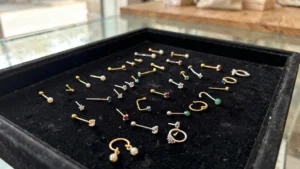
Nose screws are usually worn in the nostril, not the septum. They suit people who want the look of a stud with extra security, and they are a common recommendation after a piercing has healed, when a person is moving on from their first piece of jewellery. They come in the same metals and gemstones as other nose jewellery, from plain titanium to solid gold set with diamonds, so the choice is mostly about shape, metal, and size rather than a completely different style.
How we chose these facts and what to look for
We chose these facts by starting with the questions people actually ask about nose screws: what the shape does, whether it hurts to insert, which metal is safe, and how it compares with a stud or a hoop. A good guide answers those questions plainly, without jargon, and separates what is widely agreed from what depends on your own piercing. That is the standard every fact in this article was checked against.

Look first at the shape of the post. A corkscrew post suits most nostrils and is very secure, but it takes a little practice to insert and remove. An L-shaped post is simpler to handle and a good first choice if you are new to nose screws, though it can shift slightly more during the day. Our guide to gold jewellery for everyday wear explains why the metal matters as much as the shape, because a well-made piece in a safe metal is comfortable in a way a cheap one rarely is.
Look next at the metal, the gauge, and the length. The gauge is the thickness of the post, and it must match your piercing: too thin and the piece will move and irritate, too thick and it will not go in at all. The length matters too, because a post that is too short presses on the skin, while one that is too long catches and snags. If you do not know your gauge or length, ask your piercer before ordering, rather than guessing and hoping.
The 9 facts about nose screws in 2027
It is a screw, not a stud or a ring
What we like: A nose screw gives you the neat look of a stud with the security of a shaped post, so it stays in place through sleep, exercise, and changing clothes without a separate back to lose. What to consider: The shape takes a little learning, and the first few insertions can feel fiddly until your hands learn the twist. Best for: Anyone who wants a discreet stud look that will not fall out. Cost: From around £10 for plain titanium to several hundred pounds for solid gold. Time needed: A minute or two to insert once you know the motion.
The corkscrew and L-shaped posts work differently
What we like: The corkscrew is the most secure shape and rarely works loose, while the L-shape is the easiest to put in and take out. What to consider: A corkscrew can be awkward at first, and an L-shape can rotate slightly during the day. Best for: Corkscrews for active wearers, L-shapes for beginners. Cost: Both shapes cost about the same in the same metal. Time needed: A few minutes of practice over a few days to feel confident.
It needs a fully healed nostril piercing
What we like: In a healed piercing, a nose screw is comfortable all day and easy to live with. What to consider: A screw should not be used as first jewellery, because the twisted post can disturb healing tissue. Best for: Piercings that have been healed for at least six months. Cost: Nothing extra, but a piercer check costs little if you are unsure. Time needed: Nostril piercings usually take six to nine months to heal fully.
Titanium and solid gold are the safest metals
What we like: Implant-grade titanium is light, strong, and very rarely causes a reaction, while solid gold is warm, durable, and easy to clean. What to consider: Gold-plated and cheap alloy pieces can wear through and irritate the piercing. Best for: Sensitive skin and everyday wear. Cost: Titanium from around £10, solid gold from around £60 and up. Time needed: No extra time, but choosing well saves weeks of irritation.
The gauge and length must match your piercing
What we like: A correctly sized screw sits flat, feels weightless, and does not catch on anything. What to consider: Most nostrils are pierced at 18 or 20 gauge, and the wrong size will either slip or not fit at all. Best for: Anyone buying their first screw after healing. Cost: A sizing check at a piercer is usually free or very cheap. Time needed: Five minutes to measure, and it prevents a wasted purchase.
The end is where the design lives
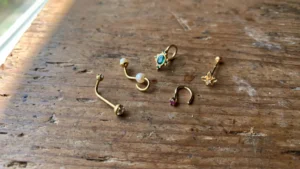
What we like: The visible end can be a diamond, a crystal, a pearl, a plain ball, or a tiny cluster, so one screw can look minimal or dressy. What to consider: Large or heavy ends can pull on the piercing and feel uncomfortable by evening. Best for: Small gems for everyday wear, larger ends for occasions. Cost: From a few pounds for a plain ball to hundreds for a diamond. Time needed: No extra time, just a choice about how much attention you want the piece to draw.
It stays put better than a hoop
What we like: The shaped post resists pulling and snagging, so a screw is less likely to be tugged out by a scarf, a mask, or a pillow. What to consider: It can still come out if the tail is too short or the gauge is too thin for your piercing. Best for: Sleep, sport, and anyone who has lost hoops before. Cost: No extra cost for the security. Time needed: None, once the piece is in.
Cleaning is simple but not optional
What we like: Warm water and a gentle, fragrance-free cleanser are usually enough, and the piece itself can be cleaned with mild soap and water. What to consider: Harsh products, alcohol, and hydrogen peroxide can dry out and irritate the piercing. Best for: A quick daily rinse and a proper clean when you change the piece. Cost: A bottle of sterile saline costs a few pounds. Time needed: A minute a day.
Real gold and titanium hold value best
What we like: Solid gold and good titanium keep their finish for years, can be cleaned and reused, and are easy to resell or pass on. What to consider: Plated pieces lose their coating with wear and are rarely worth keeping long term. Best for: A piece you plan to wear for years. Cost: More up front, less per year of wear. Time needed: A few minutes of care now and then.
Which nose screw is right for you
Start with your piercing, not with the jewellery. If your nostril is fully healed and you know your gauge, a corkscrew in titanium is the safest all-round choice: secure, light, and unlikely to irritate. If you are new to screws, or you change your jewellery often, an L-shape is easier to handle and a better first step. Either way, choose a small end for everyday wear and keep anything large or heavy for occasions.
Match the metal to your skin and your life. Titanium suits almost everyone and is the best choice if your skin reacts easily. Solid gold suits people who want warmth and a piece that will last for years, and it pairs well with other gold jewellery. Our guide to the best nose rings for women is a useful comparison here, because it shows how a screw sits alongside rings and studs, and why many people end up owning one of each rather than choosing a single style for good.
Finally, think about size. A two-millimetre gem is discreet enough for work and everyday life. A three-millimetre stone is the classic choice, visible without being loud.
The caveats that matter
Nose screws are simple, but they are not foolproof. The most common problems come from wearing one too soon, choosing the wrong size, or picking a metal that does not suit your skin. All three are easy to avoid, and all three are worth taking seriously, because a piercing that becomes irritated can take weeks to settle again. The table below gathers the points that matter most, so you can check yourself against them before you buy.
| Detail | What is known |
|---|---|
| What it is | A stud-style nose piece with a corkscrew or L-shaped post that holds itself in place |
| When to wear one | Only in a fully healed nostril piercing, usually six to nine months after piercing |
| Safest metals | Implant-grade titanium and 14-carat or 18-carat solid gold |
| Common gauges | 18 or 20 gauge for most nostrils, matched to your own piercing |
| What to avoid | Cheap plating, nickel-heavy alloys, and wearing a screw in an unhealed piercing |
| Cleaning | Warm water or sterile saline daily, mild soap for the jewellery itself |
| When to seek help | Persistent pain, swelling, discharge, or a bump that does not settle within a few days |
| What it does not do | It does not heal a piercing, fix an infection, or suit every nostril shape |
If your piercing becomes painful, swollen, or starts producing discharge, see your piercer promptly, and see a clinician if the area becomes hot, very swollen, or streaked with red. Most problems settle quickly with the right advice, but they do not settle on their own if the cause is the wrong jewellery or the wrong size.
Checklist: buying a nose screw honestly
Use these checks before you buy, and again when the piece arrives.
- Check your piercing is fully healed, with no tenderness, swelling, or discharge.
- Check your gauge and length with your piercer, rather than guessing from a previous piece.
- Check the metal: implant-grade titanium or solid gold, not thin plating or cheap alloy.
- Check the post shape: corkscrew for the most security, L-shape for the easiest handling.
- Check the end size: two to three millimetres for everyday wear, larger only for occasions.
- Check the return policy before you pay, in case the size or shape does not suit your piercing.
Frequently asked questions
Does a nose screw hurt to put in?
It should not hurt in a fully healed piercing. The first few insertions can feel strange, and the twist takes a little practice, but pain is a sign to stop. Clean your hands and the jewellery, try again gently, and ask your piercer to show you the motion if it keeps catching.
Can I wear a nose screw while my piercing is still healing?
No. A screw should only go into a fully healed piercing, usually six to nine months after piercing. The twisted post can disturb healing tissue and set recovery back by weeks. Keep your original jewellery in until your piercer confirms the piercing is healed.
How do I stop my nose screw falling out?
Make sure the gauge and length match your piercing, and choose a corkscrew if security matters most. A screw that is too thin or too short will work loose, so a sizing check is worth more than any trick. If it keeps falling out, your piercer can check whether the size is right.
Can I sleep in a nose screw?
Yes, that is one of its strengths. A screw sits close to the skin with nothing hanging, so it is comfortable to sleep on and far less likely to be pulled out by a pillow than a hoop. If it feels uncomfortable at night, the length may be wrong, and a shorter post may suit you better.
What is the difference between a nose screw and a nose stud?
A nose stud has a straight post and usually a separate back or a flat disc to hold it in, while a nose screw has a twisted or bent post that holds itself in place. From the front they look very similar, but the screw is more secure and has no back to lose. The visible end is only half the story, just as it is with a pearl necklace, where the clasp and the stringing decide how well the piece wears even though you only ever see the pearls.
How do I clean a nose screw?
Wash your hands first, then rinse the piercing with warm water or sterile saline and pat it dry with a clean tissue. Clean the screw itself with mild soap and warm water before you put it in, and avoid alcohol, hydrogen peroxide, and harsh cleansers, which can dry out and irritate the skin around the piercing.
The bottom line
A nose screw is a small piece of jewellery that solves a real problem: it looks like a neat stud, but it stays in place far better than a straight pin with a back, and it does so without anything hanging or catching. Choose a corkscrew for security or an L-shape for ease, pick titanium or solid gold, and make sure the gauge and length match your own piercing before you buy.
Wait until your piercing is fully healed, buy the best metal you can afford, and treat the screw as a piece to keep. Done that way, a nose screw is one of the easiest, most comfortable pieces of nose jewellery you can own, and it will look after itself with a minute of cleaning a day.