How to Wear a Nose Pin 2027
A nose pin is the easiest piece of nose jewellery to wear well, and the easiest to wear badly. Put on correctly, it looks like a small, deliberate detail, a point of light that suits your face without drawing attention away from it. Put on carelessly, it can look crooked, sit too high or too low, or catch the light in a way that makes it look larger than it is.
The difference is rarely the pin itself. It is the fit, the metal, and the way the pin is paired with the rest of your look. A pin that matches your skin tone and your other jewellery will look like it belongs. A pin that fights with your makeup, your hair, or your outfit will look like an afterthought, however expensive it is.
Below are nine ways to wear a nose pin in 2027, from choosing the right size to pairing it with your hairstyle and makeup. Each tip is described by what works, what to watch for, and how long it takes, so you can wear a nose pin with confidence rather than hope.
Key takeaways
- A nose pin should match your piercing’s gauge and your nostril’s thickness, or it will wobble, hurt, or fall out.
- Match the pin’s metal to the jewellery you already wear, because mixed metals draw the eye to the nose.
- Keep the end small for the day and save larger stones for the evening, when the light flatters them.
- Clean the pin and the piercing regularly, because a dirty pin irritates the skin and dulls the sparkle.
- No nose pin suits every face or every occasion, and a pin that hurts or keeps falling out should be changed rather than endured.
What wearing a nose pin actually involves
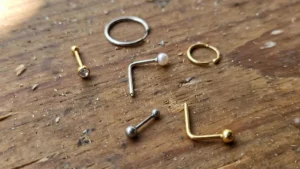
Wearing a nose pin means putting a short, straight pin through a healed nostril piercing so that the decorative end sits flat against the outside of the nose. The pin should go in smoothly, without force, and sit still once it is in place. If you have to push, twist, or wiggle it, the gauge or the length is wrong, and forcing it will irritate the piercing.
Most people put a nose pin in once in the morning and leave it alone all day. That is the right approach. A nose pin is not meant to be adjusted, twirled, or checked every hour. Touching it transfers oil and dirt to the piercing, and it loosens the pin. Put it in, check it once in the mirror, and then forget about it.
Taking it out is just as simple. Wash your hands, hold the decorative end, and slide the pin out gently. If it resists, do not pull harder. Soften the area with warm water, or ask your piercer to help. A pin that will not come out easily is usually the wrong size, and it is better to find out from a piercer than from a sore nose.
How we chose these tips and what to look for
Look first at the fit. A nose pin that fits well will sit flat against the nostril, with the decorative end resting lightly on the skin and the pin hidden inside the nose. A pin that is too long will stick out and catch on fabric. A pin that is too short will press the end hard into the skin and leave a mark. Fit is the foundation, and no amount of styling will fix a pin that does not fit.

Look next at the metal. Gold suits warm skin and gold jewellery. Silver suits cool skin and silver jewellery. Titanium suits everyone, because it is neutral and hypoallergenic, and it comes in a range of colours. Our guide to the best necklaces for women makes the same point about chains: the metal should match what you already wear, or the mismatch will be the first thing anyone notices.
Finally, look at the whole picture. A nose pin is a small detail, and it should work with your makeup, your hair, and your outfit, not against them. A tiny pin with a bold red lip and a strong eye can look unbalanced. A large, sparkling pin with bare skin and no other jewellery can look lost. The goal is balance, and the tips below show how to find it.
The 9 ways to wear a nose pin in 2027
Start with the right size for your face
What we like: A pin whose end is in proportion to your nose, so it reads as a detail rather than a decoration. What to consider: Size is personal, and what looks small on one face can look large on another, so try the pin on before committing. Best For: Anyone wearing a nose pin for the first time. Cost: Nothing extra, just a careful choice. Time Needed: Five minutes in front of a mirror.
Match the metal to your other jewellery
What we like: A pin in the same metal as your rings, necklace, or earrings, so the whole look hangs together. What to consider: Mixing metals can work, but it needs to look deliberate, and a single mismatched pin usually looks accidental. Best For: Anyone who wears other jewellery daily. Cost: Nothing, if you already own matching pieces. Time Needed: A minute when you get dressed.
Choose a pin you can manage one-handed
What we like: A pin with a straight post and a secure end that goes in and comes out without tools, tweezers, or a second pair of hands. What to consider: Pins with bent or screw ends are more secure, but they take longer to put in and can be fiddly in the morning. Best For: Busy mornings and anyone who changes jewellery often. Cost: Nothing extra. Time Needed: Less than a minute, once you know the pin.
Keep the pin light for all-day wear
What we like: A light titanium or thin gold pin that you forget you are wearing, with no pulling, no pressure, and no soreness by evening. What to consider: Heavy stones and thick posts can ache after a few hours, especially if the piercing is still settling. Best For: Long days, work, and travel. Cost: Nothing extra. Time Needed: A day of wear to judge comfort honestly.
Weight matters more than most people expect. A heavy pin pulls on the piercing all day, and by evening the nose can feel sore. If a pin hurts after a few hours, it is too heavy for daily wear, however beautiful it is. Save it for a short evening and choose a lighter pin for the day.
Match it to your outfit and occasion
What we like: A small, simple pin for the office or the school run, and a sparkling or pearl pin for a wedding, a dinner, or a night out. What to consider: A large, glittering pin can look out of place in a formal work setting, and a plain pin can look underdressed at a party. Best For: Anyone who wants the pin to suit the day, not fight it. Cost: Nothing, if you own two pins. Time Needed: A minute when you choose your outfit.
Pair it with the right hairstyle
What we like: Hair that frames the face without covering the pin, so the pin is visible when you turn your head but never tangled in your hair. What to consider: Long, loose hair can catch on a pin, pull it, and hide it entirely, which defeats the purpose of wearing it. Best For: Anyone with long hair who wears a nose pin daily. Cost: Nothing. Time Needed: A minute to tie hair back or tuck it behind the ear.
Wear it with the right makeup
What we like: Clean, simple makeup that lets the pin be a small accent, with the focus on the eyes or the lips, not on the nose. What to consider: Heavy contouring around the nose can make a pin look misplaced, and glittery highlighter on the nose competes with the pin for attention. Best For: Anyone who wears makeup with a nose pin. Cost: Nothing. Time Needed: No extra time, just a lighter hand near the nose.
Clean and store it properly
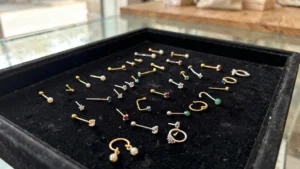
What we like: A pin that is cleaned weekly and stored in a small, lined box, so it stays bright, stays secure, and is easy to find in the morning. What to consider: Pins left loose in a bag or a drawer get scratched, bent, and lost, and a dirty pin can irritate the piercing. Best For: Anyone who owns more than one pin. Cost: A small jewellery box, if you do not already own one. Time Needed: Five minutes a week to clean, and a few seconds to store.
Know when to take it off
What we like: Taking the pin out for sport, swimming, a facial, or a medical appointment, so the piercing is protected and the pin is not lost. What to consider: Leaving a pin in during a rough activity risks losing it, bending it, or tearing the piercing, which takes weeks to heal. Best For: Anyone who plays sport, swims, or has regular facials. Cost: Nothing. Time Needed: A few seconds to remove the pin.
Take the pin out before contact sport, before swimming in a pool or the sea, and before any facial or skin treatment near the nose. Keep a small case in your bag so the pin is safe while it is out. A pin that is taken out for an hour is still there when you get back. A pin that is lost in a swimming pool is not.
Which nose pin is right for you
Start with your daily life. If your days are busy and physical, choose a small titanium pin that you can forget about. If your days are mostly desk work and evenings out, choose a gold pin with a small stone that works for both. If you attend weddings and formal events often, add a diamond, crystal, or pearl pin to your collection.
Then think about your face. A small pin suits a small nose and a minimal style. A slightly larger stone suits a larger nose or a bolder style. The pin should suit you, not the other way around. If you find yourself adjusting it all day, or if it hurts, it is the wrong pin, and no amount of styling will make it right.
Finally, think about your other jewellery. A nose pin should sit comfortably alongside your earrings, your necklace, and your watch, not compete with them. A guide to statement necklaces is useful here, because the same rule applies: one bold piece at a time, and everything else quiet. If your necklace is the statement, keep the pin small. If the pin is the statement, keep everything else simple.
The caveats that matter
A nose pin should only be worn in a fully healed piercing. If your piercing is still healing, sore, or weeping, do not change the jewellery, and do not wear a pin that is heavier or larger than the one your piercer fitted. Changing jewellery too soon is the most common cause of a piercing bump, and it can take weeks to settle.
| Detail | What is known |
|---|---|
| When a pin is safe to wear | Only in a fully healed nostril piercing, usually at least six months old |
| Best daily metal | Titanium or solid gold, light and rarely irritating |
| Best end size for the day | 1.5 to 2 millimetres, small enough to sit flat and stay comfortable |
| When to take the pin out | For sport, swimming, facials, and medical appointments near the nose |
| How often to clean it | At least once a week with warm water and mild soap, dried fully |
| What to avoid near the nose | Heavy highlighter, contour, and glitter makeup on the nostril itself |
| What to do if it hurts | Take it out, check the size and metal, and see your piercer if soreness lasts |
| What a pin does not do | It does not stay secure during rough activity without a well-fitting end |
If you are pregnant, breastfeeding, or taking medication that affects healing, check with your clinician or piercer before changing your nose jewellery. Healing can slow, and a pin that was comfortable before may irritate a piercing that is healing more slowly than usual.
Checklist: wearing a nose pin well
Use these checks each morning, and again after a week of wearing a new pin.
- Check the fit: the pin should sit flat, with the end resting lightly on the skin and no pressure or pulling.
- Check the metal: it should match your other jewellery, and it should be titanium or solid gold if your skin is sensitive.
- Check the end: it should be smooth, secure, and in proportion to your nose, not the first thing anyone notices.
- Check your hair: tie it back or tuck it behind your ear on the pierced side, so it does not catch on the pin.
- Check your makeup: keep highlighter and contour away from the nostril, and let the pin be the only sparkle on the nose.
- Check the pin at night: if it hurts, wobbles, or feels loose, take it out and try a different size or metal tomorrow.
Frequently asked questions
How do I put a nose pin in for the first time?
Wash your hands, hold the decorative end, and slide the pin gently through the piercing from the outside. Do not force it. If it does not go in smoothly, stop and try again with a little warm water on the area, or ask your piercer for help. A pin that needs force is the wrong size.
Can I wear a nose pin to work?
Yes, in most workplaces. A small, simple pin in gold, silver, or titanium reads as a piece of jewellery, not a statement. Check your workplace dress code if you work in healthcare, food preparation, or a very formal setting, and choose the smallest, plainest pin you own for those days.
Does a nose pin hurt to wear?
It should not hurt at all once the piercing is healed. A pin that hurts is usually too long, too thick, too heavy, or made from a metal your skin does not like. Take it out, check the size and the metal, and try a lighter titanium pin. If soreness lasts more than a day, see your piercer.
Can I wear a nose pin with glasses?
Yes. A nose pin sits on the nostril, well below where glasses rest, so the two rarely interfere. If your glasses slide down and press on the pin, have the glasses adjusted, or choose a smaller, flatter pin end that sits closer to the skin.
How do I stop my nose pin from falling out?
Choose the right length and a secure end. A pin that is too short slips through the piercing, and a pin with a loose end falls out easily. A slightly bent end, a flat disc, or a small screw end holds the pin in place far better than a plain straight post. Our guide to luxury watches makes a similar point about fit: a piece that fits properly stays where it belongs, and a piece that does not will keep slipping, however expensive it is.
Can I wear a nose pin while exercising?
Light exercise is usually fine, but take the pin out for contact sport, swimming, and anything where your face might be hit or rubbed. Sweat can also irritate a piercing, so rinse the area with clean water after a workout and dry it gently before putting the pin back in.
The bottom line
Wearing a nose pin well comes down to three things: the right size, the right metal, and the right balance with the rest of your look. Get those three right and the pin will look like it belongs on your face, whether you are at work, at a wedding, or doing nothing more than walking to the shops.
Start with a small, comfortable pin in a metal that suits your skin, wear it for a week, and pay attention to how it feels and how it looks in photographs. If it is comfortable and it suits you, you have found your pin. If it is not, change the size or the metal before you blame the style, because the style is rarely the problem.