Stud vs Pin Nose Pins 2027: 9 Comparisons That Matter
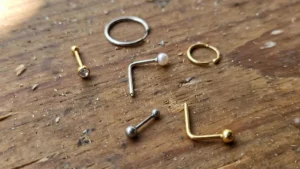
Studs and pins are the two quietest styles of nose jewellery. Both are small and sit on the side of the nostril. The difference is in how they are built. A stud has a decorative head and a backing that holds it in place. A pin is a single slim piece, held by its post.
That small difference matters. A stud is usually more secure and easier to change, but the backing can press or catch. A pin is lighter and simpler, with nothing extra inside the nose, but it can slip if the post is the wrong length. The right choice depends on your piercing and how often you change your jewellery.
Below are nine comparisons that matter in 2027, from first impressions and comfort to cost, care, and keepsake value. Each one is judged on what it does well, what to watch for, and who it suits best.
Key takeaways
- A stud has a decorative head and a backing that holds it in place, while a pin is a single slim piece held by the fit of its post.
- Studs are usually more secure and easier to swap, while pins are lighter and simpler, with nothing extra inside the nostril.
- Both styles suit healed piercings, but a pin needs the right post length and gauge, or it can slip or press.
- Cost is close between the two, so choose by comfort and security first, and by price second.
- No style suits every nose, piercing, or routine, so buy from a seller with a fair return policy.
What stud and pin nose jewellery actually are
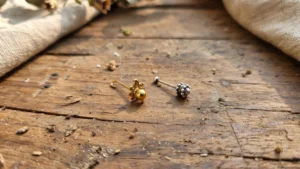
A nose stud is the most common style of nostril jewellery. It has a decorative head on the outside, a tiny gem, ball, or flat disc, and a short straight post held in place by a backing inside the nostril. The backing can be a small flat disc, a ball, or a screw fitting.
A nose pin is a simpler shape: one slim piece of metal with a decorative end and a straight post, and no separate backing. The post is sized to fit the piercing closely, so friction holds it in place. Pins are often slightly longer than studs, because the post does the work of the backing.
The two styles overlap, and sellers do not always use the words the same way. What matters is not the label but the build: does it have a backing, or is it a single piece? Ask the seller before you buy, and check the post length and gauge against your piercing.
How we chose these comparisons and what to look for
Look first at the build. For a stud, check the backing: a flat disc sits most comfortably, a ball backing is secure but can press, and a screw fitting is the most secure but the hardest to change. For a pin, check the post matches your piercing gauge and length, because a loose post slips and a tight post presses.

Look next at the metal and the finish. Solid gold and sterling silver are the safest common choices for sensitive skin, and implant-grade titanium is the safest of all. Avoid unnamed alloys and plated pieces, because the plating wears. The end should be smooth and polished, with no rough edges.
Finally, look at how you will wear it. If you change your jewellery often, a stud with a simple backing is easier to swap. If you leave a piece in for weeks, a pin has less to catch and less to clean. A guide to the best necklaces for women makes the same point: the piece you wear every day should be the easiest to live with.
The 9 comparisons that matter in 2027
First impressions and how they look on the nose
On the face, studs and pins look very similar. A stud usually has a larger or more decorative head, because the backing lets it be heavier. A pin usually has a smaller, lighter end, because the post has to carry it.
What we like: A stud can carry a bigger stone or a more detailed head. What to consider: A pin looks more minimal, which suits a quiet look but can be too subtle. Best for: Studs for a visible, decorative look; pins for a minimal, understated one. Material: Solid gold, sterling silver, or implant-grade titanium. Price range: About £15 to £90 for a stud, about £10 to £80 for a pin. Standout feature: Studs show more; pins whisper.
Comfort and how they feel all day
Comfort is where the two styles part company. A pin has nothing inside the nostril except the post, so there is nothing to press or catch. A stud has a backing inside the nostril, and even a small flat disc can press, especially if the post is short.
What we like: Pins feel like almost nothing once they are in. What to consider: A stud with a flat backing can be just as comfortable, but a ball backing can press. Best for: Pins for all-day, forget-it-is-there comfort; studs with a flat backing for a close second. Material: Solid gold, sterling silver, or implant-grade titanium, with a smooth finish. Price range: About £15 to £90 for a stud, about £10 to £80 for a pin. Standout feature: A pin has nothing extra inside the nose.
Security and what stays put
Security is the stud’s strongest point. The backing holds the head in place, so a stud is unlikely to fall out, even if you catch it on a towel. A pin relies on the fit of the post, so it is secure when the fit is right, but it can slip if the post is too short or too thin.
What we like: A stud stays put through sleep, sport, and busy days. What to consider: A pin can work loose, especially in the first weeks. Best for: Studs for security and peace of mind; pins for a piercing with a well-matched post. Material: Solid gold, sterling silver, or implant-grade titanium. Price range: About £15 to £90 for a stud, about £10 to £80 for a pin. Standout feature: A backing holds; a fit can slip.
Ease of putting it on and taking it off
Changing jewellery is part of wearing it, and here the stud is usually easier. A stud with a push-in or screw backing can be changed in a minute once you know how. A pin has to be eased through at the right angle, which takes a steadier hand.
What we like: Studs are quicker to change, which suits people who swap jewellery often. What to consider: Pins take more patience, and forcing one irritates the piercing. Best for: Studs for frequent changes; pins for a piece you leave in for weeks. Material: Solid gold, sterling silver, or implant-grade titanium. Price range: About £15 to £90 for a stud, about £10 to £80 for a pin. Standout feature: A backing gives you something to hold.
Versatility: dressing it up or down
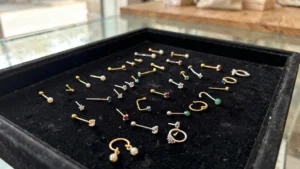
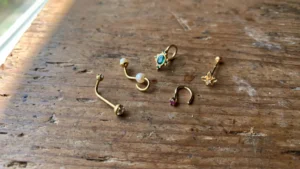
Both styles can be dressed up or down. A stud with a diamond or a pearl reads as smart and suits formal occasions, while a plain gold ball stud suits every day. A pin with a tiny gem reads as delicate and suits almost anything.
What we like: Studs offer more variety, from plain balls to gem settings. What to consider: Pins are more limited, because the end must stay light enough for the post to hold. Best for: Studs for variety across occasions; pins for a single, minimal everyday look. Material: Solid gold, sterling silver, or implant-grade titanium. Price range: About £15 to £90 for a stud, about £10 to £80 for a pin. Standout feature: Studs give you more choice; pins give you less to think about.
Durability and what can go wrong
Both styles are durable when well made, but they fail in different ways. A stud’s weak point is the backing: a screw thread can wear, a push-in fitting can loosen, and a ball backing can come off. A pin’s weak point is the post: if it bends or wears smooth, the pin will not stay in.
What we like: Both last for years when the metal and fit are right. What to consider: Check a stud’s backing and a pin’s post regularly. Best for: Either style, with regular checks. Material: Solid gold, sterling silver, or implant-grade titanium. Price range: About £15 to £90 for a stud, about £10 to £80 for a pin. Standout feature: A stud fails at the backing; a pin fails at the post.
Cost for one piece and for a set
Cost is close, because the metal and the stone matter far more than the shape. A simple gold stud and a simple gold pin cost roughly the same, and the same is true in silver. A stud costs slightly more to make, because of the backing.
What we like: Pins are usually a little cheaper, which helps if you are building a collection. What to consider: A stud with a gemstone costs more than a plain pin, but the difference is the stone. Best for: Pins for a budget-friendly collection; studs for one special piece. Material: Solid gold, sterling silver, or implant-grade titanium. Price range: About £15 to £90 for a stud, about £10 to £80 for a pin; gemstone pieces from about £60 to £250 in either style. Standout feature: The metal and stone set the price, not the shape.
Matching outfits and other jewellery
A stud or pin sits next to your earrings, necklace, and watch, and looks best when the metals agree. A gold stud pairs with gold jewellery and warm colours; a silver pin pairs with silver jewellery and cool colours. A decorative stud suits statement jewellery, while a plain pin suits minimal jewellery.
What we like: A stud with a gemstone echoes a necklace or earrings with stones. What to consider: A plain pin can disappear next to bold jewellery, so match the scale too. Best for: Studs with statement jewellery; pins with minimal jewellery. Material: Solid gold, sterling silver, or implant-grade titanium. Price range: About £15 to £90 for a stud, about £10 to £80 for a pin. Standout feature: Match the metal first, then the scale. A guide to gold anklets makes the same point about matching metals across a whole outfit.
Keeping it afterwards as a keepsake
Neither style is an investment, but both can become keepsakes. A stud with a gemstone is easier to keep and remount, because the setting can be moved to a new piece. A pin is kept as it is, or melted down for the metal. Gold holds more value than silver in either style.
What we like: A stud’s setting can be reused, which makes it the more flexible keepsake. What to consider: A pin is simpler to keep, but harder to remake. Best for: Studs for a keepsake you might remount; pins for a piece you keep as it is. Material: Solid gold, sterling silver, or implant-grade titanium. Price range: About £15 to £90 for a stud, about £10 to £80 for a pin. Standout feature: A stud can be remade; a pin is kept whole.
Which nose pin is right for you
Start with your piercing. If it is fully healed and you know your gauge and length, either style works. If you are unsure of the size, a stud with a flat backing is the more forgiving choice. A pin needs the size to be right, so ask a piercer to measure it.
Then think about how you live with jewellery. If you change it often, a stud is easier to swap. If you leave a piece in for weeks, a pin is lighter and has less to catch. If you sleep on the pierced side or play sport, a stud is more secure. Our guide to luxury watches makes a similar point: the best everyday piece is the one you do not have to think about.
Finally, think about your skin. Sensitive skin should avoid plated pieces and unnamed alloys in either style. Solid gold, sterling silver, and implant-grade titanium are the safest common choices, with titanium the safest for very reactive skin.
The caveats that matter
Studs and pins are safe for most people, but there are honest limits. A stud’s backing can press if the post is too short, and a screw backing can be hard to change without help. A pin can slip out if the post is the wrong size, and a bent post can scratch the piercing. Neither style should be worn in a healing piercing. If your piercing becomes red, swollen, or painful after changing jewellery, remove the piece, clean the area gently, and speak to your piercer or a clinician.
| Detail | What is known |
|---|---|
| How a stud is held | A backing inside the nostril, such as a flat disc, ball, or screw fitting |
| How a pin is held | The fit of its straight post, with no separate backing |
| Most comfortable for all-day wear | A pin, because there is nothing extra inside the nostril |
| Most secure | A stud, because the backing holds it even if it is caught |
| Easiest to change | A stud, because the backing gives you something to hold |
| Most likely to be lost | A pin, if the post is too short, too thin, or worn smooth |
| Safest for sensitive skin | Solid gold, sterling silver, or implant-grade titanium in either style |
| What neither style does | Neither suits a healing piercing, and neither replaces proper aftercare |
If you are pregnant, breastfeeding, or using prescription skincare, the style itself is not usually a concern, but irritation around a piercing should still be checked with your clinician.
Checklist: choosing between a stud and a pin honestly
Use these checks before you buy.
- Check the build: a stud should have a secure backing, and a pin should have a straight, smooth post.
- Check the size: the post should match your piercing gauge and length.
- Check the metal: solid gold, sterling silver, or implant-grade titanium, not plated and not an unnamed alloy.
- Check the finish: smooth, polished, no rough edges, and a secure setting if the piece holds a stone.
- Check how you will wear it: studs suit frequent changes, pins suit leaving a piece in for weeks.
- Check the return policy: buy from a seller who lets you return the piece if the fit is wrong.
Frequently asked questions
Is a stud or a pin better for a nose piercing?
Neither is better in every way. A stud is more secure and easier to change, while a pin is lighter and more comfortable. Choose by your piercing size, your routine, and how often you change jewellery.
Can a nose pin fall out easily?
It can if the post is too short, too thin, or worn smooth, because the fit is what holds it in. A pin with the right post length and gauge stays in well, but check it regularly in the first weeks.
Is a stud more comfortable than a pin?
Usually a pin is more comfortable, because there is no backing to press inside the nostril. A stud with a flat backing can be just as comfortable, but a ball backing can press.
Can I wear a stud and a pin in the same piercing?
Not at the same time, because one piercing holds one piece. You can swap between them, though, wearing a stud when you want security and a pin when you want comfort.
Which is better for sensitive skin, a stud or a pin?
The metal matters more than the style. Solid gold, sterling silver, and implant-grade titanium are the safest choices in either style. Avoid plated pieces and unnamed alloys.
How do I know my post length and gauge?
Ask your piercer to measure your piercing, or check the size of the piece you already wear comfortably. A post that is too long moves and catches, and one that is too short presses. If unsure, choose a stud with a flat backing.
The bottom line
Studs and pins are both good choices, and the difference between them is smaller than the difference between a good fit and a bad one. A stud is more secure and easier to change, which suits active days. A pin is lighter and more comfortable, which suits leaving a piece in for weeks.
Choose by your piercing first, by your routine second, and by price third. Check the build, check the metal, and check the size.