What Is a Nose Pin? 2027
A nose pin is a small, pin-style piece of nose jewellery: a short post with a decorative end that sits flat against the nostril. It is one of the simplest nose piercings to wear, and one of the easiest to overlook when you are choosing jewellery, because it looks so quiet from a distance. Up close, though, the difference between a good nose pin and a poor one is obvious, in the metal, the fit, and the way the end catches the light.
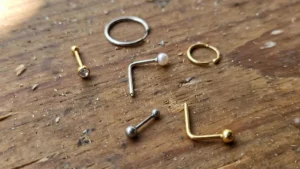
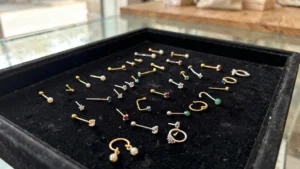
The confusion usually starts with the names. A nose pin, a nose stud and a nose screw are often sold as if they were the same thing, and they are not. A stud is a general word for a short-post piece with a gem or ball end, a screw has a curved or corkscrew post that twists into place, and a pin is a slim, straight-post piece, often with a flat or very low-profile end, designed to sit neatly and barely move.
This guide explains what a nose pin actually is, how it differs from the other styles, what to look for before you buy one, and the nine facts that matter most in 2027. It is written for anyone choosing a first nose pin, or replacing one that never quite sat right.
Key takeaways
- A nose pin is a slim, straight-post piece of nose jewellery with a decorative end, designed to sit flat and still against the nostril.
- It is not the same as a nose stud or a nose screw: the pin has a straight post, the screw has a curved or corkscrew post, and the stud is a broader term for short-post pieces.
- A nose pin needs a fully healed nostril piercing, and the gauge and length must match your piercing, or it will sit crooked or slip out.
- Titanium and solid gold are the safest metals for most people, while cheap plated metals are the most common cause of irritation.
- No nose pin is guaranteed irritation-free, and a pin that hurts, swells, or keeps falling out is a sign to check the fit and the metal, not to keep wearing it.
What a nose pin actually is
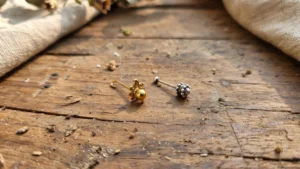
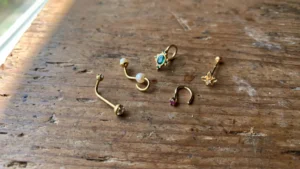
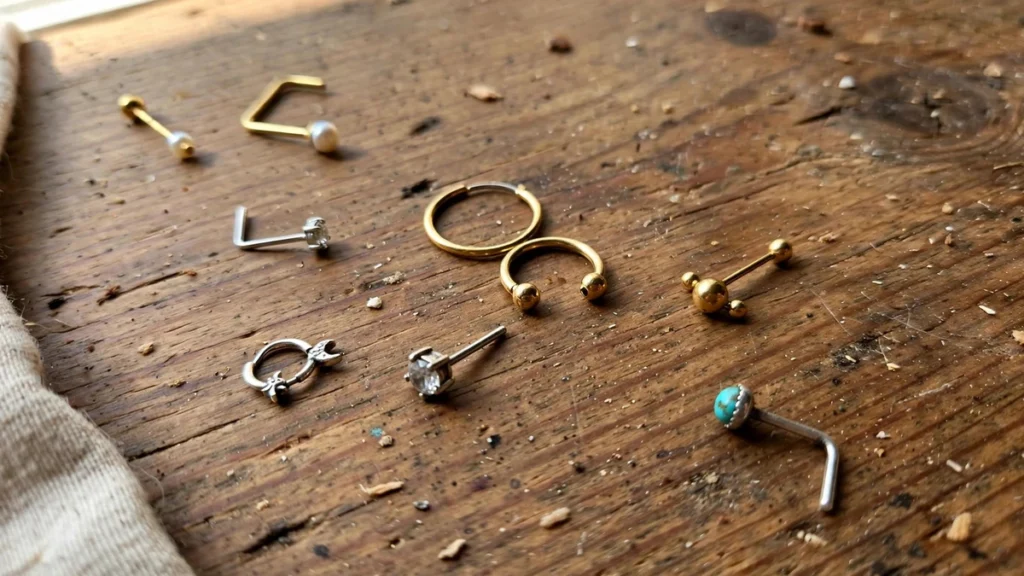
A nose pin is a piece of jewellery made for a nostril piercing. It has three parts: a decorative end, which is what you see, a short straight post, which passes through the piercing, and a small back or flat disc that holds it in place. The end can be a tiny gem, a ball, a pearl, a flower, or a flat disc. The post is usually 18 or 20 gauge, and between 6 and 8 millimetres long, although shorter and longer posts exist for different noses and different piercings.
What makes a nose pin different is its profile. It is designed to sit close to the skin, with very little movement. A hoop moves as you turn your head. A screw twists in and holds itself in place with its curve. A pin sits still, which is why many people choose it for work, for sport, and for everyday wear, and why it is often the first piece a piercer suggests once a piercing has healed.
The pin style has a long history in South Asian jewellery, where a small nose pin, often in gold with a tiny stone, is a classic everyday piece. In Western piercing, it arrived later, as a neater alternative to the ring and the screw.
How we chose these facts and what to look for
Look first at the metal. The metal is the single most important choice, because it is the part that touches your skin all day. Implant-grade titanium and solid 14 or 18-carat gold are the safest choices for most people, and they are worth the extra cost if your skin is sensitive. Surgical steel is a reasonable middle ground, but it contains nickel, so it is not the best choice if you know you react to nickel.

Look next at the fit. The post length matters more than most people expect. A post that is too long leaves a gap between the end and your skin, and the pin wobbles and catches on clothes. A post that is too short pulls the end tight against the skin and can cause soreness, especially in the first days. Measure the thickness of your nostril, or ask your piercer to measure it, and choose a post that leaves only a hair of space. Our guide to gold jewellery for everyday wear explains why solid gold is a sensible choice for a piece you will wear every day, because it does not tarnish or flake the way plated metal does.
Finally, look at the end and the back. The end is the visible part, so choose one you will still like in a year, not just this week. A tiny diamond or crystal suits most faces. A pearl is softer and more classic. A ball is the simplest and the hardest to lose. The back matters too: a flat disc back is the most comfortable and the least likely to snag, while a push-fit end is easier to change but needs a firm click to stay secure.
The 9 facts about nose pins in 2027
It is a pin, not a ring or a stud
What we like: The pin sits flat and still, which makes it the neatest of the nostril styles, and the least likely to catch on clothing, scarves, or towels. What to consider: It is also the most discreet, so if you want a bold look, a hoop or a larger stud will show up more. Best for: Everyday wear and first jewellery after healing. Cost: About £10 to £40 for a plain pin, more for gold or gem-set ends. Time needed: A few minutes to fit, once the piercing is healed.
The post is short and the end is the design
What we like: A short post means the pin barely moves, so it is comfortable to sleep in and easy to forget you are wearing. What to consider: A short post also means the fit has to be right, because there is no spare length to absorb a wrong measurement. Best for: People who want a piece they can leave in for weeks at a time. Cost: No extra cost for a standard post, although custom lengths cost more. Time needed: A few minutes to measure and choose.
It needs a fully healed nostril piercing
What we like: Once healed, a nostril piercing accepts a pin easily, and the pin itself helps the piercing stay open and settled. What to consider: A pin should not go into a fresh piercing, because changing jewellery early is one of the most common causes of irritation and bumps. Best for: Piercings that are at least six months old and settled. Cost: No cost beyond the pin itself. Time needed: Six to twelve months of healing before the first change.
Titanium and solid gold are the safest metals
What we like: Implant-grade titanium is light, strong, and very rarely causes a reaction, while solid gold is warm, classic, and does not tarnish. What to consider: Both cost more than steel or plated metal, and solid gold is softer, so a thin gold post can bend if handled roughly. Best for: Sensitive skin and everyday wear. Cost: About £20 to £60 for titanium, £60 and up for solid gold. Time needed: No extra time, just a better choice at the point of purchase.
The gauge and length must match your piercing
What we like: A pin that matches your piercing sits straight, stays put, and feels like nothing at all. What to consider: A gauge that is too thin will wobble and can let the hole shrink, while a gauge that is too thick will not go in at all, or will hurt. Best for: Anyone buying a pin without their piercer to hand. Cost: Free if you ask your piercer to check, a small fee if you buy a measuring tool. Time needed: A few minutes to confirm the size.
Flat backs and push-fit ends work differently
What we like: A flat back is comfortable and secure, and a push-fit end is easy to swap when you want a change. What to consider: A flat back can be fiddly to fit without a mirror, and a push-fit end can work loose if it is not clicked in firmly. Best for: Flat backs for sleeping and sport, push-fit ends for people who like to change their look. Cost: Push-fit ends cost a little more than screw-in ends. Time needed: A minute or two to fit, once you have practised.
It stays put better than a hoop
What we like: A pin has nothing to snag and nowhere to swing, so it rarely falls out, and it does not spin around in the piercing. What to consider: If the back is lost, the pin can slide out unnoticed, so check the back when you clean it. Best for: Work, sport, and sleeping. Cost: No extra cost, it is a property of the design. Time needed: None, it is the natural behaviour of a straight post.
Cleaning is simple but not optional
What we like: A pin is easy to clean, because there are no curves or hinges to trap dirt, and the flat end wipes clean in seconds. What to consider: A pin that is never cleaned builds up the same oils and residue as any jewellery, and that residue is what irritates the skin around a piercing. Best for: Anyone who wants a low-maintenance piece. Cost: Warm water and a little mild soap, nothing more. Time needed: A minute a day, or a few minutes once a week.
Real gold and titanium hold value best
What we like: A solid gold or titanium pin keeps its finish for years, and a gold pin can be resold or passed on, while a plated pin is worth nothing once the plating wears. What to consider: The upfront cost is higher, and a gold pin is a small piece, so it is easy to lose if the back fails. Best for: A piece you plan to keep, and a piercing you plan to keep. Cost: From about £60 for solid gold, £20 and up for titanium. Time needed: No extra time, just a decision to buy once and buy well.
Which nose pin is right for you
Start with your piercing. If it is fully healed and settled, you have the full range to choose from. If it is still a little tender, wait, and when you do choose, pick titanium first, because it is the least likely to cause a reaction. If you do not know your gauge and length, a visit to your piercer is worth the trip, because a pin that fits is a pin you will actually wear.
Then think about your day. If you work in an office, play sport, or sleep on your side, a flat-back pin with a small end is the practical choice. If you want something that reads as jewellery rather than a detail, a gold pin with a diamond or a pearl end is a better fit. A guide to nose rings for women is worth a look if you are still deciding between a pin and a ring, because the two styles suit different faces and different routines, and many people end up owning both.
Finally, think about your other jewellery. A nose pin is a small piece, so it should sit comfortably alongside your earrings and necklaces, not fight them. Silver pins suit cool-toned jewellery, gold pins suit warm-toned jewellery, and a tiny diamond end works with either.
The caveats that matter
A nose pin is a simple piece, but it is not risk-free. The most common problems are the wrong metal, the wrong size, and changing jewellery too early.
| Detail | What is known |
|---|---|
| What it is | A slim, straight-post nose pin with a decorative end, made for a healed nostril piercing |
| Common gauges | 18 or 20 gauge, with 6 to 8 millimetre posts suiting most nostrils |
| Safest metals | Implant-grade titanium and solid 14 or 18-carat gold |
| When to first wear one | Only once the piercing is fully healed, usually after six to twelve months |
| Who should be cautious | Anyone with a nickel allergy, a fresh piercing, or a history of irritation from cheap jewellery |
| Cleaning | Warm water and mild soap, or saline solution; avoid alcohol and hydrogen peroxide |
| What to avoid | Plated pins, forcing a pin that does not fit, and changing jewellery in an unhealed piercing |
| What it does not do | It does not heal a piercing, hide a bump, or suit every face and outfit on its own |
If you are pregnant, breastfeeding, or taking medication that affects healing, speak to your clinician or piercer before changing jewellery. If the skin around your piercing becomes hot, swollen, or painful, remove the pin, clean the area, and seek advice promptly, rather than waiting to see if it settles on its own.
Checklist: buying a nose pin honestly
Use these checks before you buy, and again after a week of wear.
- Check the metal: implant-grade titanium or solid gold, not plated or unknown alloys.
- Check the size: confirm your gauge and post length with your piercer before ordering.
- Check the post: it should be straight, smooth, and free of rough edges or burrs.
- Check the back: a flat disc or a secure push-fit end that clicks in firmly.
- Check the piercing: it should be fully healed, with no soreness or discharge, before you change jewellery.
- Check the fit after a week: the pin should sit flat, not pull, wobble, or leave a mark on the skin.
Frequently asked questions
How long should I wait before wearing a nose pin?
Wait until the piercing is fully healed, usually six to twelve months. A healed piercing has no soreness, no discharge, and no tenderness when touched gently.
What is the difference between a nose pin and a nose stud?
A nose stud is a broad term for a short-post piece with a decorative end, while a nose pin is a specific type of stud with a slim, straight post and a low-profile end. In practice, sellers use the words interchangeably, so check the shape of the post before you buy.
What gauge should I choose for a nose pin?
Most nostril piercings are 18 or 20 gauge. Use the gauge your piercer fitted, and do not guess. A pin that is too thin will wobble, and a pin that is too thick will not fit, or will hurt going in.
Can I sleep in a nose pin?
Yes, a flat-back nose pin is one of the most comfortable pieces to sleep in, because it has nothing to snag and nowhere to swing.
Why does my nose pin keep falling out?
Usually the back has worked loose, or the post is too short for the thickness of your nostril. Check the back, and if the pin still slips, try a slightly longer post, or a different fixing, such as a screw-in end. A pearl necklace guide may seem unrelated, but the same rule applies to all fine jewellery: a piece that fits well stays put, and a piece that does not will keep reminding you.
Is a gold nose pin worth the extra cost?
For most people, yes, if you plan to wear it every day. Solid gold does not tarnish or flake, it suits sensitive skin, and it holds its value. If you only wear a pin occasionally, titanium gives you most of the benefit at a lower price.
The bottom line
A nose pin is the quietest of the nose jewellery styles, and that is its strength. It sits flat, stays put, and works with almost any outfit, which is why it is the piece many people reach for every day, even when they own bolder hoops and screws. The choice that matters most is the metal, and the measurement that matters most is the post length. Get those two right, and the design is a matter of taste.
Wait for the piercing to heal, choose titanium or solid gold, confirm your gauge and length, and pick an end you will still like in a year. That is the honest way to buy a nose pin, and the way to end up with a piece you wear, rather than a piece that sits in a drawer.