Best Nose Pins for Women 2027
A nose pin is the smallest, quietest piece of nose jewellery you can wear, and that is exactly why it works so well. It is a short, straight pin with a tiny decorative end, usually a ball, a stone, or a small motif, that sits neatly against the nostril. There is no hoop to catch on a scarf, no bar to span the nose, and no long post to fuss with. It goes in, it sits flat, and it stays out of the way.
The problem is not finding a nose pin. It is finding one that suits your face, your skin, and your daily life. A pin that is too long will wobble and irritate the piercing. A cheap metal can cause itching or a dull grey mark on sensitive skin. A stone that is too large can look heavy on a small nose, while a pin that is too fine can disappear entirely in photographs.
Below are nine nose pins worth considering in 2027, from a simple titanium classic to diamond and pearl pieces for special occasions. Each one is described by what it is good at, what to watch for, and who it suits best, so you can choose with your face in mind, not just a bestseller list.
Key takeaways
- A nose pin is a short, straight pin with a small decorative end, and it suits a healed nostril piercing better than any other style for everyday wear.
- Titanium and solid gold are the safest metals for sensitive skin, while plated metals can wear through and cause irritation.
- Pin length and thickness must match your piercing, so measure before you buy rather than guessing.
- Small ends suit small noses and fine features, while slightly larger stones work best for evening looks and photographs.
- No nose pin is maintenance-free, and a pin that hurts, turns the skin grey, or keeps falling out should be replaced rather than tolerated.
What a nose pin actually is
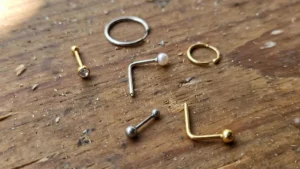
A nose pin is a short length of metal, usually between 6 and 8 millimetres long, with a decorative end on one side and a small stopper, bend, or flat disc on the other. The pin passes through a healed nostril piercing and the decorative end sits on the outside of the nose. Because there is no curve, no hoop, and no bar, the pin lies close to the skin and moves very little during the day.
That low profile is the whole point. A nose pin does not snag on jumpers, scarves, or towels the way a hoop can, and it does not press against glasses or a phone the way a longer bar might. It is the style most people choose when they want nose jewellery that reads as a detail rather than a statement, something that catches the light when you turn your head but never dominates your face.
It also asks very little of the wearer. Once the piercing is healed, a nose pin can be put in in seconds, worn all day without adjustment, and taken out at night without tools. That simplicity is why it is often the first piece someone buys after their piercing heals, and the piece they return to when a bolder style starts to feel like too much effort.
How we chose these nose pins and what to look for
Look first at the metal. Titanium and solid gold are the safest choices, especially for skin that reacts easily, because they rarely cause irritation and do not tarnish. Surgical steel is a good mid-priced option for most people, while silver is beautiful but softer and can tarnish. Plated jewellery can look identical in a photograph, but the plating wears away with time, and what is underneath is often a cheaper metal that irritates the skin.

Look next at the length and the thickness, known as the gauge. A standard nostril piercing is usually 18 or 20 gauge, and the pin should match it. Too thin and the pin will move and irritate the piercing; too thick and it will not go in at all. Length matters just as much. A pin that is too long will stick out and catch on things, while one that is too short will press the decorative end hard against the skin. Our guide to gold jewellery for everyday wear explains the same principle for rings and necklaces: the right metal and the right fit matter far more than the price.
Finally, look at the end itself. A small ball or a 1.5 to 2 millimetre stone suits most faces for daily wear. A larger stone, a pearl, or a shaped motif suits evening looks and photographs. The end should be smooth, with no sharp prongs or rough edges, because anything rough will catch on skin and fabric. If the end is a stone, check that it is set securely, because a loose stone is the most common reason a nose pin is lost.
The 9 best nose pins for women in 2027
The Classic Titanium Pin
What we like: Implant-grade titanium, a smooth 2 millimetre ball end, light enough to forget, and the safest metal for sensitive or newly healed skin. What to consider: Plain by design, with no stone or colour, so it reads as a detail rather than a feature. Best For: Everyday wear and sensitive skin. Material: Implant-grade titanium. Price Range: Approximately £10 to £25. Standout Feature: The most comfortable pin to wear all day.
The Gold Ball-End Pin
What we like: A warm 14-carat gold ball end that catches the light softly, with a polished finish that suits warm skin tones and gold jewellery. What to consider: Solid gold costs more than plated gold, and the ball end is small, so it suits a subtle look. Best For: Warm skin tones and daily gold jewellery. Material: 14-carat solid gold. Price Range: Approximately £60 to £150. Standout Feature: A warm, soft glow that flatters the face.
The Diamond-Set Gold Pin
What we like: A small round diamond set in 14-carat gold, with a clean, bright sparkle that reads as a single point of light on the nose. What to consider: The most expensive pin here, and the stone needs checking now and then to make sure the setting is still tight. Best For: Special occasions and evening wear. Material: 14-carat gold with a diamond. Price Range: Approximately £150 to £400. Standout Feature: The brightest sparkle of any pin in this guide.
The Silver Pin
What we like: A cool, bright sterling silver ball end that suits cool skin tones and silver jewellery, at a price that makes it easy to own more than one. What to consider: Silver tarnishes and needs polishing, and it is softer than titanium, so it can bend if handled roughly. Best For: Cool skin tones and silver jewellery. Material: Sterling silver. Price Range: Approximately £15 to £45. Standout Feature: The brightest, coolest finish at an accessible price.
The Rose Gold Thin Pin
What we like: A slim rose gold pin with a tiny ball end, in a soft pink tone that flatters warm and neutral skin and looks modern without being loud. What to consider: The thin post can bend if forced, so it needs gentle handling when you put it in. Best For: A soft, modern look and warm skin tones. Material: 14-carat rose gold. Price Range: Approximately £50 to £120. Standout Feature: The softest colour of any metal in this guide.
The Crystal Pin
What we like: A clear crystal set in a slim metal pin, giving a bright, diamond-like sparkle at a fraction of the price, with a clean, simple setting. What to consider: Crystal is not diamond, so it can scratch and lose its sparkle over time, and the setting needs checking for looseness. Best For: Evening looks and anyone who wants sparkle on a budget. Material: Crystal set in surgical steel or titanium. Price Range: Approximately £12 to £35. Standout Feature: The most sparkle for the least money.
The Pearl Accent Pin
What we like: A small freshwater pearl on a slim gold or silver pin, soft and luminous, with a classic feel that suits weddings, formal events, and soft, romantic styling. What to consider: Pearls are delicate and should not be cleaned with harsh chemicals or ultrasonic cleaners. Best For: Weddings, formal occasions, and classic styling. Material: Freshwater pearl on a gold or silver pin. Price Range: Approximately £30 to £90. Standout Feature: The softest, most romantic end of any pin here.
The Blackened Steel Pin
What we like: A dark, matte blackened steel ball end that reads as modern and understated, and suits bold styling, dark hair, and monochrome outfits. What to consider: The dark coating can wear with time, and it suits a specific style, so it is less versatile than gold or silver. Best For: Bold, modern styling and dark hair. Material: Blackened surgical steel. Price Range: Approximately £12 to £30. Standout Feature: The most distinctive look of any pin in this guide.
The Double-End Pin
What we like: A small stone at each end of the pin, so the nose is decorated on both sides, with a balanced look that suits a higher nostril piercing. What to consider: It needs a piercing that sits high enough for both ends to show, and it is slightly harder to put in than a single-end pin. Best For: Higher nostril piercings and a balanced, symmetrical look. Material: Titanium or gold with crystal ends. Price Range: Approximately £20 to £60. Standout Feature: The only pin here that decorates both sides of the nose.
Most nose pins decorate one side only. The double-end pin is different, and it suits a piercing placed a little higher on the nostril, where both ends are visible. It is a small detail, but it changes the whole look.
Which nose pin is right for you
Start with your skin. If your skin reacts to cheap earrings or costume jewellery, choose titanium or solid gold and avoid plated metals entirely. If your skin is not sensitive, surgical steel and sterling silver are both good, affordable choices. The metal matters more than the design, because a beautiful pin you cannot wear is a waste of money.
Then think about your face. A small ball or a 1.5 millimetre stone suits a small nose and fine features. A 2 to 2.5 millimetre stone suits a larger nose or a face that can carry a little more sparkle. The pin should be visible when you turn your head, but it should not be the first thing anyone notices about your face. A good test is a photograph: if the pin draws your eye away from your smile, it is too large.
Finally, think about how you will wear it. For daily wear, choose titanium or gold, a small end, and a pin you can put in and take out without thinking. For evenings, choose a diamond, a crystal, or a pearl, and keep it in a small box so it is ready when you need it. A guide to the best nose rings for women is worth reading alongside this one, because the same questions of metal, size, and occasion apply to every style of nose jewellery.
The caveats that matter
A nose pin is only suitable for a fully healed nostril piercing. Putting a pin into a fresh or irritated piercing can trap bacteria, slow healing, and cause a bump that takes weeks to settle. If your piercing is less than six months old, or if it is still sore, red, or weeping, wait. The pin will still be there when you are ready.
| Detail | What is known |
|---|---|
| Safest metals | Implant-grade titanium and solid gold, especially for sensitive skin |
| Standard gauge | 18 or 20 gauge for most nostril piercings, matching the original piercing |
| Typical pin length | 6 to 8 millimetres, depending on the thickness of the nostril |
| Best end size for daily wear | 1.5 to 2 millimetres, small enough to sit flat and stay comfortable |
| Who should avoid plated pins | Anyone with sensitive skin, as plating wears away and can irritate |
| When to wait | Until the piercing is fully healed, usually at least six months |
| How to clean a pin | Warm water and mild soap, dried fully before wearing |
| What a pin does not do | It does not stay in on its own during sleep or sport without a secure end |
If you are pregnant, breastfeeding, or taking medication that affects healing, check with your clinician or piercer before changing your nose jewellery. That is not a formality. Healing changes, and a pin that was comfortable before may irritate a piercing that is healing more slowly than usual.
Checklist: buying a nose pin honestly
Use these checks before you buy, and again after a week of wear.
- Check the metal: titanium or solid gold for sensitive skin, and avoid plated metals if your skin reacts easily.
- Check the gauge and length: match the gauge of your piercing and measure the length you need before ordering.
- Check the end: it should be smooth, with no sharp prongs or rough edges, and the stone should sit tightly in its setting.
- Check the finish: hold the pin up to the light and look for scratches, rough spots, or uneven colour.
- Try it at home first: wear it for a day before an event, and check that it does not hurt, wobble, or fall out.
- Keep the receipt: a good seller will exchange a pin that does not fit, and you should not be stuck with one that does not suit you.
Frequently asked questions
How do I know what size nose pin I need?
Ask your piercer, or measure the pin you already wear. Most nostril piercings are 18 or 20 gauge, and most pins are 6 to 8 millimetres long. If you are unsure, buy from a seller who accepts returns, and try the pin at home before wearing it out.
Can I wear a nose pin every day?
Yes, once the piercing is fully healed. Titanium and solid gold pins are the best choices for daily wear because they rarely irritate the skin and do not tarnish. Take the pin out at night if it feels uncomfortable, and clean it regularly.
Is a nose pin better than a nose ring?
Neither is better in general. A pin is quieter, less likely to snag, and easier to wear every day. A ring is bolder and more visible. Most people who wear nose jewellery own both and choose according to the occasion.
How do I clean a nose pin?
Wash it in warm water with a drop of mild soap, rinse it well, and dry it fully before you put it in. Do not use harsh chemicals, and do not clean a pearl pin in an ultrasonic cleaner. Clean the pin at least once a week if you wear it daily.
Why does my nose pin keep falling out?
Usually because the pin is too short, too thin, or the end is not secure. A pin that is too short will slip through the piercing, and a pin that is too thin will move around and work its way out. Try a slightly longer pin, or one with a bent or flattened end that holds it in place. A guide to pearl necklaces for women may seem unrelated, but it makes the same point about fit: a piece that does not fit properly will not stay where you put it, however beautiful it is.
Can I sleep in a nose pin?
Yes, if the pin is comfortable and the end is secure. Many people sleep in a small titanium or gold pin without any trouble. If the pin presses into your nose while you sleep, or if it falls out overnight, take it out before bed and put it back in the morning.
The bottom line
The best nose pin in 2027 is not the most expensive or the most sparkling. It is the one that matches your piercing, suits your skin, and sits so comfortably that you forget it is there. For most women, that means a titanium or solid gold pin with a small ball or stone end, bought in the right gauge and length, and worn every day without fuss.
Start with a simple, safe pin, wear it for a few weeks, and only then add a diamond, a crystal, or a pearl for evenings. That is the honest way to build a small collection of nose pins that you will actually wear, rather than a box of beautiful pieces that never leave the drawer.