Straight vs Curved Nose Bars 2027: 9 Comparisons That Matter
A nose bar is a small bar of jewellery that sits across a nose piercing, with a ball or gem at each end. The one choice that changes how it looks and feels more than any other is the shape of the bar itself: straight or curved. A straight bar runs in a clean line across the piercing, while a curved bar follows the natural shape of the nose, and the difference shows in comfort, security and style.
Straight bars look crisp and deliberate. They suit a minimal, modern look. Curved bars look softer and more natural. They follow the shape of the face, feel less rigid against the skin, and suit people who want the jewellery to blend in rather than stand out.
Below are nine comparisons that matter in 2027, from how each shape looks on the face to how it feels all day, how it stays put, and what it costs. Each comparison ends with what we like, what to consider, and who each shape suits best, so you can choose with your piercing and your routine in mind.
Key takeaways
- Straight nose bars look crisp and modern, while curved nose bars look softer and follow the natural shape of the nose.
- Curved bars usually feel more comfortable against the skin, especially on a septum piercing or a curved nostril.
- Straight bars are easier to clean and to put in, while curved bars need a little more care to insert and remove.
- Security depends more on the ends and the fit than on the shape, so check the balls and the length before you buy.
- Neither shape suits every piercing: a fresh piercing, a tight fit or an unusual piercing angle can rule one out, so check with your piercer first.
What straight and curved nose bars actually are
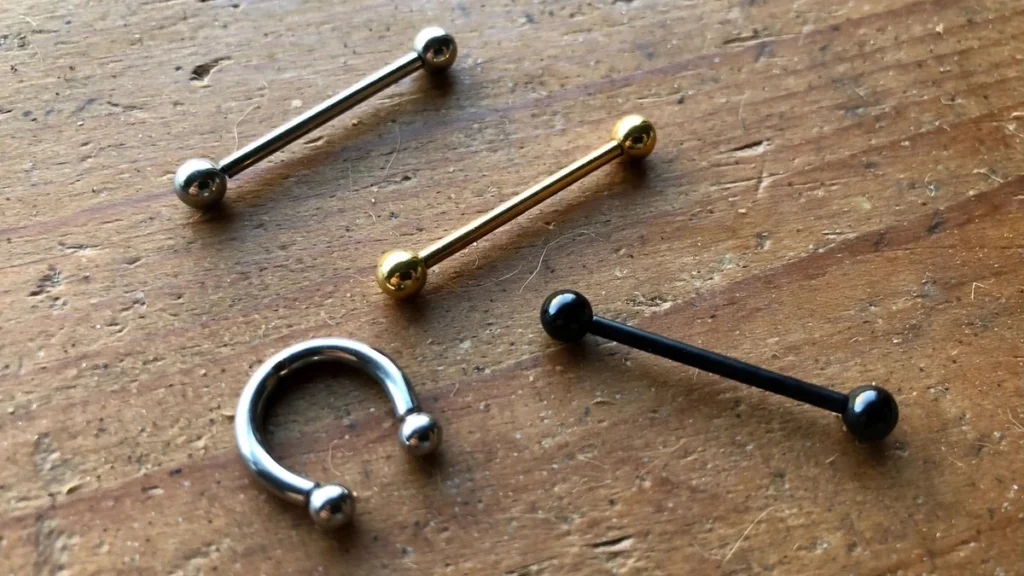
A straight nose bar is a short, straight piece of metal, usually in 18 or 16 gauge, with a ball, flat disc or small gem at each end. It passes through the piercing in a straight line, and it is the shape most people picture when they think of a nose bar. It suits nostril piercings well, and it is the standard choice for a septum piercing that is meant to look neat and symmetrical.
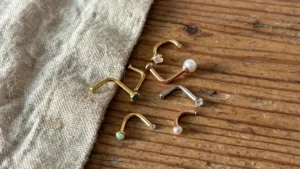
A curved nose bar, sometimes called a banana bar, has a gentle bend in the middle, so the ends angle slightly towards the face. The curve follows the natural shape of the nose, which makes it sit closer to the skin and feel less rigid. It is a popular choice for septum piercings and for nostril piercings where the straight bar would stick out or press on the skin.
Both shapes come in the same metals, gold, silver and titanium, in the same gauges, and in lengths from about 6 to 10 millimetres.
How we chose these comparisons and what to look for
We judged straight and curved nose bars on the things that actually change how they look and feel on the face: appearance, comfort, security, ease of use, versatility, durability, cost, matching with other jewellery, and what the piece is worth afterwards.

Look first at your piercing. A straight piercing suits a straight bar, and a piercing that sits at an angle often suits a curved bar better. Look next at the length: the bar should leave a little room without sticking out, and the ends should sit close to the skin without pressing on it. Our guide to the best necklaces for women makes the same point about jewellery in general: the piece that fits your body is the piece you will actually wear, and a nose bar is no different.
Finally, check the ends. Balls screw on and stay put, gems catch the light, and flat discs sit closest to the skin.
The 9 comparisons that matter in 2027
First impressions and how they look on the nose
What we like: Straight bars look clean, sharp and modern, with a neat line that suits a minimal style. Curved bars look soft and natural, and they follow the shape of the nose so the jewellery blends in. What to consider: A straight bar can look stark on a small nose, and a curved bar can look almost invisible, which is not what everyone wants.
Best for: Straight bars for a bold, modern look; curved bars for a soft, natural look. Material: Gold, silver or titanium in either shape. Price range: Both shapes cost about the same, from about £10 to £60 in silver and £40 to £250 in gold. Standout feature: A straight bar makes a statement; a curved bar disappears into the look.
Comfort and how they feel all day
What we like: Curved bars follow the nose, so they press less on the skin and feel easier to forget. Straight bars sit evenly, so they do not twist or turn during the day. What to consider: A straight bar can press on a curved piercing, and a curved bar can feel odd if the piercing is perfectly straight.
Best for: Curved bars for septum piercings and sensitive skin; straight bars for nostril piercings. Material: Lightweight 18-gauge bars in either shape. Price range: Slim bars cost less in both shapes. Standout feature: A curved bar hugs the nose and stays out of the way.
Comfort comes from how the bar meets your skin. The shape that follows your piercing will always feel better than the shape that fights it.
Security and what stays put
What we like: Straight bars stay in line and are easy to check, while curved bars sit closer to the face and are less likely to catch on clothing. What to consider: Either shape can fall out if an end comes loose, so check the balls regularly, especially in the first weeks.
Best for: Curved bars for active days; straight bars for a secure, easy-to-check fit. Material: Threaded ends in any metal. Price range: Secure screw-on ends cost a little more in both shapes. Standout feature: A curved bar is harder to snag on a scarf or mask.
Ease of putting it on and taking it off
What we like: Straight bars slide in easily in a straight line, which makes them simple to change. Curved bars take a little practice, but once you know the angle they go in smoothly. What to consider: A curved bar can be fiddly the first few times, and a tight straight bar can be hard to grip if the ends are small.
Best for: Straight bars for beginners and frequent changers; curved bars once you know the angle. Material: Any metal, with larger balls for an easier grip. Price range: No price difference for ease of use. Standout feature: A straight bar is the easiest shape to change.
Ease of use matters more than people expect. A bar you can change in a minute is a bar you will actually wear, while a fiddly one stays in a drawer.
Versatility: dressing it up or down
What we like: Straight bars suit both casual and formal looks, because their clean line works with anything. Curved bars suit soft, everyday looks, and they pair well with delicate jewellery. What to consider: A large gem-set bar in either shape can be too much for a strict workplace, whatever the shape.
Best for: Straight bars for a versatile, all-occasion piece; curved bars for a soft everyday piece. Material: Small polished bars in either shape for strict dress codes. Price range: Small plain bars are the cheapest in both shapes. Standout feature: A small straight bar works almost everywhere.
Versatility is about size as much as shape. A small, plain bar in either shape passes where a large gem-set one would not.
Durability and what can go wrong
What we like: Both shapes are durable when they are well made, and neither bends easily in normal wear. What to consider: A thin curved bar can bend if it catches on something, and a straight bar can feel the full force of a knock because it does not flex with the nose.
Best for: Straight bars for a sturdy, simple piece; curved bars for a piece that moves with the nose. Material: Solid gold or titanium for the longest life. Price range: Thicker bars cost more in both shapes. Standout feature: A well-made bar in either shape lasts for years.
Cost for one bar and for a set
What we like: Both shapes cost about the same, so shape does not force a budget choice. Silver bars in either shape are affordable enough to own several, while one good gold bar can be the piece you wear every day. What to consider: Curved bars in unusual sizes can cost a little more, and a cheap bar in either shape is often poorly finished.
Best for: Either shape for a budget buy; gold for one lasting piece. Material: Sterling silver, or solid 14-carat gold. Price range: Silver £10 to £40; gold £40 to £250 and more, in both shapes. Standout feature: Shape is free: the metal decides the price.
Matching outfits and other jewellery
What we like: Straight bars pair with sharp, structured outfits and modern jewellery. Curved bars pair with soft fabrics, layered looks and delicate pieces. What to consider: The shape matters less than the metal and the size, so match those first and let the shape follow.
Best for: Straight bars for structured, modern outfits; curved bars for soft, layered outfits. Material: Gold, silver or titanium in either shape. Price range: No price difference for matching. Standout feature: A curved bar blends with layered jewellery beautifully.
Look at the jewellery you already wear most. A gold anklet, such as our guide to the best gold anklets, shows how a small piece of jewellery can tie a whole look together, and a nose bar works the same way when its metal matches the rest of what you wear.
Keeping it afterwards as a keepsake
What we like: A good bar in either shape can be kept for years, and a solid gold bar holds its value whatever its shape. What to consider: Shape does not change resale value, so buy the shape you will wear, not the shape you think will sell.
Best for: Either shape for a keepsake; solid gold for real resale value. Material: Solid 14-carat or 18-carat gold. Price range: Solid gold from about £80; silver rarely resells above its purchase price. Standout feature: The metal, not the shape, decides the value.
If you want a piece to last and to mean something later, solid gold in the shape that fits your piercing is the honest choice.
Which nose bar is right for you
Start with your piercing. A straight nostril piercing usually suits a straight bar, and a septum piercing or a piercing that sits at an angle often suits a curved bar better. Your piercer can tell you which shape your piercing wants, and that advice is worth more than any guide, because every piercing sits a little differently.
Next, think about comfort. If your nose is sensitive, or if you wear a face mask or glasses often, a curved bar that hugs the nose is usually more comfortable. If you like a clean, modern line and you change your jewellery often, a straight bar is simpler to put in and take out.
Finally, think about the look you want. A straight bar makes a small, deliberate statement, while a curved bar blends into the face and lets the rest of your jewellery do the talking. Neither is better in general; the right shape is the one that fits your piercing, feels comfortable all day, and looks like it belongs on your face.
The caveats that matter
Straight and curved nose bars are both well-established jewellery shapes, but neither suits every piercing. A fresh piercing is more sensitive than a healed one, and a bar that is too tight, too long or the wrong shape can slow healing. A curved bar in a straight piercing can press unevenly, and a straight bar in a curved piercing can stick out or rub, so the shape must match the piercing, not just the look you want.
| Detail | What is known |
|---|---|
| Best for nostril piercings | Straight bars, for a clean, even line |
| Best for septum piercings | Curved bars, which follow the shape of the nose |
| Comfort | Curved bars press less; straight bars sit more evenly |
| Ease of changing | Straight bars slide in easily; curved bars take practice |
| Security | Both stay put if the ends are tight and the length is right |
| Typical price | Both shapes cost about the same in the same metal |
| Who should be careful | Anyone with a fresh piercing, or a piercing at an unusual angle |
| What neither shape does | Neither shape heals a piercing or fits every nose |
If you are pregnant, breastfeeding, or using prescription skincare, check with your clinician before changing a piercing or adding new jewellery near the face. That is not a formality. Skin is more reactive at some times than others, and a simple check avoids weeks of irritation.
Checklist: choosing between straight and curved
Use these checks before you buy, and again when the bar arrives.
- Check your piercing: straight for a straight piercing, curved for a septum or angled piercing, and ask your piercer if you are unsure.
- Check the fit: the gauge should match your piercing, and the length should leave a little room without sticking out.
- Check the ends: smooth ball or gem ends that screw or press on securely and do not catch on clothing or a mask.
- Check the comfort: try the bar at home first, and wear it for a full day before deciding it is right.
- Check the metal: solid gold or titanium for sensitive skin, stamped 925 for sterling silver.
- Check the return policy before you pay, so you can send it back if the shape or fit is wrong.
Frequently asked questions
Is a straight or curved nose bar better?
Neither is better in general. Straight bars suit straight piercings and a modern look, while curved bars suit septum piercings and a softer look. Choose by your piercing first, then by comfort, then by style.
Can I wear a curved bar in a nostril piercing?
Yes, if the piercing angle suits it. A curved bar can sit more comfortably in a nostril piercing that is not perfectly straight, but a straight bar is usually the simpler choice for a standard nostril piercing.
Which shape is more comfortable?
Curved bars are usually more comfortable, because they follow the shape of the nose and press less on the skin. Straight bars can feel more rigid, especially on a septum piercing, but a well-fitted straight bar is comfortable too.
Do curved nose bars fall out more easily?
No, not if the ends are tight and the length is right. Security depends on the ends and the fit, not the shape, so check the balls regularly in the first weeks, whatever shape you wear.
Can I change from a straight bar to a curved bar?
Yes, once your piercing is fully healed. A luxury watch, such as our guide to the best luxury watches, is changed to suit the occasion, and a nose bar works the same way: swap shapes when your piercing is healed and you want a different look.
Does the shape affect the price?
Almost never. Straight and curved bars cost about the same in the same metal and size. The metal, the gauge and the finish decide the price, not the shape.
The bottom line
Straight and curved nose bars do the same job in different ways. Straight bars are clean, modern and easy to change, and they suit straight nostril piercings. Curved bars are soft, comfortable and natural-looking, and they suit septum piercings and angled piercings. The right shape is the one that fits your piercing and feels comfortable all day.
Choose the shape by your piercing first, then the metal, then the finish. Ask your piercer if you are unsure, try the bar at home for a full day, and check the ends before you wear it out. That is the honest way to buy a nose bar you will still be glad to wear next year.