The best olive oil is the one that suits the dish in front of you: a grassy, peppery extra virgin for finishing a salad, and a milder oil for everyday frying and roasting. Olive oil is not one flavour, and the bottle that lifts a tomato salad can taste too strong in a cake.
So which is the best olive oil in 2027? A good extra virgin oil is the best all-rounder for most kitchens, because it brings the most flavour and suits dressings, drizzling and gentle cooking. This guide compares the ten best olive oil types in 2027, explains the main origins, and looks at olive oil and health in general terms.
Key takeaways:
- Extra virgin olive oil is the best all-rounder for flavour, finishing and dressings.
- Milder oils are better for everyday frying, roasting and baking, where a strong flavour would take over.
- Origin shapes flavour: Spanish oils tend to be smooth and nutty, Italian oils often peppery, and Greek oils often grassy and green.
- Buy in dark glass or tins, check the harvest date, and use the oil within a few months of opening.
- Olive oil is a source of monounsaturated fat and is a central part of the Mediterranean way of eating.
Olive oil types and origins
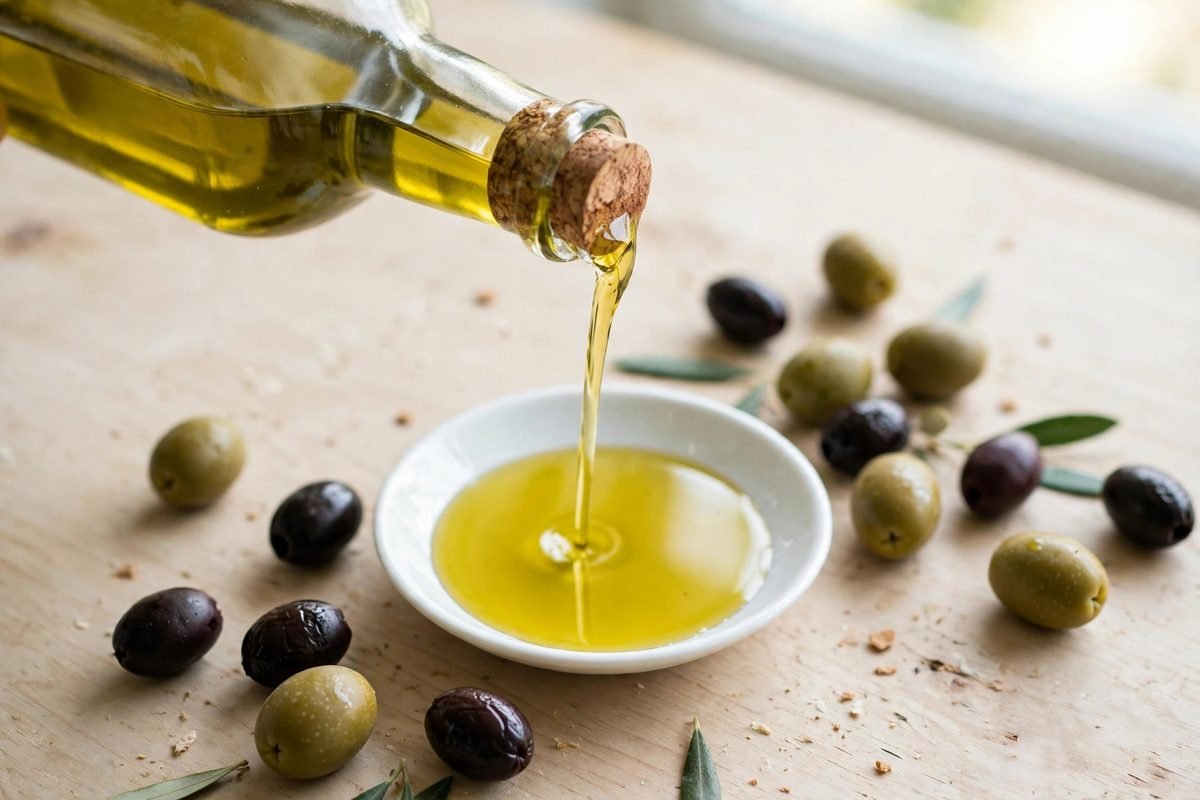
Olive oil is graded by how it is made and how it tastes. Extra virgin olive oil sits at the top: it is pressed from fresh olives without heat or chemical refining, and it must pass tasting tests for flavour and aroma. Below it sit virgin olive oil, also pressed without refining but allowing more flavour variation, and refined olive oil, processed to remove strong flavours and usually blended with a little extra virgin oil.
The grade tells you how the oil was made, but not how it will taste. Two extra virgin oils can taste very different, because flavour depends on the olive variety, the ripeness of the fruit at harvest, and the soil and climate. Early-harvest oils, made from green olives, tend to taste grassy and peppery, while oils from ripe olives taste softer and more buttery.
Spain is the largest olive oil producer in the world, and Spanish oils are often smooth, nutty and mild, which makes them easy everyday oils. Much Spanish oil comes from the Picual olive, which gives a robust, slightly woody flavour, and from the Arbequina olive, which is softer and fruitier. Italian oils are often peppery and herbal, and many come from small groves in Tuscany, Puglia and Sicily.
Greek oils are often bold and green, with a fresh, grassy bite and a peppery finish, and the Koroneiki olive, grown widely in Crete and the Peloponnese, is known for a fruity, pungent oil. Portugal, Tunisia and Turkey also produce widely used oils, often at a gentler flavour level. None of these origins is better than the others; they are different styles, and the right one depends on the dish.
Look for a harvest date rather than only a best-before date, because olive oil is a fresh product and its flavour fades with time. A dark glass bottle or a tin protects the oil from light, a main cause of staleness. Cold pressed describes the traditional pressing method, while single estate and single origin mean the oil comes from one place rather than a blend from several countries.
Olive oil and health
Olive oil is a central part of the Mediterranean way of eating, which is widely regarded as a healthy pattern of eating. The oil is rich in monounsaturated fat, the kind found in olives, nuts and avocados, and it contains plant compounds, including polyphenols, which give good extra virgin oil its peppery bite. That peppery catch is a normal sign of a fresh, well-made oil, not a fault.
In general terms, replacing saturated fats such as butter and lard with unsaturated fats such as olive oil is a well-established part of dietary guidance in many countries. In Mediterranean cooking, meals are built around vegetables, beans, whole grains, fish and fruit, with meat eaten less often. It is the pattern as a whole, rather than any single ingredient, that is linked with good health.
None of this makes olive oil a medicine, and it is still an energy-dense food, with roughly the same calories per spoonful as any other cooking oil. A drizzle over a salad is a different matter from pouring freely over every meal. Use it to make vegetables, beans and grains taste good.
The 10 best olive oil types in 2027
1. Everyday extra virgin olive oil
A good everyday extra virgin oil has a fresh, green flavour with a gentle peppery finish, and it works for dressings, drizzling over cooked vegetables, and gentle sautéing. It is the most versatile oil in the kitchen.
Best for: a single bottle that does most jobs well.
2. Early-harvest extra virgin olive oil
Early-harvest oil is made from olives picked while still green, and it tastes greener and more peppery than oil from ripe fruit. It is a finishing oil: a spoonful over a tomato salad, a bowl of soup or grilled bread shows it at its best.
Best for: finishing salads, soups and grilled bread.
3. Mild extra virgin olive oil
A mild extra virgin oil keeps the freshness of the top grade with a softer, rounder flavour. It suits cooks who find bold oils too strong, and dishes where olive oil should support rather than lead, such as a delicate fish dish.
Best for: cooks who prefer a gentle olive flavour.
4. Virgin olive oil
Virgin olive oil is pressed like extra virgin oil but allows more variation in flavour and aroma. It is a solid cooking oil, with a recognisable olive character at a gentler level, and it suits everyday frying and roasting.
Best for: everyday cooking at a gentler flavour level.
5. Light-tasting olive oil
Light-tasting olive oil is a refined oil blended with a little extra virgin oil. The word light refers to flavour, not calories: it has the same energy per spoonful as any olive oil, but a much fainter taste, which suits baking and frying.
Best for: baking, frying and roasting.
6. Cold-pressed extra virgin olive oil
Cold-pressed oil is made without heat during pressing, which helps keep the fresh, fruity aromas of the olives. Most good extra virgin oils are cold pressed, though the term is no guarantee of flavour. Taste remains the real test.
Best for: dressings and finishing, where fresh flavour matters most.
7. Spanish single-origin olive oil
A Spanish single-origin oil, often from Andalusia, tends to be smooth, nutty and rounded, with a mild peppery finish. It is easy to cook with and to drizzle, and it suits sautéed vegetables and grilled fish.
Best for: smooth, nutty everyday cooking and drizzling.
8. Italian single-origin olive oil
An Italian single-origin oil, often from Tuscany or Puglia, tends to be greener and more peppery, with herbal notes and a clean, grassy bite. It suits pasta, bean soup, and a tomato and mozzarella salad.
Best for: peppery, herbal finishing on Italian dishes.
9. Greek single-origin olive oil
A Greek single-origin oil, often made from Koroneiki olives, tends to be bold, green and fruity, with a lively peppery finish. A little goes a long way, and it is at its best over salads, grilled vegetables and fish.
Best for: bold, grassy finishing on salads and grilled vegetables.
10. Infused olive oil
Infused olive oil is extra virgin or mild oil flavoured with herbs, chilli, garlic or citrus, by steeping the flavouring in the oil or pressing it with the olives. Chilli oil lifts a pizza, lemon oil brightens fish, and rosemary oil suits roast potatoes. Keep it for finishing.
Best for: finishing dishes with a clear herbal or citrus note.
How do the best olive oils compare?
| Oil type | Flavour | Best use | Heat |
|---|---|---|---|
| Everyday extra virgin | Fresh and green | Dressings and drizzling | Gentle cooking |
| Early-harvest extra virgin | Grassy and peppery | Finishing salads and soup | No heat |
| Mild extra virgin | Soft and round | Delicate dishes | Gentle cooking |
| Virgin olive oil | Recognisable olive | Everyday cooking | Moderate cooking |
| Light-tasting olive oil | Very mild | Baking and frying | Higher-heat cooking |
| Cold-pressed extra virgin | Fresh and fruity | Dressings and finishing | No heat |
| Spanish single-origin | Smooth and nutty | Everyday cooking | Gentle cooking |
| Italian single-origin | Peppery and herbal | Pasta and salads | No heat |
| Greek single-origin | Bold and grassy | Salads and grilled vegetables | No heat |
| Infused olive oil | Herbal or citrus | Finishing | No heat |
Your olive oil buying checklist
Work through this list before you buy.
- Check the harvest date: choose the most recent harvest, and use the oil within a few months of opening.
- Pick the grade for the job: extra virgin for flavour, a milder oil for frying and baking.
- Choose dark glass or a tin: light is the enemy of fresh oil, so avoid clear bottles left on a bright shelf.
- Taste before you commit: a good oil should taste fresh and green, with a little peppery bite, never stale.
- Buy a size you will finish: a smaller bottle used quickly beats a large one that sits open for a year.
- Store it cool and dark: keep the bottle away from the cooker and out of sunlight, with the cap on.
Frequently asked questions
What is the best olive oil for everyday cooking?
A mild extra virgin oil or a good virgin olive oil is the best everyday choice, because it has a recognisable olive flavour without the strong peppery bite of a bold finishing oil.
Can you fry with extra virgin olive oil?
Yes, extra virgin olive oil is fine for gentle frying and sautéing, and it is used that way across the Mediterranean. For high-heat frying, a light-tasting olive oil is more practical, because its flavour is milder.
What is the difference between extra virgin and virgin olive oil?
Both are pressed without refining, but extra virgin oil must pass stricter tests for flavour, aroma and acidity, while virgin oil allows a little more variation. Extra virgin is the higher grade, and the one to choose when flavour is the point.
How should olive oil be stored?
Keep olive oil in a cool, dark place, away from the cooker and out of direct sunlight, with the cap firmly on. Use it within a few months of opening.
Does olive oil go off?
Yes, olive oil fades with time and can turn rancid, tasting stale, waxy or flat. A harvest date is the best guide, and a bottle open for many months is best replaced.
Is olive oil healthy?
Olive oil is rich in monounsaturated fat and is central to the Mediterranean way of eating, which is widely regarded as a healthy pattern. It is still energy-dense, so use it in modest amounts, with meals built around vegetables, beans and whole grains.
Sources
This guide reflects widely published guidance on olive oil grades, origins and the Mediterranean way of eating. For more, our guides to the best cookware skillet, how to roast a chicken and the best cookbooks cover the rest of the kitchen.
The bottom line
The best olive oil in 2027 is not a single bottle but a small shelf: a good extra virgin oil for flavour and finishing, and a milder oil for everyday cooking. Match the oil to the dish, buy fresh, and store it well.
Your next step is simple: pick a fresh extra virgin oil, taste it on good bread, and keep a milder oil beside it for the pan.
Note: this article is general food information, not medical advice. If you have a health condition or dietary question, speak to a qualified health professional.