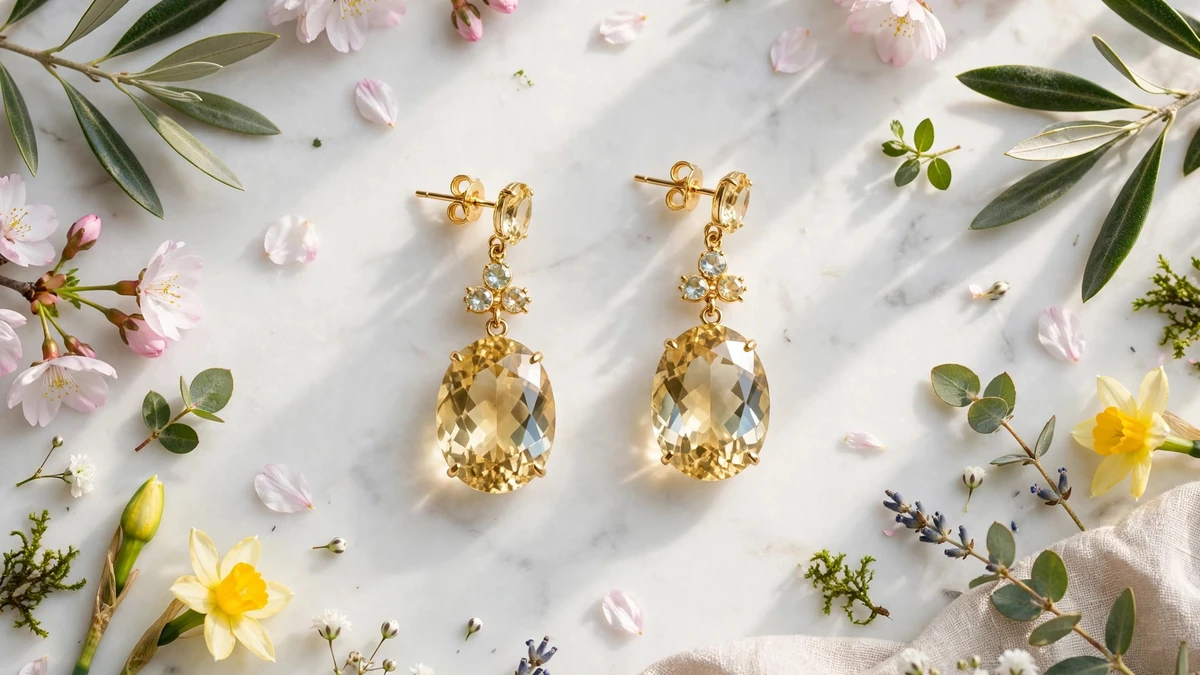
Topaz is the spring earring stone that does the most with the least effort. Pale blue topaz catches the light the way a clear spring sky does, white topaz reads as clean and bright without the price of a diamond, and the softer pink and champagne tones warm up the neutral knits and light jackets that define the season. The problem is not finding topaz earrings. It is knowing which ones are worth buying, because most blue topaz on the market has been treated, most white topaz is sold on a diamond comparison it cannot win, and a poorly set stone can look dull no matter how good the metal is.
That is why this guide is organised by stone colour and setting, not just by brand. A Swiss blue stud in a slim bezel is a different purchase from a London blue drop in yellow gold, and both are different again from a white topaz stud bought as an everyday piece. Price is a poor guide on its own. Some of the most wearable topaz earrings are mid-priced, and some of the most expensive are the hardest to wear every day.
Below are nine topaz earrings worth considering for spring 2027, from a classic blue stud to soft pink drops and clean white topaz for daily wear. Each one is described by what it is good at, what to watch for, and who it suits best, so you can choose with your wardrobe in mind, not just a bestseller list.
Key takeaways
- Blue topaz is the most popular spring choice, but almost all of it is heat-treated or irradiated to reach its colour, which is standard practice and should be disclosed.
- Topaz is hard, at Mohs 8, so it suits everyday wear, but it can chip if it is knocked hard, and a bezel setting protects the stone better than prongs.
- White topaz is bright and affordable, but it is not a diamond, and it will not hold value the way a diamond does.
- Choose the shade by your wardrobe: pale Swiss blue for light neutrals, deeper London blue for navy and dark spring layers, warm pink and champagne for gold jewellery.
- Topaz has no proven healing properties, and no earring will appreciate in value on its own, so buy it because you love wearing it.
What topaz actually is, and why it suits spring
Topaz is a silicate mineral that forms in a wide range of colours, from colourless white to pale blue, pink, champagne and golden yellow. The blue most people picture in spring is almost never natural. Colourless topaz is routinely irradiated and then heat-treated to produce the pale Swiss blue and the deeper London blue that dominate jewellery counters, and that treatment is stable, permanent and widely accepted in the trade. What matters is disclosure: a reputable seller will say the stone is treated, and a seller who will not say is a seller to walk away from.
Spring is topaz at its best because the stone is light, bright and cool-toned, which matches the season. Pale blue reads fresh against cream, white and soft grey, while white topaz works as a clean everyday stud that goes with everything and competes with nothing. The softer pink and champagne tones sit well with gold, which is useful if your spring wardrobe leans warm. Topaz is also practical: at Mohs 8 it is harder than most jewellery stones, so it resists the scratches that dull softer gems, and it does not need the careful handling that pearls or opals demand.
What topaz does not do is hold value. It is abundant, it is affordable, and it is not an investment stone. That is not a flaw. It is the reason you can buy a genuinely pretty pair of earrings for the price of a good dinner, wear them all spring, and not worry about them.
How we chose these earrings and what to look for
Look first at the colour and the cut. A well-cut topaz is bright from across the room, because the facets return light evenly, while a poorly cut stone looks flat and glassy even in good light. Pale Swiss blue should look like a clear sky, not washed out, and London blue should look like deep water, not murky. White topaz should be clean and bright, with no grey or yellow cast. Hold the earring under daylight if you can, because shop lighting flatters almost everything.

Look next at the setting and the metal. A bezel setting wraps the stone in metal and protects its edges, which makes it the best choice for everyday studs, while prongs show more of the stone and suit dressier drops. Sterling silver keeps the price down and suits cool tones, while 14k gold costs more and warms up pink and champagne topaz. Check the backs too: a screw-back or a sturdy butterfly back is worth more than it sounds, because a lost earring is the most expensive kind. Our guide to the best diamond earrings of 2027 explains the same setting logic, because a secure setting matters just as much for a modest stone as for an expensive one.
Finally, look at the disclosure and the return policy. A good seller states the treatment, the metal, and the stone size plainly, and lets you return the earrings if the colour disappoints in daylight. If the listing hides the treatment, the metal, or the size, treat that as information. A pair you enjoy wearing every day is worth more than a pair with a famous name that sits in a box.
The 9 best topaz earrings for spring 2027
Tiffany & Co. Blue Topaz Studs
What we like: A clean Swiss blue topaz in a slim four-prong setting, with the polished finishing and secure backs that make these easy to wear every day. The colour is pale and bright, exactly right for spring.
What to consider: Premium price for the stone size, and the prong setting leaves the edges exposed. Stone: Swiss blue topaz, treated. Setting: Sterling silver or 18k gold, four-prong stud. Best for: Everyday spring wear and light neutrals. Price range: From about $325.
Cartier Blue Topaz Studs
What we like: A deeper London blue topaz in a refined gold setting, with a calm, grown-up colour that suits navy, charcoal and dark spring tailoring better than pale blue does.
What to consider: The highest price here, and the darker stone can look almost grey in poor light. Stone: London blue topaz, treated. Setting: 18k gold, prong stud. Best for: Evening spring looks and dark tailoring. Price range: From about $1,050.
David Yurman Blue Topaz Studs
What we like: A bright blue topaz set with the brand’s signature cable detailing, which gives a simple stud a recognisable silhouette without making it fussy.
What to consider: The cable detail adds weight, and the price sits between high street and high jewellery. Stone: Blue topaz, treated. Setting: Sterling silver with 14k gold accents, bezel-set stud. Best for: Smart spring outfits and mixed-metal jewellery. Price range: From about $395.
Mejuri Blue Topaz Stud Earrings
What we like: A small, clean Swiss blue stud in solid gold, at a price that makes daily wear feel sensible rather than precious, with a secure screw-back option.
What to consider: The stone is small, so the colour reads subtly, and the setting is plain. Stone: Swiss blue topaz, treated. Setting: 14k solid gold, prong stud. Best for: Everyday wear and second piercings. Price range: From about $150.
Monica Vinader Blue Topaz Studs
What we like: A pale blue topaz in a slim gold vermeil setting, light enough for all-day wear and bright enough to lift a plain spring outfit.
What to consider: Vermeil wears faster than solid gold, so these need gentle handling and occasional replating. Stone: Swiss blue topaz, treated. Setting: 18k gold vermeil on sterling silver, prong stud. Best for: Light spring layers and first topaz earrings. Price range: From about $145.
Missoma White Topaz Stud Earrings
What we like: A clean white topaz stud that reads bright and neutral, in a slim gold vermeil setting that stacks well with other earrings and suits every skin tone.
What to consider: White topaz is not a diamond, and it will not sparkle the same way in low light. Stone: White topaz, untreated. Setting: 18k gold vermeil on sterling silver, prong stud. Best for: Daily wear and stacking with hoops or cuffs. Price range: From about $120.
Maria Black Pink Topaz Studs
What we like: A soft pink topaz with a warm, modern feel, in a minimal setting that suits gold jewellery and the blush and rose tones that run through spring fashion.
What to consider: Pink topaz is rarer and often paler than the photos suggest, so check the colour in daylight. Stone: Pink topaz, treated. Setting: Sterling silver or 14k gold, bezel-set stud. Best for: Warm spring palettes and gold jewellery. Price range: From about $160.
Astrid & Miyu Blue Topaz Drops
What we like: A small blue topaz drop on a fine chain, which moves and catches the light in a way studs cannot, and dresses up a simple spring outfit without trying hard.
What to consider: Drops swing and can catch on scarves and collars, and the chain needs care. Stone: Swiss blue topaz, treated. Setting: Gold-plated sterling silver, drop on a fine chain. Best for: Spring evenings and occasions. Price range: From about $95.
Thomas Sabo Champagne Topaz Drops
What we like: A warm champagne topaz drop with a soft golden glow, in a setting that suits both silver and gold jewellery and flatters warm skin tones.
What to consider: Champagne topaz can look brown in poor light, so the cut matters more than usual. Stone: Champagne topaz, treated. Setting: Sterling silver, drop. Best for: Warm spring evenings and golden neutrals. Price range: From about $110.
Which topaz earrings are right for you
Start with your wardrobe, not the stone. If your spring clothes are cream, white, soft grey and pale denim, Swiss blue is the natural choice, because it echoes those colours without competing with them. If you wear navy, charcoal and dark tailoring through spring, London blue will look richer and more deliberate. If your jewellery is mostly gold, pink and champagne topaz will sit more comfortably than blue, and if you wear mostly silver, blue and white topaz are the safer pairings.
Then think about how you will actually wear them. A stud is the right choice for work, for travel, and for days when you do not want to think about your earrings. A drop is the right choice for evenings, weddings and occasions, when a little movement is welcome. A bezel setting is the right choice if you are rough on jewellery, because it protects the stone, while a prong setting shows more of the stone and suits dressier pieces. For everyday gold, our guide to gold jewellery for everyday wear covers the same metal and setting questions in more detail, because the metal you choose matters as much as the stone.
Finally, be honest about the budget. Topaz is affordable by nature, and a well-made mid-priced pair will look better and last longer than a poorly made expensive one. Spend on the setting and the cut, not on the brand name, and buy the pair you will reach for most mornings, not the pair that looks best in a photograph.
The caveats that matter
Topaz is a straightforward stone, but there are still things worth knowing before you buy. The most common surprise is treatment. Almost all blue topaz is irradiated and heat-treated, and that is normal, stable and accepted, but it should be disclosed, and an undisclosed treatment is a reason to buy elsewhere. The second surprise is imitations: glass and synthetic spinel can mimic pale blue topaz, and a very cheap pair with a very bright colour deserves a second look. The third is durability. Topaz is hard, but it has perfect cleavage, which means a sharp knock in the wrong direction can split it, so a bezel setting and a little care are worth more than they sound.
| Detail | What is known |
|---|---|
| Hardness | Mohs 8, hard enough for everyday wear, but it can chip if knocked hard |
| Blue topaz treatment | Almost all blue topaz is irradiated and heat-treated; stable and standard, must be disclosed |
| Best spring shades | Pale Swiss blue for light neutrals, London blue for dark layers, pink and champagne for gold |
| Best setting for daily wear | Bezel, which protects the stone edges better than prongs |
| White topaz | Bright and affordable, but not a diamond, and it does not hold value like one |
| Cleaning | Warm soapy water and a soft brush; avoid ultrasonic cleaners and steam |
| What to avoid | Undisclosed treatment, very cheap bright stones, and sellers who hide the metal or size |
| What it does not do | It has no proven healing properties and is not an investment stone |
If you are buying topaz as a gift, check the return policy before you buy, because colour is the hardest thing to judge from a photograph, and a pale blue that looks perfect online can look washed out in daylight. A good seller will let you return it, and that is worth more than a small discount from one who will not.
Checklist: choosing topaz earrings honestly
Use these checks before you buy, and again when the earrings arrive.
- Check the treatment: the seller should state plainly whether the stone is treated, and how.
- Check the colour in daylight: pale blue should look like a clear sky, not washed out or grey.
- Check the setting: a bezel protects the stone for daily wear, prongs show more of it for occasions.
- Check the metal and the backs: solid gold or vermeil, and a secure back that will not slip off.
- Check the size: the stone size should be stated, and a small stone will read subtly, not boldly.
- Check the return policy: you should be able to return the earrings if the colour disappoints in daylight.
Frequently asked questions
Is blue topaz natural?
Almost never. Nearly all blue topaz is colourless topaz that has been irradiated and heat-treated to produce Swiss blue or London blue. The treatment is stable, permanent and standard in the trade, and a reputable seller discloses it.
Can I wear topaz earrings every day?
Yes. Topaz is hard, at Mohs 8, and suits daily wear, especially in a bezel setting. Avoid knocking them against hard surfaces, and take them off before heavy exercise or manual work, because a sharp knock can chip the stone.
Is white topaz a good diamond alternative?
It is a bright, affordable stone in its own right, but it is not a diamond. It is softer, it sparkles less in low light, and it does not hold value. Buy it because you like it, not because it imitates something else.
How do I clean topaz earrings?
Warm water, mild soap and a soft brush, then rinse and dry with a soft cloth. Avoid ultrasonic cleaners and steam cleaners, which can damage the stone, and store the earrings separately so harder stones do not scratch them.
Which topaz colour suits spring best?
Pale Swiss blue is the classic spring choice, because it matches light neutrals and clear spring light. Pink and champagne suit warm wardrobes and gold jewellery, while London blue suits dark spring layers. For a seasonal comparison, our guide to diamond jewellery for winter shows how the same setting logic shifts with the season.
Does topaz hold its value?
No. Topaz is abundant and affordable, and it is not an investment stone. Buy it because you enjoy wearing it, and spend on the setting and the cut, which are what you will notice every day.
The bottom line
The best topaz earrings for spring 2027 are not the most expensive or the most famous. They are the pair whose colour suits your wardrobe, whose setting protects the stone, and whose treatment and metal are disclosed plainly. For light spring neutrals, a pale Swiss blue stud is the honest choice. For dark tailoring, London blue is richer. For gold jewellery and warm skin, pink or champagne topaz will sit more comfortably than blue.
Choose one pair, check the colour in daylight, wear them all spring, and judge them on how often you reach for them, not on how they photograph. That is the honest way to buy a stone that is meant to be worn, not kept in a box.