


What do you actually do with the eleven minutes between dropping one kid at soccer and picking up another from piano? Most parents don’t plan those gaps. They just live in them. And that stretch of time, the one that happens between carpools, turns out to be one of the most revealing and underrated parts of modern family life.
The phrase itself has become shorthand for a specific kind of chaos: the hours spent shuttling children from school to practice to lessons to home, and the slivers of time wedged in between. Understanding what happens in those gaps, and how to make them work better, can change the texture of an entire week.
What “Between Carpools” Actually Refers To
between carpools describes the intervals in a family’s day that exist because of, and around, driving children from place to place. It is not a single moment. It is a category of time: the twenty minutes in a parking lot, the half hour before a practice starts, the quick stop at home that is too short to accomplish anything real.
For many households, this time is neither rest nor productivity. It is a holding pattern. Parents sit in running cars, scroll on phones, or run frantic errands with a child in tow. The mental load of tracking who needs to be where, and when, fills the space even when the car is parked.
The phrase also has cultural weight. It has become a lighthearted label for the juggling act of parenting when children’s schedules are dense and spread out. When someone says they will handle something “between carpools,” they mean it will happen in the margins, squeezed in around obligations that cannot move.
Why This Slice of Time Matters More Than It Seems
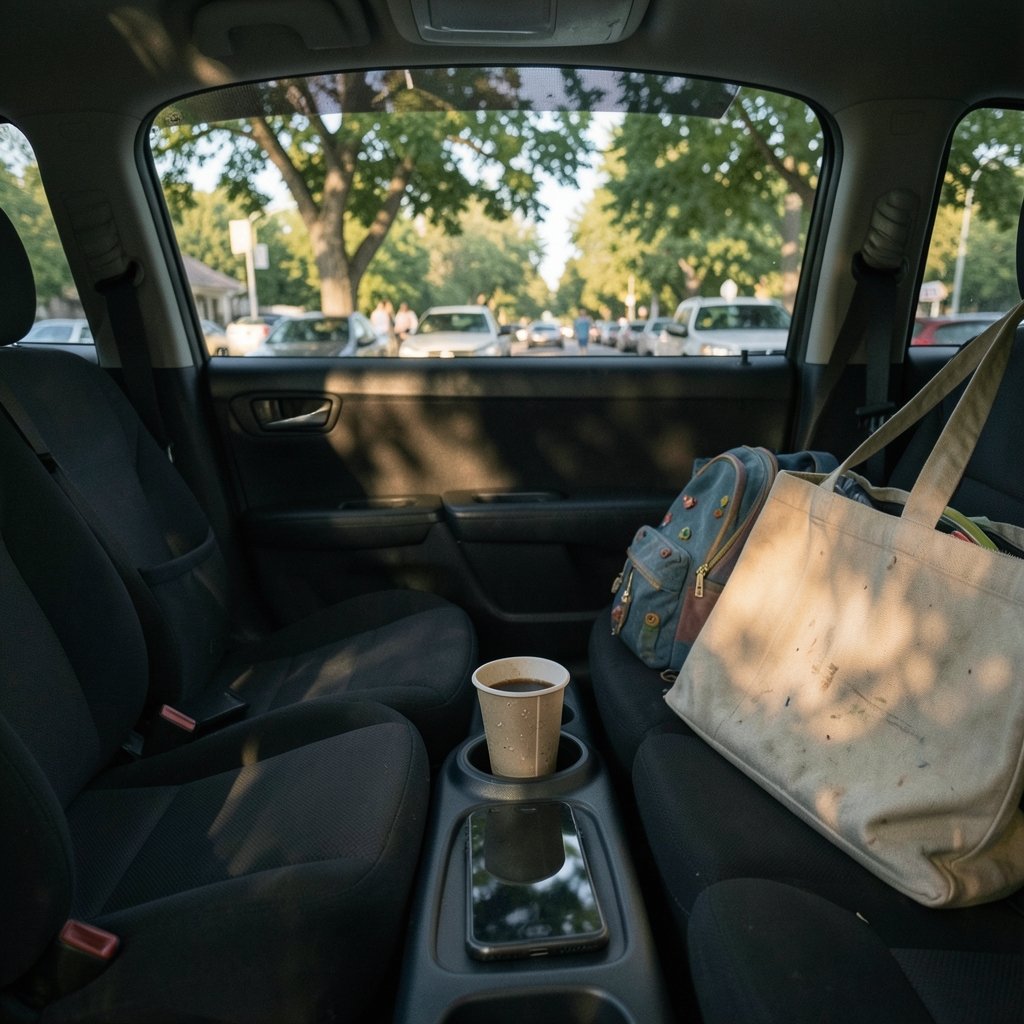
It would be easy to dismiss these gaps as dead time. But researchers who study family life and time use keep returning to a similar finding: it is not only the big, planned moments that shape how children feel about their family. The small, unplanned ones matter too.
A parked car with a parent and a child in it is a strange and useful space. There is no screen competing for attention in the same way, no chores visible, no sibling interrupting. Conversations that would never surface at the dinner table sometimes emerge in a pickup line. A child who shrugs at “how was school?” may open up ten minutes later while waiting for a lesson to begin.
That is the quiet value of the time between carpools. It is unstructured, which is exactly why it can be honest.
The Real Logistics of the Carpool Gap
Practical parents know that the gap is rarely as simple as it sounds. A few realities define how this time actually works.
- The gap is often too short to go home and too long to just wait. Twenty-five minutes is the most awkward duration in parenting. It is not enough to start a project, but it is long enough to feel wasteful.
- Weather and traffic reshape everything. A gap planned around a ten-minute drive becomes forty minutes when a road closes or a storm rolls in.
- Younger siblings get dragged along. The child who is not in the activity becomes a passenger in someone else’s schedule, which shapes their own experience of the day.
- The car becomes a second living room. Snacks, water bottles, spare clothes, and homework folders accumulate there because that is where life happens.
A parent who plans for these realities, rather than pretending the gaps will be clean and predictable, tends to have a calmer week. The trick is not eliminating the gaps. It is designing for them. (Apartment swimming pools)
Making the Gaps Work: What Actually Helps
There is no single system that fits every family, but a few approaches hold up in practice far better than others. The key is to treat the time between carpools as real time, not leftover time.
Build a car kit that earns its space
The most common mistake is treating the car as a neutral container. In practice, a well-stocked car reduces friction enormously. A small bin with shelf-stable snacks, wipes, a phone charger, a spare set of clothes for the youngest child, and a few quiet activities for waiting periods can turn a stressful gap into a manageable one.
What does not work: overpacking. A car so full of stuff that nothing can be found is worse than an empty one. Keep the kit small, specific, and restocked on a fixed day each week.
Protect a little of the gap for connection
Not every pause needs to be productive. Some of the best use of a fifteen-minute wait is simply talking. Parents who resist the urge to hand over a phone immediately often find that children talk more in the car than anywhere else.
A useful habit is to ask open questions that do not require a performance. “What was the best part of your day so far?” lands better than “How was school?” The car, parked or moving, is a low-pressure setting where a child does not have to make eye contact or stop what they are doing.
Batch the errands that fit the gap
The gap is often just long enough for one small errand, not three. Parents who succeed at this tend to keep a running list of tasks that genuinely fit a twenty-minute window: a quick grocery pickup, a library return, a prescription collection. Tasks that require browsing or decision-making get saved for a different day.
The mistake here is optimism. A gap that looks like thirty minutes usually contains only about eighteen minutes of usable time once parking, walking, and buckling are counted. Plan for the shorter number.
Accept that some gaps are for rest
Not every interval needs a purpose. Sometimes the best choice is to park, recline the seat, and do nothing. This is not laziness. It is recovery, and it makes the next hour of driving safer and calmer.
The Mental Load Hiding in the Schedule
The logistics of carpooling are visible. The planning behind them is not. Someone has to remember that Thursday practice moved to the other field, that the permission slip is due Friday, that one child needs cleats and the other needs a violin.
This invisible work, often called the mental load, is a major source of parental stress. The time between carpools is where much of it gets processed, because that is when there is finally a moment to think. Unfortunately, that moment is also when a parent is driving, which is not ideal for deep planning. (4c hair)
A practical fix that many families adopt is a shared calendar that everyone can see, plus a single weekly review. Fifteen minutes on a Sunday to confirm the week’s schedule prevents a dozen frantic midweek phone calls. It also moves the planning out of the driver’s seat and into a calmer moment.
How Carpool Culture Shapes Kids
Children absorb the rhythm of the household. When the week is a blur of transitions, kids feel it, even if they cannot name it. When the gaps are handled with a little steadiness, they feel that too.
There is a real benefit to children learning that time has texture: some of it is scheduled, some of it is open, and both are normal. A child who learns to wait patiently, to chat in the car, or to read during a fifteen-minute pause is building a small but genuine skill.
There is also a caution. A schedule so packed that every gap is consumed by another obligation leaves little room for the unstructured boredom that fuels creativity. Parents who protect a few empty hours each week, even at the cost of one activity, often find that their children are calmer and more self-directed.
When the Gaps Get Too Big to Manage
For some families, the time between carpools is not a minor inconvenience but a structural problem. Two working parents, activities spread across a wide area, and limited public transport can turn a normal week into a logistical puzzle.
In these cases, the honest answer is that no amount of clever packing solves the problem. What helps is reducing the number of commitments, sharing rides with other families, or choosing activities closer to home. A carpool that is shared with a neighbor cuts both the driving and the waiting in half, and it builds a small community in the process.
The families who manage this best tend to be ruthless about what they say yes to. They treat the family schedule as a budget with a hard limit, not an open invitation.
A Note on the Phrase Itself
The expression has spread because it captures something true. It names a kind of time that most schedules ignore. It also carries a bit of humor, a wry acknowledgment that adult life is often measured in school runs and practice pickups. (The row)
For readers who encounter the phrase in a specific context, such as a newsletter, a column, or a community group, the meaning stays close to the everyday one: the time and tasks that happen around the driving. The details may vary, but the core idea, that family life is stitched together in the margins, holds steady.
Practical Habits That Hold Up Over Time
A few habits tend to survive contact with real life better than elaborate systems.
- Keep one shared calendar. Everyone adds to it, everyone checks it. Paper or digital, the format matters less than the habit.
- Restock the car on a fixed day. Pick a day, refill snacks and supplies, and clear out the trash. Ten minutes prevents a week of small frustrations.
- Plan for the shorter version of every gap. Assume less time than the clock suggests.
- Protect one empty afternoon a week. Guard it like an appointment.
- Share rides when possible. It saves time and builds relationships.
- Let some gaps be rest. Not every pause needs a task.
These are not glamorous. They are the kind of small, repeatable choices that make a dense week feel less like a scramble.
Conclusion
The time between carpools is easy to overlook because it does not appear on any schedule. It is the parking lot, the pickup line, the twenty minutes before practice. But that is precisely where much of family life quietly happens: the conversations, the small recoveries, the planning, the patience.
Treating those gaps as real time, worth a little design and a little rest, does not eliminate the chaos of a busy household. It just makes the chaos more livable. And for anyone who has ever sat in a running car, waiting for a child to emerge from a building, that is a genuinely useful thing to know.
Frequently Asked Questions
What does “between carpools” mean?
It refers to the stretches of time in a family’s day that exist around driving children to and from school, activities, and appointments. It covers the waiting periods, quick errands, and short pauses that happen in the margins of a busy schedule.
Is the time between carpools actually useful?
Yes, though not always in a productive sense. Some of it is best used for small errands or restocking the car. Some of it is best used for talking with children, who often open up more in a parked or moving car than at home. And some of it is simply for rest.
How can parents make the most of short waiting periods?
The most reliable approach is to plan for less time than the clock suggests, keep a small car kit with snacks and supplies, and batch only the errands that genuinely fit a twenty-minute window. Protecting a little of the gap for conversation or rest also helps.
What is the biggest mistake families make with carpool schedules?
Overcommitting. A schedule with no empty gaps leaves no room for rest, spontaneity, or the unexpected. Families that treat their schedule as a budget with a hard limit tend to have calmer weeks than those that fill every slot.
Does carpooling affect children’s development?
It can, in small ways. Children learn patience, routine, and how to handle unstructured time. They also absorb the household’s stress level, so a schedule that allows for some calm gaps tends to benefit them.
How do families handle carpooling when both parents work?
Shared calendars, ride-sharing with other families, and choosing activities closer to home are the most common solutions. Reducing the number of commitments is often the most effective step, even though it is the hardest one to take.









