


Have you ever pinned back a stray piece of hair, only to have the bobby pin slide out within minutes? This is a common problem. The bobby pin is a tiny piece of folded metal and one of the most common hair tools in the world, yet most people use it wrong. Small changes, such as flipping the pin over or choosing the right coating, can make a slipping pin stay in place all day.
Bobby pins look simple, and that simplicity is exactly why they work. They are cheap, they hold almost any hair type, and they fit in a pocket. But there is more to them than most people realize: a real history, a correct way to wear them, and a set of practical rules that separate a pin that grips from one that slides. This guide covers all of it, including what actually works in practice and the common mistakes that make pins fail.
What Is a Bobby Pin, Exactly?
A bobby pin is a flat, folded strip of springy metal. It forms two legs joined at a bend. One leg is straight. The other is ridged, with a wavy pattern pressed into the metal. That ridge is the working part: it grips the hair so the pin does not slide out.
The name is generally traced to the 1920s, when short hair cut in a “bob” became fashionable, and the pin was named for that hairstyle. The exact inventor and patent date are often repeated online, but those claims are rarely backed by primary documents. Treat any specific “invented in year X by person Y” story with some caution unless you have checked a patent database yourself.
In Britain and much of the Commonwealth, the same object is usually called a kirby grip. If you are shopping and see “kirby grips” listed, you are looking at the same folded metal pin, not a different tool.
Most bobby pins are made from steel or brass wire, often with a coating. Plain pins have bare metal tips. Others have plastic-coated or ball-tipped ends, which are gentler on the scalp and less likely to scratch. Neither type is universally better. It depends on your hair and how you plan to use the pin.
The One Rule Most People Get Wrong
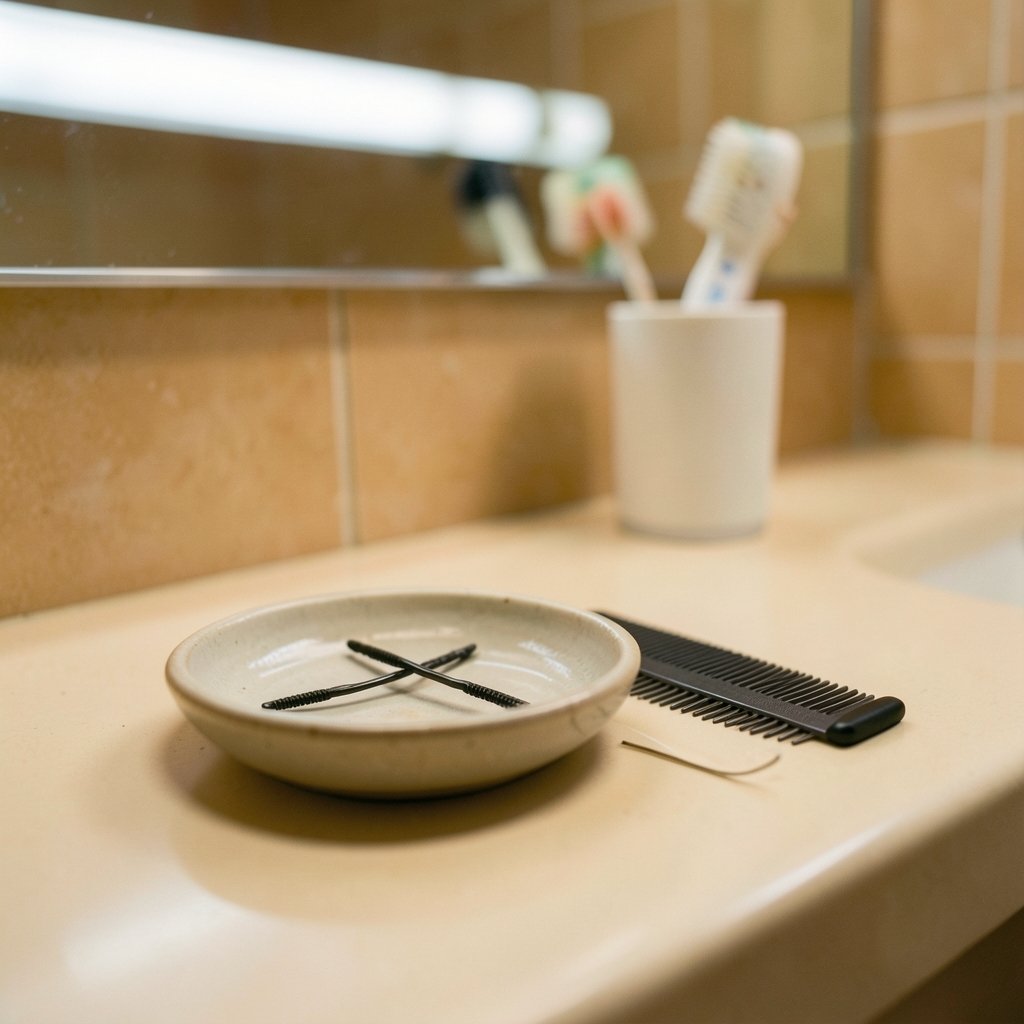
Here is the mistake almost everyone makes: they push the pin in with the ridged side facing out. That is backwards. The ridged leg should sit against the scalp, with the waves pressing into the hair. The flat leg faces outward. Worn this way, the ridges catch the hair and hold the pin in place. Worn the other way, the smooth side slides against the hair and the pin creeps out.
A second common error is opening the pin too wide before inserting it. Bobby pins are springy, but they are not indestructible. If you bend the legs far apart, you stretch the metal and the pin loses its grip for good. A gentle opening is enough.
A third mistake is using a single pin where two would work better. One pin on a loose section of hair often rotates and slips. Two pins crossed in a slight X shape hold far more securely than one pin placed alone.
How to Insert a Bobby Pin So It Stays
The technique matters more than the brand. Here is the sequence that works in practice:
- Start with dry or nearly dry hair. Pins grip damp hair poorly because the strands are slippery and the pin can rust over time. If you must pin damp hair, expect a weaker hold.
- Gather the section you want to hold. Keep it small. A pin holds a thin section far better than a thick one, so use more pins rather than bigger chunks of hair.
- Open the pin slightly with your thumb and forefinger. Do not force it wide.
- Slide the ridged side down against the scalp, pushing the pin in the direction the hair grows, then flip it back toward the head so the waves catch the strands.
- Cross a second pin over the first if the section is heavy or the hair is very smooth.
- Add a light mist of hairspray to textured styles, or a tiny amount of styling product to slick styles, to give the pin something to grip.
For very fine or slippery hair, a quick trick is to spray the pin itself with a little hairspray or texture spray before inserting it. The tacky surface gives the metal extra grip. For coarser textures, such as 4c hair, pins work well for holding twists and pinned-up styles, but they need to be placed firmly against the scalp so the ridges can bite into the strand pattern.
Matching the Pin to Your Hair Type
Hair texture changes how a bobby pin behaves. A pin that holds perfectly on straight hair can slide right out of fine, silky hair, and a pin that grips coily hair may feel tight on a sensitive scalp. The table below sums up what tends to work.
| Hair type | What tends to work | What to avoid |
|---|---|---|
| Fine or silky straight hair | Ridged pins worn correctly, two pins crossed, light texture spray | Single pins on large sections, very smooth pins |
| Wavy hair (for example, 2b hair) | Standard ridged pins, pins with a light coating | Overloading one pin with too much hair |
| Thick or coarse hair | Larger pins, several pins per section, sectioning first | Tiny pins that bend under pressure |
| Curly and coily hair | Pins pushed firmly to the scalp, ball-tipped ends for comfort | Pins with sharp bare tips near the scalp |
| Very long hair | Pins plus a hair tie or clip for support | Relying on pins alone to hold weight |
The pattern is simple. The smoother and finer the hair, the more the pin depends on its ridges and on pairing with a second pin. The thicker the hair, the more the pin depends on size and on how well you section the hair before pinning.
Coated, Ball-Tipped, or Plain: Which Should You Buy?
Walk down any drugstore hair aisle and you will see several kinds of pins. They are not interchangeable, and the differences matter more than the price tag suggests.
Plain metal pins are the classic. They are cheap, strong, and hold well. The downside is that the bare tips can scratch the scalp and can rust if they are stored damp or used on wet hair.
Plastic-coated pins are gentler on the scalp and less likely to snag. The coating can wear off over time, especially at the tips, and once it peels the pin becomes rougher than a plain one. Check the tips before each use.
Ball-tipped pins have small rounded ends that protect the scalp. They are a good choice for anyone with a sensitive head or for styles worn close to the skin. The trade-off is that the balls can make the pin slightly bulkier and a little harder to slide in.
In practice, most people do best with a mixed set: plain pins for heavy lifting, coated or ball-tipped pins for comfort near the scalp. Buy more than you think you need. Pins vanish at an impressive rate, and a full pack costs very little.
Where Bobby Pins Actually Earn Their Keep
Bobby pins hold back a fringe and also show up in a surprising range of jobs:
- Holding a style in place. Updos, pinned-back sections, and half-up styles all rely on pins.
- Taming flyaways. A single pin can flatten a stray section near the part.
- Keeping hair out of the face during exercise, cooking, or work.
- Marking a place in knitting, sewing, or craft projects, where a pin works as a cheap clip.
- Organizing cables and cords in a pinch, though this is a makeshift fix rather than a proper solution.
They also appear in pop culture as a look in their own right. Decorated pins, crossed rows of pins, and sculpted pin styles have all had moments in fashion. The row of pins across the head, sometimes just called the row, is a good example of a simple tool turned into a deliberate style choice.
Common Mistakes and How to Fix Them
Even experienced users run into the same handful of problems. Here is a quick troubleshooting guide.
| Problem | Likely cause | Fix |
|---|---|---|
| Pin slides out | Worn smooth side to scalp | Flip it so the ridges face the scalp |
| Pin feels loose after an hour | Section too thick | Use smaller sections and more pins |
| Pin bends out of shape | Opened too wide | Open gently; replace stretched pins |
| Scalp feels scratched | Bare metal tips | Switch to coated or ball-tipped pins |
| Pin rusts | Stored damp or used on wet hair | Dry pins before storing; keep them dry |
| Style droops | Too few pins for the weight | Cross pins and add support at the base |
One more fix worth knowing: if a pin keeps sliding, rough up the hair slightly with your fingers or a little dry shampoo before pinning. Slightly textured hair grips better than freshly washed, perfectly smooth hair. That is why many stylists say day-old hair holds pins better than clean hair.
Safety, Storage, and Travel
Bobby pins are small, and that makes them a real hazard around young children. They are a known choking hazard, and small pins have been reported as objects that children swallow or inhale. Keep pins out of reach, count them when you finish a style, and sweep the floor after using them near a crib or play area. If you suspect a child has swallowed a pin, seek medical help right away rather than waiting for symptoms.
Storage matters too. A small jar, a pillbox, or a magnetic strip keeps pins together and stops them from scattering in a drawer. Keep them dry. Pins stored in a damp bathroom cabinet rust faster, and a rusty pin is a scratched scalp waiting to happen.
For travel, pins are generally fine in carry-on bags, though airport screeners may take a closer look at small metal items. Pack them in a small container rather than loose in a pocket so they are easy to present if asked. Rules can vary by country and can change, so check the current guidance for your airline and destination before you fly.
A Short, Honest History
The bobby pin is usually described as a 1920s product, named for the bob haircut that made short hair fashionable. Beyond that, the story gets murky. Many websites repeat a specific inventor or a specific patent year, but those claims are often copied from one another without a source. If you want the documented version, search a patent database for “hair pin” and read the original filings rather than trusting a summary.
What is clear is that the design has barely changed in a century. Two legs, one ridge, one bend. It is a rare case of a tool that got it right the first time, which is probably why it is still in every bathroom drawer in the world.
Conclusion
The bobby pin is a small, cheap, unglamorous tool that rewards a little knowledge. Wear it with the ridged side against the scalp. Keep sections small. Cross two pins when one is not enough. Choose coated or ball-tipped pins if your scalp is sensitive, and plain pins when you need maximum grip. Keep them dry, keep them away from small children, and buy more than you think you need.
None of these tips cost anything, and together they turn a pin that slips into one that holds from morning to night. The next time a pin fails, the fix is probably not a better pin. It is a better technique.
FAQ
Why do my bobby pins keep falling out?
The most common reason is that the pin is worn with the ridged side facing out instead of against the scalp. The ridges are what grip the hair, so flipping the pin over often solves the problem instantly. If the pin still slips, the section of hair is probably too thick, or the hair is too smooth. Use smaller sections, cross two pins, and add a little texture spray.
Which side of a bobby pin goes against the scalp?
The ridged, wavy side goes against the scalp. The flat side faces outward. This is the single most important rule for getting a bobby pin to hold, and it is the one most people get backwards.
What is the difference between a bobby pin and a kirby grip?
They are the same object under different names. “Bobby pin” is the common term in the United States, while “kirby grip” is the usual term in Britain and much of the Commonwealth. Both describe a folded metal pin with one straight leg and one ridged leg.
Can you use bobby pins on wet hair?
You can, but it is not ideal. Wet hair is slippery, so pins hold less firmly, and moisture can cause plain metal pins to rust over time. If you need to pin damp hair, dry the pins thoroughly afterward and expect to use a few extra pins for a secure hold.
Are bobby pins safe for children?
Bobby pins are a choking hazard for young children and have been reported as objects that children swallow or inhale. Keep them out of reach, count them after styling, and clean the floor after using them near a play area. If you think a child has swallowed a pin, get medical help immediately.
How should I store bobby pins so they last longer?
Keep them dry and contained. A small jar, a pillbox, or a magnetic strip works well and stops pins from scattering. Avoid storing them in a damp place, because moisture causes rust, and a rusty pin can scratch the scalp. Check the tips now and then and throw away any pin that has lost its coating or bent out of shape.









