

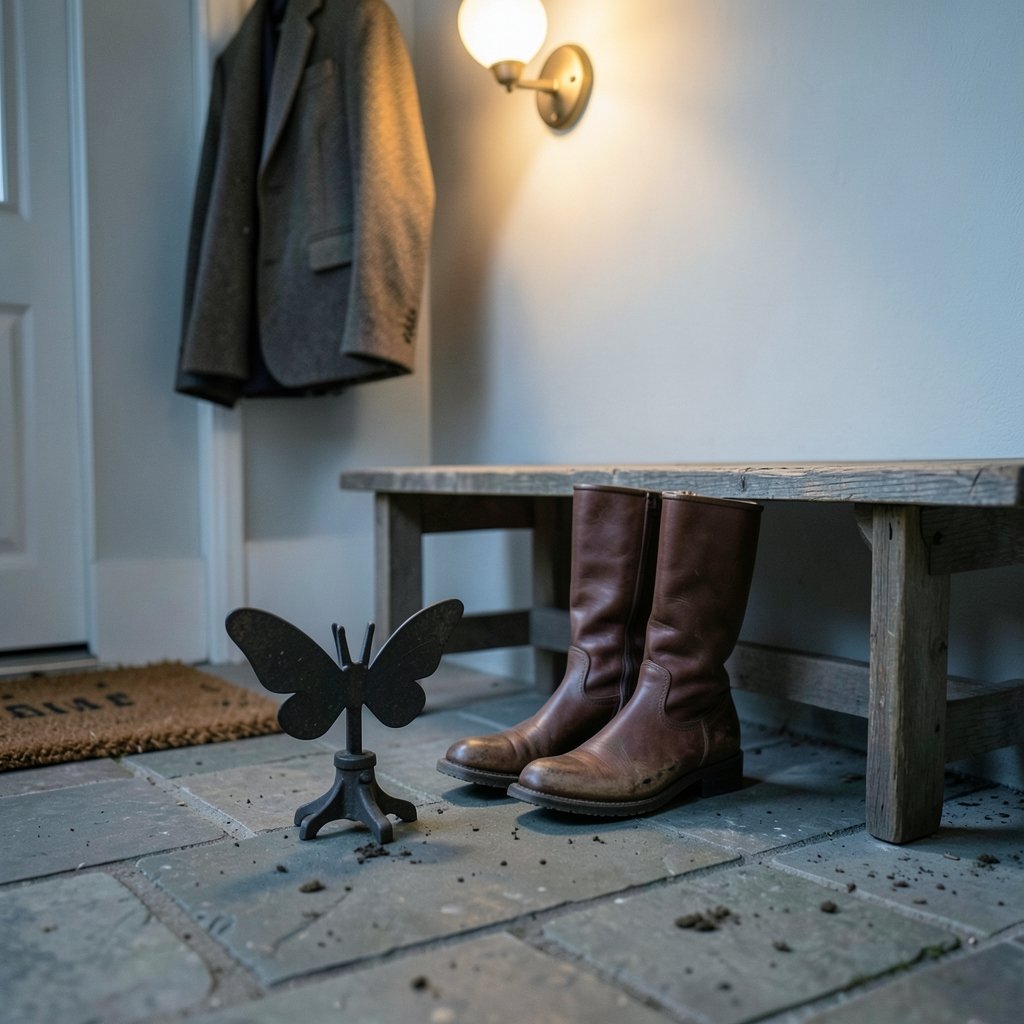
Have you ever hopped on one foot by the front door, tugging at a stubborn boot with both hands, hoping you don’t topple over? Most people who own tall boots have lived that exact moment. The fix has existed for well over a century, and it costs less than a takeaway meal: the boot jack.
A boot jack is one of those quiet, unglamorous tools that does its job so well you forget it exists until you need it. It grips the heel of your boot while you press down with your other foot, letting you step out cleanly without bending, straining, or wrestling. This article covers what a boot jack is, how it works, the main types, how to choose one, and the mistakes that make them fail.
What Is a Boot Jack?
A boot jack is a device for removing boots without bending down. It usually has a forked or U-shaped opening that catches the heel of the boot while the wearer stands on the base with the other foot. The boot stays put; the foot slides out.
The name follows an old English pattern. “Jack” has long been a generic word for a mechanical device or tool, the same way it appears in car jack or lifting jack. A boot jack is simply the jack that works on boots.
Historical examples were commonly made from cast iron, wrought iron, or wood. Two broad forms show up again and again: the single-foot shoe jack, which you hold steady with one foot, and the two-footed stand-on type, where you plant one foot on a wide base and pull the other boot free. Museum collections are the best place to see dated examples with object descriptions, and the Oxford English Dictionary is the authority for the earliest written use of the term. Anyone who claims a precise “invented in year X” date should be treated with suspicion until it is checked against patent records.
How a Boot Jack Actually Works

The mechanics are almost embarrassingly simple, which is exactly why the tool lasts. Three forces do the work:
- The heel cup or fork traps the heel of the boot so it cannot lift as your foot rises.
- Your standing foot pins the jack to the floor, so the jack becomes a fixed anchor.
- Your pulling leg does the rest. You lean back slightly and slide your foot out.
The result is a straight, controlled pull instead of a sideways wrench. That matters for tight-fitting boots, and it matters even more for anyone with back pain, limited mobility, or a recent injury. Bending over to haul off a knee-high boot is a genuine strain; standing upright and stepping out is not.
The boot jack versus the boot pull
These two tools get confused constantly, and the confusion causes real disappointment. A boot pull (sometimes called a boot hook) is a long-handled hook used to pull boots on. A boot jack is for taking them off. They solve opposite problems, and a well-equipped boot owner eventually wants both.
| Feature | Boot Jack | Boot Pull / Boot Hook |
|---|---|---|
| Purpose | Removes boots | Puts boots on |
| How it works | Heel is trapped while foot slides out | Hook catches a pull loop or boot top |
| Typical shape | Forked or U-shaped rest on a base | Long handle with a hooked end |
| Best for | Tall boots, tight fits, back strain | Stiff shafts, pull-on boots, limited reach |
| Common materials | Wood, cast iron, steel, plastic | Wood, metal, plastic |
The Main Types of Boot Jack
Not all boot jacks suit all boots. The differences are small on paper but obvious in daily use.
The classic stand-on wooden jack
This is the shape most people picture: a flat wooden base with a V-shaped or U-shaped notch at one end. You stand on the base with one foot and pull the other boot free. Wooden jacks are light, warm to the touch, and gentle on boot leather. The trade-off is that a light wooden jack can slide on smooth flooring unless it has a grip underneath.
The cast iron or steel jack
Heavy metal jacks stay put. That weight is their whole advantage, especially on tile or hardwood where a light jack skitters. The downside is that bare metal edges can scuff delicate leather or suede if the heel cup is sharp, and a heavy jack is not something you toss in a bag. Look for rounded, coated, or rubber-lined edges.
The single-foot shoe jack
The smaller shoe jack is designed to be held steady with one foot while the other foot comes out. It takes up little space and works well for low shoes and ankle boots. For tall, stiff-shafted boots, the bigger stand-on design gives more leverage.
The portable and travel jack
Compact plastic or folding jacks exist for travel, riding, and camping. They are handy, but a very light jack on a slippery floor is the classic failure case. If portability matters more than stability, choose one with a textured or rubberized base.
The wall-mounted or floor-anchored jack
Some jacks are fixed to a wall or a sturdy board so they never move at all. These are excellent for mudrooms and stables, where boots come off dirty and often. The catch is installation: you need a solid fixing point at a comfortable height.
How to Choose a Boot Jack
Buying a boot jack is not complicated, but a few details separate a tool you keep for decades from one that lives in a drawer.
- Match the jack to your boots. Tall riding boots and stiff shafts need a wide, deep heel cup and a stable base. Low shoes need far less.
- Check the base for grip. Rubber feet, a textured underside, or simple weight all help. This is the single most common weak point.
- Inspect the edges of the heel cup. Rounded and lined edges protect leather and suede. Sharp metal can leave marks.
- Consider your floor. Heavy cast iron on tile is stable but can chip if dropped. Light wood on polished floors can slide.
- Think about where it will live. A jack by the door gets used; a jack in a cupboard gets forgotten. Mudroom, entryway, or stable wall are the natural spots.
- Test the height. A jack that is too tall or too short makes you stoop or overreach, which defeats the purpose.
Common Mistakes People Make
Practical experience with boot jacks tends to produce the same lessons. Here are the ones that come up most.
Using a slippery jack on a smooth floor. The jack slides, the boot twists, and you end up hopping anyway. Fix it with a non-slip mat underneath or a heavier jack.
Yanking instead of stepping. The jack is an anchor, not a lever. Plant your standing foot firmly, keep your pulling leg fairly straight, and let the boot slide free. Jerking sideways strains the ankle and stretches the boot.
Ignoring the heel cup shape. A heel cup that is too shallow lets the heel pop out mid-pull. Too narrow, and it pinches. Try the jack with the boots you actually wear.
Letting grit build up in the notch. Mud and grit in the heel cup act like sandpaper on leather. A quick wipe after use prevents most wear.
Assuming one jack fits every boot. A household with riding boots, work boots, and ankle boots may genuinely benefit from two jacks, or one adjustable design.
Confusing a boot jack with a boot pull. Buying the wrong tool is the most avoidable mistake of all. If your problem is getting boots on, you need a hook, not a jack.
Boot Jacks and Different Hair and Boot Types
Boot care connects to hair care more than people expect, because the same friction and handling issues show up in both. Tight curls and textured hair need gentle, low-friction handling to avoid breakage, and boots need the same consideration at the heel and ankle. Anyone who already thinks carefully about 4c hair and how much pulling it tolerates will recognize the principle: controlled, straight-line force beats tugging at an angle.
The same logic applies to styling decisions. Someone comparing looser waves and tighter curls, say 2b hair versus a coily texture, is already thinking about how much manipulation a given shape can take. Boot leather behaves similarly. A soft, supple shaft tolerates more handling than a stiff one, and a jack that pulls straight puts far less stress on seams than a hand yanking sideways.
There is also a practical link in how people store and rotate their gear. Riders and stable workers often keep boots, helmets, and grooming kit together in one organized spot, much like a grooming routine kept in a single row for easy reach. The row of everyday items by the door is where a boot jack earns its place, right next to the brush and the boot pull.
A Short History and What It Tells Us
Boot jacks were common household and stable items in the Victorian era, and the term appears in nineteenth-century English usage. That long run explains the design: the tool has barely changed because the problem has barely changed. A heel needs to be held; a foot needs to slide out.
The materials tell the story of daily life. Cast iron and wrought iron jacks sat by hearths and stable doors, heavy enough to stay put on stone floors. Wooden jacks were lighter, cheaper, and kinder to leather, which is why the wooden V-notch design survived into the modern entryway. Museum collections hold dated examples with object descriptions, and patent archives hold the original filings. Anyone researching a specific jack’s age should start there rather than trusting a date printed on a reproduction.
What the history really shows is that the boot jack is a solved problem. There is no clever new mechanism waiting to be invented. The best modern jacks simply refine the old design with better grip, rounded edges, and materials that survive being stood on every day.
Caring for a Boot Jack So It Lasts
A boot jack needs almost no maintenance, which is part of its appeal. A few habits keep it working:
- Wipe the heel cup after muddy use so grit does not grind into leather.
- Check the base for loose rubber feet or worn grip pads and replace them early.
- Keep wooden jacks dry. Prolonged damp can warp a base and split the notch.
- Oil metal jacks occasionally if they live outdoors or in a damp stable.
- Store it where it is used. A jack by the door lasts longer in practice than one packed away, simply because it gets looked after.
Conclusion
The boot jack is proof that the best tools are often the simplest. It holds a heel, anchors to the floor, and lets a person step out of a boot without bending, straining, or hopping on one foot. Wood or cast iron, single-foot or stand-on, the principle never changes: trap the heel, plant your foot, pull straight.
Choosing well comes down to a handful of details. Match the jack to your boots, check the grip on the base, and make sure the heel cup edges are kind to leather. Keep it by the door where it will actually be used, and remember that a boot jack removes boots while a boot pull puts them on. Get those basics right, and one small piece of wood or iron will quietly save your back, your boots, and your patience for years.
Frequently Asked Questions
What is a boot jack used for?
A boot jack is used to remove boots without bending down. The forked or U-shaped rest grips the heel of the boot while the wearer stands on the base with the other foot, so the boot stays in place and the foot slides out. It is especially useful for tall boots, tight-fitting boots, and anyone with back pain or limited mobility.
Is a boot jack the same as a boot pull?
No. A boot jack removes boots by trapping the heel while the foot slides out. A boot pull, also called a boot hook, is a long-handled hook used to pull boots on, usually by catching a pull loop or the top of the shaft. They solve opposite problems and are often used as a pair.
What is the best material for a boot jack?
It depends on where you will use it. Cast iron and steel jacks are heavy and stay put on smooth floors, which makes them very stable. Wooden jacks are lighter, warmer, and gentler on leather, but they can slide on polished flooring unless they have a grip underneath. Plastic travel jacks are convenient but the least stable.
Can a boot jack damage leather boots?
A well-made jack with rounded or lined edges will not damage boots in normal use. Problems come from sharp metal edges, grit left in the heel cup, or pulling at an angle instead of straight. Wiping the notch after muddy use and pulling the boot out in a straight line prevents most wear.
How do you use a boot jack correctly?
Stand on the base of the jack with one foot to anchor it. Place the heel of the other boot into the notch or fork. Keep your pulling leg fairly straight and lean back slightly as you slide your foot out. Do not jerk or twist sideways, which strains the ankle and stretches the boot.
Do you need a boot jack for ankle boots?
Not always. Ankle boots and low shoes are easy enough to remove by hand, and a small single-foot shoe jack is usually enough if you want help. A larger stand-on boot jack becomes genuinely useful with tall, stiff-shafted boots, riding boots, and work boots.









